Content Type: Article

  • Financing innovation: A more strategic capital playbook for life sciences

    Financing innovation: A more strategic capital playbook for life sciences

    ARTICLE

    Financing innovation: A more strategic capital playbook for life sciences

    May 2026

    Read time: 4 min

    Key takeaways
    Overview

    At our European Health and Life Sciences Symposium, discussions about financing highlighted a clear shift: As the pace of innovation increases, and in the face of market constraints, life sciences capital is becoming more flexible, specialised, and strategic.

    During an event panel, McDermott partner and European head of finance Aymen Mahmoud discussed emerging and existing trends with heavy hitters in the industry: Thomas Baetz, chief financial officer at Genfit; Nadiya Ishnazarova, principal, venture investments at Johnson & Johnson Development Corporation; Maureen Planchard, director at Capza; and Rodolphe Roch, senior managing director at Teneo.

    The panelists brought forward several key points about the life sciences financing landscape:

    More diverse capital is creating more nuanced financing options

    Life sciences innovation has historically followed the relatively linear path of venture capital, strategic partnerships, and public markets. While that model still exists, the landscape of alternate options has expanded significantly.

    Today, a wider range of investors, including private credit funds, structured capital providers, and royalty investors, are active across the ecosystem. The result is not just more capital, but a more nuanced set of financing options, enabling companies to better align funding with their stage of development and risk profile.

    Capital and risk are becoming better aligned

    As capital is deployed with increasing precision, equity remains critical for early-stage innovation, where scientific and clinical risks are highest. Structured and non-dilutive capital is playing a growing role as companies mature, while blended financing approaches enable companies to fund different assets or stages in parallel.

    This more targeted approach reflects a maturing sector, where scientific advances (such as improved biomarkers and more efficient trial designs) are helping to de-risk parts of the innovation life cycle and attract a broader range of investors.

    A shift to long-term funding is improving stability

    Rather than raising capital incrementally, companies are increasingly seeking to fund through meaningful value inflection points, such as clinical proof of concept or strategic partnering readiness. This shift allows for greater stability and supports more deliberate, value-driven decision-making.

    Flexible structures are gaining traction

    Innovative financing structures are becoming a more established part of the funding toolkit. In particular, royalty and revenue-contingent financing are gaining traction because they reduce dilution, make repayment contingent upon performance, and offer flexibility beyond traditional debt or equity.

    These structures are not universal solutions, but they reflect a broader move toward more tailored, situation-specific financing models.

    Private credit is taking a growing, but still clearly defined, role

    Early-stage innovation remains predominantly equity-funded. However, credit providers are engaging earlier than before in companies that demonstrate revenue visibility, strong unit economics, or a clear path to scale.

    This is creating a more layered financing environment, where different forms of capital are applied at different stages.

    Europe’s funding gap remains a challenge

    Despite strong scientific foundations, Europe continues to face a funding gap, particularly between early discovery and clinical proof of concept.

    Addressing this gap will be critical to ensuring that promising innovation can progress to later stages of development and attract broader pools of global capital.

    Capital strategy is becoming a differentiator

    Capital is now a strategic lever, not just an input. Life sciences companies that succeed will be those that can select the right financing structures at the right time, combine multiple sources of capital effectively, and align their funding strategy with their long-term growth objectives.

    Bottom line

    The life sciences funding model is no longer linear. It is flexible, multi-layered, and increasingly central to value creation. In this more complex and selective environment, the ability to navigate capital strategically is becoming a core driver of success.

    In depth
    Authors

    Aymen Mahmoud

    Partner

    London – 22 Bishopsgate

    More insights

  • A new era for EU merger control? Key takeaways from the draft guidelines

    A new era for EU merger control? Key takeaways from the draft guidelines

    ARTICLE / CLIENT ALERT

    A new era for EU merger control? Key takeaways from the draft guidelines

    May 5, 2026

    Read time: 15 min

    Key takeaways
    Overview

    Overview

    On 30 April 2026, the European Commission published its recast 2026 draft merger guidelines, which would replace the current horizontal and non-horizontal regime with a single, unified framework, with the stated ambition of materially reshaping European Union (EU) merger review.

    The draft guidelines provide greater scope for companies to rely on industrial scale, sustainability, resilience and innovation efficiencies through a structured “theory of benefit” framework. Moreover, the draft guidelines introduce a new “innovation shield” safe harbour for transactions involving small, innovative companies, clarifying which types of transactions the Commission is likely to consider as “killer acquisitions” and which may benefit from the new “innovation shield”. At the same time, the Commission will place increased evidentiary weight on internal documents to support pro-competitive arguments.

    On the flip side, the draft guidelines abolish the existing safe harbours, which means that transactions previously considered low risk may now face closer scrutiny, greater reliance on economic evidence, and longer review timelines. The draft guidelines also expand the Commission’s theories of harm, including through a sharper focus on important competitive forces, coordinated effects, access to commercially sensitive information, diagonal mergers, entrenchment of dominance, labour-market monopsony, minority shareholdings and common ownership, portfolio effects, and innovation harm, while adopting a more holistic value-chain and counterfactual assessment.

    In practice, companies should prioritise document hygiene at an early stage, including by briefing commercial and strategy teams ahead of deal discussions and reviewing internal materials with the expectation that they may be closely scrutinised in any merger investigation (2026 Draft Guidelines, paras. 39, 50–52).

    In depth

    Background

    In a move closely aligned with the EU’s broader strategy to strengthen Europe’s global competitiveness, the publication of the draft guidelines illustrates how Brussels is reshaping EU merger control for a more contested and dynamic global economy. By proposing a single, streamlined framework to replace the 2004 horizontal merger guidelines and the 2008 non-horizontal merger guidelines, the Commission signals a meaningful shift in how mergers will be assessed going forward.

    The reform responds directly to the political and economic imperatives identified in (published in September 2024), which urged a more active role for merger control in supporting European industrial scale, innovation, and resilience. Against the backdrop of intensified geopolitical competition, supply-chain disruptions, and the EU’s strategic autonomy agenda, the draft guidelines acknowledge expressly that “the global geopolitical and trade context has changed” and that “industrial scale and global competitiveness have become increasingly important”. Merger control is reframed as a tool that supports the EU’s broader policy objectives – including competitiveness, resilience, security of supply, and defence readiness – alongside the protection of effective competition.

    The review forms part of a wider policy debate on whether EU merger control should better reflect global competition, resilience, and innovation, while still preserving effective competition in the internal market. The draft guidelines reflect this tension, combining a broader enforcement toolkit with a more contextual and evidence-based assessment.

    This client alert highlights some of the key changes introduced by the draft guidelines, and discusses their practical implications for transaction planning, deal risk assessment, and engagement with the Commission going forward.

    Scale, resilience, and strategic autonomy as pro-competitive factors

    In response to Draghi’s report, the draft guidelines treat, for the first time, industrial scale, resilience, and security of supply not merely as policy backdrop but as substantive parameters relevant to the competitive assessment (2026 Draft Guidelines, paras. 17–19, 297–300). Scale-enhancing transactions – particularly those that combine activities across Member States, enable European firms to compete in global markets, or secure access to critical inputs – may be viewed more favourably, provided sufficient post-merger competition remains (2026 Draft Guidelines, para. 13). “Defence readiness” is expressly defined as a relevant resilience parameter, signalling that consolidation in defence, semiconductors, batteries, critical minerals, and other strategically sensitive sectors may benefit from the new framework (2026 Draft Guidelines, para. 15).

    It should be emphasised, however, that the underlying SIEC test remains unchanged. The new pro-competitive parameters inform the Commission’s exercise of its existing discretion; they do not displace the legal standard. A transaction that creates or strengthens market power without sufficient countervailing benefits will continue to face a steep climb to clearance, irrespective of its industrial logic.

    More room for sustainability and innovation arguments: The “theory of benefit” framework and the innovation shield

    Conceptually, the most significant change is the introduction of a structured “theory of benefit” framework (2026 Draft Guidelines, para. 25). What used to be the Commission’s rarely applied “efficiency defence”, pro-competitive arguments under the “theory of benefit” framework are now assessed alongside theories of harm under the same evidentiary standard. The draft guidelines distinguish between direct efficiencies (immediate cost savings or quality improvements) and dynamic efficiencies (longer-term gains in innovation, investment, sustainability, or resilience). The traditional analytical conditions – efficiencies must be verifiable, merger-specific, and beneficial to consumers – are retained, but the scope of recognised benefits is markedly broader.

    The draft guidelines significantly broaden the Commission’s approach to efficiencies, explicitly recognising sustainability, resilience, and innovation benefits alongside more traditional cost, price, and quality gains. In addition to short-term efficiencies, parties may rely on longer-term dynamic benefits (including accelerated innovation, improved security of supply, and sustainability outcomes), as well as collective benefits and non-use value (2026 Draft Guidelines, paras. 321 and 337). Importantly, the Commission has moved away from the rigid two-year horizon traditionally applied to the materialisation of benefits, which is particularly significant for capital-intensive sectors with longer investment cycles (such as defence, energy, telecommunications, and infrastructure).

    Another novelty is the introduction of an “innovation shield” for acquisitions involving small, innovative companies or R&D projects which the Commission may have labelled as “killer acquisitions” in the past (2026 Draft Guidelines, paras. 192 et seq.). The draft guidelines list five scenarios under which such transactions are unlikely to raise competition concerns and may instead facilitate faster and more effective market entry of innovation.

    For example, one of these scenarios relates to an overlap between one merging party’s R&D project with another party’s existing activities and applies if the merging parties do not have a post-merger market share (individually or combined) of more than 40% and there are at least three competitors with R&D projects independent from the merging parties. As a result, the Commission envisages clearing the transaction without finding a significant competition concern. This is a welcome concept, as it creates greater legal certainty and planning comfort for innovation-driven M&A, particularly in early-stage, R&D-intensive sectors.

    From safe harbours to flexible screens: A shift in merger assessment certainty

    The draft guidelines mark a clear departure from the “safe harbour” thresholds that characterised the 2004 guidelines (2004 Guidelines, paras. 19–21). While similar HHI and market share metrics remain, they now function only as indicative screening tools rather than providing comfort that a deal will be cleared absent further scrutiny (2026 Draft Guidelines, para. 129).

    For businesses, this shift results in reduced up-front certainty. Transactions that would previously have fallen squarely within the safe harbours may now attract closer scrutiny, while high market shares no longer automatically give rise to competition concerns, reflecting the Commission’s move towards a more dynamic evidence-based assessment and broader enforcement discretion (2026 Draft Guidelines, paras. 126–129).

    The shift is particularly impactful in concentrated markets. Where a transaction results in high combined market shares or a significant increase in concentration, parties should expect a higher evidentiary burden to demonstrate the absence of harm to competition (2026 Draft Guidelines, para. 127). More generally, businesses should anticipate more granular factual and economic assessments, greater reliance on economic evidence, and potentially longer review timelines – including for deals that may previously have been considered low risk.

    Expanded theories of harm: Increased merger scrutiny

    The draft guidelines materially expand the circumstances in which the Commission may intervene, increasing the likelihood that transactions previously viewed as low risk will now attract closer scrutiny. For businesses, this translates into a need for earlier and broader antitrust risk assessment, particularly in innovation-led, data-driven, and highly interconnected markets, where competitive dynamics evolve rapidly and traditional indicators may be less informative.

    A key shift is the Commission’s enhanced focus on “important competitive forces”. Acquisitions of targets with limited or no current market share (such as disruptive entrants, fast-growing firms, or companies with strong R&D capabilities) may still raise concerns where they are seen as exerting, or likely to exert, meaningful competitive pressure (2026 Draft Guidelines, paras. 138–142). This is especially relevant for innovation-driven and growth-stage acquisitions, where future competition, rather than existing overlap, sits at the heart of the assessment.

    The draft guidelines also widen the scope for coordinated-effects analysis. Minority shareholdings, joint ventures, and other structural links, as well as reliance on shared data, algorithms, or AI tools, are explicitly identified as potential coordination enablers. As a result, transactions in transparent, data-rich markets are more likely to face probing questions, even where traditional coordination concerns would previously have been considered remote (2026 Draft Guidelines, para. 267).

    Access to commercially sensitive information is now recognised as a standalone theory of harm. Transactions that facilitate data access or information flows may therefore be challenged even in the absence of traditional foreclosure or coordination concerns (2026 Draft Guidelines, paras. 282, 286).

    The introduction of “diagonal mergers” – where one party controls an input or customer base that is important for the other party’s competitors – further expands intervention risk. Such transactions are singled out for heightened scrutiny and are less likely to benefit from efficiency arguments, increasing uncertainty for parties operating across interlinked levels of the value chain (2026 Draft Guidelines, para. 251).

    Finally, innovation harm is elevated to a core theory of intervention. The Commission may intervene solely based on reduced innovation rivalry, including overlaps in R&D pipelines or capabilities, even where there is no clear product market overlap. This significantly raises the bar for R&D-intensive transactions, making early innovation mapping and robust evidence of continued competitive pressure increasingly critical. The graft guidelines thus codify the analytical principles developed in Dow/DuPont and Bayer/Monsanto.

    In a notable expansion of the Commission’s enforcement perimeter, the draft guidelines introduce labour markets as a standalone parameter of competitive assessment (2026 Draft Guidelines, paras. 160–162). A transaction may now be assessed for its impact on workers’ wages, working conditions, and mobility where it creates or strengthens monopsony or oligopsony power on the relevant labour market. The Commission has, however, made clear that effects on workers unrelated to competition (such as post-merger restructuring) fall outside the scope of the assessment. The implications are particularly acute for transactions involving specialised workforces with limited alternative employers, such as in life sciences, technology, professional services, and certain manufacturing sectors.

    The draft guidelines also codify entrenchment of a dominant position as a standalone theory of harm (2026 Draft Guidelines, paras. 252–258), drawing on the principles applied in Booking/eTraveli. Entrenchment may arise where the merged firm acquires assets that structurally reinforce existing barriers to entry or expansion – such as data, intellectual property, customer-acquisition channels, or critical infrastructure – within a “core market” or across an interconnected ecosystem of related markets. This theory is particularly relevant for digital platforms, technology ecosystems, and other sectors characterised by network effects, scale economies, or customer inertia.

    In addition, loss of investment competition is now codified as a separate theory of harm (2026 Draft Guidelines, Section II.B.3), distinct from innovation competition. This recognises that mergers may dampen competitive incentives to invest in capacity, distribution, or other infrastructure even where R&D rivalry is not directly affected – a development of particular relevance for capital-intensive sectors such as energy, telecommunications, infrastructure, and manufacturing.

    The draft guidelines also treat non-controlling minority shareholdings and common institutional ownership as potential standalone theories of harm (paras. 163–166). The draft guidelines point out that the competitive pressure may be reduced in situations where one of the merging companies is a non-controlling minority shareholder in a company that competes with the other merging company.

    The Commission will not, in principle, consider shareholdings below 5% as relevant in isolation, but holdings at or above this threshold may give rise to a SIEC (Significant Impediment of Effective Competition) even absent additional rights or formal influence. Common ownership across competitors – typically through institutional investors with broad portfolio holdings across a sector – may also be considered as a contributing factor to a loss of head-to-head competition. These developments have direct implications for financial sponsors, sovereign wealth funds, and institutional investors, and warrant careful pre-deal assessment of cross-shareholdings within the relevant industry.

    The draft guidelines further list portfolio effects as a distinct theory of harm (paras. 287–290), applicable to mergers combining products that are neither substitutes nor complements but which together strengthen the merged firm’s bargaining position vis-à-vis common customers – for example, by increasing the cost to retailers of de-listing the merged firm’s products or by increasing the cost and risk of patent litigation for rivals.

    Holistic value chain assessment and counterfactual analysis: Broader scope, greater evidentiary demands

    Rather than focusing narrowly on classic vertical relationships (e.g., input or customer foreclosure), the draft guidelines decisively move away from the traditional, category-based approach to non-horizontal mergers. Where the 2008 guidelines assessed foreclosure primarily at individual levels of the supply chain, the new draft guidelines require the Commission to assess competitive effects more holistically across the value chain and across related markets, taking into account the parties’ position and influence at multiple levels of supply and distribution (2008 Guidelines, paras. 3–6, 28–32, 58–60; 2026 Draft Guidelines, para. 249). This means transactions may face scrutiny beyond their immediate overlaps, including indirect or ecosystem effects across related markets, as well as in circular-economy contexts.

    At the same time, the draft guidelines introduce a more structured, yet potentially more flexible, approach to the counterfactual analysis. While the Commission will continue to compare how the market is likely to develop with and without the merger, it may now depart from prevailing conditions where there is convincing evidence of expected change, such as evolving market trends or credible alternative transactions (2004 Guidelines, para. 9; 2026 Draft Guidelines, paras. 37–44).

    This creates an opportunity for parties to argue that any deterioration in competitive conditions would have arisen even absent the deal. However, this flexibility comes with higher evidentiary expectations: Arguments must be supported by robust, contemporaneous pre-deal evidence, and parties are expected to provide supporting material early in the review process (2026 Draft Guidelines, para. 29).

    In practice, companies should anticipate a broader and more integrated competitive assessment, combined with a heightened need to substantiate forward-looking arguments with robust internal documents and market evidence. Early preparation and consistency between deal rationale, internal materials, and counterfactual narratives will be critical.

    Member State intervention and the one-stop shop

    The draft guidelines also clarify the limits of Member State intervention in transactions falling within the Commission’s exclusive jurisdiction. Building on Article 21 of the EU Merger Regulation (EUMR), the Commission has signalled a more robust stance against fragmentation of the one-stop shop, including a presumption that intra-EU mergers are not, as such, contrary to a Member State’s public security interests. Member State action under Article 21(4) of the EUMR remains possible to protect legitimate non-competition interests – public security, media plurality, and prudential rules – but the Commission has signalled that it intends to police the boundaries of those carve-outs more closely, particularly in energy, banking, media, and telecommunications.

    The interface between EU merger control and national foreign direct investment (FDI) screening regimes – increasingly tested in recent cross-border energy, banking, infrastructure, and technology transactions – will remain a critical area of strategic planning. While the draft guidelines do not affect Member States’ powers under their own FDI legislation, they raise the prospect of more vigorous Commission scrutiny where Article 21 is invoked alongside, or in substitution for, FDI tools.

    Document hygiene as a deal risk: Heightened scrutiny of internal evidence

    The draft guidelines place materially greater weight on internal documents, reinforcing the importance of careful document creation and management. Strategy and planning materials using terms such as “rationalisation”, “capacity discipline”, or “pricing leadership” may be interpreted as signalling reduced competitive pressure or coordination concerns (2026 Draft Guidelines, paras. 180, 194).

    The draft guidelines codify the evidentiary principles developed in Wieland-Werke, confirming that contemporaneous, ordinary-course documents – especially those prepared close in time to the transaction and by operational teams – are treated as particularly reliable evidence (paras. 39, 50). Documents addressing pricing, capacity, or competitive dynamics, as well as statements against a party’s interest, carry heightened probative value (2026 Draft Guidelines, paras. 39, 53).

    For businesses, this means internal materials can play a decisive role in merger reviews. The Commission retains broad discretion in assessing evidence and may even rely heavily  on a single document  where it is considered credible (2026 Draft Guidelines, paras. 42, 52, 54–55). Importantly, the absence of problematic documents does not, in itself, reduce risk (2026 Draft Guidelines, paras. 51–53).

    These principles apply equally to defensive arguments. Efficiency and counterfactual claims will be most persuasive where they are supported by pre-existing, non-transactional business documents, rather than by materials prepared specifically for the merger process (2026 Draft Guidelines, paras. 36–37, 363).

    Conclusion

    The draft guidelines point toward a more flexible and more evidence-intensive approach to EU merger control. Transactions that may previously have appeared straightforward could now face broader scrutiny, particularly where the Commission perceives risks relating to future competition, innovation, information flows, or wider value-chain dynamics.

    For businesses, the practical takeaway is the need for earlier antitrust assessment, stronger evidentiary preparation, and rigorous document discipline from the outset. While the draft guidelines offer greater scope to advance scale, sustainability, resilience, and innovation arguments through the new “theory of benefit” framework, they also signal a merger review process that is likely to be less predictable and more demanding in practice.

    Next steps: The Commission has launched a public consultation on the draft guidelines, with a deadline for comments of 26 June 2026 and a stakeholder workshop scheduled for 10 June 2026. The final text is expected by the end of 2026. Importantly, the Commission has indicated that it will already apply the analytical concepts set out in the draft guidelines to ongoing cases, meaning that the new framework has immediate practical implications for live transactions. Parties contemplating notifiable transactions should engage in a substantive antitrust risk assessment under the draft guidelines now and consider whether to participate in the consultation – either directly or through trade associations – to influence the final text.

    Authors

    Stéphane Dionnet

    Partner

    Brussels

    Kristina Nordlander

    Partner

    London – 22 Bishopsgate

    Emilia Bonine

    Associate

    Brussels

    More insights

  • Advisory Opinion 26-02: OIG greenlights MSO-owned laboratory in urgent care, with important caveats

    Advisory Opinion 26-02: OIG greenlights MSO-owned laboratory in urgent care, with important caveats

    ARTICLE / CLIENT ALERT

    Advisory Opinion 26-02: OIG greenlights MSO-owned laboratory in urgent care, with important caveats

    May 1, 2026

    Read time: 6 min

    Key takeaways
    Overview

    The US Department of Health and Human Services Office of Inspector General (OIG) has historically subjected arrangements involving ancillary services and management services organizations (MSOs) to scrutiny. Notwithstanding the agency’s prevailing enforcement posture, OIG issued a favorable opinion on such an arrangement on February 12, 2026. Advisory Opinion (AO) 26-02 concluded that a proposed arrangement in which an urgent care MSO would provide laboratory services to affiliated urgent care centers would not generate prohibited remuneration under the federal Anti-Kickback Statute (AKS).

    In depth

    The facts

    The requestor is an MSO affiliated with four urgent care centers operated through various management companies and one affiliated professional corporation. Because of state corporate practice of medicine restrictions, the requestor does not own the professional corporation that holds the urgent care licenses. Nonetheless, the requestor oversees and manages all four centers and holds ownership interests in the management companies associated with each site.

    Under the proposed arrangement, the requestor would own and operate an independent clinical laboratory through a separate legal entity. The laboratory would perform clinical testing for the affiliated urgent care centers but would be located offsite and would not be owned or operated by any individuals or entities in a position to refer specimens.

    OIG’s conclusion

    OIG ultimately determined that the AKS would not be implicated because neither the requestor nor the laboratory would provide any remuneration to induce referrals. In reaching its conclusion, OIG highlighted several key safeguards:

    • Compensation for urgent care center providers and suppliers would not be tied to the volume or value of tests ordered from the laboratory.
    • No remuneration would flow, directly or indirectly, between the laboratory and the urgent care centers (or any of their providers or suppliers).
    • The requestor would not share laboratory-related revenue, directly or indirectly, with the urgent care centers.
    • The laboratory would directly bill federal healthcare programs and other payors and would not bill the urgent care centers or other providers for services furnished.
    • Patients of the urgent care centers would receive written notice of the affiliation and would retain the option to have their tests sent to an unaffiliated laboratory.
    • The requestor would not track referrals from the urgent care centers.
    • The urgent care centers’ electronic health record system would allow ordering from multiple laboratories without preference.

    Analysis

    AO 26-02 provides a practical roadmap for urgent-care-focused MSOs seeking to structure affiliated laboratory arrangements without violating the AKS. As underscored by the opinion, urgent-care-focused MSOs may own and operate clinical laboratories serving affiliated sites as long as referral influence is sufficiently separated from ownership. Key compliance considerations include maintaining a distinct physical location for the laboratory, implementing direct billing to payors, disclosing the affiliation to patients, preserving patient choice, and, most importantly, ensuring no remuneration is paid based on referrals of specimens to the laboratory.

    AO 26-02 is fact-specific and should not be applied beyond the structure discussed in the opinion. The proposed arrangement involves four tightly controlled urgent care affiliates with limited downstream referral dependency. Other arrangements, such as those involving more predictable ancillary utilization and those that grant providers more flexibility in driving ancillary revenue, may inherently present greater risk under the AKS. The urgent care MSO structure also may be less likely to implicate the AKS than other types of physician practice management structures, which frequently involve large multispecialty networks and more complex referral dynamics, and may include ownership of ambulatory surgery centers and other complicating factors. In contrast, urgent care centers usually heavily leverage advanced practice providers, who make the lion’s share of referrals for ancillaries and are compensated on an hourly or salary basis with incentives for productivity rather than a model that allows them the potential to share in ancillary revenues.

    While the opinion is favorable, it arrives against the backdrop of continued OIG and US Department of Justice enforcement activity involving MSO-structured ventures and ancillary services arrangements. AO 26-02 explicitly warns that similar arrangements involving the payment of remuneration to referral sources to induce or reward the referral of laboratory specimens to a particular laboratory for testing would implicate the AKS and “would not be low risk.” The opinion goes on to list sham consulting arrangements, sham investment opportunities, and the provision of free personnel or equipment as potentially high-risk arrangements under the AKS.

    Even when AKS risk is mitigated, arrangements may still run afoul of the Physician Self-Referral Law (Stark Law) or state analogues, particularly in MSO-supported arrangements where service lines may generate designated health services. Other laws may also be implicated, such as the Ending Kickbacks in Recovery Act of 2018, which, similar to the AKS, prohibits paying remuneration to induce or reward referrals for certain services, including laboratory services, but applies regardless of payor. Entities evaluating similar models must carefully consider all dimensions of the healthcare fraud and abuse landscape, particularly with respect to financial incentives.

    Conclusion

    AO 26-02 endorses a narrow but important pathway for urgent care MSOs to structure affiliated laboratory arrangements without triggering AKS liability. The opinion reinforces that certain MSO-owned ancillary service lines do not implicate the AKS, as long as the business is insulated from referral pressure and no remuneration, whether direct or indirect, is paid based on referrals. That said, OIG’s detailed discussion of safeguards signals that it will continue to scrutinize MSO arrangements with ancillary service providers. Even seemingly modest deviations from the proposed arrangement, such as introducing compensation tied to laboratory utilization, can materially shift AKS risk.

    Authors

    Sarah Kitchell

    Partner

    Boston

    Lauren Ellison

    Associate

    Washington, DC

    More insights

  • European Health & Life Sciences Symposium 2026: Key takeaways from Paris

    European Health & Life Sciences Symposium 2026: Key takeaways from Paris

    ARTICLE

    European Health & Life Sciences Symposium 2026: Key takeaways from Paris

    May 2026

    Read time: 7 min

    At McDermott’s European Health & Life Sciences Symposium 2026, more than 350 leaders gathered in Paris from across the life sciences and healthcare ecosystem to discuss the trends that are defining the sector’s future. The conversations emphasized how market dynamics, capital allocation, private equity strategies, and the rapid rise of artificial intelligence (AI) are reshaping the landscape.

    During the event, Sharon Lamb, head of McDermott’s UK Health & Life Sciences Practice Group, noted that “life sciences is entering a new era where innovation alone is no longer enough, and success will be defined by how effectively organisations execute across capital, technology, and increasingly complex market dynamics.”

    Here are six defining shifts reshaping the sector.

    Growth, pricing, and geopolitics are increasingly intertwined

    For much of the past decade, life sciences growth has been driven by scientific breakthroughs and new modalities. That is no longer the whole story, as pricing and geopolitics are becoming primary shapers of industry economics. Of note:

    • Healthcare spending continues to outpace GDP across developed markets, intensifying scrutiny on pricing
    • The global industry remains structurally dependent on US pricing, despite sustained downward pressure on net prices
    • Policy scenarios such as international price benchmarking highlight the potential for significant profit compression

    At the same time, loss of exclusivity is accelerating, creating substantial challenges to pipeline replenishment. As a result, the scale of revenue at risk over the next five years is significantly higher than in the previous five, increasing reliance on external innovation and dealmaking.


    Balancing scale-driven growth with affordability and delivery constraints is critical

    After a decade dominated by specialty areas such as oncology and immunology, the industry is moving back toward high-prevalence, large-scale disease areas, driven in part by the success of GLP-1 therapies.

    This notable shift brings both opportunity and tension, including:

    • Larger addressable markets and broader patient populations
    • Increased pressure on healthcare systems and reimbursement models
    • New delivery challenges that require more scalable, digital-first care models

    Simultaneously, consumer behaviour is evolving, with patients increasingly willing to pay out of pocket for treatments that deliver tangible quality-of-life benefits. This is accelerating the rise of more consumer-centric healthcare delivery.

    Capital strategy is becoming a competitive differentiator

    Traditional funding models such as venture capital, strategic partnerships, and public markets are being complemented by a more complex and flexible capital ecosystem.

    New participants and structures include:

    • Private credit and structured capital providers
    • Royalty and revenue-contingent financing
    • Sovereign and long-duration capital
    • Public-private funding partnerships

    Crucially, capital is becoming more targeted and specialised. Equity continues to dominate early-stage, high-risk innovation, while structured and nondilutive capital is increasingly used at later stages. Financing strategies are now aligned to specific assets, risks, and development phases.

    There has also been a shift to longer-horizon capital planning, enabling companies to reach more meaningful value inflection points before returning to market. However, funding gaps remain, particularly in Europe, where companies often struggle to secure funding between early discovery and clinical proof of concept.

    In a tighter market, execution, discipline, and defensibility are defining factors for success

    Private equity in healthcare remains highly attractive, but the investment environment has become more disciplined on pricing, more selective in asset choice, and more complex in execution.

    The market is increasingly bifurcated, with high-quality, defensible assets continue to see strong demand and pricing, while less differentiated businesses face longer processes, valuation gaps, and more structured deal terms. In response, private equity firms are shifting toward:

    • Operational value creation over financial engineering
    • Greater focus on leadership, pricing, M&A, and execution
    • More flexible deal structures, including continuation vehicles and structured equity

    Investors are also specialising in specific sub-sectors where they can build deep expertise.

    AI advantages depend on practical, scalable implementation and demonstrable outcomes

    No longer an emerging trend, AI is reshaping life sciences and healthcare across the value chain, including:

    • Accelerating drug discovery and development
    • Enhancing diagnostics and enabling personalised medicine
    • Reducing administrative burden and improving clinical workflows
    • Unlocking new models of patient engagement and care delivery

    The speed of adoption has been striking. Unlike previous healthcare technologies, AI is being implemented rapidly by clinicians, organisations, and patients, with immediate, tangible benefits such as time savings and decision support. Its value is also emerging in less visible but equally high-impact areas, such as workflow automation, data structuring and interoperability, and operational efficiency across healthcare systems.

    However, there is still a gap between adoption and measurable financial impact, along with significant challenges around trust, validation, and integration.

    Data, infrastructure, and regulation will define the next winners

    As AI scales, the foundations of value creation are shifting. Most healthcare data remains unstructured and underutilised, and better data infrastructure will be essential to enabling AI at scale. With the rise of foundation models and agentic AI, solutions have shifted toward platforms and ecosystems, and the ability to embed AI into clinical workflows and healthcare systems will determine real-world impact.

    Regulation is also emerging as a defining variable. Regulatory frameworks are struggling to keep pace with technological change, and fragmentation across geographies is increasing regulatory complexity. Europe faces a particular challenge in balancing innovation with regulation.

    Conclusion: A new playbook for life sciences leaders

    The life sciences sector is not slowing down, but it is becoming more demanding. Success in the coming years will depend on the ability to combine differentiated science with disciplined execution and strategic capital deployment.

    Overlaying all of this is the accelerating impact of AI, which is reshaping how healthcare and life sciences innovation is created, delivered, and monetised. The result is a fundamental shift: The next generation of leaders will not be defined by innovation alone, but by their ability to navigate complexity across markets, capital, and technology faster and more effectively than their peers.

    Authors
    More insights

  • Patent disclosure erases trade secret protection

    Patent disclosure erases trade secret protection

    ARTICLE

    Patent disclosure erases trade secret protection

    Apr 30, 2026

    Read time: 4 min

    Key takeaways
    Overview

    Addressing the boundary between patent disclosures and trade secret protection, the US Court of Appeals for the Federal Circuit reversed a jury’s findings of trade secret misappropriation, breach of contract, and improper inventorship, concluding that the asserted “trade secrets” were generally known and therefore not protectable under California law. The Court affirmed, however, a $1 million statutory damages award for trademark counterfeiting. International Medical Devices, Inc. v. Cornell, Case Nos. 25 1580; 1605 (Fed. Cir. Apr. 17, 2026) (Dyk, Reyna, Taranto, JJ.)

    International Medical Devices, Menova International, and Dr. James Elist (collectively, the plaintiffs) manufacture and sell the Penuma® cosmetic penile implant. The plaintiffs sued Dr. Robert Cornell and associated individuals and entities after Cornell attended a Penuma® surgical training session under a nondisclosure agreement (NDA) and later helped develop a competing implant. The plaintiffs asserted claims for misappropriation of trade secrets, breach of the NDA, trademark counterfeiting based on unauthorized use of the Penuma® mark, and invalidity of two cosmetic implant patents for failure to name Elist as an inventor.

    A jury found for the plaintiffs on all claims. After a bench trial on remedies, the district court awarded more than $17 million in trade secret and exemplary damages, entered a permanent injunction, and awarded $1 million in statutory damages for counterfeiting. Cornell appealed.

    The Federal Circuit reversed the trade secret verdict in its entirety, concluding that none of the asserted trade secrets were protectable under California law. The Court concluded that the alleged technical trade secrets were disclosed in publicly available patents and thus were “generally known” as a matter of law.

    In doing so, the Federal Circuit reaffirmed the long-standing principle that “that which is disclosed in a patent cannot be a trade secret.” Once information enters the public domain through patent disclosures, it cannot later be reclaimed as confidential business information through trade secret law.

    The plaintiffs’ remaining alleged trade secret (a list of surgical instruments) fared no better. The Federal Circuit found that the list had been emailed to the defendants without any confidentiality designation or obligation, defeating any claim that reasonable measures were taken to maintain its secrecy.

    Because the plaintiffs failed to identify any confidential information beyond the alleged trade secrets, the Federal Circuit also reversed the breach of contract verdict. The NDA expressly excluded information that was “generally available to the public,” and the Court found that an NDA cannot transform public domain information into protected confidential material.

    The Federal Circuit reached a different conclusion on trademark counterfeiting, however, and affirmed the jury’s finding and the $1 million statutory damages award. The Court explained that the evidence showed that Cornell had advertised and offered Penuma® implants without authorization. Cornell argued that the Penuma® mark was registered only for goods, not services, and therefore could not support a counterfeiting claim tied to surgical procedures. The Court rejected that argument, concluding there was sufficient evidence that Cornell offered the Penuma® implant itself as a good, not merely a medical service.

    Finally, the Federal Circuit reversed the jury’s finding that two cosmetic implant patents were invalid for improper inventorship. Elist’s alleged inventive contributions were the same three ideas asserted as trade secrets. Having already determined that those ideas were generally known in the prior art, the Court determined they could not constitute the “significant contribution to conception” required for inventorship. The Court also noted that the United States Patent & Trademark Office allowed the claims only after amendments added limitations not allegedly contributed by Elist, further undercutting the inventorship challenge.

    Practice note: The decision offers a clear reminder that public disclosures, particularly in patents, can permanently foreclose trade secret protection, and that inventorship claims cannot be revived by reframing generally known ideas as confidential know how.

    Authors

    Hannah Hurley

    Associate

    Silicon Valley

    More insights
    Endnotes

  • State of the states: Avoiding healthcare transaction pitfalls in 2026

    State of the states: Avoiding healthcare transaction pitfalls in 2026

    ARTICLE

    State of the states: Avoiding healthcare transaction pitfalls in 2026

    April 30, 2026

    Read time: 10 min

    Key takeaways
    Overview

    Healthcare transaction oversight is growing at both the state and federal levels. We’ve analyzed the current landscape to outline how sponsors and platform operators should consider approaching transaction planning in 2026 and beyond.


    State oversight of healthcare transactions continues to expand in 2026. Across multiple jurisdictions, regulators are adopting advance notice regimes, increasing ownership disclosure expectations, and implementing merger-notification frameworks modeled on the Uniform Antitrust Pre-Merger Notification Act.

    These developments reflect a growing interest in the effects of healthcare consolidation, particularly transactions involving private equity sponsors, management services organization (MSO)-backed provider platforms, and multi-site healthcare operators.

    In depth

    Why it matters

    State reportability analysis is now a front-end diligence issue, not a post-signing compliance exercise. For sponsors and strategic investors, transaction success depends on knowing how to navigate shifting compliance mandates and more in-depth review processes.

    Recent trends to be aware of:

    • State regulators are applying heightened scrutiny to private equity investment in healthcare
    • Regulatory notice and review processes are becoming more complex and burdensome
    • States are requiring more detailed information about ownership structures, integration strategy, and anticipated market effects of a transaction (including required reporting for years after the transaction closes)
    • Newer transaction review frameworks are increasingly focused on cost, competition, consolidation, and access-to-care implications
    • Extended review periods can materially affect execution timelines and diligence planning

    The Office of Health Care Affordability (OHCA) continues implementing its material change transaction notification framework, which requires advance notice for certain healthcare transactions and authorizes extended cost and market-impact reviews (CMIR) where necessary. These reviews evaluate affordability trends, competition dynamics, and access-to-care considerations that can significantly extend transaction timelines.

    California has also enacted legislation aligned with the Uniform Antitrust Pre-Merger Notification Act requiring parties submitting federal HSR filings to provide parallel notice to the California Attorney General (AG) beginning January 1, 2027, when transactions meet applicable nexus thresholds.

    Enhanced enforcement of corporate practice doctrines, particularly in medicine (CPOM) and dentistry (CPOD), remain a key consideration to structuring sponsor-backed transactions, particularly where MSO arrangements are involved. Investors can expect these transactions to receive scrutiny through OHCA and potentially other state regulatory agencies.

    Authors

    Gregory E. Heltzer

    Partner

    Washington, DC

    Travis Jackson

    Partner

    Los Angeles

    Sarah Kitchell

    Partner

    Boston

    Steven J. Schnelle

    Partner

    New York – One Vanderbilt Avenue

    Patrick Zanayed

    Partner

    Chicago

    More insights

  • Global M&A trends: 5 notable Q1 2026 cases out of the US, EU, and UK

    Global M&A trends: 5 notable Q1 2026 cases out of the US, EU, and UK

    ARTICLE

    Global M&A trends: 5 notable Q1 2026 cases out of the US, EU, and UK

    April 2026

    Read time: 8 min

    Key takeaways
    Overview

    Global competition authorities scrutinized mergers closely in Q1 2026 across industrial, healthcare, energy, and services sectors. In the United States, the US Department of Justice (DOJ) and Federal Trade Commission (FTC) addressed deals in packaged ice, healthcare services, and medical technology, resulting in targeted divestitures and, in one case, deal abandonment following extended review. In the European Union, the European Commission applied the Foreign Subsidies Regulation (FSR) alongside merger control to impose remedies on a state-backed acquisition. In the United Kingdom, the Competition and Markets Authority (CMA) cleared a completed merger in the used vehicle auction sector after a Phase 2 investigation without imposing remedies.

    These cases underscore a few clear themes: US agencies are pursuing targeted remedies, particularly in healthcare; close-competitor deals continue to face meaningful execution risk; the EU is ramping up scrutiny of foreign subsidies, including their impact on bidding; and the CMA remains willing to clear deals where competitive constraints are well supported, even in concentrated markets.

    In depth

    Notable US cases

    DOJ requires divestiture of customer relationships to clear Reddy Ice’s acquisition of Arctic Glacier

    Markets/structure

    The merging parties, Reddy Ice and Arctic Glacier, are the first- and third-largest packaged ice producers in the United States. The DOJ alleged that the deal would combine the two largest packaged ice producers in local markets defined around two sets of targeted customers: (1) retail chains in Oregon, Washington, and Imperial and Riverside counties in California, and (2) airlines and airline caterers in the Boston and New York City metropolitan areas.

    Summary and observations

    On January 30, 2026, the DOJ entered into a settlement with Reddy Ice and Arctic Glacier, allowing the parties to proceed with their proposed deal with conditions.

    The DOJ alleged the merger would eliminate head-to-head competition between Reddy Ice and Arctic Glacier in specific local markets, allowing the parties to raise price to targeted customers such as retail chains and to airlines and airline caterers.

    For some markets, the parties agreed to divest ice manufacturing and distribution facilities and customer contracts. For others, the parties divested customer contracts without facilities. Each divestiture buyer is a co-packer for Reddy Ice that currently serves the divested customer.

    FTC requires Sevita to spin off 168 facilities to clear acquisition of BrightSpring’s ResCare business

    Markets/structure

    Sevita and BrightSpring’s ResCare are the leading providers of home and community-based services for people with intellectual and developmental disabilities (IDD). The FTC alleged that the deal would substantially lessen competition for services to individuals with IDD in intermediate care facilities (ICFs) in local markets in Indiana, Louisiana, and Texas. In each of the local markets, the FTC alleged the companies had a combined share well over 30% and are each other’s largest competitor.

    Summary and observations

    The case is notable for alleging harm across non-price dimensions of competition. ICF services are, for the most part, paid through Medicaid according to fixed reimbursement rates, meaning parties compete on non-price factors. The FTC emphasizes that antitrust law “is not confined to price effects alone; it safeguards consumers – here, individuals with IDD – from a broader spectrum of harms.”

    The FTC alleges that the deal would decrease quality and reduce or eliminate consumer choice. The parties compete on quality to attract referrals, convert referrals to residents, and retain residents. The elimination of competition between the parties would reduce incentives to maintain and improve the quality of facilities, staffing levels, safety, care, and service offerings. The deal would also reduce or deprive individuals with IDD choice when it comes to ICF providers.

    To resolve the FTC’s competitive concerns, the parties agreed to divest 128 of Sevita’s facilities in Indiana, Louisiana, and Texas to Dungarvin Group.

    Alcon and LENSAR terminate proposed deal after lengthy FTC review

    Markets/structure

    The FTC indicated that Alcon and LENSAR are “the two most significant players” in the femtosecond laser-assisted cataract surgery market.

    Summary and observations

    Alcon’s $365 million deal to acquire LENSAR was announced on March 25, 2025. Nearly a year later, on March 16, 2026, the parties agreed to terminate the proposed transaction, with Alcon attributing the decision to “the delay and associated costs of [the FTC’s] extended regulatory review.” The FTC appeared prepared to file suit to enjoin the deal. The merger agreement provided for a $10 million termination fee to LENSAR nine months after closing and an outside date of April 23, 2026.

    The FTC found significant competition between the parties, which the FTC alleged resulted in lower prices and increased innovation in the femtosecond laser-assisted cataract surgery market. LENSAR’s annual reports indicated its innovative system allowed it to take substantial share. LENSAR’s compact system, unlike Alcon’s, allows for an entire laser-assisted cataract surgery to be performed in one room instead of two.

    The FTC found a market comprised of laser-assisted cataract surgery systems, excluding traditional cataract surgery. Although the FTC did not address its reasons for doing so, it appears that commercial insurers use different reimbursement schemes for the two procedures and laser-assisted techniques offer unique benefits to patients over traditional surgery. The FTC’s investigation underscores that healthcare – innovation in healthcare, in particular – continues to be a focus at the FTC.

    Notable EU case

    European Commission imposes FSR remedies on ADNOC’s acquisition of Covestro

    Markets/structure

    The transaction involved the acquisition by ADNOC, the UAE state-owned energy and petrochemicals group, of Covestro, a leading German producer of high-performance polymers serving electronics, automotive, construction, and other industrial sectors. The relevant markets were global polymer and advanced materials, with Covestro maintaining a strong EU manufacturing and R&D presence.

    Summary and observations

    The acquisition of Covestro by ADNOC illustrates the emerging dual regulatory framework created by the EU Merger Regulation and the FSR. Under EU merger control, ADNOC obtained clearance from the Commission to acquire sole control of Covestro, while the Commission used the FSR to assess financial contributions from the United Arab Emirates. The Commission determined that ADNOC had benefited from a UAE state guarantee and a committed capital increase, which could distort market conditions within the EU.

    For the FSR analysis, the Commission identified two main theories of harm: distortion of the acquisition process, enabling ADNOC to submit a higher bid, and potential post-transaction distortions through a strengthened investment position. Notably, this was the first case in which the Commission established that a distortion occurred during the transaction process itself, finding that foreign subsidies enabled ADNOC to offer an overvalued price and accept risks that a non-subsidized investor would not, potentially deterring other bidders. The Commission ultimately granted conditional clearance under the FSR in November 2025, requiring ADNOC to remove the effects of the state guarantee and to provide EU competitors with access to key Covestro sustainability-related patents for 10 years.

    Notable UK case

    CMA clears Constellation’s acquisition of Aston Barclay

    Markets/structure

    The transaction concerned Constellation Developments’ completed acquisition of ABVR Holdings (trading as Aston Barclay), both active in the business to business (B2B) used vehicle auction services market in Great Britain. Constellation is the largest operator in the sector through British Car Auctions (BCA), while ABVR is a significant independent competitor with multiple auction centers.

    The CMA’s market investigation identified a relatively concentrated competitive landscape, with BCA as the leading national player and Aston Barclay positioned as the third-largest operator.

    Summary and observations

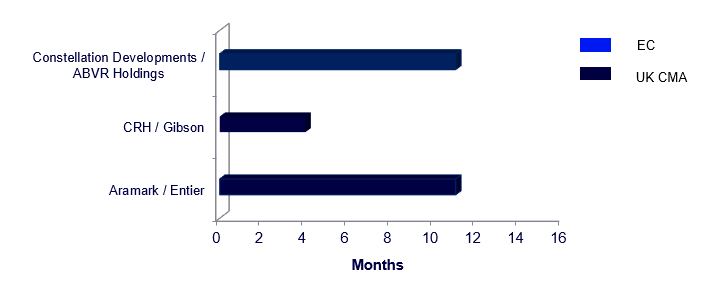
    The CMA opened a Phase 2 investigation on October 13, 2025, after concluding that the completed acquisition constituted a relevant merger situation requiring an in-depth investigation. In its interim report published on January 22, 2026, the inquiry group provisionally cleared the merger, finding no substantial lessening of competition in the supply of B2B used vehicle auction services across Great Britain. The CMA concluded that, despite the combination of two sizeable players, evidence did not show a materially adverse impact on competitive dynamics, vendor choice, or buyer outcomes. Following consultation and review of stakeholder submissions, the CMA issued its final report on March 5, 2026, formally clearing the merger without remedies and confirming that the acquisition is not expected to harm competition.

    Overall, the CMA’s final findings underscore that existing competitive pressures, alternative auction channels, and customer switching options were sufficient to prevent the merged entity from exercising market power, despite notable concerns raised by rival auction groups and certain commercial vendors during the review.

    Authors

    Phoebe Flint

    Associate

    Washington, DC

    Jon B. Dubrow

    Partner

    Washington, DC

    Joel R. Grosberg

    Partner

    Washington, DC

    Stéphane Dionnet

    Partner

    Brussels

    Graham J. Hyman

    Associate

    New York – One Vanderbilt Avenue

    Max Küttner

    Associate

    Düsseldorf

    More insights

  • EU and UK merger control in transition: Innovation, sustainability, and cross-border coordination

    EU and UK merger control in transition: Innovation, sustainability, and cross-border coordination

    ARTICLE

    EU and UK merger control in transition: Innovation, sustainability, and cross-border coordination

    April 2026

    Read time: 6 min

    Key takeaways
    Overview

    The European Union (EU) is recalibrating its merger-control regime to respond to structural economic shifts driven by digitalization, decarbonization, and intensifying global competition. Policymakers are increasingly seeking to balance traditional competition principles with broader industrial, sustainability, and strategic autonomy objectives. Several initiatives illustrate this transition: First, the Commission is preparing updated merger guidelines that place greater emphasis on innovation, dynamic market analysis, and efficiency considerations aimed at strengthening European competitiveness. At the same time, proposed legislation, such as the Industrial Accelerator Act, introduces an additional review mechanism for foreign investments in strategic sectors, signaling a stronger industrial policy dimension. Finally, merger assessments are progressively incorporating public interest considerations, particularly environmental and social sustainability.

    The United Kingdom (UK) is reshaping its merger-control framework as part of a broader strategy to strengthen economic competitiveness and improve regulatory predictability. Guided by the government’s 2025 “strategic steer,” reforms aim to modernize the institutional structure and operational approach of the Competition and Markets Authority (CMA) while ensuring that enforcement remains proportionate and business friendly. Key proposals include changes to decision-making structures, new operational priorities designed to accelerate reviews, and clearer jurisdictional rules to reduce uncertainty for merging parties. The new EU-UK Competition Cooperation Agreement introduces a formal information-sharing framework that enhances coordination between the CMA and European competition authorities.

    In depth

    EUROPEAN UNION

    Modernizing EU merger control: Updates to the European Commission’s merger guidelines

    • The Commission is committed to modernizing the EU merger guidelines to address the transformational challenges of digitalization, globalization, and decarbonization. A formal draft is expected by spring 2026, including the following key substantive shifts:
      • Innovation shield: A protective framework for startups and innovators, focusing on long-term competitive dynamics rather than short-term price effects.
      • Broadened policy criteria: Formal integration of sustainability, labor markets, and national security, alongside supply chain resilience in strategic sectors such as aerospace.
      • Efficiency flexibility: A proposed lowering of the evidentiary bar for efficiency claims, allowing mergers that significantly enhance regional industrial competitiveness.
      • Dynamic analysis: Extending assessment timeframes beyond the typical three-year window to capture delayed benefits in disruptive technology sectors.
      • Legal presumptions: Introducing rebuttable presumptions to distinguish harmful transactions from those creating necessary scale for “European Champions.”

    Expanding the toolkit: The potential introduction of the IAA

    • The new Industrial Accelerator Act (IAA), proposed on March 4, 2026, and aiming to strengthen EU industrial capacity, reduce strategic dependencies, and accelerate clean and low-carbon technologies, introduces a parallel review process for mergers and acquisitions involving foreign investors in strategic sectors. This system operates alongside existing EU competition law, including the EU Merger Regulation, without replacing it. Key developments include:
      • Mandatory and suspensory regime: Transactions exceeding EUR 100 million in sectors such as batteries or critical raw materials require prior notification to designated national investment authorities.
      • Lowered control thresholds: Notification is triggered at 30% ownership or voting rights, widening the concept of control beyond the traditional “decisive influence.”
      • Value-added substantive test: Approval depends on meeting specific criteria, such as establishing joint ventures or ensuring at least 50% of the workforce is located within the EU.
      • Strict enforcement: Implementing transactions before approval (gun-jumping) faces administrative fines of at least 5% of the investor’s average daily turnover (5% of what the company earns on average for a single day based on annual revenue). This indicates a major shift toward strategic autonomy.

    Bringing in public interest grounds

    • EU merger control is undergoing a polycentric shift, moving beyond traditional price-centric analysis to integrate environmental and social sustainability. The Commission increasingly treats sustainability as a core differentiator in market definition and competitive assessments. However, this creates a potential “green catch-22”: identifying narrower, more sustainable markets increases the likelihood of the Commission challenging mergers between innovative “green” firms.
    • To mitigate this, policy developments emphasize a holistic rethink of the efficiency defense. This includes explicitly considering out-of-market benefits and extending assessment timeframes to capture long-term environmental gains currently excluded by the traditional three-to-five-year window. Furthermore, there is a growing trend toward using investment-centric remedies to legally guarantee that claimed sustainability efficiencies actually materialize. These changes aim to align merger enforcement with broader EU objectives such as the European Green Deal and strategic resilience.

    UNITED KINGDOM

    Reforming UK merger control: The CMA’s revised approach to merger assessment

    • UK merger control is currently undergoing a significant transformation driven by the government’s 2025 “strategic steer” to enhance international competitiveness and long-term economic growth.
      • Restructuring decision-making: A major legislative proposal involves abolishing independent Phase 2 panels and replacing them with CMA board committees to improve democratic accountability. However, some experts caution that this structural shift could consolidate executive authority and risk future political influence in individual merger assessments.
      • The “4Ps” operational strategy: The CMA is embedding pace, predictability, proportionality, and process across all operations to attract investment and foster business confidence. This involves deprioritizing multijurisdictional deals without specific UK impact and establishing ambitious targets for completing straightforward Phase 1 investigations.
      • Narrowing jurisdictional scope: Reforms aim to limit CMA discretion by establishing specific criteria for jurisdictional tests like “share of supply.”
      • Remedy evolution: Enforcement trends indicate greater flexibility for behavioral commitments and extended statutory timeframes for finalizing Phase 1 remedies.

    Strengthening cross-border enforcement: The EU’s information-sharing framework with the CMA

    • The EU-UK Competition Cooperation Agreement, signed on February 25, 2026, represents a major shift toward structured cross-border competition enforcement. As a supplement to the Trade and Cooperation Agreement, it replaces informal dialogue with a formal legal framework intended to improve predictability and legal certainty. A central innovation is the introduction of a new information-sharing mechanism allowing the UK CMA and European authorities to exchange confidential data. Where domestic law permits, information may be shared without the provider’s consent.
    • The agreement also promotes cooperation between the CMA and national competition authorities across EU Member States through mutual notification and coordinated investigations, reducing the likelihood of conflicting rulings. Parallel domestic reforms reinforce this goal by extending the CMA’s Phase 1 merger remedy period to 20 working days and clarifying jurisdictional tests through closed statutory lists.

    EU and UK Q1 2026 M&A activity: By the numbers

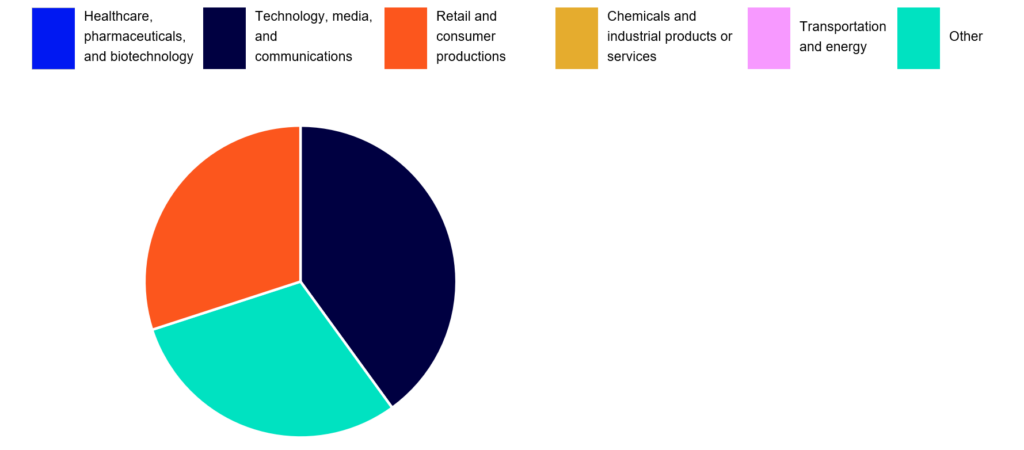
    Number of enforcement actions in key industries1

    Snapshot of selected enforcement actions2

    Time from signing to clearance

    Authors

    Phoebe Flint

    Associate

    Washington, DC

    Jon B. Dubrow

    Partner

    Washington, DC

    Joel R. Grosberg

    Partner

    Washington, DC

    Stéphane Dionnet

    Partner

    Brussels

    Graham J. Hyman

    Associate

    New York – One Vanderbilt Avenue

    Max Küttner

    Associate

    Düsseldorf

    More insights

  • Merger enforcement under Trump 2.0: Challenges, crystallization, and criticism

    Merger enforcement under Trump 2.0: Challenges, crystallization, and criticism

    ARTICLE

    Merger enforcement under Trump 2.0: Challenges, crystallization, and criticism

    April 2026

    Read time: 5 min

    Key takeaways
    Overview

    The Trump 2.0 antitrust agencies have changed how merger cases are being challenged and resolved. But the agencies’ tactics are not without criticism. States and lawmakers are scrutinizing recent Department of Justice (DOJ) decisions in several high-profile matters in which there are allegations of potential political interference, and conflicting views within the DOJ itself have resulted in the departures of several high-level officials. States and private parties are stepping in to fill perceived federal enforcement gaps. Meanwhile, a Fifth Circuit ruling has forced the regulators to revert to accepting the legacy Hart-Scott-Rodino (HSR) form while the Federal Trade Commission (FTC) appeals the decision.

    In depth

    FTC accepts old HSR form as Fifth Circuit hears challenge to new form

    • Under the Biden administration, the FTC issued a final rule that adopted a new premerger notification form under the HSR Act. The 2025 HSR form expanded the categories of information that filers must furnish with their premerger notification, increasing the time and expense involved in preparing the filing.
    • However, a legal challenge pending in the Fifth Circuit will decide the new HSR form’s fate. On February 12, 2026, a federal district court in Texas vacated and set aside the new HSR form as unlawful under the Administrative Procedure Act. The FTC appealed the decision to the Fifth Circuit, which on March 19, 2026, rejected the FTC’s bid to pause the lower court’s ruling pending the appeal. For now, federal regulators must accept the legacy, less burdensome form.
    • Affirming their stance that the old HSR form is “insufficient to review modern mergers and acquisitions,” the FTC and DOJ are soliciting public comment on the effectiveness of the 2025 HSR form, suggesting that another round of HSR rulemaking might be on the horizon. The agencies’ requests signal an interest in using rulemaking to address “novel” transactions like “acquihires” that “may be structured to avoid” HSR reporting, as well as challenges posed by “late-proposed remedies” and “litigate the fix” strategies.

    Trump 2.0 tactics for merger enforcement are taking shape

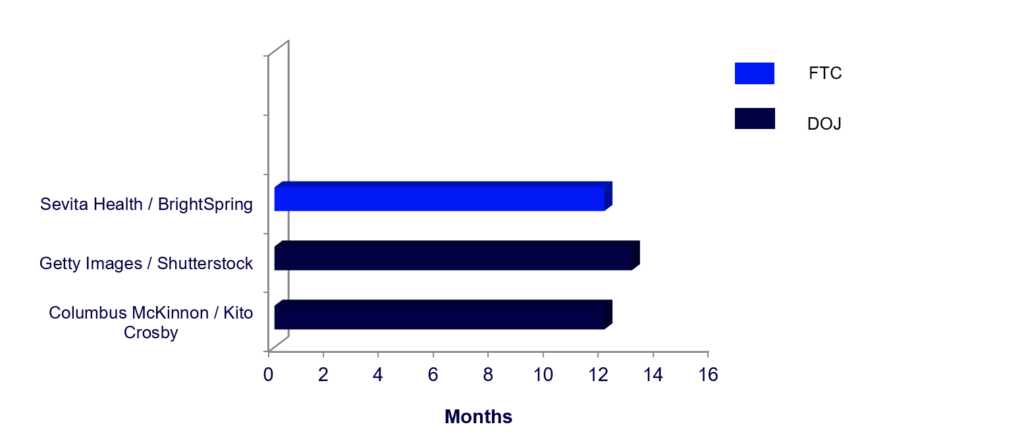
    • FTC Chairman Ferguson emphasized that the FTC is open to negotiating settlements, which is a departure from policy under the Biden administration. The DOJ and FTC recently approved several transactions with settlements, including Sevita/BrightSpring, Columbus McKinnon/Kito Crosby, and Reddy Ice/Arctice Glacier. Ferguson expressed a distaste for “fake settlements ” that require extensive monitoring and noted a preference for “real settlements that fully protect competition” (which include divestitures of complete “lines of businesses,” with strong, upfront buyers). He also noted that behavioral remedies are disfavored and should be informed by the unique risks presented in different industries. Citing research suggesting that divestitures are “difficult” in retail and grocery contexts, Ferguson indicated that he will “require more” from parties in these sectors to show that their divestiture proposal preserves competition.
    • For future FTC merger challenges, the FTC will attempt to litigate under the same standards as the DOJ. FTC Chairman Ferguson stated that his preference is to have the FTC challenge mergers by seeking a permanent injunction in federal court instead of the traditional FTC practice of seeking a preliminary injunction in federal court and then litigating on the merits in the FTC’s in-house administrative process. The FTC implemented this approach in its ongoing Loctite/Liquid Nails merger challenge.
    • If Ferguson’s plan is put into practice, (1) the FTC will now have to meet the higher permanent injunction standard, (2) merging parties can expect lengthier timelines to trial on the merits, and (3) the commissioners can now engage in settlement negotiations during litigation because they are not in an adjudicative role.

    States stepping up as DOJ shrinks and settles

    • Twelve states and the District of Columbia continue to challenge a DOJ settlement approving Hewlett Packard Enterprise’s acquisition of Juniper Networks. The states’ intervention was prompted by reports from an ousted, formerly senior DOJ official that the settlement was a product of improper influence by lobbyists.
    • Allegations of political interference have emerged again this quarter, related to the DOJ’s decision to clear, without a second request, the $1.6 billion merger of Compass and Anywhere, two of the largest real estate brokerages in the United States. The Wall Street Journal reported that Compass appealed to DOJ officials above Gail Slater, the former assistant attorney general of the Antitrust Division, who wanted to investigate the deal in-depth. Lawmakers have also raised concerns about Slater’s forced resignation in February 2026, given allegations that DOJ leadership overrode Antitrust Division officials in matters like HPE/Juniper and Compass/Anywhere.
    • Parties should be aware that allegations of political influence may prompt intervention by state enforcers and private parties. For example, after Nexstar Media Group, Inc.’s, $6.2 billion acquisition of TEGNA Inc. received Federal Communications Commission (FCC) and DOJ approval – with a public endorsement from President Trump – a coalition of eight states filed a lawsuit to block the deal. Separately, DirecTV succeeded in obtaining an order to temporarily pause further integration efforts between the parties.

    US Q1 2026 M&A activity: By the numbers

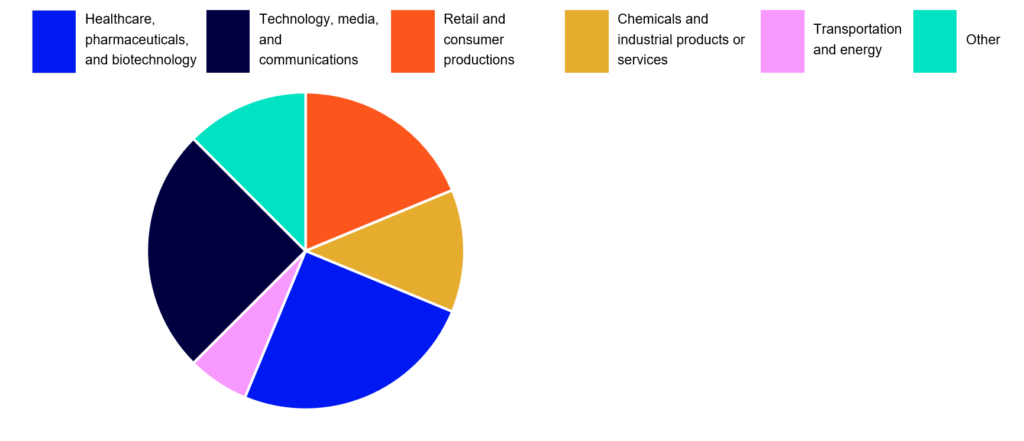
    Number of enforcement actions in key industries1

    Snapshot of selected enforcement actions2

    Time from signing to consent or investigation closing

    Authors

    Phoebe Flint

    Associate

    Washington, DC

    Jon B. Dubrow

    Partner

    Washington, DC

    Joel R. Grosberg

    Partner

    Washington, DC

    Stéphane Dionnet

    Partner

    Brussels

    Graham J. Hyman

    Associate

    New York – One Vanderbilt Avenue

    Max Küttner

    Associate

    Düsseldorf

    More insights

  • Effort to invalidate original Utah App Store Act voluntarily dismissed following legislative amendments

    Effort to invalidate original Utah App Store Act voluntarily dismissed following legislative amendments

    ARTICLE / CLIENT ALERT

    Effort to invalidate original Utah App Store Act voluntarily dismissed following legislative amendments

    April 29, 2026

    Read time: 6 min

    Key takeaways
    Overview

    On April 21, 2026, the Computer & Communications Industry Association (CCIA) agreed to a stipulated dismissal of its constitutional challenge to Utah’s App Store Accountability Act (Utah ASAA) following the amendments to the ASAA in Utah H.B. 498. Those amendments effectively delay the substantive requirements of ASAA to May 6, 2027.

    Future constitutional challenges to the Utah ASAA are possible, but because enforcement now relies on a private right of action, companies may need to wait until a case is filed for the law to be challenged. In the meantime, companies should assume the amendments will take effect and prepare accordingly.

    In depth

    Expanded scope

    H.B. 498 expands the scope of the Utah ASAA to include pre-installed applications – applications already present on a device at the time of purchase or setup – excluding apps required for basic device operation. The original Utah law focused primarily on applications downloaded through an app store; however, the amended law ensures age verification and parental consent requirements apply regardless of how an application reaches the user.

    Updated definitions: §13-76-101

    The amendments to the Utah ASAA refine key terms (e.g., “significant change,” “account holder,” “minor,” “in-app purchase,” “parent”), clarifying how these terms apply in practice:

    • “Account holder” expands the statute to define an individual associated with a mobile device, replacing the broader “user” concept; this requires covered entities to apply compliance obligations at the account/device level, increasing operational complexity and coverage.
    • “In-app purchase” includes charges billed by an app store for virtual currency, digital goods, services, or other apps within an app; this brings monetization features squarely within scope and requires covered entities to extend consent and disclosure obligations to in-app transactions.
    • “Minor” narrows the definition to exclude emancipated or married individuals under 18 years of age; this reduces the population subject to protections and requires covered entities to refine age-classification processes to determine when obligations apply.
    • “Parent” expands to include individuals reasonably believed to have legal authority and others authorized to act on behalf of a minor; this provides flexibility in obtaining consent but requires app-store providers and developers to implement reasonable verification processes to support that determination.
    • “Parent account” aligns eligibility with the revised “minor” definition by requiring the account holder to be “not a minor” instead of explicitly 18 years old or older; this requires covered entities to adjust age-verification logic and account eligibility criteria.
    • “Parental consent disclosure” refocuses required disclosures on obtaining “verifiable parental consent” and removes express references to in-app purchases; this requires app-store providers and developers to design clear, disclosure-driven consent flows tied to verification requirements.
    • “Pre-installed application” expands the Utah ASAA to cover apps present on a device at purchase or activation, subject to certain exclusions; this broadens applicability and requires covered entities – including manufacturers and distributors – to evaluate compliance for preloaded software.
    • “Significant change” narrows the trigger to material updates involving data practices, age ratings, or first-time introduction of ads or in-app purchases; this allows covered entities to target compliance reviews on high-risk updates while reducing burdens for routine changes.

    Adjustments to age-verification and default settings

    The amendments to the Utah ASAA establish a dual-layer compliance framework: app-store providers are responsible for building and enforcing infrastructure-level controls, while developers must ensure substantive accuracy and transparency in their apps and updates.

    App-store providers: § 13-76-201

    The amendments impose more structured and explicit obligations on app-store providers. Most notably, the amendments tie compliance to the “account holder,” requiring providers to apply age-verification and consent mechanisms at the individual account or device level.

    The Utah ASAA also reinforces the requirement to link the accounts of minors to the accounts of parents, effectively mandating a parent–child account structure for covered users. The revised “significant change” standard introduces ongoing compliance duties, requiring providers to reassess notice and consent obligations when apps introduce new data practices, advertising, or monetization features.

    Developers: § 13-76-202

    Importantly, the Utah ASAA extends compliance expectations to app functionality itself, requiring developers to account for in-app purchases, advertising, and data-collection practices in disclosures as well as design. Updates that constitute a “significant change” may trigger renewed disclosure and consent requirements, making compliance an ongoing consideration throughout the product lifecycle.

    Changes to enforcement and introduction of safe-harbor concepts 

    Private right of action: § 13-76-401

    While the original ASAA had a dual enforcement mechanism – allowing private rights of action and regulatory enforcement – the amended ASAA only has a private right of action. The ASAA provides for monetary damages, including the greater of actual damages or statutory damages of up to $1,000 per violation. This per-violation framework could create substantial liability, particularly where practices affect large numbers of users. Companies should ensure that compliance measures are consistently implemented and well documented in anticipation of defending putative class claims under the ASAA.

    Safe harbor (developers only): § 13-76-402

    The amendments establish a safe harbor that applies specifically to developers (not app-store providers). Under this provision, a developer may be shielded from liability for certain violations if it reasonably relied on the app-store provider’s compliance systems, particularly with respect to age-category determinations and obtaining verifiable parental consent.

    To qualify for the safe harbor, a developer must:

    • Rely in good faith on the app-store provider to determine the user’s age category and obtain verifiable parental consent.
    • Not have actual knowledge that the app-store provider’s processes are noncompliant or that the information provided is inaccurate.
    • Operate consistently with the information provided by the app store (e.g., honoring age-category data and not circumventing restrictions or consent requirements).

    Importantly, the safe harbor does not protect developers who independently violate the Utah ASAA, such as by misrepresenting content, failing to provide accurate disclosures, or designing features that bypass or undermine app-store controls.

    Practical implications for clients

    The amendments introduced by H.B. 498, coupled with the dismissal of the CCIA challenge, reflect an evolving regulatory environment for digital marketplaces. Clients should consider several key action items:

    • Assess coverage: Determine whether your platform or services fall within the revised definition of covered entities.
    • Update compliance frameworks: Align internal policies and procedures with the clarified requirements under the amended Utah ASAA.
    • Enhance documentation: Maintain thorough records of compliance efforts, particularly in areas such as developer verification and user-protection measures.
    • Monitor enforcement: Stay informed about how regulators are interpreting and applying the amended law.
    • Prepare for continued evolution: Recognize that age assurance remains a dynamic area, with potential for further legislative and judicial developments.

    If you have questions about the Utah ASAA or other age assurance requirements and the implications for your products and services, please contact any of the authors or your regular McDermott Will & Schulte lawyer.

    Authors

    Tyler Henry

    Associate

    New York – One Vanderbilt Avenue

    Katelyn N. Ringrose

    Associate

    Washington, DC

    David P. Saunders

    Partner

    Chicago

    More insights