





COVERAGE
Heightened fiduciary liability? We’ve seen this play out before
April 21, 2026
Read time: 2 min
About Us
You may also like




COVERAGE
April 21, 2026
Read time: 2 min
COVERAGE
April 20, 2026
Read time: 2 min



COVERAGE
April 20, 2026
Read time: 2 min

Partner
COVERAGE
April 20, 2026
Read time: 2 min




PRESS RELEASE
April 20, 2026
Read time: 4 min
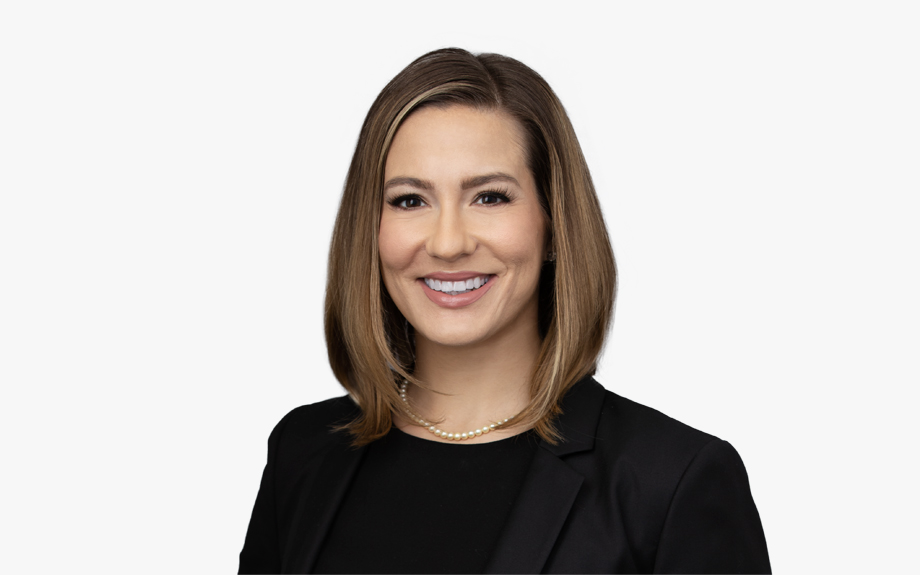
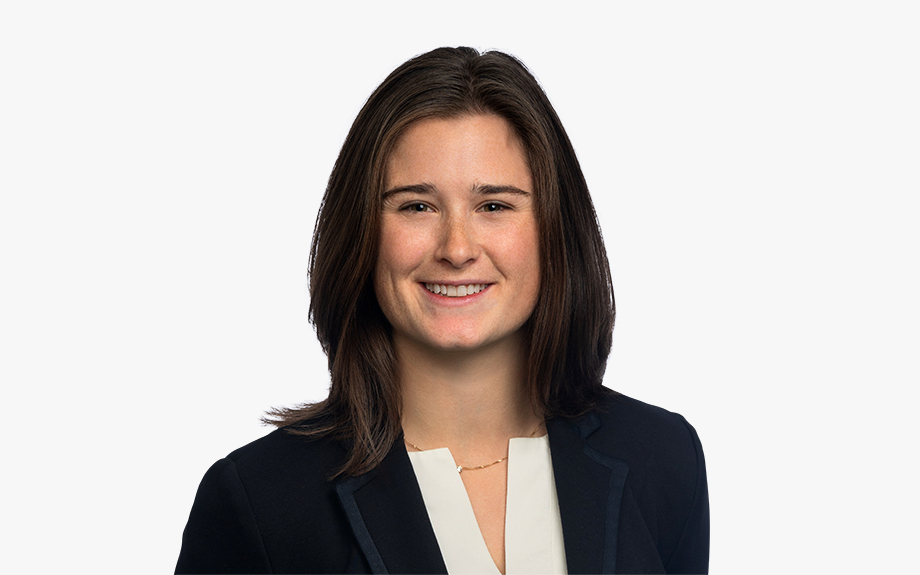
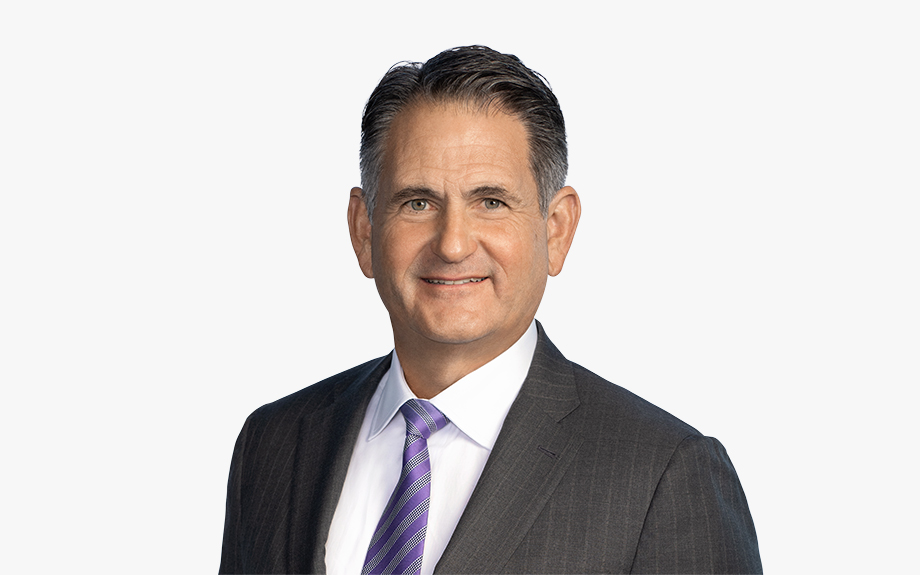
Global law firm McDermott Will & Schulte further solidified its market‑leading presence in health and life sciences with the arrival of partners Kyle Faget and Monica Chmielewski.
“Kyle and Monica strengthen our elite capabilities in digital health, pharmacy, and regulatory, while expanding our depth in the complex life sciences sub-sectors of pharmaceuticals and biotech. We’re thrilled to welcome them to the firm,” said Kristian Werling, global head of McDermott’s Health & Life Sciences Practice Group.
Kyle focuses on clinical research, digital health, software as a medical device, and AI applications in healthcare, areas that are increasingly shaping how innovation is developed, regulated, and deployed.
She advises life sciences companies, virtual care providers, and academic medical centers on FDA and broader regulatory and compliance matters, helping clients navigate rapidly evolving oversight frameworks while advancing novel technologies to market.
“I am excited to join the McDermott team and work to provide clients with an expanded platform of services to address their increasingly sophisticated healthcare needs,” said Kyle.
Monica brings more than 25 years of experience guiding life sciences, biotech, and healthcare entities across clinical research, grant and grant administration, AI, FDA, and pharmaceutical and medical device regulatory matters.
She counsels clients on supply chain management, compliance, and contracting, helping organizations manage risk, maintain operational resilience, and support long‑term growth in a highly regulated global market.
“I am truly looking forward to joining McDermott’s Health & Life Sciences group,” said Monica. “The firm has a great reputation for providing high quality client services, and I look forward to collaborating with new colleagues to bring that work to life for our clients.”
Both Kyle and Monica bring valuable in-house perspectives, having served as regulatory and compliance counsel for pharmaceutical and medical device companies, as well as health systems.
Kyle joins McDermott’s Boston office, while Monica joins the Miami and Chicago offices.
McDermott Will & Schulte’s internationally recognized health and life sciences practice addresses the critical legal and business needs of leading industry players. The global team leverages deep market intelligence and decades of experience representing clients across all subsectors, including health systems and other providers, payors, private equity and other investors, major healthcare and life sciences companies, health technology developers, and new market entrants. It is the only healthcare practice to receive top rankings from Best Law Firms, Chambers, Legal 500, and Law360, while also ranking among the leading life sciences law firms.
Leading organizations turn to global law firm McDermott Will & Schulte for a better way to address legal challenges, connect with those at the forefront, and drive stronger outcomes. Working across more than 20 offices globally, our 1,750+ lawyers act on data-driven insights, deep relationships, and unmatched industry experience to deliver on our commitment of Always Better.

COVERAGE
April 16, 2026
Read time: 2 min



COVERAGE
April 16, 2026
Read time: 2 min
Partner
COVERAGE
April 16, 2026
Read time: 2 min
Partner

CLIENT ALERT
April 16, 2026
Read time: 5 min
In a decision issued at the end of last year (OVG Niedersachsen, 12 December 2025 – 12 MS 43/24), the Higher Administrative Court of Lower Saxony (OVG Niedersachsen) commented on the requirements for decommissioning bonds (Rückbausicherheiten) to be provided for onshore wind turbines, as well as on the requirements for evidence of structural stability in permitting procedures for onshore wind turbines (Standsicherheitsnachweis). Both aspects are relevant in project development and, in also in a transaction context. We have therefore summarised below the court’s key statements.
Background: An environmental association brought legal proceedings against an emission control permit (permit under the Federal Emission Control Act, or Bundes-Immissionsschutzgesetz (BImSchG Permit)) for three onshore wind turbines. In addition to the amount of the decommissioning bond ordered in the BImSchG Permit, the association criticised, among other things, the requirements imposed with respect to the structural stability of the wind turbines. The court upheld the association’s claims on both points.
The court held that the decommissioning obligation of the wind farm operator to be secured pursuant to section 35(5) sentence 3 of the German Federal Building Code (Baugesetzbuch (BauGB)) covers the wind turbine’s installations locatedbothabove ground and underground. This includes, where relevant also deep pile foundations (Pfahlgründungen). Accordingly, the decommissioningcosts likely required for that purpose must be included when calculating the amount of the security to be provided before the start of installation works.
This standard obligation does not apply only by way of exception if, in the individual case, removal of the piles after the end of operations would be disproportionate. However, according to the court, requirementsare high for such a finding. In the case at hand, the wind turbines were to be constructed in or near a water protection area (Wasserschutzgebiet). Against this background, the court decided that the potentially high efforts involved in proper removal are not sufficient to assume that removal would be disproportionate. Rather, the court stated that it must also be considered how permanently leaving the piles in place and their slow decomposition over the next 100 years would affect the soil or the groundwater.
To put the decision in a practical context: In the past, it was not always clear whether the statutory decommissioning obligation also covers the removal of pile foundations. For project developers, the decision of the court therefore means that going forward they will generally need to assume significantly higher decommissioning costs in case of pile foundations. Investors in projects should scrutinise the decommissioning costs assumed, as the amount of decommissioning security to be provided – and thus the costs of such security – may also increase accordingly.
By virtue of its concentrating effect (Konzentrationswirkung) under section 13 BImSchG, the BImSchG Permit generally also covers the review of a facility’s structural stability under state building law. As the procedure for the BImSchG Permit does not provide for a comprehensive delegation of tasks (e.g., to engineers), the Higher Administrative Court held that the permitting authority may not simply transfer the review of structural stability for statically/structurally complex construction measures to an engineer acting as a delegated public agent (Beliehener) and then adopt that review results in its decision without carrying out its own further review. Accordingly, while the permitting authority may rely on the results submitted by experts, it must also conduct a review of the expert reports, according to the court.
Furthermore, the Higher Administrative Court confirmed that structural stability must also be reviewed and established as part of the permitting decision. While in principle the BImSchG Permit may be issued subject to a condition (Bedingung), the permitting authority is generally obliged to verify the existence of all permitting prerequisites and to confirm them before granting the permit.
Accordingly, the permitting authority may not initially refrain from reviewing structural stability and shift the review that is actually required to a point in time after the BImSchG Permit has been granted (e.g., by way of an ancillary provision (Auflage) that the evidence of structural stability be submitted subsequently prior to the start of construction or commissioning). Under the Ninth Ordinance on the Implementation of the Federal Emission Control Act (9. Verordnung zur Durchffchrung des Bundes-Immissionsschutzgesetzes), this is permissible only by way of exception for documents whose details are not directly relevant to assessing the permissibility of any given facility. An order imposing a suspensive condition (aufschiebende Bedingung) regarding evidence of structural stability is therefore only possible if, at the time the permit is granted, at least a reliable prognosis that the missing prerequisite will be fulfilled within a foreseeable period is possible.
From a practical perspective, the decision once again underlines the importance of the permitting authority itself providing evidence of structural stability. Particularly in complex site conditions, such as pile foundations, the evidence of structural stability will generally need to be available already at the time the permit is granted. Project developers should take this aspect into account in the permitting process in order to obtain a legally reliable permit – and to address, at an early stage, risks arising from potential challenges to the BImSchG Permit and corresponding reservations by investors in the context of a transaction.




DEAL ANNOUNCEMENT / PRESS RELEASE
April 15, 2026
Read time: 4 min
International law firm McDermott Will & Schulte represented Mill Point Capital LLC (Mill Point), a private equity firm focused on control investments in lower-middle market companies, and portfolio company AeriTek Global Holdings LLC (AeriTek), a trailblazer in the commercial refrigeration and foodservice equipment markets, in the acquisition of the foodservice refrigeration and HVAC assets of National Refrigeration & Air Conditioning Products, Inc., operating under the Continental Refrigerator (Continental) and National Comfort Products (NCP) brands. Continental and NCP are trusted providers of high-quality, configurable, build-to-order solutions for more than 850 customers across the US.
The transaction strengthens AeriTek’s US foodservice equipment footprint, positioning it as a leading commercial refrigeration manufacturer and marking its third North American acquisition in under eight months.
McDermott recently represented Mill Point and AeriTek in its acquisition of Federal Industries.
The McDermott team was led by Ben Kozinn and Lauren Troeller with invaluable support from Meredith Schwartz, Mitch DaSilva, Molly Moore, Theodore Keyes, Graham Hyman, Elai Katz, Lance Kodish, Adam Mazin, Haley Dow, Maxwell Preston, Moshe Mashitz, Grace Kirtland, Raymond Paretzky, Kelly Holloway, Hayley Yandoli, Wendy Phinny, Caitlin Drott, Katie Cross, Brian Casillas, Phoebe Hebson, Todd Solomon, Joseph Reich, and Sarah Bro.
Read Mill Point’s press release here.
About McDermott Will & Schulte’s Private Equity Group
With more than 150 private equity-focused lawyers working across offices globally, McDermott Will & Schulte’s Private Equity Group is poised to help you stay ahead of the curve on all types of PE transactions, including fund formation, mergers and acquisitions, minority and majority investments, and leveraged buyouts. At every stage, we manage and assess risks and opportunities while looking for the most efficient way to get the deal done. Our team of leading private equity practitioners offers deep industry experience in the healthcare, life sciences, food and beverage, energy, real estate, insurance, and technology sectors – along with the cross-border and cross-practice capabilities critical to facilitating business success.
Leading organizations turn to global law firm McDermott Will & Schulte for a better way to address legal challenges, connect with those at the forefront, and drive stronger outcomes. Working across more than 20 offices globally, our 1,750+ lawyers act on data-driven insights, deep relationships, and unmatched industry experience to deliver on our commitment of Always Better.