
ARTICLE / CLIENT ALERT
Mark Your Calendars for Schrems III: Key Takeaways from the Latest Developments in the EU-U.S. Data Deal
October 10, 2022
Read time: 6 min
In a string of executive actions unveiled on October 7, 2022, the U.S. government took steps to implement the EU-U.S. Data Privacy Framework (DPF), the third attempt to secure trans-Atlantic data flows after the European Court of Justice’s (ECJ) rejection of prior attempts in the Schrems I and Schrems II decisions. In an effort to address the ECJ’s concerns over U.S. surveillance law, U.S. President Joe Biden signed an executive order (EO) and U.S. Attorney General Merrick Garland executed new DOJ regulations reforming how U.S. intelligence agencies collect and use personal data. Following these actions, U.S. Secretary of Commerce Gina Raimondo announced the development of new commercial principles to which companies will need to self-certify to participate in the DPF.
Despite all of this, like its predecessor, the DPF is likely to face a legal challenge by privacy advocates, and its long-term prospects are uncertain. Still, the importance of EU-U.S. data transfers cannot be overstated in today’s global economy. Many companies will find it worthwhile to certify to the DPF to streamline their own operations and to assure customers, partners and regulators that they are taking all available measures to protect cross-border data flows.
WHAT ARE THE NEW SURVEILLANCE REFORMS?
The new EO is designed to address the ECJ’s concerns over the breadth of U.S. surveillance authorities. The EO imposes new limits on the collection and use of personal data by U.S. intelligence agencies. All such intelligence programs must:
- Be conducted “in pursuit of” one of twelve new “legitimate objectives,” including, for example, protecting against terrorism, foreign military, transnational criminal and cybersecurity threats, and related national security objectives;
- Take civil liberties into account, as well as any available “less intrusive” means, in pursuing the documented objective(s);
- Not be for “the purpose” of one of four “prohibited objectives,” including suppressing privacy or freedom of expression;
- Adhere to additional, narrower security objectives in the case of “bulk collection”; and
- Be subject to additional new data minimization, sharing and retention limits.
Second, the EO creates a new “redress” mechanism by authorizing and directing the Attorney General to establish a Data Protection Review Court (DPRC). An Article II body, the DPRC will be empowered to issue decisions on alleged violations of U.S. law. The DPRC will review complaints through a complex process requiring the designation of “qualifying” foreign governments that can transmit complaints on behalf of complainants. The DPRC’s decisions will be binding on U.S. intelligence agencies, which will be required to implement “appropriate remediation.”
THRICE IN A LIFETIME: WILL THE DPF SURVIVE SCHREMS III?
The new EO represents a clear step forward from the Privacy Shield Framework. The surveillance purpose limitations directly address the ECJ’s concerns around necessity and proportionality in Schrems II, and the redress mechanism is designed to allow independent oversight and correct the asserted deficiencies the ECJ found with the Privacy Shield Framework’s Ombudsperson.
However, critics of the DPF will likely argue that these reforms do not go far enough. But this time the devil is even more in the details than previously. Indeed, Mr. Schrems has already expressed his view that the DPF is insufficient. His statements raise the specter of a likely Schrems III case challenging the DPF after the framework enters into force in the European Union. Privacy professionals should prepare for yet another extended court battle over the scope and proportionality of U.S. surveillance to play out over the coming years because the following remains true even after the recent changes by the U.S. government:
- The new surveillance purpose limitations still retain broad “legitimate objectives,” potentially creating inconsistency with EU standards of “necessity and proportionality,” which require frequent reassessments of the level of existing threats.
- Surveillance programs under FISA 702 will continue to be conducted without individualized judicial approval (which likely will be an issue in subsequent ECJ reviews) and will not qualify as “bulk collection” under the EO.
- The DPRC’s requirement to grant “appropriate deference to any relevant determinations made by national security officials” may limit the scope of its review over purpose determinations made by intelligence officials.
- Complainants to the DPRC will not be informed of the disposition of their cases or what “redress” was performed and may have little incentive to bring complaints, which may conflict with the ECJ’s prior rulings requiring that data subjects’ rights be enforceable.
WHAT DOES IT ALL MEAN FOR COMPANIES?
Despite the DPF’s uncertain future, companies should take note of these developments. The DPF has immediate practical value for companies transferring data to the United States pursuant to “transfer impact assessments,” which evaluate the risks of specific data transfers under local law. Many of the provisions of the EO can be used to support these assessments on the grounds that intervening changes to U.S. law change the Schrems II analysis.
Finally, once the DPF enters into full force, many companies will find value in signing on to the new DPF even as court challenges proceed. The framework will provide an extra layer of protection for data transfers at a time when these activities pose complex legal challenges for many businesses. So, while questions remain as to whether these most recent actions by the United States will suffice, it is unquestionable that at least for some period of time, they will help companies address the current challenges of EU-U.S. personal data transfers.



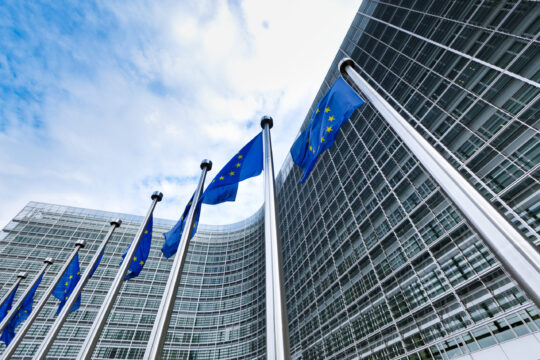
Eighth EU Sanctions Package: Closing the Loop on More Goods, Services and Russian Oil
ARTICLE / CLIENT ALERT
Eighth EU Sanctions Package: Closing the Loop on More Goods, Services and Russian Oil
October 7, 2022
Read time: 10 min
In response to Russia’s further aggression against Ukraine and its illegal annexation of the Donetsk, Kherson, Luhansk and Zaporizhzhia regions (the Occupied Regions), the European Union (EU) has adopted a new sanctions package against Russia, which has now been published in the Official Journal of the EU.
Following a press release published on 30 September 2022, it is expected that the United Kingdom will follow suit and adopt similar restrictions in the near future.
Further Financial and Economic Restrictions on Russia
Regulation (EU) 833/2014 (Regulation 833) has been amended to expand the existing financial and economic restrictions, imposing wide-ranging economic restrictions aimed at cutting off Russian access to the most important capital markets and the Russian defence, energy and aviation sectors. Specifically, the new measures include:
FURTHER EXTENSION OF RESTRICTIONS ON SERVICES
- The EU has expanded on the prohibitions it imposed in June 2022 on the provision of certain professional services to the Russian government or Russia-incorporated entities. Under the newly amended Article 5n of Regulation 833, it is now prohibited for those within the scope of EU sanctions laws to directly or indirectly provide architectural and engineering services, legal advisory services and IT consultancy services to those entities. Such services are defined in the preamble of the amending regulation (Regulation (EU) 2022/1904), rather than in Regulation 833 itself. Specifically:
- ‘Architectural and engineering services’ covers both architectural and engineering services as well as integrated engineering services, urban planning and landscape architectural services, and engineering-related scientific and technical consulting services. The provision of technical assistance related to goods exported to Russia remains allowed, provided that the sale, supply, transfer or export of such goods is not prohibited under Regulation 833 at the time at which such technical assistance is provided.
- ‘IT consultancy services’ covers consultancy services related to the installation of computer hardware, including assistance services to the clients in the installation of computer hardware (i.e., physical equipment) and computer networks, and software implementation services, including all services involving consultancy services on, development of and implementation of software.
- ‘Legal advisory services’ cover the provision of legal advice to customers in non-contentious matters, including commercial transactions, involving the application or interpretation of law; participation with or on behalf of clients in commercial transactions, negotiations and other dealings with third parties; and preparation, execution and verification of legal documents. The scope of such services does not cover representation, advice, preparation of documents or verification of documents in the context of legal representation services, namely in matters or proceedings before administrative agencies, courts or other duly constituted official tribunals, or in arbitral or mediation proceedings.
EXCEPTIONS AND LICENSES
There are various exceptions and licensing grounds applicable to the new services restrictions. The prohibitions shall not apply to in-scope services, which are:
- Intended for the exclusive use of legal persons, entities or bodies established in Russia that are owned by, or solely or jointly controlled by, an entity incorporated in a Member State, a country member of the European Economic Area, Switzerland or a ‘partner country’. The list of ‘partner countries’ currently includes the United Kingdom, Japan, South Korea and the United States;
- Strictly necessary for the termination by 8 January 2023 of contracts that are not compliant with EU restrictions concluded before 7 October 2022, or of ancillary contracts necessary for the execution of such contracts;
- Necessary for a range of public health-related emergencies;
- Necessary for software updates for non-military use and non-military end user in relation to goods listed in Annex VII of Regulation 833;
- Services strictly necessary for the exercise of the right of defence in a judicial proceeding and the right to an effective legal remedy; and
- Services that are strictly necessary to ensure access to judicial, administrative or arbitral proceedings in a Member State, or for the recognition or enforcement of a judgment or an arbitration award rendered in a Member State.
There are also a number of grounds for which Member States can authorise the provision of in-scope services where they are deemed appropriate and necessary for (a) humanitarian purposes; (b) civil society activities that promote democracy and human rights and the rule of law in Russia; (c) the functioning of diplomatic and consular representations; (d) ensuring critical energy supply within the EU; (e) ensuring continuous operation of, and/or the establishment of various critical infrastructures in the EU relating to, among other things, security, nuclear energy, environmental stability and public health; and (f) the provision of electronic communication services necessary for the operation and security of electronic communications in Russia, Ukraine and the EU.
Legal advisors within the jurisdictional scope of EU sanctions laws (such as those located within the EU, or who are nationals of an EU Member State) must carefully consider whether and on what basis they can continue to work for Russian legal entities. Although there is a wind-down period for in-scope legal services provided pursuant to engagements concluded before 7 October 2022 until 8 January 2023, lawyers should bear in mind whether the services they provide during this period are “strictly necessary” for the engagement’s termination.
RESTRICTIONS ON IMPORT AND EXPORT
New import and export restrictions have also been introduced to Regulation 833, which include:
- A ban on Imports of further iron and steel products which either originate in, or have been exported from, Russia (Article 3g and Annex XVII);
- New import restrictions on listed items originating in, or exported from, Russia that generate significant revenues for Russia. This includes wood pulp and paper, certain elements used in the jewelry industry, certain machinery and chemical items, cigarettes, plastics and finished chemical products such as cosmetics (Article 3i and Annex XXI);
- An export ban on further items which could contribute to the enhancement of Russian industrial capacities (Article 3k and Annex XXIII);
- Additional restrictions on the sale, supply, transfer or export of goods used in the aviation sector to Russia (Article 3c and Annex XI);
- The extension of the list of items subject to an export ban that might contribute to Russia’s military and technological enhancement or to the development of its defence and security sector (Article 2a and Annex VII); and
- The prohibition on the sale, supply, transfer or export of firearms, their parts and essential components and ammunition, and the prohibition to provide technical assistance, brokering services, other services, and financing or financial assistance related to these goods (Article 2aa, with the relevant goods being listed in Annex I to Regulation (EU) 258/2012).
Many prohibitions also prohibit the provision of technical assistance, brokering services or financing or financial assistance in relation to restricted imports and exports of restricted goods.
BANS ON TRANSACTING WITH CERTAIN RUSSIAN STATE-OWNED ENTITIES
The prohibition on engaging in any transaction with certain Russian State-owned or controlled entities (Article 5aa of Regulation 833) has been expanded to include a ban on EU nationals holding any posts on the governing bodies of listed entities.
The Russian Maritime Register of Shipping has been added to the Annex XIX list of entities subject to the transaction ban. Further, the Article 3ea ban on certain vessels being granted access to EU ports and locks has been expanded to include vessels certified by the Russian Maritime Register of Shipping (Article 3ea).
OIL-RELATED MEASURES
Further prohibitions have been introduced on the maritime transport of crude oil and certain petroleum products to third countries (Article 3n of Regulation 833). For example, it will be prohibited to transport to third countries certain Russian crude oil products as of 5 December 2022, and certain petroleum products as of 5 February 2023 (as listed in Annex XXV). This prohibition will not apply where the price per barrel does not exceed the price cap laid down in Annex XXVIII of Regulation 833 (which is yet to be published).
BAN ON THE PROVISION OF CRYPTO ASSET-RELATED SERVICES
The provision of crypto-asset wallet, account or custody services to Russian persons and residents—irrespective of the assets’ value—has been banned. Previously, such services were allowed in respect of assets worth up to €10,000. (Article 5b of Regulation 833).
TARGETED SANCTIONS ON RUSSIAN ENTITIES AND INDIVIDUALS
The EU has expanded the scope of financial sanctions (asset freezes) by amending Regulation (EU) 269/2014 (Regulation 269). This includes the following measures:
- The imposition of asset freezes to 30 new persons and seven new entities. Altogether, the EU’s restrictive measures now apply to 1,262 individuals and 118 entities. The EU complemented this by mandating that individuals and entities that ‘facilitate’ prohibited activities—including facilitating other individuals/entities in circumventing prohibitions—are potentially liable to be listed as a sanctioned individual or entity.
- The introduction of a requirement for Member States to inform within two weeks other Member States and the European Commission whenever they authorise payments to the Crimean Sea Ports for services provided at the ports of (i) Kerch Fishery Port, (ii) Yalta Commercial Port and (iii) Evpatoria Commercial Port, and for services provided by Gosgidrografiya and by Port-Terminal branches of the Crimean Sea Ports pursuant to Article 6a.
- Two new licensing grounds have been enacted which allow competent authorities of a Member State to authorise the release of certain frozen funds or economic resources where:
- Necessary for the completion of transactions, including sales, with PJSC Kamaz (entry 91 in the asset freeze entity list), which are strictly necessary for the wind-down, by 31 December 2022, of a joint venture or similar legal arrangement concluded before 16 March 2022 involving an entity listed in Annex XIX to Regulation 833; and
- A competent authority deems it appropriate and necessary for the termination, by 7 January 2023, of operations, contracts or other agreements concluded with the National Settlement Depository (entry 101 in the asset freeze entity list) before 3 June 2022.
CONCLUSION
The latest raft of EU sanctions has expanded the scope of prohibitions significantly and could have a substantial impact on those still providing in-scope goods and services to the Russian government or Russian legal persons. The expanded services prohibitions, as well as the additional ground for designating those that facilitate the circumvention of EU sanctions laws, show that the EU’s focus is not just those who transact with Russian entities but also those who advise on and facilitate such transactions. Even those with an ancillary role in a transaction having a nexus with Russia should consider whether the transaction falls within the scope of EU sanctions and whether they can continue to act.
The above being said, it will be a welcome development for many businesses with international operations that exclusions to several prohibitions have been expanded, to enable certain in-scope goods and services to be provided to Russian entities where they are owned by corporates incorporated in the United Kingdom, United States, Japan or South Korea.
It seems likely that the EU’s sanctions against Russia are only going to expand in scope, so the position should be monitored regularly for developments. To the extent that you have any questions as to the scope and application of EU sanctions, please do not hesitate to contact Raminta Dereskeviciute.





EUMR: What’s New in Relation to Art. 22?
ARTICLE
EUMR: What’s New in Relation to Art. 22?
October 2022
Read time: 2 min
Hendrik Viaene and Hannelore Wiame authored this chapter on the Art.22 referral mechanism.
To read the full chapter, please click here.




The Legal 500: Merger Control Country Comparative Guide
ARTICLE
The Legal 500: Merger Control Country Comparative Guide
October 2022
Read time: 2 min
Hendrik Viaene and Hannelore Wiame authored this chapter on merger control in Belgium.
To read the full chapter, please click here.

Washington Supreme Court: Tax Refund Actions Must Be Filed in County Where Taxes Were Paid
ARTICLE / CLIENT ALERT
Washington Supreme Court: Tax Refund Actions Must Be Filed in County Where Taxes Were Paid
October 6, 2022
Read time: 3 min
The Washington Supreme Court recently held that property tax refund actions must be filed in the superior court of the county where the tax was collected. Hardel Mut. Plywood Corp. v. Lewis Cnty., 515 P.3d 973 (Wash. 2022). At issue in the case were two venue statutes that were in tension with each other. The more specific statute stated that property tax refund cases “shall be brought in the superior court of the county wherein the tax was collected.” Whereas the more general statute stated that all actions against any county “may be commenced in the superior court of such county, or in the superior court of either of the two nearest judicial districts.”
The taxpayer and amici argued that the statutes were not in conflict and simply needed to be harmonized in a way that allowed taxpayers the flexibility to file in the venue of their choice as provided by the two statutes. The Washington Supreme Court, however, held that these two statutes were not complementary to each other, and that when confronted with two equally applicable venue statutes, courts should give effect to the more specific statute unless there is some indication that the legislature intended for the general statute to govern.
Here, the Washington Supreme Court found that the more specific statute concerned both the type of case (a tax refund action) and the type of defendant (a county). Thus, the Court applied the general rule that a mandatory and specific venue statute governs, and property tax cases must be brought in the superior court of the county in which the tax at issue was paid.




Healthcare Regulatory Check-Up | September 2022
ARTICLE / REPORT
Healthcare Regulatory Check-Up | September 2022
October 2022
Read time: 2 min
This issue of McDermott’s Healthcare Regulatory Check-Up highlights significant regulatory activity between August 21 and September 20, 2022, including a guilty plea from a telemedicine physician who wrote prescriptions for thousands of patients without personally evaluating medical necessity, in exchange for per-visit fees. A federal jury similarly convicted a physician for fraudulently billing TRICARE for diagnostic tests that were not provided or were medically unnecessary, and in some cases inducing TRICARE beneficiaries to provide testing specimen in exchange for gift cards. During this period, the Office of Inspector General (OIG) issued two advisory opinions that, addressed an arrangement between a health system and a federally qualified health center (FQHC) look-alike, and an arrangement between a Medigap plan and a preferred hospital organization (PHO).
We also review several other notable developments, including OIG’s intent to audit a sampling of hospitals’ compliance with the hospital price transparency rule, an OIG report recommending targeted reviews of telehealth services, and a federal court decision denying the US Department of Justice’s (DOJ’s) attempt to block a proposed UnitedHealth transaction on antitrust grounds.







And the Band Played On: Reviewing Rule 54(b) Partial Summary Judgment Based on Who Did What to Whom and When
ARTICLE
And the Band Played On: Reviewing Rule 54(b) Partial Summary Judgment Based on Who Did What to Whom and When
Oct 6, 2022
Read time: 8 min
In a case where the cast of characters on both sides of the v. evolved during the lead-up to the litigation as the litigants negotiated third-party deals and formed new entities, the US Court of Appeals for the First Circuit (characterizing the matter as the “entrepreneurial equivalent of musical chairs”) affirmed a dismissal of a trade secret claim against a foreign defendant but not against the related US entity, and found that the case qualified under Rule 54(b) for the “narrow exception” to the finality rule. Amyndas Pharmaceutical, SA v. Zealand Pharma A/S, Case No. 21-1781 (1st Cir. Sept. 2, 2022) (Barron, Selya, Kayatta, JJ.)
Amyndas is a Greek company with a US affiliate. It is a biotechnology firm that researches and develops therapeutics targeting a part of the immune system known as the complement system. One area of Amyndas’s research deals with “complement inhibitors.”
Amyndas’s research yielded compstatin, a peptide that selectively inhibits the C3 protein (which plays a role in activating the complement system). Amyndas also developed a related peptide (AMY-101) that targets that protein. Amyndas owns trade secrets and confidential information related to this work.
Zealand Pharma, a Danish biotechnology firm, contacted Amyndas about a potential partnership for the development of complement-related therapeutics. The firms entered into a confidential disclosure agreement (CDA) regarding information-sharing “for the purposes of evaluating a possible business/services relationship between the parties and their respective Affiliates.” Amyndas started giving Zealand Pharma access to confidential information (including confidential information about AMY-101). The firms also entered into a second CDA—with added protections—for “the evaluation or formation of a possible business and/or services and/or collaborative relationship.”
Both CDAs included an identical “Governing Law” provision stipulating that the CDAs would “be interpreted and governed by the laws of the country (applicable state) in which the defendant resides” and a forum-selection clause stipulating that “any dispute arising out of th[e CDA] shall be settled in the first instance by the venue of the defendant.”
Zealand Pharma also began its own research program focused on complement therapeutics. It did not inform Amyndas of this initiative. Although negotiations continued, the firms ultimately decided not to collaborate. Amyndas later terminated its information-sharing relationship with Zealand Pharma.
Zealand Pharma later formed Zealand US, a Delaware corporation. Without Amyndas’s knowledge or consent, Zealand Pharma also filed two European patent applications for compstatin analogues and later an international patent application designating the United States and claiming priority to the earlier EU applications.
After the international applications were published, Amyndas learned that they described “compstatin analogues that are capable of binding to C3 protein and inhibiting complement activation,” which had been the focus of Amyndas’s research and a subject of Amyndas’s confidential information-sharing with Zealand Pharma.
The other defendant, Alexion, is an established player in the complement therapeutics field and a proprietor of Soliris, a complement inhibitor that targets a protein in the complement system. Soliris is approved by the US Food and Drug Administration (FDA) and previously was the only FDA-approved and clinically available complement-specific therapeutic on the market. Alexion’s patent on Soliris was set to shortly expire, and Alexion was facing commercial pressure to bring new complement-based drugs to market. Alexion expressed interest in forming a partnership with Amyndas. The two companies signed a CDA limiting the use of exchanged confidential information to the “exploration of one or more potential business arrangements and/or potential arrangements of research, development, and commercialization of drug candidates relating to Amyndas’ complement inhibitors.” Alexion requested and received certain confidential information about Amyndas’s complement therapeutic research, including details about Amyndas’s intellectual property, planned clinical trials, platform and collaboration network.
Unbeknownst to Amyndas (while it was in discussions with Zealand), Alexion and Zealand Pharma had been discussing the above collaboration during the same timeframe and issued a joint press release announcing a joint venture to develop complement therapeutics.
Amyndas sued Zealand Pharma, Zealand US and Alexion in the US District Court for the District of Massachusetts, alleging that the Zealand defendants breached the CDAs, misappropriated trade secrets and other confidential information, and conspired with Alexion to use those misappropriated materials in producing competing complement therapeutic products. The complaint against Alexion similarly alleged trade secret misappropriation, tortious interference with contractual relations, unfair competition, breach of contract and unjust enrichment. The complaint then tied all the defendants together by asserting conspiracy claims.
Alexion answered the complaint, but the Zealand defendants moved to dismiss. The district court dismissed Amyndas’s claims against both Zealand defendants. As to Zealand Pharma, the court ruled that the forum-selection clause in the CDAs required that all claims against that defendant be brought in Denmark. As to Zealand US (which had not itself executed a CDA with Amyndas), the district court ruled that the complaint failed to state a claim upon which relief could be granted. The court noted that the complaint largely referred to “Zealand” as a single entity and did not make clear whether and how Zealand US was involved, but because Zealand US was not formed until after the CDA came into force, the “claims stated against ‘Zealand’ as a combined entity [we]re not sufficient to put Defendants on notice as to which claims pertain to Zealand [US].”
Amyndas moved for reconsideration or, in the alternative, leave to amend the complaint. In its proposed amended complaint, Amyndas carefully distinguished between the two Zealand entities and pleaded its claims against them as discrete counts. Furthermore, the proposed amended complaint alleged additional facts supporting the claim that Zealand US was involved in the continuing exploitation of Amyndas’s trade secrets, including allegations that Zealand US bore ongoing responsibility for the Alexion partnership and was participating in efforts to obtain regulatory approval for therapeutics derived from Amyndas’s trade secrets. The proposed amended complaint also alleged that Zealand US was a corporate alter ego of Zealand Pharma and that the two were operated as a single business.
The district court denied Amyndas’s motion, refusing reconsideration and denying Amyndas’s request to file an amended complaint. The court indicated that the proposed amended complaint would be futile but undertook no analysis of any specific allegations against Zealand US. Instead, it simply noted that the “proposed additional factual allegations” did not “plausibly allege a basis to conclude either that the Court should disregard the Zealand defendants’ separate legal identities, or that Amyndas has stated claims directly against Zealand US.”
Amyndas appealed. At the same time, Amyndas moved the district court for entry of a partial final judgment under Fed. R. Civ. P. 54(b). Zealand Pharma and Zealand US opposed, but the court entered a partial final judgment. The district court determined that this case fit within the narrow confines of Rule 54(b) and entered a partial final judgment dismissing Amyndas’s claims against Zealand Pharma and Zealand US but retaining jurisdiction over Amyndas’s claims against Alexion and staying further proceedings pending the disposition of this appeal.
Under 28 U.S.C. § 1291, an appellate court’s jurisdiction over an appeal is ordinarily limited to “final decisions” of the district court. This finality principle typically requires a final disposition of all claims in an action that have been brought by or against all of the parties. However, Rule 54(b) carves out an exception whereby a district court can issue a partial final judgment that is immediately appealable as to particular claims or parties when those claims or parties can be sufficiently separated from other claims or parties in the case.
The First Circuit affirmed the entry of the partial final judgment and dismissal of Zealand Pharma. Amyndas argued that the term “venue of the defendant” in the CDA denoted multiple locations as applied to Zealand Pharma—including locations where Zealand Pharma and its affiliates have a presence (such as both Denmark and Massachusetts). As against the Danish entity, the Court rejected the argument, noting that applying the federal venue statute to the definition “would inevitably lead to the conclusion that Zealand Pharma potentially could be sued in virtually any jurisdiction. But such a conclusion would undercut the certainty that forum-selection clauses are meant to confer and would render the clause largely superfluous.” With regard to Amyndas’s argument tying the US and Danish entities for venue purposes, the Court noted that at the time the CDA was signed, there was only one Zealand entity, in Demark, and that was the venue agreed to in the event Zealand was named as a defendant.
The First Circuit also rejected Amyndas’ argument that it should not be forced to litigate in Denmark based on convenience as well as unfavorable trade secret law and restrictive litigation rules: “When the CDAs were first negotiated and signed, Zealand Pharma was based in Denmark and Zealand US did not exist. It would have been obvious to Amyndas at that time that if it wound up suing Zealand Pharma, it would be obliged to do so in Denmark, using whatever trade secret protections and discovery procedures were available under Danish law. Put bluntly, the content and contours of Danish trade secret law and the potential limitations on discovery were clearly foreseeable to Amyndas from the start.”
Finally, the First Circuit reversed the district court’s denial of Amyndas’ motion to amend the complaint, noting that such leave should be liberally granted under Rule 15(a) and that the proposed amended complaint incorporated new information not available to Amyndas when it drafted its original complaint and found that the allegations plausibly supported a cause of action against the US entity.





Mind Who You Are Talking To: The UK Takeover Code & Limits on Shareholder Conversations
ARTICLE / CLIENT ALERT
Mind Who You Are Talking To: The UK Takeover Code & Limits on Shareholder Conversations
October 6, 2022
Read time: 5 min
The UK Takeover Code (the “Code”) places some limits on shareholder conversations and can in some instances (and earlier than you might expect) require an announcement of a possible offer. This is not new, but the Panel on Takeovers and Mergers (the “Panel”) has issued guidance that is pertinent to activists and other investors who may have engaged in early stage discussions with UK issuers[1] which have touched upon a possible offer being made.
Two issues are relevant here:
When might an announcement be made, and when might an activist be required to make it?
First, the Code does not generally require an announcement prior to the point at which a “firm intention” to make an offer is received by the UK issuer. However, if the UK issuer becomes subject to “rumour or speculation”, or if there is “an untoward movement in its share price”, the Code does require an announcement to be made[2]. That usually applies only following some form of approach from a potential offeror, but it need not be if there are reasonable grounds to link the rumour, speculation or price movement to the actions of the potential offeror.
An “approach” here is interpreted broadly, and may be at a very preliminary stage in the offeror’s preparations. Further, the manner of the approach may be informal and no more than broadly indicative[3]. So a discussion as regards capital solutions which touches upon a take-private solution may sometimes be enough to qualify as an “approach”.
If there has been an approach, the responsibility for making any announcement lies with the UK issuer. Otherwise (and if there are reasonable grounds to link the rumour, speculation or price movement to the actions of the potential offeror) the responsibility lies with the potential offeror[4].
Once an obligation to make an announcement arises, the Panel expects it to be done immediately, i.e. within a matter of minutes[5], and whilst the Panel does show lenience to non-UK parties in some circumstances (such as in connection with Rule 8 filings), its expectations here are clear.
Holding meetings with other investors
When an announcement has been made, meetings (which for this purpose includes telephone calls and electronic meetings such as those held via Zoom, Teams or similar services) between an activist or its advisers on the one hand and any other shareholder in the UK issuer or any of such other shareholders’ investment advisers, investment managers or analysts on the other must have a chaperone[6] in attendance, and no material new information or significant new opinion may be provided[7]. The chaperone must report to the Panel, in writing, by 12 noon the following business day to such effect.
Even where no announcement has been made, meetings which either relate to the possible offer, or which would not be taking place but for the possible offer, must still comply with the requirements set out above.
These rules all stem from the principle of ensuring equality of information to offeree company shareholders during the course of an offer. Accordingly, activists seeking to gauge support for, say, a variety of capital solutions which may include a take private scenario or some other potential offer should exercise extreme caution when doing so and should consider carefully whether a chaperone ought to be present at relevant meetings.
Authored by Jim McNally.
If you have any questions concerning this Alert, please contact your attorney at Schulte Roth & Zabel or the author.
[1] The Code can also apply to Channel Islands and Isle of Man companies, as well as other companies if they have their registered office and place of central management and control in the UK, the Channel Islands or the Isle of Man. If you have any doubt on whether the Code applies to a given issuer, please contact us.
[2] The Takeover Code, Rule 2.2.
[3] Practice Statement 20, paragraph 3.2.
[4] If the UK issuer rejects an approach, the announcement obligation can revert to the activist. Coordination on announcements here is encouraged by the Panel: Practice Statement 20, paragraph 3.4.
[6] An appropriate financial adviser or corporate broker to the UK issuer or to the activist.
[7] The Takeover Code, Rule 20.2. See also Panel Bulletin 1.
This communication is issued by Schulte Roth & Zabel International LLP for informational purposes only and does not constitute legal advice or establish an attorney-client relationship. In some jurisdictions, this publication may be considered attorney advertising. ©2022 Schulte Roth & Zabel International LLP.
All rights reserved. SCHULTE ROTH & ZABEL is the registered trademark of Schulte Roth & Zabel LLP.


OIG Medicare Telehealth Data Brief Demonstrates Continued Focus on Data Analytics in Program Integrity Efforts
ARTICLE / CLIENT ALERT
OIG Medicare Telehealth Data Brief Demonstrates Continued Focus on Data Analytics in Program Integrity Efforts
October 5, 2022
Read time: 7 min
On September 2, 2022, the US Department of Health and Human Services (HHS) Office of the Inspector General (OIG) released a data brief analyzing telehealth services covered by Medicare and related program integrity risks. OIG sought to evaluate the impact that the regulatory flexibilities implemented during COVID-19, and corresponding hikes in utilization rates for telehealth services by Medicare beneficiaries, had on program integrity. OIG found that of the 742,000 providers evaluated, 1,714 had “concerning billing” on at least one of the seven measures that OIG considers to be potential indicators of fraud, waste and abuse. The data brief is OIG’s latest effort to use data analytics to identify program integrity concerns and includes specific proposals to improve data quality to aid in program integrity efforts.
Seven OIG Program Integrity Measures
OIG identified seven measures that it views as posing high risk for fraud, waste and abuse. These measures were developed in collaboration with OIG investigators. Such integrity measures are related to, but different from, the seven measures OIG identified in a special fraud alert released in July 2022 with respect to provider arrangements with telehealth companies. The seven measures identified in the data brief are as follows:
- Billing for both a telehealth service and a facility fee for most visits (672 providers identified)
- Always billing telehealth services at the highest, most expensive level (365 providers identified)
- Billing telehealth services for more than 300 days of the year (328 providers identified)
- Billing both Medicare fee-for-service and a Medicare Advantage plan for the same service for a high proportion of services (138 providers identified)
- Billing more than two hours of telehealth services per visit (86 providers identified)
- Billing telehealth services for at least 2,000 beneficiaries in a year (76 providers identified)
- Billing for a telehealth service and ordering medical equipment for at least half of beneficiaries (67 providers identified).
OIG’s data analysis found that 1,696 of the providers with concerning billing practices were identified as having one of the seven measures present in their billing practices, while 18 had two measures present. OIG noted that the presence of any of the measures in a provider’s billing may indicate that the provider is billing for services that are not medically necessary or were never actually provided to the patient. OIG also expressed quality of care concerns for such providers. Of the providers identified as having billing practices that may present high risk of fraud, waste and abuse, more than half (991) were part of a medical practice where at least one other provider was likewise identified as high risk. OIG noted that this may indicate that certain practices encourage problematic billing practices among their providers. Of the providers that had concerning billing practices, OIG specifically identified 41 as being associated with telehealth companies.
OIG Program Integrity Recommendations
Based on its findings, OIG recommended five steps that the Centers for Medicare & Medicaid Services (CMS) should take to guard against fraud, waste and abuse in the Medicare program related to telehealth services. OIG recommended that CMS take the following actions:
- Strengthen monitoring and targeted oversight of telehealth services
- Provide additional education to providers on appropriate billing for telehealth services
- Improve the transparency of “incident to” services when clinical staff primarily delivered the telehealth service
- Identify companies that bill Medicare
- Follow up on the providers identified in the OIG data brief.
In its response to the draft data brief, CMS explicitly concurred with the OIG’s recommendation to follow up with providers specifically identified in the data brief, but did not commit to implementing the remaining recommendations. Two of these recommendations include specific action items to change or modify claims or enrollment materials to better identify telehealth service providers.
Concerns Raised Regarding “Incident-to” Billing
While OIG noted certain challenges in analyzing the data available to it from an oversight perspective, OIG called particular attention to the challenge that incident-to billing presents for such enforcement efforts. According to OIG, incident-to billing presents a challenge because it allows services provided by clinical staff that are directly supervised by a different physician to be billed under the supervising physician’s identification number. Therefore, it is more difficult for OIG to determine who performed services billed on an incident-to basis. OIG further cited previous work that uncovered other concerns with incident-to billing, namely that certain incident-to services were being provided in-person by providers that did not possess the proper licenses, certification, credentials or training necessary to provide such services.
To remedy this challenge, OIG recommended that CMS create and require the use of a modifier to indicate incident-to telehealth services performed by clinical staff under the supervision of the billing physician. OIG also recommended that CMS create a pathway to report the identification numbers of the clinical staff that perform the incident-to services. OIG recommended that CMS work with the designated standards development organization and National Uniform Claim Committee to implement this change on the claims form.
In its response to OIG dated July 29, 2022, CMS acknowledged that increasing the transparency of incident-to services may aid in program integrity efforts but noted that the ability to change the required form lies outside of CMS’s power. CMS noted that the claims form is the responsibility of the designated standards maintenance organization and changing the form could be a “significant undertaking and require extensive system changes that impact the entire health system.” CMS also questioned whether a new modifier would be sufficient to address OIG’s concerns without a simultaneous change to the claims form that would identify the individual that primarily delivered the telehealth service.
Identification of Telehealth Companies
OIG also expressed a desire to identify telehealth companies that are providing services. OIG noted that currently there is no systemic way to identify telehealth companies in Medicare data. OIG recommended that CMS update the Medicare enrollment application, including the CMS-855B, to identify telehealth companies that enroll in the Medicare program. OIG alternatively suggested that a new taxonomy code be created for telehealth companies in collaboration with the National Uniform Claim Committee.
CMS’s response to this suggestion stated that the risk specifically associated with telehealth companies is “unclear.” CMS stated that it would review the providers identified by the data brief as potentially posing a high risk against telehealth providers already identified by CMS. CMS would then determine whether additional information is necessary to identify telehealth companies, and would evaluate the feasibility of updating the Medicare provider application or taxonomy codes at that point.
Key Takeaways
- The data brief is the latest OIG effort demonstrating OIG’s use of data analytics to determine which providers are billing outside of OIG-expected standards, and could be translated into further enforcement action.
- Providers should continue to ensure that telehealth services are properly billed in accordance with applicable billing policies.
- As the COVID-19 public health emergency continues to evolve, providers should be aware of flexibilities that may be modified or cease to exist, and should update their billing practices accordingly.
- OIG, CMS and other agencies may explore ways to improve the data already available to them, which may further enhance enforcement agencies’ ability to target and refine program integrity efforts.



Jarrett Leaves Unanswered Questions on Taxation of Staking Rewards
ARTICLE / CLIENT ALERT
Jarrett Leaves Unanswered Questions on Taxation of Staking Rewards
October 4, 2022
Read time: 4 min
In the latest turn of events for the closely followed Jarrett case concerning the taxation of staking rewards, on September 30, 2022, the US District Court for the Middle District of Tennessee granted the United States’ motion to dismiss. The question before the district court was whether the receipt of staking rewards generates taxable income at the date the rewards are received.
JARRETT V. UNITED STATES
In Jarrett v. United States, No. 3:21-cv-00419 (M.D. Tenn.), Joshua Jarrett engaged in staking activities where he posted Tezos tokens to contribute to the creation of new blocks of the Tezos public blockchain and, in turn, received new Tezos tokens. Despite not selling or exchanging any of the newly created Tezos tokens during the year of receipt, Jarrett reported such tokens as “other income” and then filed an amended return requesting a refund on the claim that staking income is not taxable.
Jarrett filed a complaint in Tennessee district court seeking a refund because he did not receive a timely response from the Internal Revenue Service (IRS). He argued that the newly created Tezos tokens were only taxable at the time of sale, not at the time of receipt, and asserted that the foundational basis of US tax law is that newly created property (such as creating a cake or a book) is not an accession to wealth that is “clearly realized.” Under US federal income tax principles, an accession to wealth is a requirement that is necessary for an item to be included as income.
Thereafter, the US Department of Justice Tax Division informed Jarrett that a full refund had been approved and issued a refund check that included interest. In response, Jarrett refused to accept the refund because it did not provide any assurance with respect to whether tokens created through staking activities constitute taxable income at the time of creation. On the basis that Jarrett’s claim is moot because the United States has fully refunded the federal income taxes and statutory interest demanded in the complaint, the district court granted the United States’ motion to dismiss.
THE NEED FOR IMMEDIATE GUIDANCE
With the recent upgrade of Ethereum to proof of stake and the exponential growth of digital assets involving staking rewards, taxpayers engaging in staking activities were hopeful that the Jarrett case would provide much-needed clarity on how staking rewards should be taxed. Presently, stakers are taking a wide range of positions with respect to the tax character and tax timing of staking rewards. For example, some stakers take the position that the receipt of staking rewards results in taxable income from the performance of services, while others assert that staking rewards are not taxable until they sell, exchange or otherwise dispose of the rewards.
With Jarrett’s dismissal, taxpayers continue to operate in uncharted tax waters. While recent legislative proposals have tried to bridge the gap between taxation and digital assets, including the Responsible Financial Innovation Act introduced in June 2022, which permitted cryptocurrency stakers to defer taxes with respect to such activities (including the receipt of staking rewards) until those assets were disposed of, such legislative proposals have not yet gained any traction in the US Congress. Meanwhile, the IRS continues to remain silent on the issue with the only analogous guidance (involving mining activities) implying that staking awards should be taxed as ordinary income upon receipt. As a result, taxpayers should continue to proceed with caution.
For a detailed discussion of staking and US federal income tax considerations, please see “Taxation of Virtual Currency Staking Activities.”
If you have questions about the tax implications of staking activities, please do not hesitate to contact the authors of this article or your regular McDermott contact(s).