Newsroom Categories: Coverage

  • Rising Tide in Climate Risk Regulation Presents New Challenges for Insurers

    COVERAGE

    Rising Tide in Climate Risk Regulation Presents New Challenges for Insurers

    April 17, 2023

    Read time: 2 min

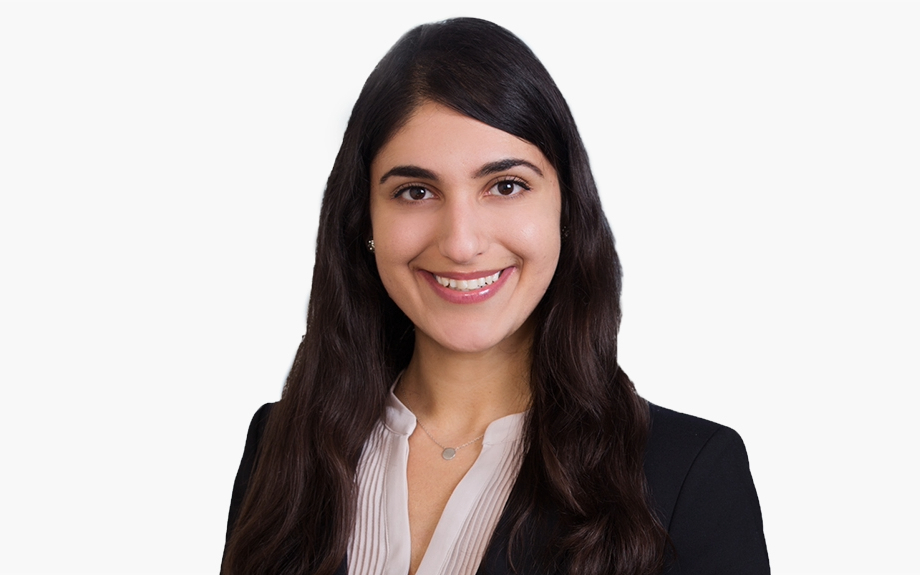
    Thomas Dawson is quoted in Best’s Review commenting on climate regulation impacting businesses.

    About Us

    Thomas M. Dawson

    Partner

    New York – One Vanderbilt Avenue

    You may also like

  • Tech Enabled Corp Practice Department of the Year, Law Firm: McDermott Will & Emery

    COVERAGE

    Tech Enabled Corp Practice Department of the Year, Law Firm: McDermott Will & Emery

    Aril 17, 2023

    Read time: 2 min

    Hunter Jackson speaks with Legaltech News about McDermott’s advancements in technology.

    About Us
    You may also like

  • ABC Supply’s Acquisition of Five Specialty Distribution Businesses from US LBM Holdings

    ABC Supply’s Acquisition of Five Specialty Distribution Businesses from US LBM Holdings

    COVERAGE

    ABC Supply’s Acquisition of Five Specialty Distribution Businesses from US LBM Holdings

    April 14, 2023

    Read time: 2 min

    The deal team was led by Stephanie McCann, Eric Gilbert and Ann Marie Brodarick and included Adam Byrne, Anna Sikorski, Greg Heltzer, Jason Krieser, Noah Feldman Greene, Graham Hyman, Alex Ruiz, Ty Carson, Amy Pimentel, Jacob Hollinger, Heidi Steele, Andrew Granek, Jed Gordon, George Houhanisin, Nicole Briody, Caitlin Harrington, Daniel Mayor and Robin Riley.

    About Us

    Stephanie S. McCann

    Partner

    Chicago

    Eric Gilbert

    Partner

    Miami

    Ann Marie Brodarick

    Partner

    Chicago

    Anna Sikorski

    Associate

    Chicago

    Gregory E. Heltzer

    Partner

    Washington, DC

    Jason D. Krieser

    Partner

    Dallas

    Noah Feldman Greene

    Partner

    Washington, DC

    Graham J. Hyman

    Law Clerk

    New York – One Vanderbilt Avenue

    Alejandro Ruiz

    Partner

    San Francisco

    Timothy (Ty) Carson

    Counsel

    Washington, DC

    Amy C. Pimentel

    Partner

    Boston

    Jacob Hollinger

    Partner

    New York – One Vanderbilt Avenue

    Heidi J. Steele

    Partner

    Chicago

    Andrew M. Granek

    Partner

    New York – One Vanderbilt Avenue

    Nicole Briody

    Partner

    Chicago

    Caitlin M. Harrington

    Associate

    Chicago

    You may also like

  • UPDATE  GERMAN FUTURE FINANCING ACT

    UPDATE GERMAN FUTURE FINANCING ACT

    COVERAGE

    UPDATE GERMAN FUTURE FINANCING ACT

    April 14, 2023

    Read time: 7 min

    On April 12, 2023, the German Federal Ministry of Finance and the German Federal Ministry of Justice published a draft bill on the financing of future-proof investments (Future Financing Act – Zukunftsfinanzierungsgesetz – “ZuFinG-E”). The draft aims to strengthen the performance of the German capital market and enhance the attractiveness of Germany as a financial center in the European financial area by proposing a large number of amendments to corporate, financial market and tax law.

    In the following, we provide an initial overview of the proposals under stock corporation law and the capital market law topics of the ZuFinG-E that are relevant for stock companies.

    FURTHER INFORMATION
    I. Introduction of electronic shares
    As already set out in the coalition agreement of the government and announced in a key issues paper on the German Future Financing Act, the scope of the Electronic Securities Act (Gesetz über elektronische Wertpapiere – “eWpG“) is to be extended to include electronic shares. To date, only bearer bonds and investment fund share certificates could be issued electronically under the eWpG. As a result of the proposed amendments to the eWpG and the German Stock Corporations Act (Aktiengesetz – “AktG“), this will also be possible for shares in the future.

    Stock companies will then have the choice of issuing their shares as conventionally certified shares or as electronic shares. In this context, registered shares shall in the future be able to be issued in both forms of electronic securities under the eWpG, i.e., as central register securities and as crypto securities (Sec. 10 (6) AktG-E).

    Bearer shares, on the other hand, should only be able to be issued electronically as central register securities (Sec. 10 (1) sentence 1 no. 2 AktG-E), as the legislator fears a large number of corporate law and money laundering issues for bearer shares in the absence of a central register.

    II. Introduction of dual-class shares
    By removing the previous ban on multiple voting rights in Sec. 12 (2) AktG, dual class shares are expected to make the procurement of equity via the capital market more attractive in the future.

    In particular, start-ups and growth companies are to be made less reluctant to go public by securing influence and control over the strategic direction of the company.

    The modalities of the multiple voting rights are to be regulated by the introduction of a new Sec. 134 (2) AktG-E which, among other things, provides for the limitation of the multiple voting rights to a maximum of ten times the voting rights pursuant to Sec. 134 (1) sentence 1 AktG and for the expiry of the multiple voting rights after a maximum of ten years after the listing of the Company (“sunset clause”). However, provided there is a qualified majority of the capital, an extension of a further ten years is to be possible under the articles of association (Sec. 134 (2) sentence 5, 6 AktG-E).

    III. Facilitation of capital increases
    In addition, it is intended to make it easier to raise equity capital by simplifying capital increases under corporate law.

    For this purpose, the draft provides for an increase in the limit for the simplified exclusion of subscription rights from the previous 10 percent of the share capital to 20 percent (Sec. 186 (3) sentence 4 AktG-E).

    Furthermore, the limits on conditional capital are to be increased in the case of mergers and for subscription rights of employees and members of the management:

    • In the future, conditional capital shall be possible for mergers up to a limit of 60 percent of the capital shares instead of the previous 50 percent (Sec. 192 (3) sentence 1 AktG-E).
    • The limit for subscription rights of employees and members of management is to be increased from 10 percent to 20 percent (Sec. 192 (3) sentence 1 no. 2 AktG-E).

    Moreover, the draft proposes that disputes concerning the appropriateness of the amount of the issue price for capital measures pursuant to Sec. 255 AktG should no longer be admissible in the context of a contestation procedure in the future and should instead be decided in appraisal proceedings (Sec. 255 (2) to (6) AktG-E). This is justified by the desire of market participants to be able to register and make capital increases effective as soon as possible after the resolution has been passed.

    The draft also supplements the new provision on the issue price with a paragraph on determining the value of listed companies, whereby the value – assuming a continuous and functioning price mechanism – will in future be explicitly determined by the average stock exchange price (Sec. 255 (4) AktG-E).

    IV. Introduction of SPACs
    In order to facilitate companies’ access to the capital market, a new Segment 4a-E of the Stock Exchange Act (Börsengesetz – “BörsG“) is to introduce the Special Purpose Acquisition Company (“SPAC“) as a special legal form of stock companies in the future. The SPAC refers to a shell company without its own operative business, which is founded in order to raise capital by means of an IPO and thereby to take over a – prior to the IPO undetermined – non-listed company and thus indirectly to bring it to the stock exchange. Against this background, the draft proposes the term Börsenmantelaktiengesellschaft (Exchange Shell Stock Corporation – “BMAG“) as the future legal form designation.

    In the new Segment 4a BörsG-E, the draft bill then provides for numerous special regulations for the new legal form, which are to take precedence over stock corporation law pursuant to Sec. 44 (7) BörsG-E. These include, for example, the mandatory requirement to enable virtual Annual General Meetings by way of a provision in the articles of association (Sec. 44 (4) no. 3 BörsG-E) and the mandatory dissolution of the company if no target transaction takes place within a period specified in the articles of association (Sec. 47b (1) BörsG-E).

    V. Alignment of the Record Date
    The proposal to align the definition of the record date in Sec. 123 (4) sentence 2 AktG with the Implementing Regulation (EU) 2018/1212 is also welcome for the practice of Annual General Meetings. Although there has not been any material difference in the deadline due to the different wording, the proposed link to the “close of business on the 22nd day” (instead of the “start of the 21st day”) before the Annual General Meeting eliminates the risk of misunderstanding and complications in the information to be provided in accordance with EU regulations as part of the convening notice.

    VI. Facilitation of IPOs
    Finally, the draft provides for some easing measures in IPOs:

    • In order to strengthen the competitiveness of the capital market, the minimum amount for the expected market liquidity is to be reduced from EUR 1.25 million to EUR 1 million (Sec. 2 (1) of the German Stock Exchange Admission Regulation (Börsenzulassungsverordnung – “BörsZulV“).
    • In addition, in order to reduce admission costs for issuers, stock exchanges shall in future be able to provide in the Exchange Rules that admission to certain segments may also be applied for by the issuer alone (Sec. 32 (2a) BörsG-E).

    VII. Outlook
    The draft bill for the ZuFinG is now in the process of interdepartmental coordination and is expected to come into force as early as 2024 once the legislative process has been completed. We look forward to keeping you informed about the developments of the ZuFinG!

    About Us

    Dr. Philipp Grenzebach

    Partner

    Düsseldorf, Frankfurt

    Annabelle Juliette Rau

    Associate

    Cologne

    You may also like

  • US Fertility’s Acquisition of Ovation Fertility

    COVERAGE

    US Fertility’s Acquisition of Ovation Fertility

    April 13, 2023

    Read time: 2 min

    McDermott is featured in Global Legal Chronicle for representing Amulet Capital Partners and US Fertility.

    The McDermott deal team was led by Krist Werling, Joel Rush and Eric Preston and included William Hadler, Brian Hall, Greg Fosheim, Caroline Reignley, Mark Bilut, Kevin Hall,  Jeffrey Holdvogt, Brian Mead, Scott Weinstein, Ashley Fischer, Margaret Cremin, Adetoro Olugbemi, Delaney Prunty, Terry Brennan, Nick Greiner, Angela Theodoropoulos, Melissa Najjar, Jacob Weissman, Ellie Atkins, Kristi Mankowske, Graham Hyman, Andrew Granek, Danielle Scheer, Nick Paul and Deepak Tamasker.

    The McDermott debt finance team was led by Josh Samis and included Michael Rostov, Matthew Celentano, David Stage and Will Orner.

    About Us

    Kristian A. Werling

    Partner

    Chicago

    Joel C. Rush

    Partner

    Washington, DC

    Eric M. Preston

    Partner

    Chicago

    William Hadler

    Partner

    Chicago

    M. Brian Hall ,IV

    Partner

    Washington, DC

    Caroline Reignley

    Partner

    Washington, DC

    Mark A. Bilut

    Partner

    Chicago

    Kevin Hall

    Partner

    Miami

    Jeffrey M. Holdvogt

    Partner

    Chicago

    Brian Mead

    Partner

    Chicago

    Ashley M. Fischer

    Partner

    Chicago

    Delaney Prunty

    Associate

    Chicago

    Terry Brennan

    Partner

    Chicago

    Nick Greiner

    Partner

    Chicago

    Eleanor B. Atkins

    Partner

    Washington, DC

    Graham J. Hyman

    Law Clerk

    New York – One Vanderbilt Avenue

    Andrew M. Granek

    Partner

    New York – One Vanderbilt Avenue

    Deepak R. Tamasker

    Staff Attorney

    Chicago

    Joshua Samis

    Partner

    Chicago

    Michael Rostov

    Partner

    Los Angeles

    Matthew J. Celentano

    Partner

    New York – One Vanderbilt Avenue

    Will Orner

    Associate

    Chicago

    You may also like

  • Am Law 100 Firms Reconsider the ‘Givens’ in Their Expense Budgets

    COVERAGE

    Am Law 100 Firms Reconsider the ‘Givens’ in Their Expense Budgets

    April 13, 2023

    Read time: 2 min

    Ira Coleman speaks to The American Lawyer about 2022 financials.

    About Us

    Ira J. Coleman

    Chairman

    Miami

    You may also like

  • Health Data – Regulatory Trends and Developments

    Health Data – Regulatory Trends and Developments

    COVERAGE

    Health Data – Regulatory Trends and Developments

    April 13, 2023

    Read time: 2 min

    The health and data protection team at McDermott Will & Emery advise EU and UK health and life sciences organisations to review their collection and processing of health data obligations, in light of the increasing number of GDPR enforcement actions. Read more in the latest article published in Privacy & Data Protection Journal.

    About Us

    Sharon Lamb

    Partner

    London – 22 Bishopsgate

    Pilar Arzuaga

    Partner

    London – 22 Bishopsgate

    Daniel F. Gottlieb

    Partner

    Chicago

    You may also like

  • Court Upholds Work Permits for Spouses of H-1B Visa Holders

    COVERAGE

    Court Upholds Work Permits for Spouses of H-1B Visa Holders

    April 12, 2023

    Read time: 2 min

    Paul Hughes is quoted in SHRM about how H-1B workers will continue to be allowed to apply for employment authorization in the United States after a federal district court upheld a 2015 Department of Homeland Security (DHS) rule.

    About Us

    Paul W. Hughes

    Partner

    Washington, DC

    You may also like

  • Abortion Pill Battle Puts Squeeze On Drug Benefit Managers

    Abortion Pill Battle Puts Squeeze On Drug Benefit Managers

    COVERAGE

    Abortion Pill Battle Puts Squeeze On Drug Benefit Managers

    Apr 12, 2023

    Read time: 2 min

    Sarah Raaii is quoted in Law360 discussing the halt of the FDA’s approval of mifepristone.

    About Us

    Sarah G. Raaii

    Partner

    Chicago

    You may also like

  • Innocent Business Partner’s Fraud Liability Survives Bankruptcy

    Innocent Business Partner’s Fraud Liability Survives Bankruptcy

    COVERAGE

    Innocent Business Partner’s Fraud Liability Survives Bankruptcy

    April 2023

    Read time: 3 min

    In his recent article for The Bankruptcy Strategist titled “Innocent Business Partner’s Fraud Liability Survives Bankruptcy,” Michael L. Cook discusses the U.S. Supreme Court’s recent decision in Bartenwerfer v. Buckley, which has practical significance for corporate officers and those in an agency or partnership relationship. 

    “[S]ometimes a debtor is liable for fraud that she did not personally commit,” held the U.S. Supreme Court on Feb. 22, 2023, when the debtor’s business partner had deceptively obtained money by fraud, thereby making the innocent partner liable for a nondischargeable debt under Bankruptcy Code (Code) §523(a)(2)(A) (“any debt from money “obtained by … fraud” not dischargeable and survives debtor’s bankruptcy). Bartenwerfer v. Buckley, 2023 WL 2144417 (Feb. 22, 2023). Unanimously affirming the Ninth Circuit and resolving “confusion in the lower courts,” the Court explained that the common law and precedent precluded an innocent debtor from discharging a debt obtained by the fraud of the debtor’s agent or partner. The innocent debtor here thus could not use bankruptcy to avoid liability. More important, the decision has practical significance for corporate officers and others in an agency or partnership relationship. The decision also may have serious consequences for corporate Chapter 11 debtors whenever a “domestic governmental unit” is a creditor.

    About Us
    You may also like