Content Type: Article

  • Understanding and Navigating Compliance With NIH Grant DEI Policies

    Understanding and Navigating Compliance With NIH Grant DEI Policies

    CLIENT ALERT / US POLICY

    Understanding and Navigating Compliance With NIH Grant DEI Policies

    April 25, 2025

    Read time: 2 min

    Key takeaways
    Overview

    On April 21, 2025, the National Institutes of Health (NIH) issued a notice regarding its policy to require all US grant recipients to certify that:

    1. They do not, and will not during the term of receiving funds from the NIH, operate any programs that advance or promote diversity, equity, and inclusion (DEI); diversity, equity, inclusion, and accessibility (DEIA); or discriminatory equity ideology (collectively, DEI) in violation of federal anti-discrimination law; and
    2. They do not engage in, and will not during the term of this award engage in, a discriminatory prohibited boycott.

    This document is intended to help NIH grant recipients evaluate where any company policies and practices need to be changed prior to providing the above-referenced certification. But keep in mind that legal challenges are working their way through the federal courts of appeals circuits on whether these certification provisions of the executive orders are enforceable or violate the First and Fifth Amendments of the US Constitution.

    In depth
    Authors

    Marshall E. Jackson , Jr.

    Partner

    Washington, DC

    Travis Jackson

    Partner

    Los Angeles

    Tony W. Torain II

    Partner

    Washington, DC, New York – One Vanderbilt Avenue

    Tara L. Ward

    Partner

    Washington, DC

    More insights

  • The Employee Retention Credit: IRS’s “Risking” Model Faces Legal Challenge

    The Employee Retention Credit: IRS’s “Risking” Model Faces Legal Challenge

    ARTICLE

    The Employee Retention Credit: IRS’s “Risking” Model Faces Legal Challenge

    Apr 24, 2025

    Read time: 6 min

    Case: ERC Today LLC et al. v. John McInelly et al., No. 2:24-cv-03178 (D. Ariz.)

    In an April 2025 order, the US District Court for the District of Arizona denied a motion for a preliminary injunction filed by two tax preparation firms. The firms sought to halt the Internal Revenue Service’s (IRS) use of an automated “risk assessment model” that the IRS used to evaluate and disallow claims for the Employee Retention Credit (ERC), seeking to restore individualized review of ERC claims.

    BACKGROUND ON THE ERC

    The ERC was enacted in 2020 as part of the Coronavirus Aid, Relief, and Economic Security (CARES) Act to provide financial relief to businesses affected by COVID-19 by incentivizing employers to retain employees and rehire displaced workers. The ERC allowed employers that experienced significant disruptions due to government orders or a substantial decline in gross receipts to claim a tax credit equal to a percentage of qualified wages paid to employees. Millions of employers have filed amended employment tax returns (Form 941-X) claiming the credit for periods in 2020 and 2021. Since the enactment of the CARES Act, the IRS has issued roughly $250 billion in ERC.

    THE IRS’S MORATORIUM AND AUTOMATED RISK ASSESSMENT MODEL

    In September 2023, the IRS instituted a moratorium on processing ERC claims to review its procedures, reduce the backlog of claims, and identify potential fraud. Before the moratorium, all ERC claims received individualized review. During the moratorium, the IRS developed an automated “risk assessment model” to facilitate the processing of claims. This model, which is alternatively known as “risking,” utilizes taxpayer-submitted data and publicly available information to predict the likelihood that a taxpayer’s claim is valid or invalid. Claims deemed to be “high risk” by the system are excluded from review by an IRS employee and instead are designated for immediate disallowance. In August 2024, the IRS lifted its ERC processing moratorium and began issuing thousands of disallowance notices to taxpayers. Notwithstanding these actions, the number of pending ERC claims remained above one million as of November 2024.

    THE COURT CHALLENGE TO THE IRS’S “RISKING” MODEL

    In their motion for a preliminary injunction, filed January 7, 2025, the plaintiffs (the tax preparation firms) sought a court order compelling the IRS to, among other things, stop the use of “risking” and restore individualized employee review of ERC claims. The plaintiffs claimed to be injured by the “risking” model because they were unable to collect contingency fees from clients when claims were disallowed.

    In support of their motion, the plaintiffs pointed to having received on behalf of their clients many boilerplate rejections immediately following the end of the moratorium. The plaintiffs alleged that these summary disallowances were arbitrary and capricious, thus violating the Administrative Procedure Act (APA), because the “risking” model precluded the IRS from acquiring information necessary to properly evaluate the claims.[1] The plaintiffs also contended that the disallowances reflected a shift in IRS policy to disfavor ERC, with the result being that several legitimate claims were being unfairly disallowed. The plaintiffs argued that this apparent shift violated Congress’s intent in enacting legislation providing for ERC.

    On April 7, 2025, the court denied the motion, finding that the plaintiffs failed to meet the high bar for injunctive relief at this stage of the litigation.[2] The court said that the record of the case at this juncture did not support the plaintiffs’ contention that the increase in claim disallowances after August 2024 was because of the IRS denying valid claims. However, the court pointed to a concession by the IRS that its use of the “risking” model may be resulting in the disallowance of legitimate claims. The court suggested at several points in its order that the plaintiffs (or the employers they support) could bring forth evidence demonstrating that the “risking” model was unduly denying benefits to deserving taxpayers.

    Practice Point:

    This case highlights that the IRS has been adopting novel mechanisms to address its backlog of pending ERC claims, which given current resource constraints, it may seek to employ them in other contexts, including those involving income tax refunds. The “risking” model in particular, while purporting to expedite the review of certain supposedly “high-risk” claims, may be having the collateral consequence of denying benefits to eligible employers. Taxpayers with potentially meritorious claims can (and should) be prepared to administratively appeal or even litigate disallowed claims, which they can do by filing a complaint in the US district court with jurisdiction or in the US Court of Federal Claims. For more on appealing and litigating ERC claims, click here.

    Update:

    On April 23, 2025, the tax preparation firms filed a notice of appeal reflecting that they will seek review from the US Court of Appeals for the Ninth Circuit of the district court’s order denying their motion for a preliminary injunction. If the interlocutory appeal is accepted, the parties will brief the matter, and we anticipate that the Ninth Circuit will then decide whether the firms can show a likelihood of success on their claim that the IRS’s “risking” model violates their rights under the US Constitution and APA.

    In depth
    Authors

    Shawn O'Brien

    Partner

    Houston

    Michael J. Scarduzio

    Partner

    New York – One Vanderbilt Avenue

    Samuel F. Hamer

    Associate

    Washington, DC

    More insights
    Endnotes

    [1] The plaintiffs also alleged that the IRS exceeded its statutory authority by disallowing their clients’ ERC claims without providing them a right to be heard or a direct right to appeal in an independent forum. The plaintiffs argued that the IRS violated the Due Process Clause of the Constitution’s Fifth Amendment by depriving their clients of ERC without adequate review of these clients’ claims.

    [2] More specifically, the court found that the plaintiffs did not establish that they had standing to seek the requested relief, or that the United States (through the actions of the IRS) had waived sovereign immunity as to the plaintiffs’ APA claims. The court also concluded that the plaintiffs did not show that their due process claim was likely to succeed on the merits such that a preliminary injunction was an appropriate remedy.


  • New edition of the commentary on German and European antitrust law

    New edition of the commentary on German and European antitrust law

    ARTICLE / CLIENT ALERT

    New edition of the commentary on German and European antitrust law

    2025

    Read time: 2 min

    Key takeaways
    Overview

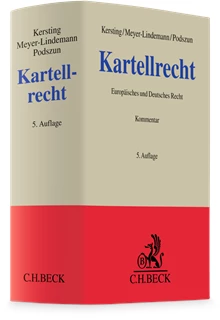
    Dr. Laura Stammwitz contributed to the new edition of the commentary on German and European antitrust law. The fifth edition provides a detailed analysis of current developments in antitrust law, including the significant changes brought about by the 11th amendment to the German Act Against Restraints of Competition (GWB) and the first commentary on the Digital Markets Act (DMA) 2021.

    In depth
    Authors

    Dr. Laura Stammwitz

    Partner

    Frankfurt

    More insights

  • DOJ Secures Its First-Ever Conviction in a Criminal Antitrust Labor Market Trial

    DOJ Secures Its First-Ever Conviction in a Criminal Antitrust Labor Market Trial

    CLIENT ALERT / US POLICY

    DOJ Secures Its First-Ever Conviction in a Criminal Antitrust Labor Market Trial

    April 23, 2025

    Read time: 5 min

    Key takeaways
    Overview

    On April 14, 2025, a federal jury convicted an executive in a wage-fixing conspiracy under the Sherman Act. This marks the first time, after many tries, that the US Department of Justice (DOJ) has secured a conviction in a criminal antitrust case alleging labor market harms. This case, coupled with Federal Trade Commission (FTC) Chairman Andrew N. Ferguson’s February announcement of a Joint Labor Task Force, indicates that antitrust enforcement in labor markets will continue to be a significant focus under the Trump administration.

    In depth

    Why It Matters

    The DOJ and FTC announced, in 2016 guidelines, that they would treat labor market wage-fixing and no-poach agreements as per se illegal and subject to criminal prosecution. Until now, the DOJ had failed to secure a conviction in any of its criminal prosecutions brought under these theories, including:

    • United States v. DaVita Inc, Case No. 1:21-cr-00229 (D. Colo.): Acquittal
    • United States v. Surgical Care Affiliates LLC, et al., Case No. 21-cr-00011 (N.D. Tex.): Voluntary dismissal of the indictment
    • United States v. Patel, et al., Case No. 21-cr-00220 (D. Conn.): Judgement of acquittal

    The continued focus on labor markets is broadly relevant, so all companies should ensure they review their antitrust compliance policies and procedures considering the DOJ’s and FTC’s 2025 guidelines to minimize their antitrust risk.

    The Conviction

    In United States v. Lopez, Case No. 2:23-cr-00055 (D. Nev.), a federal jury convicted a home health agency (HHA) executive of conspiring to fix the wages for home healthcare nurses in Las Vegas and for fraudulently failing to disclose the investigation during the sale of the company. This is the DOJ’s first successful criminal prosecution in a labor market antitrust case and indicates that labor markets will continue to be a key focus for antitrust regulators, with Assistant Attorney General for the Antitrust Division Gail Slater stating, “nurses here deserved better and, under President Trump’s leadership, they will be protected.”

    From the tail end of the first Trump administration, through the Biden administration, and into President Trump’s second term, momentum for criminal antitrust enforcement in labor markets has been building, and there are indications that this will be a continued focus for the antitrust agencies. In 2016, the DOJ and the FTC released guidelines for human resources (HR) professionals that stated for the first time that the DOJ and FTC would treat “naked” wage-fixing and no-poach agreements among competing employers as per se illegal and subject to criminal prosecution. This was the first time the DOJ indicated to HR and legal professionals that labor market issues would be a potential focus of criminal antitrust enforcement.

    After the release of these HR guidelines, the DOJ initiated investigations focused on alleged no-poach and nonsolicitation agreements. The federal enforcers tried unsuccessfully to secure convictions alleging wage-fixing and no-poach conduct, including in the healthcare space, such as the 2022 acquittal of DaVita.[1]

    The jury conviction last week was the first such labor market conviction and also indicates the type of conduct juries may find warrants criminal liability. The DOJ brought the case after a grand jury indicted Eduardo “Eddie” Lopez, the owner of an HHA, in March 2023 and filed a superseding indictment in September 2023. The conduct at the heart of the conspiracy was a mutual agreement between competing HHAs to “stay within the same hourly rate.” In other words, the DOJ prosecuted wage-fixing, rather than only an alleged no-poach or nonsolicitation agreement. The indictment relied on “hot” text exchanges between executives of the several competing HHAs discussing their “agreed rates” for hiring nurses at their facilities.

    The future of antitrust enforcement in labor markets was uncertain going into the second Trump administration, but it appears after three months of observation that the issue has staying power and consensus among current leadership at the antitrust enforcement agencies. In the waning days of the Biden administration, the DOJ and FTC announced new “Antitrust Guidelines for Business Activities Affecting Workers.” Because these guidelines, which replaced the 2016 guidelines, were released just days before President Trump’s inauguration, the future of enforcement of antitrust in labor markets was uncertain. However, Lopez’s conviction and subsequent statements from DOJ leadership make clear that labor market enforcement will stay on the DOJ’s criminal enforcement radar, with Assistant Attorney General Abigail A. Slater stating, “[w]age-fixing agreements are nakedly unlawful attempts at unjustly profiting off American workers … The Antitrust Division will zealously prosecute those who seek to unjustly profit off their employees.” This win also comes shortly after FTC Chairman Ferguson’s directive regarding the labor markets task force, where he instructed the constituent bureaus of the FTC to “form a Joint Labor Task Force,” responsible for investigating and prosecuting “deceptive, unfair, or anticompetitive labor market conduct.”

    If you have questions about what this ruling could mean for your business, reach out to your regular McDermott lawyer or the authors of this article.

    Authors

    Royce E. Brosseau

    Associate

    Washington, DC

    More insights

  • The UK Economic Crime & Corporate Transparency Act 2023: What Companies Need to Know

    The UK Economic Crime & Corporate Transparency Act 2023: What Companies Need to Know

    ARTICLE / CLIENT ALERT

    The UK Economic Crime & Corporate Transparency Act 2023: What Companies Need to Know

    April 23, 2025

    Read time: 3 min

    Key takeaways
    Overview
    • The UK Economic Crime & Corporate Transparency Act 2023 sets out two major reforms making it much easier for UK authorities to prosecute corporate wrongdoing:
      • it substantially increases the circumstances in which a company can be held liable for crimes committed by their employees. Now, relevant offences committed by a company’s ‘senior managers’ can be attributed to the company.This reform came into force on 26 December 2023; and
      •  it introduces a new corporate offence of ‘failure to prevent fraud’, which criminalises companies that fail to prevent persons associated with them from committing a range of fraud offences. A company has a full defence where it had in place ‘reasonable procedures’ to prevent the fraud from occurring.On 6 November 2024, the UK government published its long-awaited guidance as to the new offence and the meaning of ‘reasonable procedures’; at the same time, it announced that the offence will come into force on 1 September 2025.
    • These reforms constitute the most significant change to corporate criminal liability in the UK for decades. In addition, both of these provisions have extra-territorial effect, meaning that the actions of individuals and companies located abroad can be prosecuted in the UK as long as there is a sufficient link to the UK.
    • This article summarises these key aspects of the new legislation and (i) sets out what companies can do now in order to mitigate risks already posed by the ‘senior manager’ reform; and (ii) outlines what companies should be doing to prepare for the new ‘failure to prevent’ offence coming into force.
    In depth
    Authors

    Simon Airey

    Partner

    London – 22 Bishopsgate

    James Dobias

    Partner

    London – 22 Bishopsgate

    Andrew Butel

    Counsel

    London – 22 Bishopsgate

    William Merry

    Senior Associate

    London – 22 Bishopsgate

    More insights

  • Examining Group Health Coverage Alternatives for Small Employers

    Examining Group Health Coverage Alternatives for Small Employers

    ARTICLE / REPORT

    Examining Group Health Coverage Alternatives for Small Employers

    April 2025

    Read time: 2 min

    Overview

    Originally published in February 2025, this updated report provides new material on physician practice management (PPM) arrangements, reference-based pricing arrangements, minimum essential coverage (MEC) and MEC+ plans, and PPM-based “mirror plans.”


    Small employers’ efforts to provide robust major medical coverage to workers and their families have long proven futile, primarily due to underwriting challenges. Groups of under 50 employees are often relegated to state small group market coverage, which tends to be expensive. Slightly larger groups, while being underwritten based on their own experience, still suffer from a near-total lack of transparency. Increasingly, these employers are looking for alternatives, which include pooling under association-style plans, group medical stop-loss arrangements, level-funded products, and individual coverage Health Reimbursement Arrangements.

    This Special Report examines the options available to small employers – and the obstacles they routinely encounter – as they seek to make affordable health insurance coverage available to their employees and their families.

    In depth
    Tabs

    Sarah G. Raaii

    Partner

    Chicago

    Erin Turley

    Partner

    Dallas

    Allison Wilkerson

    Partner

    Dallas

    More insights
    Endnotes

  • Chambers & Partners Guide to Life Sciences 2025 | France

    Chambers & Partners Guide to Life Sciences 2025 | France

    ARTICLE

    Chambers & Partners Guide to Life Sciences 2025 | France

    April 2025

    Read time: 2 min

    Key takeaways
    Overview

    Emmanuelle Trombe, Anthony Paronneau, Anne-France Moreau and Lorraine Maisnier-Boché authored the 2025 Chambers Global Guide to Life Sciences.

    In depth
    Authors

    Caroline Noyrez

    Associate

    Paris

    Nejma Palasse

    Associate

    Paris

    More insights

  • Ill-Gotten Gains: Unjust Enrichment Remedy Not Barred by Limitation of Liability Provision

    Ill-Gotten Gains: Unjust Enrichment Remedy Not Barred by Limitation of Liability Provision

    ARTICLE

    Ill-Gotten Gains: Unjust Enrichment Remedy Not Barred by Limitation of Liability Provision

    Apr 17, 2025

    Read time: 4 min

    Key takeaways
    Overview

    Examining the issue of trade secret misappropriation when parties have contractually limited their liability from breach, the US Court of Appeals for the Eleventh Circuit reversed the district court’s dismissal of the case, finding that a plaintiff could still recover damages under a theory of unjust enrichment. Pemco Aircraft Engineering Services Inc. v. The Boeing Company, Case No. 22-13776 (11th Cir. Apr. 4, 2025) (Pryor, Branch, Carnes, JJ.)

    Pemco and Boeing, who are usually competitors, entered into an agreement to jointly bid for a government contract. The parties’ contract had three separately executed parts that functioned as one agreement. When the contractual relationship fell apart, Pemco sued Boeing for breach of contract and trade secret misappropriation. Based on Boeing’s contractual breach, a jury awarded Pemco more than $2 million of out-of-pocket damages. The district court dismissed the trade secret misappropriation claim, however, as time-barred under Alabama law. After Pemco appealed, the Eleventh Circuit reviewed and determined that the trade secret misappropriation claim arose under Missouri law, not Alabama law, and that under Missouri law, Pemco’s trade secret claims were not time-barred. On remand, Pemco brought amended trade secret misappropriation claims under Missouri law, which the district court dismissed based on the parties’ contract, which limited liability. Pemco appealed.

    The issue on appeal was whether the parties’ contractual limitation of liability provision precluded any damages, even for misappropriation. The contractual provision lists the categories of damages that the parties disclaimed, namely, incidental, punitive, and exemplary, or consequential damages. The Eleventh Circuit explained that two sophisticated parties negotiating at arm’s length are permitted by Missouri public policy considerations to contractually limit future recovery for even intentional torts. By including punitive and exemplary damages, which are available only for tort claims and not contractual ones, the parties clearly intended to include torts related to the contract within its scope. Thus, even though trade secret misappropriation is a tort and not a contractual claim, the Court found that the claim was restricted by this provision and Pemco was therefore limited in its potential recovery.

    The Eleventh Circuit next looked to whether the jury award had sufficiently compensated Pemco. The district court found that a Missouri trade secrets claim was barred in this context because of a full recovery under the related contract claim. The Court, however, distinguished the two causes of action. So long as the trade secrets claim provides a separate, non-duplicative remedy, it can stand on its own despite other recoveries under the contract. The Missouri Trade Secrets Act explicitly provides for an unjust enrichment remedy not available for contractual breach and the parties chose not to limit recovery for unjust enrichment. Thus, the Court concluded that this remedy was available as a trade secret claim that was not, and could not have been, available to Pemco under the contract.

    Boeing advanced two arguments against the availability of an unjust enrichment remedy. Boing argued that any further award would be duplicative of the previous jury award and that unjust enrichment constitutes a consequential damage and thus is barred under the contract.
    Relying on the jury instructions and basic damages principles, the Eleventh Circuit explained that the jury verdict compensated Pemco for reliance expenditures while an unjust enrichment award would function to disincentivize corporate espionage and would remove ill-gotten profits from Boeing that it acquired by theft. The Court reasoned that the jury award was compensatory while an unjust enrichment remedy would be restitution. Regarding Boeing’s second argument, the Court differentiated consequential damages from an unjust enrichment remedy, explaining that consequential damages are foreseeable and proximate damages experienced by the plaintiff, while unjust enrichment considers an unfair profit that a defendant has acquired. The Court further explained that unjust enrichment goes beyond making a plaintiff whole and “seeks to deprive the wrongdoer defendant of the gain it obtained from conduct that inflicted the loss on the plaintiff.”

    The Eleventh Circuit remanded the case to allow Pemco to prove it is entitled to a further remedy under unjust enrichment.

    Authors

    Taylor MacDonald

    Associate

    Boston

    More insights
    Endnotes

  • Not Secret and Not Used: Misappropriation Claim Dismissed

    Not Secret and Not Used: Misappropriation Claim Dismissed

    ARTICLE

    Not Secret and Not Used: Misappropriation Claim Dismissed

    Apr 17, 2025

    Read time: 3 min

    Key takeaways
    Overview

    The US Court of Appeals for the Fifth Circuit upheld a district court’s grant of summary judgment in favor of the defendants, finding that the plaintiff failed to identify a trade secret and presented no evidence of its use or disclosure. DeWolff, Boberg & Associates, Inc. v. Justin Pethick and The Randall Powers Co., Case No. 24-10375 (5th Cir. Apr. 3, 2025) (Smith, Clement, Duncan, JJ.)

    In 2018, Justin Pethick was a DeWolff, Boberg & Associates (DBA) employee. That year, DBA’s competitor, The Randall Powers Company (Powers), hired Pethick as regional vice president of sales. After Pethick began working at Powers, some prospective DBA clients hired Powers for consulting services. DBA sued Powers for trade secret misappropriation, asserting that Pethick stole its trade secrets and used them to poach clients. The district court granted summary judgment in favor of Powers and Pethick. DBA appealed.

    The Fifth Circuit affirmed but on alternative grounds. To prevail on a misappropriation claim under Texas law (where the initial suit was brought), “a plaintiff must show that (1) a trade secret existed, (2) the trade secret was acquired through a breach of a confidential relationship or discovered by improper means, and (3) the defendant used the trade secret without authorization from the plaintiff.”

    On appeal, Powers first argued that the information DBA claimed was trade secrets, such as contact information, meeting notes, and “confidential information related to business opportunities,” did not qualify as protectable trade secrets. DBA pointed to “large swathes of database information” without distinguishing what exactly was supposedly a trade secret. The Fifth Circuit found it was unclear as to what materials were trade secrets, noting that it had “no obligation to sift through the record in search of evidence to support a party’s opposition to summary judgment.” The Court held that summary judgment was justified on this basis.

    The Fifth Circuit further held that, even assuming the information qualified as trade secrets, summary judgment was still warranted because there was no evidence that Powers and Pethick used the information. Although Pethick had requested a copy of a document that DBA claimed contained trade secrets prior to joining Powers, there was no evidence that he ever possessed it while at Powers. To the contrary, the forensic expert retained by DBA to remove its data from Pethick’s computer did not find the document. The Court concluded that DBA failed to demonstrate any use of an alleged trade secret.

    Authors

    Dexter Hamilton

    Associate

    San Francisco

    More insights
    Endnotes

  • European Commission Fines Teva €462.6 Million for Misusing Divisional patents and Disparaging Generic Competitors in the Copaxone Market

    European Commission Fines Teva €462.6 Million for Misusing Divisional patents and Disparaging Generic Competitors in the Copaxone Market

    ARTICLE / CLIENT ALERT

    European Commission Fines Teva €462.6 Million for Misusing Divisional patents and Disparaging Generic Competitors in the Copaxone Market

    April 17, 2025

    Read time: 10 min

    Key takeaways
    Overview

    On October 31, 2024, the European Commission (the Commission) delivered its long-awaited decision in the Teva Copaxone case (which was published on April 8, 2025). Teva, a global pharmaceutical company, was fined EUR 462.6 million for abusing its dominant position in the market for glatiramer acetate (GA), the active ingredient in its blockbuster multiple sclerosis (MS) drug, Copaxone.

    It is the Commission’s first decision condemning the misuse of divisional patents and its second on disparaging therapeutically equivalent products (following the Vifor settlement decision). Both arms of the conduct form a comprehensive strategy which falls outside the boundaries of “competition on the merits”, referring back to the AstraZeneca case law (C-457/10 P), and constitute a single continuous infringement. The decision highlights the Commission’s commitment to closely scrutinize abuse of dominance in the pharmaceutical sector, especially where the market entry of generic companies is delayed and exclusivity is artificially extended.

    In depth

    Background

    The Commission opened proceedings against Teva Pharmaceutical Industries Limited and Teva Pharmaceuticals Europe B.V. in March 2021 under Article 102 TFEU, following dawn raids in October 2019; a Statement of Objections was issued in October 2022.

    In its press release of October 31, 2024, the Commission mentions that it also relied on documents from Teva’s in-house lawyers who were involved in the design of its abusive strategy to protect Copaxone and emphasized that in-house lawyer communications are not privileged under EU law.

    The Decision: Yet Another Confirmation of a Molecule Market at LoE

    The Commission acknowledges that the definition of relevant product markets in the pharmaceutical sector; the decision recalls the judgments in Generics UK and Servier, where the European Court of Justice held that the lifecycle of a pharmaceutical product can be a key determinant when defining markets.

    In fact, the Commission cites Generics UK when stating that the emergence of a competing generic molecule “could lead to a situation where the originator medicines is considered, in the professional circles concerned, to be interchangeable only with those generic medicines and, consequently, to belong to a specific market, limited exclusively to medicines which contain that active ingredient”.

    To assess whether such a market definition applies to Copaxone, the Commission analyzed the relevant product market in a two step-assessment, in line with the approach in Generics (UK) and Servier: the Commission assessed (i) the therapeutic substitutability of other MS treatments with Copaxone; and (ii) which therapeutically substitutable products actually exert an effective competitive constraint on prices, volumes and profits of Copaxone.

    In the first step of the analysis, the Commission assessed the therapeutic substitutability of Copaxone with other disease modifying therapies (DMTs) for the treatment of Relapsing-Remitting MS (RRMS), by far the most common form of MS. It concluded that non-GA first line DMTs (i.e. oral first line DMTs and interferon first-line DMTs) are at best imperfect substitutes based on their efficacy, safety and tolerability profiles. The different profiles cater to different patient needs, confirmed both by switching patterns, and Teva’s own acknowledgment of the significant therapeutic differences in submissions to national authorities. The Commission concluded that Synthon GA (Synthon’s generic version of Copaxone) is in fact therapeutically substitutable and even therapeutically equivalent to Copaxone.

    For the second step of the analysis, the assessment of economic substitutability, the Commission looked at which first-line DMTs effectively constrained Copaxone during the period of the infringement and concluded that Synthon GA exerted an effective and immediate competitive constraint even before its launch as it significantly changed market dynamics. The Commission confirmed that while non-price competition (promotional efforts) drives the market before generic entry, when approaching and following the loss of exclusivity, competitive constraints and related market dynamics are typically transformed by the (prospective) entry of generics because of significant price competition. Thus, price competition replaces non-price competition as the main driver of demand.

    Citing Generics UK, Synthon was “in a position to present itself within a short period on the market concerned with sufficient strength to constitute a serious counterbalance to the originator” because it had (i) a prior strategy for effective entry with its product; (ii) taken the steps necessary to achieve effective entry by applying for Marketing Authorizations (MAs); (iii) concluded license agreements with third parties; and (iv) there were no insurmountable entry barriers regarding IP rights or other barriers to the launch of Synthon GA.

    The Commission thus concluded that only Synthon GA was apt to exert price pressure on Copaxone, contrary to non-GA first-line DMTs, and hence the relevant product market was that for glatiramer acetate, i.e. Copaxone and Synthon GA.

    The Decision: Teva Misused the Patent System and Systematically Spread Misleading Information about a Competing Generic Product

    Teva was found to have implemented a comprehensive and deliberately anticompetitive strategy, with the overall objective of delaying competition and artificially prolonging the exclusivity of Copaxone by hindering the market entry and uptake of competing, cheaper generic version of GA, over which Teva held a basic patent until 2015. The strategy involved gaming the patent system as well as systematic disparagement targeting Synthon GA. Teva named its strategy the “Copaxone Continuation Project” or “CCP”, which was set up to counter the “risk” of competing GA entering the market.

    The decision also refers to product hopping as part of Teva’s CCP: “Teva also pursued a large-scale pre-emptive conversion of its patients from the daily 20 mg dose to a three-times-a-week 40 mg dose of Copaxone […]” and “by the time Synthon GA’s 20 mg was ready to be launched [..] most patients had already been moved from Teva’s 20 mg Copaxone to 40 mg Copaxone“. The Commission noted that the conversion was not primarily driven by patient needs but served the purpose of extending the market exclusivity for Copaxone and formed part of its measures to defend Copaxone against generic competition.

    In addition, the Commission also mentioned Teva’s interventions in the regulatory procedures for the granting of an MA to Synthon GA with a view to raising regulatory barriers and Teva’s engagement in a comprehensive EEA-wide regulatory litigation campaign aimed at getting Synthon GA’s MA annulled.

    The Commission acknowledges that these activities within the framework of the CCP “significantly increased the difficulties” of generic GA entry, but took the decision to focus only on two major parts of Teva’s CCP: the misuse of the divisional patent system and the disparagement campaign, while not taking a position on the legality of these other activities.

    The First Abuse: “The Divisionals Game”

    Under the first abuse, Teva artificially extended Copaxone’s patent protection by misusing the available European Patent Office (the EPO) rules and procedures on divisional patents.

    Divisional patents are based on parent patents in that they share the same invention but focus on different or more narrow aspects of that invention. Their validity is assessed independently from the parent patent, but their lifespan ends with the parent patent even if filed much later than the parent patent.

    The main patent protecting the composition of Copaxone was filed in 1995, granted by the EPO in 2002 and expired in 2015. In 2005, Teva filed a patent protecting an improved manufacturing process, granted by the EPO in 2010; a day before the grant, Teva started to file divisional process patents. In 2010, Teva, filed a patent protecting a new dosing regimen (40mg instead of 20mg), granted by the EPO in 2013; again, a day before grant, Teva started to file divisional dosage patents.

    The divisional process and dosage patents were filed over a period of 8 years, between 2010 and 2018. According to the Commission, Teva made use of the divisional patent instrument and multiplied these secondary patents to create two patent families, each consisting of various divisionals with significantly overlapping content i.e. the same inventive concepts and suffering from the same key weaknesses. According to the Commission, the intervals between the filings were not driven by research, as the science disclosed in them was already known from the parent patents and the differences from the parent patents were marginal. The Commission states that key Teva employees had doubts about the validity of the parent process and dosage patents and did not believe they would survive challenges before the EPO; equally, since the divisional patents shared essential features and the ingrained weaknesses of their parent patents, key Teva employees did not believe the divisional patents would survive challenges before the EPO either.

    The Commission concludes that by staggering the filing of divisional patents, Teva obtained staggered grant dates which then meant that generic entrants who wanted to clear the path had to repeatedly challenge divisional patents belonging to the same patent family. Yet, this behavior alone did not amount to an infringement (while the Commission stated that Teva’s staggered patent filings may have been problematic, it left open the question of whether the filings themselves could amount to an infringement). According to the Commission, the infringement lies in the systematic withdrawal of the various divisional patents just before a revocation decision, thereby denying generic companies the possibility to clear the path to market entry and avoiding legal precedents that could have undermined other divisional patents in its portfolio with the same essential features and overlapping claims.

    Logically, the Commission set the start date of the abuse at the time of the first withdrawal of one of Teva’s patents.

    The Second Abuse: Systematically Denigrating Competing Products

    The Commission also condemned Teva’s systematic disparagement campaign against Synthon GA, which started on April 12, 2016 across all relevant Member States. Despite regulatory approval by the appropriate health authorities confirming the safety, efficacy and therapeutic equivalence of these alternatives to Copaxone, Teva disseminated misleading information targeting key stakeholders, including doctors and national authorities responsible for pricing and reimbursement decisions, by emphasizing clinically irrelevant compositional differences between the two products and by making misleading inferences from experiences with other glatiramer-related substances unrelated to Synthon’s GA product. These claims had been rejected by the competent medicines’ authorities when granting a marketing authorisation for Sunthon’s GA product.

    These efforts were aimed at undermining confidence in rival generic products (in contrast to the Vifor case, which concerned competition between two originators), thereby slowing their market entry and uptake in certain Member States.

    The Commission concluded that Teva’s successful dissemination objectively misleading information on a large scale was in fact capable of discrediting Synthon GA to key stakeholders, influencing their decision-making and prescription behavior. This was found to depart from competition on the merits.

    Conclusion

    This decision marks the Commission’s first finding that the use of divisional patents can amount to an antitrust infringement under certain circumstances. What may be perfectly legal under patent law, the Commission found that such a conduct cannot be considered as “competition on the merits”, a test established by the Commission in AstraZeneca in 2005 and upheld on appeal by the European Court of Justice in 2012.

    It was also the first time the Commission imposed a fine for disparagement practices, given that the Vifor case was settled. The decision also confirms the application the two-part test set in Generics (UK) and Servier used to define the market as that of the molecule.

    According to former Executive Vice-President Margrethe Vestager, Teva’s conduct had significant consequences for public health budgets across Member States by delaying price reductions associated with generic competition. In some markets, list prices dropped by up to 80% after generic GA products entered.

    Authors

    Emilia Bonine

    Associate

    Brussels

    More insights