














ARTICLE
Key takeaways from Healthcare Litigation, Compliance, and Investigations Forum 2025
December 1, 2025
Read time: 3 min
Health Lit Forum 2025 delivered the high-impact legal and regulatory insights that healthcare and life sciences organizations need to navigate what’s happening now and what’s coming next. Here’s a quick recap of the key trends that shaped healthcare enforcement in 2025 and practical steps to take as you plan for the year ahead.
Three enforcement trends to watch
- Escalated fraud and abuse enforcement activity: The US Department of Justice (DOJ) and the US Department of Health and Human Services re-launched their joint False Claims Act Working Group, signaling a heightened focus on artificial intelligence (AI)-enabled billing, Medicare Advantage risk adjustment, and kickback theories tied to digital health and pharmaceutical and medical device manufacturers, among others.
- State-level expansion and private equity scrutiny: States (e.g., California, Colorado, New York, and Washington) are moving aggressively with “mini-Hart-Scott-Rodino” and other transaction notice laws. They’re also heightening review of private equity ownership and Corporate Practice of Medicine compliance in physician platforms.
- Political and social enforcement drivers: Enforcement priorities increasingly intersect with policy issues such as diversity, equity, and inclusion; reproductive health; and gender-affirming care. Hospitals and health systems face new risks and challenges while navigating conflicting federal and state mandates.
Three action items before year-end
- Refresh fraud and abuse risk mapping: Coordinate with your compliance and internal audit teams to ensure relevant risk areas are included in the internal compliance work plan. Consider including compensation, marketing, and technology-use arrangements in light of DOJ’s evolving theories and data-driven analytics. Also evaluate whether particular compliance reviews should be performed under attorney-client privilege.
- Develop informed transactional planning: Integrate regulatory and ownership-disclosure reviews early in deals in anticipation of DOJ and state attorney-general scrutiny. Identify associated timelines early in deal processes so all stakeholders are aligned.
- Prepare for multi-front investigations: To best position the organization for a nimble, consistent, and coordinated response to a government investigation or other request for information, create alignment among your legal, compliance, and government-relations functions under a government investigation and communications initiative, and provide a training for personnel regarding the updated policy requirements.
For questions about or to discuss these trends, contact your regular McDermott Will & Schulte lawyer or the authors below.











Employer of Record – New technical directive from the Employment Agency
ARTICLE
Employer of Record – New technical directive from the Employment Agency
November 26, 2025
Read time: 2 min
As digitalization accelerates, the “Employer of Record” (EoR) model has become an attractive solution for hiring international talent. However, in October 2024, Germany’s Federal Employment Agency flagged significant legal risks in its updated guidelines under the Employee Leasing Act (AÜG), discouraging its use. Following strong criticism from legal experts, the agency has now made a surprising U-turn and revised its guidance once again. What is the EoR model, why was it controversial, and what do these changes mean for businesses?
Find out more in the latest HR News blog post by Janek Joosten.
Visit the blog or register now for regular HR NEWS updates (in German).




Labor law elements in the coalition agreement
ARTICLE
Labor law elements in the coalition agreement
April 10, 2025
Read time: 2 min
The leaders of the CDU/CSU and SPD agreed on the conclusion of a coalition agreement. This must now be approved by the respective party committees before it can be signed. In the latest HR NEWS blog post, Dr. Thomas Gennert highlights and comments (in German) on the most important labor law issues.
Visit the blog and/or register now for regular HR NEWS updates (in German).


EU Cybersecurity Regulatory Landscape: A Deep Dive into the NIS2 Directive
ARTICLE / CLIENT ALERT
EU Cybersecurity Regulatory Landscape: A Deep Dive into the NIS2 Directive
November 24, 2025
Read time: 2 min
Matúš Huba, Rosa Barcelo, Dr. Natallia Karniyevich, and Julie Favreau examine how the Network and Information Systems Directive (NIS2) transforms cybersecurity compliance across Europe. In their article for ICLG – Cybersecurity 2026, they explore the Directive’s expanded scope, heightened obligations, and the introduction of management-level accountability.


Trending in Telehealth: October 2025 Recap
ARTICLE
Trending in Telehealth: October 2025 Recap
Nov 24, 2025
Read time: 7 min
Trending in Telehealth highlights monthly state legislative and regulatory developments that impact the healthcare providers, telehealth and digital health companies, pharmacists, and technology companies that deliver – and facilitate the delivery of – virtual care.
Trending in October:
- Telehealth disciplinary guidelines
- Behavioral health
- Medicaid state plan waivers
- Telehealth flexibilities
A CLOSER LOOK
Proposed Legislation and Rulemaking:
- A proposed law in Wisconsin (Senate Bill (SB) 214) passed the first chamber and would establish a pathway and registration requirements for out-of-state healthcare providers to offer telehealth services in Wisconsin.
- The Alaska State Medical Board proposed regulatory changes relating to the standards of practice for the use of buprenorphine to treat opioid-use disorder via telemedicine.
- In North Dakota, a proposed rule would establish veterinary medicine telemedicine guidelines.
- In Florida, the boards of Podiatric Medicine, Orthotists and Prosthetists, Acupuncture, and Athletic Training proposed updates to their respective disciplinary guidelines regarding patient overpayments and refunds to include telehealth registrants.
- In New Mexico, the Physical Therapy Board proposed a rule to clarify the scope of supervision required when services are administered via telehealth. Under this rule, a healthcare provider must render telehealth services under the same level of supervision required for in-person practice.
- In California, a proposed rule clarifies standards of practice for telehealth psychology services and underscores the board’s authority to regulate all psychological services provided by individuals under its jurisdiction, whether delivered in person or via telehealth.
- In Pennsylvania, a proposed rule would codify requirements for mobile crisis team services, including that a crisis intervention service medical professional or a crisis intervention service licensed behavioral health professional may participate in the mobile crisis team by means of tele-behavioral health.
- In Connecticut, the commissioner of the Department of Social Services (DSS) published a Notice of Intent to submit three applications to the Centers for Medicare and Medicaid Services, each to be effective April 1, 2026:
- Renewal of the Employment and Day Supports Medicaid Waiver
- Amendment of the Comprehensive Supports Medicaid Waiver
- Amendment of the Individual and Family Supports Medicaid Waiver
Each waiver program is operated by the Department of Developmental Services (DDS). DSS and DDS are proposing to add a new waiver service titled “Virtual Health Consultation” to each program. This service is tailored to meet the unique needs of individuals supported by DDS by providing timely, specialized telehealth assessments when a participant’s primary care physician is unavailable or unable to determine the most appropriate clinical course of action. The service ensures greater access to both routine and specialized medical care that might otherwise be challenging to obtain through traditional means and helps reduce unnecessary emergency room visits while also promoting efficient and accessible care.
- In the District of Columbia, the director of the Department of Health Care Finance (DHCF) applied for an amendment to the district’s Home and Community-Based Services for People with Intellectual and Developmental Disabilities (IDD) Waiver program. Specifically, the district is seeking approval to update the following services to include telehealth as a modality option
- Assistive technology assessment
- Behavioral support services
- Creative arts therapies
- Family training services
- Occupational therapy services
- Parenting support services
- Speech, hearing, and language services
- Wellness services, including bereavement counseling, fitness training, nutrition evaluation and counseling, and sexuality education
Additionally, the district is proposing to add a new telehealth service option called “Health Assessment and Coordination.” This standalone urgent-care telehealth service will provide specific medical advice on when waiver participants should seek additional or in-person medical treatment via virtual platforms. It also allows the provision of urgent care telehealth services to people residing in host homes, supported living, and residential habilitation settings.
Finalized Legislation and Rulemaking Activity:
- California Governor Gavin Newson signed several pieces of legislation into law relating to telehealth in the month of October:
- Assembly Bill (AB) 1503 prohibits any person from furnishing or dispensing any dangerous drug or device on the internet for delivery to any person in California without a prescription issued pursuant to an “appropriate prior examination.” California changed the terminology from “good faith prior examination” to “appropriate prior examination” in its laws governing the furnishing or dispensing of dangerous drugs or devices via the internet to better align with modern standards of care and regulatory clarity.
- AB 1502 makes technical amendments to statutes currently referencing the scope of practice, recordkeeping, and supervision requirements for veterinarians using telemedicine.
- SB 338 establishes the Virtual Health Hub for Rural Communities Pilot Program and requires the California Department of Health Care Services to administer the program to expand access to health services for farmworkers in rural communities. The bill would require the department, among other things, to deploy mobile units in rural counties based on farmworker population and access to healthcare, which would include, at a minimum, computers, Wi-Fi, cubicles for virtual visits, and exam rooms for telemedicine.
- SB 530 reinforces patient choice by requiring managed care plans to offer in-person services – even when telehealth meets access standards – if the patient prefers face-to-face care.
- AB 688 mandates the California Department of Health Care Services to utilize Medi-Cal and other data sources to generate and publicly publish Medi-Cal telehealth utilization reports starting in 2028 and biennially afterward.
- SB 669 requires the California Department of Public Health to establish a pilot project to allow critical access and individual and small-system rural hospitals to establish standby perinatal medical service. Hospitals selected for the pilot program must comply with various requirements, including having policies regarding telemedicine services for real-time perinatal and neonatal consultation.
- The Department of Veterans Affairs (VA) adopted a rule to amend its medical regulations that govern the VA’s healthcare professionals who practice healthcare via telehealth to enable the VA to maximize healthcare resource utilization and provide safe and convenient national healthcare to veterans using telehealth.
- In Michigan, an adopted rule clarifies rules for midwives who practice via telehealth.
- In New Hampshire, an adopted rule codifies requirements for providers under the Therapeutic Cannabis Program, and provides that telemedicine shall be allowed for providers for follow-up visits related to cannabis certification and treatment and for recertifications and extensions completed by the same certifying provider.
- In Utah, an adopted rule modifies the Mobile Crisis Outreach Teams (MCOT) Certification Standards to provide that in cases where a mental health therapist is not a deploying member of the team, each MCOT shall ensure a mental health therapist is available through telehealth.
- In Massachusetts, an adopted rule sets forth the requirements for programs of assertive community treatment (PACT) providers to enroll as MassHealth providers. PACT services may be provided by telehealth, as appropriate.
- The Texas Board of Physical Therapy Examiners adopted an amendment to the Texas Administrative Code relating to standardized formats for, and retention of, records related to a patient’s consent to treatment, data collection, and data sharing when providing physical therapy services via telehealth.
- Lastly, as described in more detail in the firm’s article, the pandemic-era Medicare telehealth flexibilities expired on September 30, 2025, during the pendency of the government shutdown that began on October 1, 2025. During that time, the pre-pandemic telehealth limits were reinstated.
Why it matters:
- Telehealth regulation is maturing. States are developing detailed, profession-specific rules to clarify licensure, supervision, and standards of care for telehealth across medical, behavioral health, and allied health professions.
- Access and equity are key drivers. States are expanding telehealth availability for underserved groups (such as individuals with developmental disabilities, rural communities, and behavioral health patients) while ensuring patient safety and provider accountability.
- Data, oversight, and patient choice are gaining prominence. States are formalizing data-sharing, reporting, and patient-consent requirements to balance innovation with transparency and consumer protection.
Telehealth is an important development in care delivery, but the regulatory patchwork is complicated. The McDermott Will & Schulte Digital Health team works alongside the industry’s leading providers, payors, and technology innovators to help them enter new markets, break down barriers to delivering accessible care, and mitigate enforcement risk through proactive compliance.





Executive briefing: Strategic inflection points in digital health & health tech
ARTICLE
Executive briefing: Strategic inflection points in digital health & health tech
Nov 24, 2025
Read time: 5 min
The digital health and health tech sectors are undergoing a period of accelerated transformation amidst a fragmented regulatory landscape. Companies are looking within and to peers to determine how to pursue innovation while balancing financial and regulatory risks in this challenging landscape, while investors are waiting for leaders to emerge. This briefing outlines four critical inflection points that are redefining the market.
1. AI in Healthcare: Building Trust and Embracing Risk Amidst Regulatory Uncertainty
Inflection Point: With no clear federal legal framework for AI in healthcare, organizations must work with internal and external stakeholders to build trust and understanding of the technology while proactively managing risk to drive adoption.
- Addressing Knowledge Gaps: Many patients lack the context to evaluate AI-driven decisions. Public-facing materials and clinician communication are key to bridging this gap. Empowering patients to engage with their own medical data – the information AI uses – establishes transparency and can build trust in AI-assisted care.
- Progress, Not Perfection: The question isn’t whether AI is perfect—it’s whether it’s better than current alternatives. Humans also make mistakes, but human error is more acceptable to the public than AI error. Framing AI as a tool for enhancement, not replacement, helps build trust. Communicating success stories to overcome negative perceptions in the court of public opinion is an important step in advancing AI within healthcare.
- Risk Without Regulation: The absence of federal AI regulation requires healthcare organizations to build internal frameworks for risk quantification and mitigation.
- Human-in-the-Loop Models as a De-Risking Strategy: At this time, AI is most often being deployed as clinical decision support—not as a replacement for clinicians. These models must be pressure-tested by competent humans to avoid hallucinations and ensure accountability. From a legal standpoint, the source of error—human or machine—doesn’t change the risk. What matters is whether the output was pressure-tested by a qualified reviewer.
Investor Insight: Back companies that treat AI governance as a strategic asset, not just a compliance checkbox. The strongest players combine defensible frameworks, clear accountability, and alignment with emerging federal and state guidance with real-world evidence and proven use cases. Models that embed meaningful human oversight, anchored by the pedigree and expertise of the individuals in that loop, reduce both clinical and regulatory risk. That combination makes them far more investable and better positioned for long-term adoption.
2. Payment Model Volatility: Navigating the Cash-Pay Surge and Reimbursement Gaps
Inflection Point: The traditional reimbursement ecosystem is now one of many paths for digital health companies.
- Cash-Pay Expansion: We see continued growth in cash-pay models given challenges with health plan coverage and consumer preferences to leverage virtual models for certain treatments, such as weight loss.
- Reimbursement Realities: Many digital health companies are opting out of insurance due to low reimbursement rates and protracted contracting cycles. Fee-for-service remains dominant, but Per Member Per Month (PMPM) contracts are gaining traction—especially when not tied to value-based care.
- TPA & Employer Dynamics: Third-party administrators (TPAs) increasingly expect digital health vendors to function as in-network providers. Meanwhile, employers are consolidating point solutions.
Investor Insight: Look for companies with diversified revenue strategies and the ability to navigate payor credentialing and contracting complexity.
3. Regulatory Fragmentation: State-Level Barriers and Compliance Complexity
Inflection Point: Regulatory inconsistency across states is creating operational friction, scalability challenges, and compliance risk.
- Credentialing Challenges: Credentialing delays are a contributing factor of high provider attrition rates. Partnerships with National Committee for Quality Assurance (NCQA)-certified Credentials Verification Organizations (CVOs) are emerging as a solution, but implementation remains uneven.
- Mid-Level Provider Variability: Regulations governing nurse practitioners and physician assistants vary widely by state, complicating staffing and service delivery models.
- Access Restrictions: Cash-pay telehealth providers often face barriers to accessing patient medical records, undermining trust and continuity of care.
Investor Insight: Prioritize companies with strong compliance infrastructure and scalable credentialing strategies.
4. Employer & Broker Channel Shifts: From Point Solutions to Ecosystem Integration
Inflection Point: Employers are demanding integrated digital health ecosystems over fragmented point solutions, but it is currently unclear which healthcare stakeholders can best orchestrate an ecosystem.
- Broker Channel Leverage: To reach employers, digital health companies must navigate broker relationships or align with carrier pricing strategies—often requiring strategic concessions.
- Resale Models: Carriers are increasingly reselling digital health solutions as carved-out benefits, creating pricing and positioning challenges for vendors.
- Ecosystem Expectations: Employers want plug-and-play solutions that integrate seamlessly into existing benefits infrastructure, favoring vendors that offer breadth and interoperability.
Investor Insight: Back companies with ecosystem-ready platforms and well-structured channel partnerships. Prioritize those with a clear strategy for when to own the patient front end versus when to integrate seamlessly into existing pathways, and the discipline to know when not to be the front door.
Conclusion
Digital health and health tech is at a strategic crossroads. Companies that can adapt to payment volatility, regulatory fragmentation, and shifting employer expectations will be best positioned to lead their sectors and attract investor interest. McDermott Will & Schulte’s Health & Life Sciences team offer legal insight, strategic counsel, and government strategies to help companies navigate these inflection points, respond to risk, and scale with confidence.
EU proposes sweeping reforms to the GDPR, cookie rules, Data Act, and breach reporting
ARTICLE
EU proposes sweeping reforms to the GDPR, cookie rules, Data Act, and breach reporting
November 24, 2025
Read time: 25 min
On 19 November 2025, the European Commission published two proposed regulations as part of its Digital Package on Simplification: the Digital Omnibus and the Digital Omnibus on AI. These Proposals introduce wide-ranging amendments to existing EU digital and data protection and privacy laws to simplify and streamline compliance obligations for companies operating in the EU or targeting the EU market. The Proposals focus on five main areas:
The Digital Omnibus
- Cybersecurity incident reporting (the Network and Information Systems 2 Directive (NIS2) and other key cybersecurity laws)
- Data protection (GDPR)
- E-privacy (ePrivacy Directive and updated GDPR)
- Data use and governance (Data Act and a suite of related data governance laws)
The Digital Omnibus on AI
- AI (AI Act)
The Omnibus Proposals form part of the Commission’s simplification agenda under the competitiveness compass, which aims to reduce administrative burdens by at least 25% for all companies and 35% for small and medium-sized enterprises (SME).
Below, we first look at these sweeping changes, focusing on the Digital Omnibus, and identify key proposed changes to data protection, e-privacy, cybersecurity, and data use and what these might mean for businesses.
We have also outlined the next steps the Digital Omnibus will need to undergo before becoming law, and what companies can do now to assess the potential impact on their EU operations.
Stay tuned for the second part of this series, in which we will analyse the proposed Digital Omnibus on AI.
The Digital Omnibus seeks to modernize and simplify legislation in four focus areas:
- Cybersecurity, introducing a centralised channel, the so-called Single Entry Point (SEP), for notifying competent authorities of incidents, and raising the threshold for GDPR data breach notifications to supervisory authorities to align with the threshold for notifying individuals.
- Data protection, codifying a ‘relative’ approach to personal data, introducing new legal bases for processing sensitive data (e.g., in the context of AI), introducing practical exceptions from notice obligations, unifying the approach to Data Protection Impact Assessments (DPIAs), adding protections against potential abuse of access rights by individuals, introducing a number of exceptions to ease R&D compliance requirements, and other more minor clarifications.
- E-privacy, inserting into GDPR’s specific rules on cookie consent and expanding the use cases where consent is not required. These provisions apply only when personal data is stored on or accessed from the terminal of natural persons. To try to reduce ‘cookie consent fatigue’ and simplify or eliminate the need for cookie banners, it also introduces a new obligation for websites and apps to allow data subjects to consent through automated, machine-readable mechanisms. Browser manufacturers must likewise enable users to grant or refuse consent.
- Data use and governance, consolidating and streamlining data-sharing and use-related obligations across a number of acts, introducing additional trade secret disclosure protections, and allowing temporary relief from a number of cloud-switching obligations to selected types of companies and services.
Cybersecurity
A SEP for incident reporting
The Proposal introduces an SEP: a secure, EU-wide reporting platform to be developed and operated by the European Union Agency for Cybersecurity (ENISA). The SEP will serve as a centralized channel for notifying competent authorities of cyber and data incidents under GDPR, the NIS2 Directive, the Digital Operational Resilience Act (DORA), the Electronic Identification and Trust Services (eIDAS) Regulation, and the Directive on the Resilience of Critical Entities (CER). This is done through an amendment to the NIS2 Directive and targeted amendments to DORA, GDPR, eIDAS, and CER. Future EU reporting legislation may also rely on this platform.
Key changes
The proposed amendments are mostly procedural rather than substantive. They aim to streamline reporting processes across legal frameworks without altering core obligations:
- Single submission channel. Companies will submit notification reports via ENISA’s SEP platform. ENISA will securely route each notification to all relevant national authorities.
- Scope. The SEP applies only to notifications to competent authorities (e.g., supervisory authorities and Computer Security Incident Response Teams – CSIRTs) and does not replace requirements to inform affected individuals, customers, or the public.
- ENISA’s role. ENISA will design, maintain, and operate the SEP, ensuring that the necessary technical arrangements, protocols, and tools are in place to enable entities and competent authorities to access, submit, retrieve, transmit, and process information through the SEP and integrate it within their own systems.
- Notification templates. The Proposal clarifies that when developing common reporting templates for notifications under NIS2, CER, and GDPR, the Commission should take due account of the experience gained and the common templates developed under DORA. For the development of a GDPR template, the European Data Protection Board must, within nine months of the regulation taking effect, submit to the Commission a proposal for:
- A common template for notifying personal data breaches to supervisory authorities
- A list of situations where a breach is likely to pose a high risk to individuals’ rights and freedoms
- Cross-framework recognition. An incident report submitted under Article 14(3) of CRA that includes the required details will also be accepted as a notification of a NIS2 incident notification, reducing duplication and simplifying reporting process.
- GDPR alignment. The Proposal introduces a higher threshold for data breach notification to the supervisory authority, aligning it to the notification to individuals only where a personal data breach is likely to result in a high risk to the rights and freedoms of individuals and extends the deadline from 72 to 96 hours. Notifications will be submitted through the SEP once it is operational.
Impact on businesses
- In the long term, the SEP will provide a unified, secure, and efficient mechanism for reporting to competent authorities, reducing administrative burden.
- In the short term, the benefits will materialize gradually. Within 18 months of the regulation entering into force, ENISA must pilot the SEP for each EU legal act covered. Incident notifications under each legal act may only begin after successful piloting and once the Commission has confirmed the SEP’s readiness. To do so, the Commission and ENISA will assess the SEP’s functioning, reliability, integrity, and confidentiality. When these conditions are met, the Commission will publish a notice in the Official Journal of the European Union, confirming that the SEP is fully operational. Until the system becomes fully operational, entities must continue to use existing national channels.
In summary, the newly published Digital Omnibus Regulation Proposal marks a decisive step towards simplifying and harmonising EU incident reporting. While implementation will take time, the SEP promises to significantly streamline compliance, reduce duplication, and enhance cross-border consistency in cybersecurity and data incident management.
Data protection
The proposed amendments to GDPR bring not only the changes companies might have anticipated based on European courts case law (e.g., further confirmation of the relative approach to personal data) but also a number of measures specifically aimed at facilitating the effective use of data for research and innovation. Notably, the Proposal introduces changes that support the responsible development and deployment of AI tools, such as allowing reliance on legitimate interests for the development and operation of AI systems and creating an exemption from the obligation to provide notice when personal data is processed for scientific research purposes. These adjustments are designed to create a more enabling framework for organisations seeking to use personal data in innovative and socially beneficial ways.
We have outlined key changes below.
New definition of personal data
Under GDPR, personal data means any information relating to an identified or identifiable natural person (Article 4(1)). The Proposal amends this definition by further clarifying the notion of identifiability. Specifically, it adds that information is not considered personal data for a given entity merely because a potential subsequent recipient may have means reasonably likely to be used to identify the individual to whom the information relates.
In practice, this means that companies must assess for themselves whether they are able to identify individuals using the means reasonably available to them. If they lack such means, the information will not be regarded as personal data from their perspective, even if another party could identify the person.
Recital 27 recalls the established case law of the Court of Justice of the European Union, which held that a means of identifying a data subject is not ‘reasonably likely to be used’ where the risk of identification is, in reality, insignificant, such as when identification is prohibited by law or impossible in practice, as when it would require a disproportionate effort in terms of time, cost, or labour.
In essence, the Proposal codifies and sharpens this relative approach reflected in cases such as Single Resolution Board and Scania, and by doing so it reinforces the legal weight and practical applicability of that case law.
The European Commission also proposed a fail-safe mechanism, allowing it to adopt an implementing act to further specify means and criteria to determine whether data resulting from pseudonymisation no longer constitutes personal data for certain entities.
Impact on businesses
- The impact of this amendment is potentially quite high. Businesses would no longer need to treat certain datasets as personal data if they can no longer reasonably identify individuals, removing GDPR obligations such as legal basis (e.g., consent for certain trackers consent), access rights, and data transfer restrictions.
- Companies would be able to more efficiently share, analyse, or commercialise certain data, provided proper risk assessments are in place and documented.
Amendments to facilitate development and operation of AI systems
(a) Reliance on legitimate interests
The Proposal explicitly allows controllers to rely on legitimate interest when processing personal data to develop and operate AI systems and models.
This addition would make it easier for companies to use personal data for AI-related activities, provided they meet the following conditions:
- Pass the ‘legitimate interest test.’ Companies must document that their interest in developing or operating the AI system or model is not overridden by the interests or fundamental rights and freedoms of the individuals (children in particular) whose personal data they process.
- Implement appropriate technical and organizational measures (TOMs). The Proposal highlights such examples as:
- Minimize data collected when selecting sources, training, and testing of an AI system or model
- Protect against nondisclosure of residually retained data in the AI system or model
- Increase transparency
- Grant individuals an unconditional right to object to the processing of personal data
- Lastly, where EU/local Member State laws mandate consent – companies will not be able to rely on legitimate interest.
(b) Use of sensitive data for AI development and operation
The Proposal introduces a new legal basis permitting the processing of sensitive personal data (i.e., special category personal data revealing racial or ethnic origin, political opinions, religious, or philosophical beliefs, or trade union membership; genetic/biometric data which are processed for the purpose of uniquely identifying an individual; data concerning health; and data concerning a natural person’s sex life or sexual orientation) for the development, testing, and operation of AI system and models. The above is subject to two conditions:
- Apply appropriate TOMs to avoid the collection and otherwise processing of sensitive personal data.
- Remove any sensitive personal data, which has been identified in the datasets used for training, testing, or validation or in the AI system or model despite the TOMs.
However, where removal of sensitive personal data requires disproportionate effort, the controller would need to prevent the sensitive data from being used to produce outputs, being disclosed, or otherwise being made available to third parties.
Impact on businesses
- The assured ability to rely on legitimate interest and the new legal basis for sensitive data may be crucial for a number of AI businesses. However, the Proposal provides for measures and related documentation that companies need to consider to benefit from this legal basis in line with the Proposal. In particular, an unconditional right to object is a particularly strong tool that individuals can benefit from.
Legal grounds to use biometric data for identification verification
Biometric data for identification verification is used to verify users’ identity, such as with fingerprints or facial recognition. Verification may be needed for multiple purposes, typically including unlocking devices, accessing secure systems, or confirming someone’s identity for financial or administrative purposes. GDPR requires a company to have legal grounds under Article 9, which would typically be consent, which is challenging in the employment sector.
The Proposal would allow biometric data processing for identification verification without consent when the data is controlled solely by the user. The Proposal explains that this includes when biometric data is securely stored solely on the side of the data subject (e.g., on the data subject’s device) or is securely stored by the controller in a state-of-the-art encrypted form and the encryption key or equivalent means is held solely by the data subject.
Impact on businesses
- Companies would be able to implement user-controlled biometric authentication (e.g., on-device facial or fingerprint recognition) without the need of further legal grounds, such as consent. This will ease the use of biometrics for identity verification, providing clarity and enabling innovation while still requiring robust safeguards and respect for individual rights.
Further processing for archiving, scientific, research, or statistical purposes
The Digital Omnibus Proposal provides greater clarity than the current framework by explicitly stating that further processing of personal data for archiving purposes in the public interest, scientific or historical research purposes, or statistical purposes shall be considered to be compatible with the initial purposes for which the data was collected.
It also makes clearer that when personal data is processed for these specific purposes, there is no need to assess whether the purpose of the further processing is compatible with the original one.
Impact on businesses
- It provides greater legal certainty and facilitates the secondary use of personal data for these limited purposes by clarifying that the conditions for compatible processing (e.g., the need to find a link between initial and secondary purposes) would not be relevant in these cases.
Simplified privacy notice rules and new exception for research
The Digital Omnibus Proposal streamlines privacy notice obligations under Article 13 of GDPR, further reducing the burden of controllers to provide certain information on data processing and introducing a new exception for scientific research.
If a controller collects data directly from an individual, no privacy notice is needed when:
- The personal data has been collected in the context of a clear, circumscribed relationship between the individual and a controller
- The controller exercises an activity that is not data intensive (e.g., when it collects a low amount of personal data and its processing operations are not complex; this would not be the case, for example, in the field of employment); and
- There are reasonable grounds to assume that the individual already knows who the controller is and what the intended purpose is, as well as the legal basis for processing personal data
However, this exemption does not apply if:
- The controller transmits the data to other recipients or categories of recipients
- The controller transfers the data to a third country
- The controller carries out automated decision-making, including profiling or
- The processing is likely to result in a high risk to the rights and freedoms of data subjects within the meaning of Article 35 (e.g., in cases where DPIA is necessary)
The Proposal also introduces an exception for scientific research. Controllers conducting scientific research may also be exempt from providing individual notices when:
- Giving notice is impossible or would involve disproportionate effort or
- Providing the notice would render impossible or seriously impair the achievement of the objectives of the scientific processing
In such cases, the controller must still protect individuals’ rights and freedoms and legitimate interests by taking appropriate measures, including making the information publicly available.
Impact on businesses
- The general exemption will likely apply mainly to small or local businesses engaged in straightforward, low-risk processing, such as managing small customer databases. For example, it could apply to a craftsman and a client, where the processing is confined to the minimum personal data necessary to perform the service.
- It is unlikely to affect larger organisations, which typically operate complex, data-intensive systems and global databases, where the full information requirements will continue to apply.
- The research exception will particularly benefit life sciences and research organisations, where providing individual notices may be impractical or could compromise research objectives.
‘Neutralized’ potential abuse of data subject access requests
Under the Digital Omnibus Proposal, controllers would be allowed to refuse to act on a request or charge a reasonable fee for handling data subject access requests (DSARs) under Article 15 of GDPR if the data subjects abuse the requests by using them for other than the protection of their data. Examples of abusive or excessive requests include:
- When an individual intends to cause the controller to refuse an access request in order to subsequently demand the payment of compensation, potentially under the threat of bringing a claim for damages
- When an individual makes excessive use of the right of access with the only intent of causing damage or harm to the controller
- When an individual makes a request but simultaneously offers to withdraw it in return for some form of benefit from the controller
In such cases, the controller must be able to demonstrate that there are reasonable grounds to believe that the request is excessive. The Proposal also suggests that controllers should bear a lower burden of proof regarding the excessive character of a request than regarding the manifestly unfounded character of a request (i.e., the other basis for the refusal of such request under GDPR).
Impact on businesses
- This clarification would reduce the administrative burden associated with DSARs, particularly those filed for purposes other than data protection, such as in employment litigation or termination proceedings.
- It would increase the legal certainty for organisations frequently targeted by abusive access requests.
Consistent DPIAs
The Digital Omnibus Proposal would require the European Data Protection Board to develop a unified EU-wide template and related methodology for conducting DPIAs. It would also be tasked with consolidating currently country-specific lists of processing operations that require or do not require a DPIA.
Impact on businesses
- This change will allow businesses, especially multinational ones, to more easily determine the do’s and don’ts of DPIAs and more easily unify their internal procedures across the EU.
Automated decision-making
The decisions based solely on automated processing, including profiling, are permitted when specific conditions set out in GDPR are met.
Such decisions that have legal or similarly significant effects on individuals may rely solely on automated processing, including profiling, only if one of the following applies:
- The decision is authorised by the EU or Member State law to which the controller is subject and which lays down suitable measures to safeguard the individual’s rights and freedoms and legitimate interests.
- The decision is based on the individual’s explicit consent.
- The decision is necessary for entering into or performing a contract between the individual and a controller. The Proposal clarifies that this exception applies regardless of whether the decision could be taken otherwise than by solely automated means.
Impact on businesses
- This clarification slightly improves legal certainty and flexibility for organisations using automated decision-making. Businesses may rely on automation even when a human could have made the same decision on their own, as long as one of the provided legal bases applies.
ePrivacy
The proposed Digital Omnibus introduces significant changes to GDPR by adding specific provisions governing online tracker (e.g., cookie) consent. The new rules apply in situations where personal data is stored on or accessed from the terminal equipment of natural persons (e.g., computers, mobile phones, or Internet of Things (IoT) devices).
A key element of the Proposal is the introduction of new obligations for data controllers that operate websites and mobile applications. These controllers would need to ensure that their website and app interfaces allow users to give or refuse consent in a way that computers can read automatically (a concept similar to the Global Privacy Control required under the California Consumer Privacy Act (CCPA)). Browser manufacturers will have to include technical tools within the browser that allow users to give or refuse consent. This aims to solve so-called consent fatigue and reduce the need for cookie banners.
Key changes
- Enforcement. Under GDPR, enforcement would be subject to the one-stop-shop mechanism. Companies engaging in cross-border personal data processing through online trackers will be able to interact with a single lead data protection authority rather than with the 27 national regulators.The administrative sanctions regime is not explicitly addressed in the Proposal, raising doubts as to whether violation of the online tracker rules would be subject to the maximum fines under GDPR Article 83.4 (2% of global turnover or €10 million) or Article 83.5 (4% of the global turnover or €20 million), particularly for the new automated, machine-readable consent recognition mechanisms, including for browser providers.
- Broader consent exceptions. Consent remains required for storing or accessing personal data on a user’s device unless explicitly allowed by GDPR. However, the proposed rules broaden the consent exceptions compared to the current ePrivacy Directive. Specifically, consent is not required in the following situations:
- When providing any service explicitly requested by the user. This exception aims to go beyond the current ePrivacy Directive, which applies the exception only to the narrower information society.
- When storage or access is necessary to maintain or restore the security of a service provided by the controller and requested by the individual. For example, automatic security updates previously requested by the user will apply. This is an entirely new exception.
- When a controller collects aggregated information to measure the audience of an online service, provided the analysis is carried out solely for the controller’s own use. We understand that in this use case, creation of ‘aggregated information’ requires the use of personal data; otherwise, this scenario would fall under the ePrivacy Directive rather than GDPR. Presumably controllers would still be able to rely on the same exception to the extent that they use a processor (processing personal data solely on their behalf) in line with the GDPR requirement. It is unclear whether ‘measuring the audience’ is limited to simple counting (e.g., number of users) or could extend to more detailed analytics, such as segmenting users by age range or other attributes (e.g., 30–40 years old).
- Online interfaces allowing data subjects to give or refuse consent through an automated, machine-readable mechanism. Data controllers will have to incorporate such interfaces in their websites and apps and honour the data subject’s choices. Providers of web browsers must offer technical tools to allow users to give or refuse consent. The Commission is required to issue a mandate to European standardisation organisations to create harmonised standards for such online interfaces but not for browsers. The rules would only be applicable 24 and 48 months after the adoption, respectively.
- Current ePrivacy Directive rules. The cookie consent rules in the existing ePrivacy Directive (and national cookie laws) are not repealed or significantly amended. They remain applicable but only to the storage of or access to information on users’ terminal equipment that does not constitute or lead to processing of personal data and the user/subscriber is a legal entity (not a natural person).This would cover such situations as when equipment is owned by a legal entity and used in an automated way (e.g., an autonomous vehicle). Ironically the ePrivacy rules would become more stringent than those applicable to personal data, as they do not include the new exceptions that are applicable under GDPR.
Impact on businesses
- Websites honouring browser and other automated signals. Once in effect, companies would need ensure that their website and app interfaces allow users to give or refuse consent in a way that computers can read automatically (including through a browser and other automated signals) across all websites and apps (a concept similar to Global Privacy Control required under CCPA). This Proposal would eliminate the need to request consent separately for each app or website and potentially remove the need for cookie banners entirely.Given that these obligations will take effect two years after the adoption of the Omnibus, the impact will be long term. However, the Proposal may already be relevant for companies considering significant investments in consent banners solutions.
- Expanded consent exceptions. Upon adoption of the Proposal, expanded exceptions for analytics, security, and requested services will reduce the need for consent in these cases. However, since most sites and apps use cookies for advertising, consent mechanisms will still be required for advertising cookies until they can be replaced by fully automated, unified signals.Even before the Omnibus enters into force, companies taking a risk-based approach may consider these exceptions as indicative of lower regulatory risk for such uses.
- Separate rules for personal and nonpersonal data. The Proposal introduces rules for storing and accessing personal data as distinct from nonpersonal data, which remains subject to the ePrivacy Directive. Companies will need to determine which regime applies to their trackers and act accordingly, adding complexity to the current framework, which does not make this distinction. Additional complexity arises from potentially different supervisory authorities and sanctions for the categories. Trackers entailing cross-border processing of personal data will be subject to one-stop-shop enforcement, whereas the others will be subject to each Member State’s laws.Companies may find it useful to assess whether the trackers used on their websites and apps process personal data and would become subject to GDPR rather than to the ePrivacy Directive. Given the new definition of personal data, some companies may fall under the ePrivacy Directive.
Data use and governance
The proposed amendments relate to not only the Data Act itself but also four additional pieces of legislation (the Data Governance Act, Open Data Directive, Platform-to-Business Regulation, and Free Flow of Non-Personal Data Regulation), repealing some parts and amending and consolidating the remaining provisions under the Data Act (e.g., provisions on data intermediaries and mandatory government access to data).
This section primarily focuses only on the proposed amendments to the Data Act itself, including the following key changes:
- Cloud-switching obligations. The Data Act requires cloud and other data processing service providers to allow switching to a new provider or to an on-premise solution on no more than two months’ notice, to support the migration of the data, and to phase out switching fees. The Proposal relaxes these rules for SMEs and small midcap companies (SMCs), and custom-made data processing services (e.g., services which are not off the shelf and would not function without prior adaptation to the needs and ecosystem of the user), where these are provided based on contracts concluded before 12 September 2025.
- Trade secrets. The data-sharing obligations under the Data Act include requirements for protecting trade secrets (e.g., data holders may protect trade secrets by using TOMs). Under the Digital Omnibus Proposal, data holders would not be required to share trade secrets on a case-by-case basis if, despite adopting appropriate TOMs, they are highly likely to suffer serious economic damage from the disclosure of trade secrets or there is a high risk that this information could be unlawfully acquired, used, or disclosed to countries outside the EU, or entities under their control, with less robust protections than those provided in the EU.The data holder would need to substantiate their decision to refuse disclosure of such data to the user in writing and notify the competent authority. The Proposal provides examples of how such risks would need to be demonstrated through objective considerations, such as the enforceability of trade secrets protection in third-party countries, the nature and level of confidentiality of the data requested, and the uniqueness and novelty of the connected product.
- Public sector access to private company data. The Data Act established rules for when and how public sector bodies can access data from private companies. The Proposal changes the scope of these obligations, allowing such access only in public emergencies. This is a marked limitation compared to the initial broad scope that applied to any ‘exceptional needs.’
- Smart contracts. Vendors of applications using smart contracts (or persons whose trade, business, or profession involves the deployment of smart contracts for others) will no longer need to comply with statutory essential requirements (e.g., on robustness and access control, safe termination and interruption, and data archiving and continuity).
Impact on businesses
- Smaller businesses and those that provide highly customized data processing services, such as custom software-as-a-service (SaaS), network-as-a-service (NaaS), and infrastructure-as-a-service (IaaS) providers, will benefit from lighter cloud-switching requirements under current contracts.
- All businesses should prepare to assess whether they can avail themselves of an additional layer of trade secret protections under the Data Act, which will potentially benefit businesses subject to data-sharing requirements, where such protections are crucial for business viability.
Next steps
The Digital Omnibus Proposal is expected to move through the legislative process in the European Parliament and Council throughout 2026. In the European Parliament, several committees, including the Committee on Internal Market and Consumer Protection (IMCO), the Committee on Industry, Research and Energy (ITRE), and the Committee on Civil Liberties, Justice and Home Affairs (LIBE) will be involved in shaping the Proposal. While it has been mentioned in the press that the European Parliament may adopt a fast track procedure, it is currently uncertain whether an expedited procedure will be applied, as the level of urgency (typical of such procedures) is not clear in this case.
The McDermott team will follow these developments closely. To learn more, reach out to the authors or your regular McDermott lawyer to discuss the potential legal implications for your specific business.
Tax Court confirms codified economic substance doctrine requires threshold relevancy determination, upholds 40% strict-liability penalty
ARTICLE
Tax Court confirms codified economic substance doctrine requires threshold relevancy determination, upholds 40% strict-liability penalty
Nov 24, 2025
Read time: 5 min
Patel v. Commissioner, 165 T.C. No. 10 (Nov. 12, 2025), gave the US Tax Court its “first opportunity to examine when the codified economic substance doctrine applies.” Patel at *16. The Tax Court made two key holdings:
- Section 7701(o) requires a relevancy determination that “is not coextensive with the two-part test set forth in section 7701(o)(1)(A) and (B).” Patel at *17.
- Adequate disclosure to reduce the 40% economic substance penalty imposed by sections 6662(b)(6) and (i) must be made at the time the return is filed and not at a later time. Patel at *30.
Relevancy determination
Section 7701(o) provides:
Sec. 7701(o). Clarification of economic substance doctrine.—
(1) Application of doctrine.—In the case of any transaction to which the economic substance doctrine is relevant, such transaction shall be treated as having economic substance only if—
(A) the transaction changes in a meaningful way (apart from Federal income tax effects) the taxpayer’s economic position, and
(B) the taxpayer has a substantial purpose (apart from Federal income tax effects) for entering into such transaction.
While the Internal Revenue Service (IRS) endorses a seemingly limitless application of the codified economic substance doctrine, taxpayers contend that it does not apply to every transaction. Rather, the plain language of section 7701(o)(1) requires a threshold relevancy determination. If the economic substance doctrine is not relevant, the inquiry ends.
There are very few cases that have considered whether section 7701(o) requires a threshold relevancy determination. And those that have found that section 7701(o) does not impose a separate relevancy requirement. See Liberty Global, Inc. v. United States, No. 20-cv-63501, 2023 WL 8062792 (D. Colo. Oct. 31, 2023); Chemoil Corp. v. United States, No. 19-cv-6314, 2023 WL 6257928 (S.D.N.Y. Sept. 26, 2023). While Liberty Global was appealed to the US Court of Appeals for the Tenth Circuit – and many speculate the Tenth Circuit may clarify that there is a relevancy requirement – the Tax Court beat the appellate court to the punch.
The Tax Court’s holding had solid statutory support. The plain language of section 7701(o)(1) states: “In the case of any transaction to which the economic substance doctrine is relevant…” After quoting these words, the Tax Court stated, “we easily conclude that the statute requires a relevancy determination. To put it plainly—the statute says so, right there, on its face.” Patel at *17.
Adequate disclosure of transactions
The second key holding in Patel is that the taxpayers in the case are liable for a 40% penalty for engaging in a transaction that lacks economic substance that was not adequately disclosed. Section 6662(b)(6) imposes a 20% penalty on transactions that lack economic substance. This penalty is increased to 40% under section 6662(i) if the transaction is not adequately disclosed.[1]
In the current wave of economic substance challenges, it is unclear what constitutes adequate disclosure under section 6662(i) such that the 20% (instead of the 40%) penalty applies. Based on current audit activity, it’s not clear whether an adequate disclosure must be attached to the tax return or can be made at a later time – perhaps at the beginning of an audit.
Patel clarified this issue. The Tax Court found that adequate disclosure for purposes of section 6662(i) means that a statement is attached to a tax return or relevant facts or sufficient information is provided on the tax return “to enable [the IRS] to identify the potential controversy involved.” Patel at *30. Because the taxpayers in Patel did not attach such a statement or provide such information on their returns, the taxpayers did not make adequate disclosure. As a result, the Tax Court held that section 6662(i) applies to increase the penalty from 20% to 40%.
Practice points
While the taxpayers lost in Patel, the Tax Court’s relevancy determination may nevertheless help other taxpayers that are facing economic substance challenges. Taxpayers facing such challenges should consider developing arguments that the economic substance doctrine is not relevant to the transactions at issue. These arguments provide taxpayers with an additional defense.
The Tax Court’s 40% penalty determination is a good reminder of the importance of detailed disclosures at the time tax returns are filed. Easier said than done as it is not always easy to predict which transactions the IRS may challenge as lacking economic substance. Nevertheless, if there is a risk that certain tax planning – even long-respected tax planning transactions – may be challenged on economic substance grounds, taxpayers should consider making a protective disclosure with their returns.




[1] Both the 20% and 40% penalties are strict-liability penalties that are not subject to any defenses, including reasonable cause.

Rethinking healthcare investment: The rise of creative capital strategies
ARTICLE
Rethinking healthcare investment: The rise of creative capital strategies
November 2025
Read time: 6 min
Market conditions, regulatory pressures, and technological advancements are converging to drive a new generation of deal structures as the healthcare landscape shifts to an innovative growth paradigm. And as evolving frameworks emerge, stakeholders are embracing creative investment opportunities.
At McDermott Will & Schulte’s HPE NYC 2025, industry leaders explored some of these innovative strategies. We continue the conference conversations below with a review of the latest creative capital developments in the healthcare space.

Novel pathways to value
- Bridging valuation gaps. Performance-based agreements and clever financing align valuation with performance in a selective buyer environment. These frameworks, along with strategic alliances and alternative liquidity paths – including continuation vehicles, minority recaps, and structured equity – require tactical structuring, tax optimization, particularized negotiations, and regulatory clearance. While not specific to one sector, these financing models reflect broader investor creativity in aligning value and performance.
- Private equity explores partnership opportunities. Demographic and regulatory shifts strain traditional industry economic models and require alternative means to address labor shortages, maintain profitability, and expand services. Private equity/health system partnerships are proving effective at meeting those needs when the parties share a fundamental alignment around incentives and a mutual understanding of how each will benefit from their partnership.
- Post-realization MedTech carve-outs provide value. Portfolio rationalization is a significant value generator as post-rationalization carve-outs offer investors access to innovation without the cost of full-platform premiums. Carve-outs allow global strategics to shed non-core units or finance technologies through partnerships with private equity. The process, however, is complex (and lengthy), requiring comprehensive diligence and robust transition services agreements between the parties.
- Biotech investment growth. Current biotech valuations may be particularly attractive to hedge funds. HPE NYC panelists shared some of the new approaches their firms are bringing to public and private investments, such as Private investments in Public Equity (PIPE) and hedging strategies (to manage portfolio volatility). The panelists also mentioned the potential for investment in Chinese biotech. Despite the potential legal and political challenges, they believe there is value to be found in Chinese biotech, particularly in the clinical trial phases.
- Increasing engagement in shareholder activism. Historically, most hedge funds faced with shareholder activism were likely to dispose of the asset rather than engage. Now, hedge funds may take it upon themselves to create change and unlock value through strategic pivots, asset sales, and capital reallocation while engaging management and emphasizing shared long-term goals.

Healthcare trends continue in new frameworks
- Joint venture participant range broadens. Recently, joint ventures in ambulatory surgery centers, labs, and imaging have been successful and are expected to grow. To illustrate, the panelists noted the lucrative partnership (in terms of profit and patient care) between a mammography company and a health system.
- Strategics investing in physician practices. Strategics continue to invest in the acquisition and consolidation of physician practices. They act as business enablers, providing the benefits of scale in technology, management, overhead, and overall efficiency while physicians maintain complete clinical autonomy and benefit from equity and wealth generation.
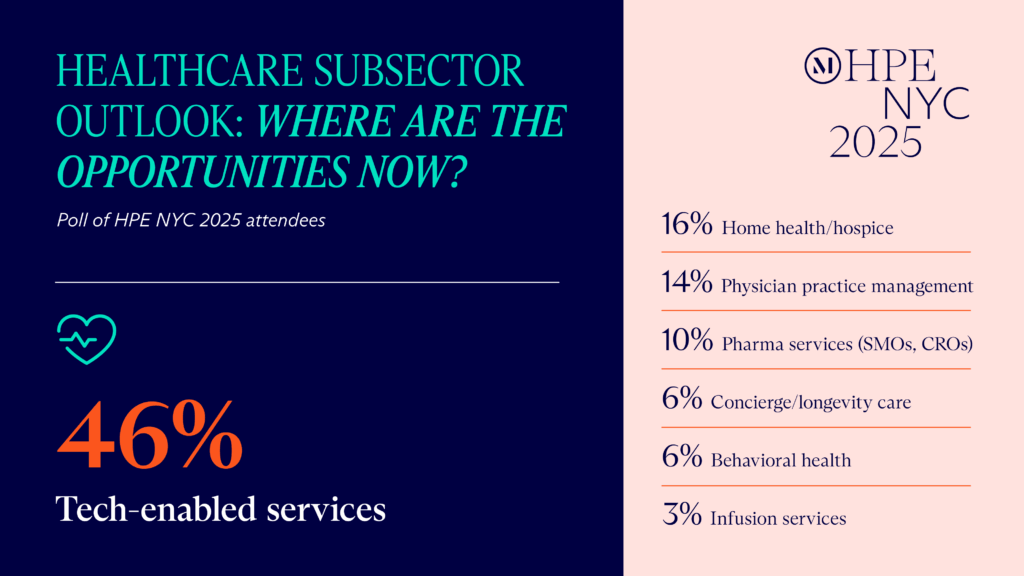
- Tech-enabled services mergers and acquisitions (M&A) activity. While broader M&A activity remains uneven, the panelists noted continued strength in tech-enabled platforms, decentralized trial capabilities, and demand for outsourced services. As platforms advance – with artificial intelligence, data, and omnichannel capabilities – into full-service commercialization, the market is rewarding scalability and integration. Anticipation and management of regulatory and compliance concerns is key, as the current M&A deal lifecycle is impacted by high-scrutiny environments in the United States and the European Union.
Custom legal structures enable investors to adapt
- Side pockets provide investment options. Hedge funds’ legal structures can significantly impact their ability to access private markets. Side pockets allow investors to maintain liquidity in the public market while participating in private deals. Traditionally, side pockets were designed to protect investors in the event an issuer went bankrupt or was delisted. More recent hedge fund structures, however, include side pockets from formation, allowing access to private deals with what is effectively a private equity fund within a hedge fund.
- Increased adoption of separately managed accounts (SMAs). SMAs are structured differently from traditional hedge funds; they are contractual relationships between investors and managers where the investor maintains ownership of the individual securities. Managers have access to the brokerage account, but their role is limited to buying and selling securities. SMAs have been gaining traction over the last several years, as they offer investors greater transparency and control.
Creativity continues to offer innovative, forward-looking investment opportunities throughout the healthcare industry.
As always, we look forward to discussing the details with our clients and partners. To explore any of these themes further, please reach out to a member of the firm’s Health & Life Sciences Group.



DORA and NIS2 in Practice
ARTICLE
DORA and NIS2 in Practice
November 2025
Read time: 2 min
Renate Prinz and Dr. Natallia Karniyevich examine how DORA and NIS2 are reshaping digital resilience and cybersecurity in the financial industry. The article was published in BKR – Journal of Banking and Capital Markets Law.
