














ARTICLE / CLIENT ALERT
IRS releases final and proposed regulations affecting the taxation of foreign governments
January 9, 2026
Read time: 14 min
On December 15, 2025, the US Department of the Treasury and the Internal Revenue Service (IRS) published final regulations and proposed regulations under Section 892 of the Internal Revenue Code relating to the taxation of foreign governments.
The final regulations largely finalize – with modifications – regulations proposed in 2011 and 2022 and provide clarity regarding the definition of “commercial activities”; further limit the scope of the US real property holding corporation (USRPHC) per se rule (discussed below); revise an exception for inadvertent commercial activities; and refine the “limited partner exception” (now the “qualified partnership interest exception”) introduced in the 2011 proposed regulations.
The proposed regulations introduce a new framework for determining whether a debt investment constitutes commercial activity. Under this framework, any acquisition of debt would be treated as a commercial activity unless it satisfies one of two safe harbors or a facts-and-circumstances test. Additionally, the proposed regulations provide further guidance on what constitutes “effective control” (previously “effective practical control”) of an entity engaged in commercial activities. As such, the proposed regulations may affect how foreign governmental investors (such as sovereign wealth funds) and their investment advisors structure debt investments and other relationships, particularly those focused on private credit and distressed debt.
The final regulations generally apply to taxable years beginning on or after December 15, 2025, and the proposed regulations generally would apply to taxable years beginning on or after the date they are published as final regulations in the Federal Register. However, a taxpayer may choose to apply both the final regulations and certain provisions of the proposed regulations to open tax years, provided certain conditions are met.
Investment advisors and their 892-eligible investors may wish to review existing arrangements in light of the final and proposed regulations.
Background
While non-US persons generally are subject to US taxation on receipt of certain US source income (e.g., dividends), Section 892 exempts foreign governments from this tax for certain enumerated types of income. However, Section 892 does not exempt from such tax income derived from the conduct of any commercial activity, income received by or from a controlled commercial entity, or income derived from the disposition of an interest in a controlled commercial entity.
Generally, both the “integral parts” of a foreign government and its “controlled entities” are considered foreign governments for purposes of the exemption. A principal distinction between an integral part of a foreign government and a controlled entity of a foreign government is that if a controlled entity becomes a “controlled commercial entity,” it loses the benefits of Section 892 entirely, whereas if an integral part of a foreign government engages in commercial activity, it loses the benefits of Section 892 only with respect to income from the commercial activity and not with respect to any other qualifying income. A controlled commercial entity is any entity that is owned 50% or more (directly or indirectly) by a foreign government or with respect to which the foreign government possesses effective control (discussed further below) and is engaged in any commercial activity worldwide during the taxable year.
Selected aspects of the final regulations
Definition of “commercial activities”
Consistent with prior guidance, the final regulations provide that all activities (whether conducted within or outside the United States) ordinarily conducted for the current or future production of income or gain are commercial activities, unless an exception applies.
The final regulations further provide that (unless an exception applies) commercial activities include activities that constitute a trade or business for purposes of Section 162 and activities that constitute (or would constitute if undertaken in the US) a US trade or business for purposes of Section 864(b). However, the preamble to the final regulations makes clear that, consistent with prior guidance, the term “commercial activities” as used in Section 892 has a broader meaning than “trade or business” under Sections 162 and 864 and is not limited to such activities. In other words, activity that may not constitute a trade or business under Sections 162 or 864 may nevertheless be treated as commercial activity under Section 892. (See discussion of debt investments below.)
Consistent with prior guidance, the final regulations provide that effecting transactions (for a foreign government’s own account and other than as a dealer) in stocks, securities, or commodities does not constitute commercial activity. The final regulations also clarify that effecting transactions (for a foreign government’s own account and other than as a dealer) in financial instruments that are derivatives generally within the scope of Prop. Reg. 1.864(b)-1(b)(2) does not constitute commercial activity. In the reasoning of the Treasury and the IRS, investing and trading in such financial instruments generally involve only putting capital at risk and do not involve activity such as structuring the instrument, in contrast to the structuring of bespoke, non-market standard derivatives. Additionally, the final regulations confirm that effecting transactions (for a foreign government’s own account and other than as a dealer) in partnership equity interests does not itself constitute commercial activity, but rather only results in commercial activity income if the partnership conducts commercial activity that is attributed to the holder.
USRPHC per se rule limited to domestic corporations
Temporary regulations issued in 1988 provided that an entity will be deemed to be engaged in commercial activity if it is a USRPHC as defined in Section 897(c)(2) (the USRPHC per se rule). Generally, a USRPHC is any corporation if the fair market value of its US real property interests (which may include interests in domestic USRPHCs) equals or exceeds 50% of the sum of the fair market value of its US and non-US real property interests and other trade or business assets.
The USRPHC per se rule created a trap for the unwary, whereby an entity holding only passive assets and a single minority interest in a domestic USRPHC could be classified as a controlled commercial entity. In 2022, the Treasury and the IRS issued proposed regulations that would exclude from the USRPHC per se rule any entity that would be a USRPHC solely by reason of its direct or indirect ownership interest in one or more other corporations that are not controlled by the foreign government (the minority interest exception). (For a further discussion of the 2022 proposed regulations, see our prior alert.)
The final regulations retain the minority interest exception (with certain modifications) with respect to domestic corporations but now entirely exclude all foreign corporations from the application of the USRPHC per se rule. As a result, the USRPHC per se rule is now applicable only to domestic corporations, although the minority interest exception may still be applicable (e.g., in the case of a foreign government’s domestic holding company that invests solely in minority interests of USRPHCs).
Inadvertent commercial activity exception
The final regulations largely adopt the “inadvertent commercial activity” exception in the 2011 proposed regulations, under which an entity will not be treated as having conducted commercial activity if three conditions are met: the failure to avoid the activity was reasonable, the activity is promptly cured, and adequate records are maintained.
The final regulations refine key aspects of this framework. For the reasonableness requirement, the analysis is limited to activities occurring during the current and immediately preceding tax year (to the extent relevant). The final regulations also introduce a facts‑and‑circumstances test for determining whether an entity’s policies and procedures are adequate to prevent commercial activities and further provide that a failure is not reasonable if employees responsible for compliance (now expanded beyond management‑level personnel) do not make reasonable efforts to follow and enforce the policies and procedures.
Qualified partnership interest exception
The 2011 proposed regulations included a so-called “limited partner exception,” whereby an entity not otherwise engaged in commercial activities would not be deemed to be engaged in commercial activities solely because it holds an interest as a limited partner in a limited partnership, provided it does not have rights to participate in the management and conduct of the partnership’s business. Nevertheless, the holder’s distributive share of income from the partnership would not be exempt under Section 892 to the extent that the partnership derived such income from the conduct of commercial activity.
The final regulations finalize this exception (with modifications), providing that the exception is not limited to limited partnership interests in state law limited partnerships and introducing the defined term “qualified partnership interest” (QPI). For purposes of the exception, the holder of a QPI must (1) have limited liability, (2) not possess the legal authority to bind or to act on behalf of the partnership, (3) not control the partnership (i.e., have 50% ownership or effective control), and (4) not have rights to participate in the management and conduct of the partnership’s business.
The final regulations also provide further guidance as to what constitutes “rights to participate in the management and conduct of a partnership’s business,” which are defined as “rights to participate in the day-to-day management or operation of the partnership’s business.” Such rights include the right to participate in ordinary-course personnel decisions, or to take active roles in formulating the partnership’s business strategy or in respect of the acquisition or disposition of a specific investment. However, such rights generally do not include the right to monitor or protect the partner’s capital investment (e.g., oversight and supervision rights regarding major strategic decisions, such as amendment of the partnership agreement or non-ordinary course deviations from previously determined investment parameters).
Additionally, under a new safe harbor, a holder will be deemed to hold a QPI if at all times during the partnership’s taxable year the holder (1) has no personal liability for claims against the partnership, (2) has no right to enter into contracts or act on behalf of the partnership, (3) is not a managing member or managing partner and does not hold an equivalent role under applicable law, and (4) does not directly or indirectly own more than 5% of either the partnership’s capital interests or its profits interests.
With respect to tiered partnership arrangements, the final regulations provide that the QPI exception applies from the bottom up. For example, if a foreign government holds an interest in an upper-tier partnership, which in turn holds a QPI in a lower-tier partnership, the lower-tier partnership’s commercial activities will not be attributed to the upper-tier partnership, even if the foreign government’s interest in the upper-tier partnership is not a QPI (although income from such activities will not be exempt under Section 892).
If a foreign government holds multiple interests in the same partnership (e.g., through multiple controlled entities), all such interests are aggregated for purposes of the QPI exception. If any such interest does not qualify for the QPI exception, then none of the interests will qualify.
Selected aspects of the proposed regulations
Acquisition of debt
The proposed regulations introduce a new framework for determining whether a debt investment constitutes commercial activity. Under this framework, an acquisition of any obligation treated as debt for US federal tax purposes (including by an agent or person otherwise acting on behalf of the acquirer) would be treated as a commercial activity unless the acquisition is (1) characterized as an investment for purposes of Section 892 under one of two safe harbors or under a facts-and-circumstances test (each discussed in further detail below) and (2) undertaken in a non-dealer capacity. Consistent with the definition of “commercial activities” described above, the preamble to the proposed regulations states that whether a debt acquisition is characterized as an investment for purposes of Section 892 would be, unless otherwise provided, determined without regard to whether the debt acquisition is treated as a trade or business for US federal tax purposes.
Safe harbors:
- Registered offerings. Acquisitions of debt in offerings registered under the Securities Act of 1933, as amended, would be characterized as investment activity (not commercial activity), provided that the underwriters are not related to the acquirer.
- Qualified secondary market acquisitions. Acquisitions of debt traded on an established securities market would be characterized as investment activity (not commercial activity), provided (1) the acquirer does not purchase the debt from the issuer or participate in the negotiation of the terms or issuance of the debt and (2) the acquisition is not from a person that is under common management or control with the acquirer (unless the prior acquisition qualified as investment activity).
A debt acquisition that does not satisfy either of the safe harbors may be characterized as investment activity based on the relevant facts and circumstances, including:
- Whether the acquirer solicited prospective borrowers or otherwise held itself out as willing to make loans or otherwise acquire debt at or in connection with its original issuance.
- Whether the acquirer materially participated in negotiating or structuring the terms of the debt.
- Whether the acquirer is entitled to compensation (whether or not labeled as a fee) that is not treated as interest (including original issue discount) for US federal tax purposes.
- The form of the debt and the issuance process, including, for example, whether the debt is a bank loan or instead a privately placed debt security pursuant to Regulation S or Rule 144A under the Securities Act.
- The percentage of the debt issuance acquired by the acquirer relative to the percentages acquired by other purchasers.
- The percentage of equity in the debt issuer held or to be held by the acquirer.
- The value of that equity relative to the amount of the debt acquired.
- If debt is deemed to be acquired in a debt-for-debt exchange as a result of a significant modification, whether there was, at the time of acquisition of the original unmodified debt, a reasonable expectation, based on objective evidence, such as a decline in the financial condition or credit rating of the debt issuer between original issuance and the time of the acquisition of the original unmodified debt, that the original unmodified debt would default.
The Treasury and the IRS have requested comments on whether the proposed regulations should include additional factors or examples of transactions undertaken by foreign government investors, including acquisitions of distressed debt, broadly syndicated loans, revolving credit facilities, and delayed-draw debt obligations.
In the preamble to the final regulations discussed above, the Treasury and the IRS explicitly rejected the suggestion that making loans to the general public or making a particular minimum number of loans constitutes a necessary condition for debt acquisitions to be commercial in character. Further to this point, an example in the proposed regulations concludes that a single loan, which the foreign government negotiated and funded at original issuance, to a borrower in which the foreign government does not own equity constitutes commercial activity.
In contrast, another example concludes that, where the foreign government owned 80% of a foreign corporation’s equity interests, which had a total value of $100 million, and lent $50 million to the foreign corporation, the loan does not constitute commercial activity (in part) because the foreign government owned a substantial percentage of the equity interests in the debt issuer and acquired an amount of debt that is not significant relative to the value of its equity investment. This example raises questions about how other shareholder loans, such as “levered blocker” arrangements, may be treated (e.g., if the foreign government owns 100% of the debt issuer but the debt-to-equity ratio is higher, or if the foreign government owns a smaller percentage of the debt issuer but the loan is funded pro rata by the owners).
Another example indicates that participation on a creditors’ committee that materially participated in negotiating and structuring the terms of the workout of a defaulted loan (resulting in a significant modification) results in commercial activity, even though there were no objective indications at the time of purchase that the borrower would default.
Definition of “effective control”
The proposed regulations would provide that, generally, effective control is achieved by any interest in the entity that, either separately or in combination, results in control over the operational, managerial, board-level, or investor-level decisions of the entity. A foreign government would not need to hold any particular amount of – or any – equity in an entity to have effective control. Interests in an entity may include:
- Equity interests
- Debt interests
- Voting power in the entity
- Contractual rights in or arrangements with the entity or with holders of equity or other interests in the entity
- Certain business relationships with the entity or with other interest holders in the entity
- Regulatory authority over the entity
- Any other relationship that provides influence over the entity’s operational, managerial, board-level, or investor-level decisions
Under a special per se rule, a foreign government would be deemed to have effective control of an entity if the foreign government is, or controls an entity that is, a managing partner or managing member of such entity, or holds or controls an entity that holds an equivalent role with respect to such entity under local law applicable to the entity.
The Treasury and the IRS have requested comments as to when a minority interest holder should not be treated as having effective control if managerial or board-level decisions are subject to veto rights of the holder and other holders (e.g., consent rights or supermajority requirements).
If you have any questions about the IRS’s final and proposed regulations, please reach out to the authors or your regular McDermott Will & Schulte lawyer.








Recent developments in tax law – News on commercial partnerships
ARTICLE
Recent developments in tax law – News on commercial partnerships
December 2025
Read time: 1 min
The trade tax treatment of partnerships is about to be reassessed.
With the decrees of November 5, 2025, the tax authorities are following the Federal Fiscal Court’s ruling for the first time and relaxing the rules on commercial infection. Dr. Gero Burwitz and Jonathan Storz explain which de minimis limits now apply and how investment income is to be reassessed in their article “News on Commercial Partnerships” in the NZG.



Eight European cyber priorities for legal counsel and CISOs in 2026
ARTICLE / CLIENT ALERT
Eight European cyber priorities for legal counsel and CISOs in 2026
January 8, 2026
Read time: 7 min
European cybersecurity regulation is entering a decisive phase, compelling companies to shift from preparation to active compliance. As the Network and Information Systems 2 (NIS2) Directive is implemented across a growing number of Member States, cybersecurity compliance obligations are now coming into effect for in-scope organizations, requiring immediate attention and operational readiness.
In parallel, new product-security obligations under the Cyber Resilience Act (CRA) will begin to apply from September 2026 (with full requirements following in December 2027), alongside sector-specific resilience frameworks, such as the Digital Operational Resilience Act (DORA). Meanwhile, the United Kingdom is undergoing cybersecurity and digital resilience reforms. Together, these developments create an increasingly complex and fragmented regulatory landscape for companies operating in Europe. For legal counsel, cybersecurity is no longer a purely technical or ancillary compliance matter; it has become a core governance, risk, and liability issue with direct implications for board oversight, management accountability, and business continuity – one that demands proactive engagement now.
Furthermore, at least for NIS2, in 2026 regulators are expected to move from preparatory work on legislative implementation to active supervision, audits, and enforcement. Against this backdrop, legal teams and chief information security officers (CISOs) must work closely to ensure their companies achieve compliance, which often requires coordinating multijurisdictional compliance efforts and embedding cybersecurity requirements into corporate governance, product design, supply-chain management, and incident-response frameworks.
Set out below are the eight key European cyber priorities that legal counsel and CISOs should have on their radar in 2026, together with practical considerations on why they matter and how companies can prepare.
1. Track and influence NIS2 transposition across the EU
Why it is relevant for you: The EU is raising the bar through landmark legislation, most notably the NIS2 Directive. These rules affect a wide range of businesses that are required to implement enhanced security measures and incident reporting, including food producers, digital infrastructure providers, information and communications technology (ICT) service providers, machinery manufacturers, medical device manufacturers, telco companies, online marketplaces, telco providers, and critical infrastructure operators. The risks of noncompliance are significant, including substantial fines, personal liability of the management team, operational restrictions, and reputational damage. National laws implementing NIS2 differ (see our NIS2 Monitoring Tracker), creating fragmented obligations and compliance risk across jurisdictions in which you operate.
What your organization should focus on now: Track individual jurisdictions, draft consultation responses, and advise on regulatory engagement strategies.
2. Implement the German NIS2 regime (now in force) where applicable to your organization
Why it is relevant for you: Germany’s rules for implementing the NIS2 Directive have recently come into force, imposing immediate cybersecurity obligations (see our article ‘Germany’s NIS2 Law: One step away from taking effect’), bringing with it the risk of fines and personal management liability in case of noncompliance.
What your organization should focus on now: Complete NIS2 readiness assessments, prepare mandatory registrations, develop compliance documentation, implement the required security measures, and update the incident-response processes.
3. Continue preparing for compliance with NIS2’s incident-reporting obligations, cybersecurity measures, and audit requirements across all relevant EU Member States (potentially all 27)
Why it is relevant for you: As additional countries adopt NIS2, companies may need to determine whether they are required to register locally, conduct readiness assessments, update incident-reporting processes, and develop the necessary compliance documentation. In addition, regulators are likely to begin audits and checks in 2026, particularly in the event of an incident; gaps in your cyber-risk management, supply-chain controls, or incident procedures could lead to enforcement. Finally, regulators are increasingly holding senior management personally accountable. It is therefore more important than ever to foster a security-conscious culture through structured training and active leadership engagement.
What your organization should focus on now: Build required policies and processes, design multi-regime reporting workflows considering the new cybersecurity requirements, prepare for audits, update risk-management frameworks, deliver tailored cyber and privacy trainings, conduct table-top exercises for leadership and operational teams, run executive briefings on regulatory expectations, develop governance playbooks, and enhance board-level reporting frameworks.
4. Prepare for the CRA
Why it is relevant for you: The CRA applies to virtually all digital products sold or used in the EU; noncompliance could block product launches or even lead to product withdrawal from the market. Examples of products in scope include smart-home devices, wearables, software applications, software-as-a-service tools, Internet of Things devices, industrial control systems, routers and switches, and cybersecurity tools.
Because the CRA imposes stringent security-by-design and documentation requirements, it is important to anticipate compliance early, not only to prepare the necessary technical documentation but also because meeting CRA obligations may require reengineering or strengthening the security architecture of products.
What your organization should focus on now: Assess CRA scope, classify products, create vulnerability and incident-handling processes, and create technical documentation.
5. Align with DORA’s financial-sector requirements
Why it is relevant for you: If you are a financial entity or a technology provider servicing one, you may fall under stringent resilience, oversight, and reporting obligations.
What your organization should focus on now: Build DORA-compliant ICT risk frameworks, develop resilience-testing strategies, update third-party management, and prepare incident-reporting playbooks.
6. Understand exposure under CER
Why it is relevant for you: The Critical Entities Resilience Directive (CER) expands cybersecurity obligations for operators of essential services (e.g., data centre providers), often overlapping with NIS2. Member States are still transposing CER into national law (the same 17 October 2024 deadline applied as for NIS2), after which national authorities began preparations for identifying the critical entities. By 17 July 2026, each Member State must formally identify the critical entities.
Entities that are in principle very likely to be designated as critical should begin preparing now. Early readiness reduces operational and legal risk and ensures a smoother compliance process once national measures enter into force.
What your organization should focus on now: Assess whether CER applies, support risk and resilience assessments, and design integrated CER–NIS2 compliance programs.
7. Monitor the EU Digital Omnibus (simplification package)
Why it is relevant for you: Although framed as “simplification”, the proposals will change the European legislation across five core areas (see our article ‘EU proposes sweeping reforms to the GDPR, cookie rules, Data Act, and breach reporting’)
- Cybersecurity incident reporting (NIS2 and related laws)
- Data protection (General Data Protection Regulation (GDPR))
- ePrivacy (ePrivacy Directive and updated GDPR rules)
- Data use and governance (Data Act and related frameworks)
- AI regulation (AI Act)
What your organization should focus on now: Assess the impact of the proposed amendments and engagement with stakeholders and monitor the legislative process. If passed, prepare for changes, including:
- Centralised incident-reporting channel (Single Entry Point)
- Higher GDPR breach-notification thresholds
- New legal bases for processing sensitive data, especially in AI contexts
- Unified approach to Data Protection Impact Assessments
- Streamlined transparency and research and development obligations
- Machine-readable consent mechanisms to reduce cookie-banner fatigue
8. Monitor the UK’s Cyber Security and Resilience (Network and Information Systems) Bill
Why it is relevant for you: The UK is undertaking a significant restructuring of its current cybersecurity regime. If passed, the bill will expand the scope to include inter alia data centres and managed service providers, introduce a new critical suppliers’ category, create detailed customer-notification duties, and establish a two-stage reporting model that differs from NIS2. As the bill continues through Parliament, requirements may still change, making early monitoring essential.
What your organization should focus on now: Monitor legislative developments, compare the bill with NIS2, map how the bill may affect your UK operations and supply chain, assess whether you could be designated a critical supplier, and evaluate the proposed amendments, as well as any changes your company may need to make to existing documentation, standard procedures, and operational practices.


French FDI review 2025: Practical lessons and regulatory outlook
ARTICLE / CLIENT ALERT
French FDI review 2025: Practical lessons and regulatory outlook
January 7, 2026
Read time: 9 min
2025 enforcement trends
The French Foreign Direct Investment (FDI) Bureau confirmed in 2025 the trends observed in 2024, notably a continued increase in the number of notifications, including a significant volume of filings linked to collective insolvency proceedings.
The Bureau emphasized that its review process is grounded in objective, non-discriminatory, transparent, and predictable criteria. Ongoing dialogue between investors and the administration was highlighted as a key factor in ensuring legal certainty, deal stability, and investor confidence.
Revision of the EU FDI regulation: What to expect
A revised EU FDI Regulation has been adopted in the first half of 2026, with entry into force at the beginning of 2028. The main anticipated changes include:
Procedural changes
- Phase 1 review standardized at 45 calendar days, aligning with the current 30 working-day period
- Multi-country transactions will require same-day filings in all relevant Member States, with simultaneous notification to the EU cooperation mechanism
- Extended cooperation mechanism deadlines (approximately 10 additional calendar days)
- As a consequence, Phase 2 reviews in France are expected to lengthen, with near-systematic use of the 45-business-day deadline. Where French authorities must wait for feedback from other Member States, the transmission of proposed conditions may be delayed.
- Expanded scope of mandatory screening, potentially including LPs of investment funds.
Expanded scope of mandatory screening
The revised regulation will significantly broaden the scope of FDI review to include:
- All dual-use goods and technologies listed in Annex I of EU Regulation 428/2009 (beyond the current Annex IV), covering research, marketing, and production activities
- Electoral infrastructure
- Financial services, including payment systems; and
- Critical technologies, notably artificial intelligence, semiconductors, and quantum technologies (to be precisely defined). Both R&D and production activities will be subject to screening (R&D only under current rules).
Practical lessons from 2025 reviews
Preparing FDI applications
The FDI Bureau noted a marked improvement in the completeness of filings, but stressed that processing times depend primarily on the quality and precision of activity descriptions. Investors should:
- Describe activities in detail, by subsidiary, product, and service, including R&D from the outset
- Avoid promotional materials and focus on clear, accessible, and technically accurate information.
For investment funds:
- The identity of fund subscribers is not required initially
- The fund manager and controlling natural persons must be disclosed
- Subscriber identities may be requested later if deemed necessary.
The Bureau also recommends including:
- A clear description of the rights acquired, particularly for minority investments
- A step plan detailing when covered investments will occur; and
- A concrete description of the investor’s strategy, including existing sector investments, presence in France, and intended investment horizon.
Examination of applications
FDI reviews are governed by Article L.110-1 of the Code of Administrative Justice, including for requests to amend existing authorizations.
The Bureau expressed concern about transactions with closing timelines incompatible with statutory review periods. While accelerated handling may be considered in objectively substantiated emergency situations affecting the target, commercial penalties alone do not justify urgency.
Notably:
- There is no specific FDI procedure for safeguard proceedings. Early engagement with the administration is strongly recommended
- While public affairs advisors may be involved, lawyers remain the primary and preferred channel for FDI communications.
Clarifying the scope of FDI authorization
The Bureau addressed several areas where scope remains frequently misunderstood:
Renewable energy
Most photovoltaic and wind projects fall outside the FDI regime, except where:
- The assets are operational at closing (projects or permits alone are not sensitive); and
- Installed capacity exceeds 50 MW, and the activity is the target’s main business.
Where energy activities are ancillary, authorization depends on whether the activity is essential to France’s energy supply under Article R.151-3 of the Monetary and Financial Code.
Agriculture and food
FDI screening applies only to infrastructure and production essential to national food security.
- Excluded: substitutable cereal trading with limited market share, and non-specialized food packaging
- Included: large-scale industrial activities involving chemical inputs for agriculture, where market share is significant and competition limited.
Critical raw materials
The definition set out in July 2025 guidelines remains unchanged.
Software and digital activities
FDI rules apply only to activities carried out in France by French-law entities. Generally excluded:
- Intra-group after-sales or marketing activities not targeting third parties in France (unless involving cryptology or interception technologies)
- Standard HR functions without proprietary hosting or storage. Data-center colocation is typically outside scope unless customers present specific national-security sensitivities.
Post-authorization obligations
Investors must:
- Notify the administration within two months of completing the authorized transaction
- Submit annual compliance reports, which must detail adherence to conditions and changes in the sensitive customer base. The Bureau indicated that a mandatory reporting template may be introduced.
Any difficulties in complying with authorization conditions should be reported as early as possible to facilitate dialogue.
Key Q&A highlights
- Change in fund nationality: No new authorization is required if sensitive activities are unaffected; notification suffices. If control becomes entirely French, the authorization lapses
- Cultural products: Media freedom and pluralism remain relevant, but the scope under the revised EU regulation is still under discussion
- Foreign lenders and security interests: No notification is required unless the lender actually acquires control
- Continuation funds: No specific intra-group exemption applies beyond those already provided by law.



IRS roundup: December 15 – December 22, 2025
ARTICLE
IRS roundup: December 15 – December 22, 2025
Jan 6, 2026
Read time: 4 min
Check out our summary of significant Internal Revenue Service (IRS) guidance and relevant tax matters for December 15, 2025 – December 22, 2025.
December 15, 2025: The IRS issued Notice 2026-2, providing an update on weighted average interest rates, yield curves, and segment rates. The notice specifically focused on the corporate bond monthly yield curve, corresponding spot segment rates used for purposes of Internal Revenue Code (Code) Section 417(e)(3), and 24-month average segment rates for purposes of Code Section 430(h)(2). Notice 2026-2 also provides the interest rate for 30-year Treasury securities for purposes of Code Section 417(e)(3)(A)(ii)(II), as in effect for plan years beginning before 2008, as well as the 30-year Treasury weighted average rate for purposes of Code Section 431(c)(6)(E)(ii)(I).
December 15, 2025: The IRS issued Revenue Ruling 2026-2, providing various prescribed rates for federal income tax purposes for January 2026. The prescribed rates include:
- Short-, mid-, and long-term applicable federal rates for certain debt instruments in the Code.
- Section 42(b)(1) housing credit appropriate percentages.
- The deemed rate of return for calendar year 2026 transfers made to pooled income funds, as described in Section 642(c)(5).
- The average of the applicable federal mid-term rates for the 60-month period ending December 31, 2025.
December 19, 2025: The IRS issued Notice 2026-1, providing interim guidance related to the credit for carbon oxide sequestration under Code Section 45Q pending the forthcoming proposed regulations removing reporting obligations related to the geological sequestration of carbon dioxide imposed under subpart RR of 40 CFR part 98. The notice specifically provides a safe harbor for determining eligibility for qualified carbon oxide, captured and disposed of in secure geological storage and not used as a tertiary injectant in a qualified enhanced oil or natural gas recovery project, during calendar year 2025. Notice 2026-1’s safe harbor applies if the US Environmental Protection Agency does not launch the electronic Greenhouse Gas Reporting Tool for filers to prepare and submit information required under subpart RR by June 10, 2026. Taxpayers can rely on the safe harbor to demonstrate compliance with subpart RR requirements when determining the Code Section 45Q credit related to the 2025 Calendar Year Secure Geological Storage.
December 19, 2025: The IRS issued Notice 2026-6, extending the transition period in Revenue Ruling 2025-4 for states administering paid family and medical leave (PFML) programs and employers participating in PFML programs. The extension is for an additional year and only as it relates to the medical leave benefits a state pays to an individual that can be attributed to employer contributions.
December 22, 2025: The IRS issued Notice 2026-3, providing relief from Code Section 6654 and 6655 additions of tax for underpayments of estimated income tax by taxpayers making valid Code Section 1062(a) elections.
December 22, 2025: In Announcement 2026-1, the IRS declared its intent to issue guidance related to Code Section 6435. That guidance, intended for taxpayers that paid Code Section 4081 tax on diesel fuel or kerosene and later removed such fuel as dyed fuel, will inform taxpayers of the process to request a refund. The US Department of the Treasury and the IRS request taxpayers to not submit any Code Section 6435 claims until this guidance is issued in early 2026. The IRS will not process any claims until that guidance is issued.
The IRS also released its weekly list of written determinations (e.g., Private Letter Rulings, Technical Advice Memorandums, and Chief Counsel Advice).

Trending in Telehealth: November 2025
ARTICLE
Trending in Telehealth: November 2025
Dec 31, 2025
Read time: 4 min
Trending in Telehealth highlights monthly state legislative and regulatory developments that impact the healthcare providers, telehealth and digital health companies, pharmacists and technology companies that deliver and facilitate the delivery of virtual care.
Trending in November:
- Telehealth expansion
- Teledentistry
- Veterinary telemedicine
- Mental and behavioral health
A CLOSER LOOK
Proposed Legislation & Rulemaking
- Alaska proposed a rule to move the telemedicine business registry provisions from the centralized professional licensing regulations to the business license regulations and to combine the application for the general business licenses and the telemedicine business registration.
- Arkansas proposed a rule that would amend the Arkansas Medicaid Personal Care and Independent Assessment Manuals to clarify that personal care services provided by telehealth are not covered by Arkansas Medicaid and that reassessments of a functional needs Independent Assessment can be performed via telehealth.
- The Florida Board of Clinical Laboratory Personnel issued a notice of development of rulemaking to update disciplinary guidelines regarding patient overpayments and refunds to include telehealth registrants. The new rule would go into effect on January 1, 2026.
- In Michigan, the first chamber passed HB 4220 which would require veterinarians to establish a veterinarian-client-patient relationship before practicing veterinary medicine on an animal. This relationship requires veterinarians to obtain current knowledge of the animal, either through in-person examinations, telehealth, or visits to where the animal is kept. Telehealth examinations have specific limitations, particularly for non-companion animals and situations involving controlled substances, which require in-person examinations. The veterinarian may only prescribe a limited supply of medication following a telehealth visit, with certain conditions needing an in-person follow-up.
- Nevada proposed a revised rule related to teledentistry. The regulation would set detailed requirements for dental care provided via teledentistry, including prescribing conditions, collaboration protocols, and supervision procedures.
- New Mexico’s Board of Examiners for Occupational Therapy proposed a rule to clarify that the New Mexico Telehealth Act does not alter supervision requirements for occupational therapy assistants.
- Ohio proposed a rule that would amend the Ohio Medicaid telehealth regulations to add doulas and certified lactation specialists to the list of eligible providers, remove hospice aides, private duty registered nurses, and private duty licensed practical nurses in a hospice setting from the list of eligible providers, and add various services to the list of services eligible for payment including doula services, nurse home visiting services, individual counseling for PreP, and services that have a code description including a telehealth component and are covered in an Ohio Medicaid program fee schedule. The proposed regulation would also require a rendering provider’s NPI for professional claims for telehealth services and would remove expired COVID-19 language from the regulation.
Finalized Legislation & Rulemaking Activity
- In Louisiana, the Licensed Professional Counselors Board of Examiners adopted a final rule that allows licensed counselors or therapists from other states to register to provide mental health counseling services via telehealth if their license is unencumbered.
- A final rule in Oregon revised to the circumstances under which a veterinarian may utilize veterinary telemedicine prior to a physical exam for an aggressive or fractious patient and to simplify the language within the rule that allows a certified veterinary technician to provide veterinary telemedicine with a valid vet-client-patient relationship.
- Texas adopted a final rule that specifies the informed consent documentation that is required when performing teledentistry.
Why it matters:
- State regulation of telehealth across licensed healthcare professions continues to mature. States continue to formalize the provision of telehealth across professions including veterinary medicine and dentistry. November saw both proposed and finalized rulemaking and legislation regulating the provision of telehealth in these professions with an emphasis on informed consent, prescribing limitations, and supervision requirements.
- State reimbursement of telehealth services for Medicaid patients continues to fluctuate. While Arkansas proposed a rule that would make clear personal care services delivered via telehealth, Ohio proposed a rule that would broaden telehealth reimbursement to support maternal health, preventive care, and home-based services.
Telehealth is an important development in care delivery, but the regulatory patchwork is complicated. The McDermott Will & Schulte Digital Health team works alongside the industry’s leading providers, payors, and technology innovators to help them enter new markets, break down barriers to delivering accessible care, and mitigate enforcement risk through proactive compliance.



The UPC’s emerging approach to injunctions: Patterns, pitfalls, and global implications
ARTICLE
The UPC’s emerging approach to injunctions: Patterns, pitfalls, and global implications
December 30, 2025
Read time: 11 min
Since its entry into force on June 1, 2023, the Unified Patent Court (UPC) has seen a growing number of cases across various fields, including pharmaceuticals, biotechnology, medical devices, electronics, and mechanical. Early decisions on preliminary and permanent injunctions offer valuable insight into how the court approaches enforcement of patent rights, and how the UPC outcomes can impact parallel US cases.
Preliminary injunctions, granted under Article 62 of the Agreement on a UPC (UPCA), constitute a form of interim relief that enables a patent holder to request that the court prohibit allegedly infringing activities even before an infringement action has been started on the merits. These preliminary measures are highly valuable because they enable patent holders to protect their market position without waiting for the full litigation process to be concluded. At the same time, preliminary injunctions can have significant consequences for the alleged infringer, potentially disrupting business operations and strategies, especially if the patent is subsequently ruled on the merits as invalid or not infringed.
By contrast, a permanent injunction is issued under Article 63 UPCA following a decision on the merits ruling the patent as valid and infringed. In this respect, in a recent landmark decision by the Court of Appeal (CoA) dated November 25, 2025, in the case Meril v. Edwards, the CoA ruled that a permanent injunction shall be issued as a principle after a finding of infringement and validity, unless an injunction would not comply with the general obligations of Article 3 of the Enforcement Directive 2004/48/EC, “in particular the obligation that the remedies shall be proportionate in light of the interests of the parties but also the interests of third parties, such as patients.”
Statistics and trends at the UPC
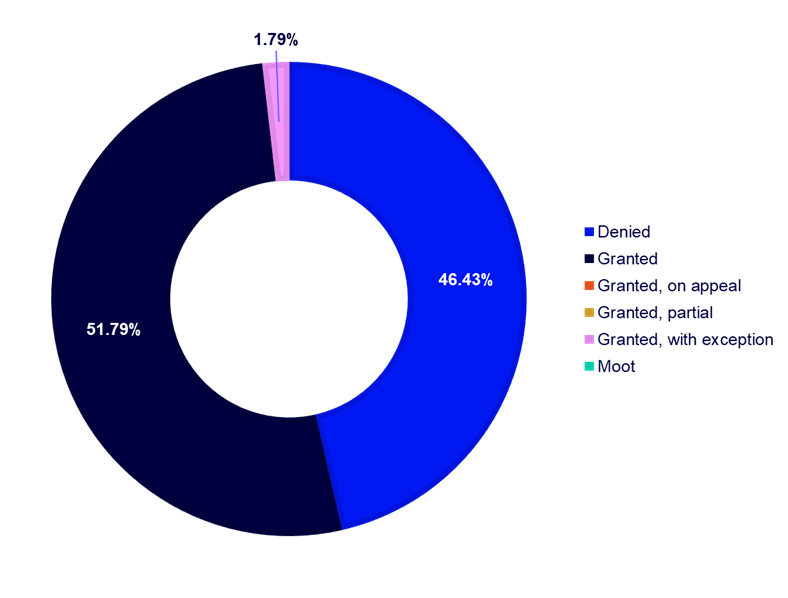
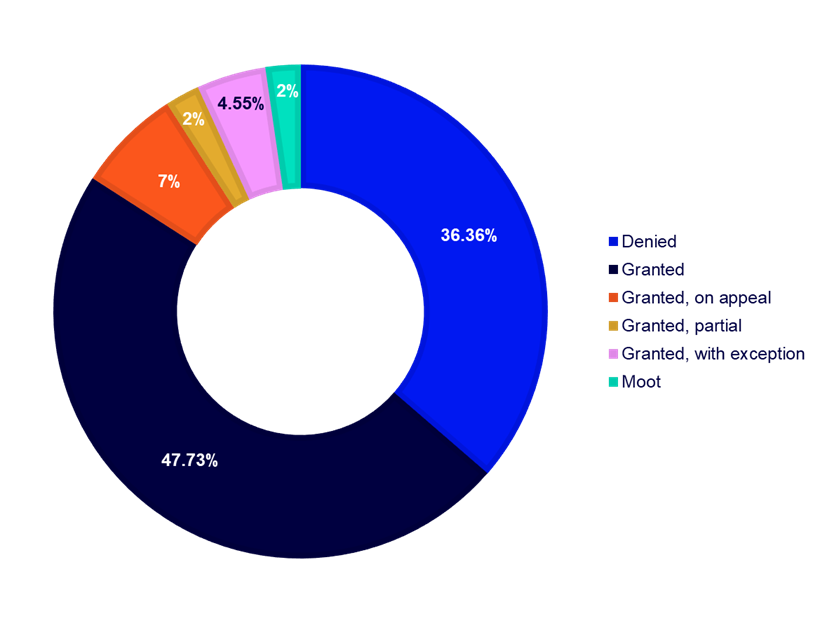
Early statistics suggest that the UPC has taken a relatively patentee-friendly approach when it comes to injunctions. Overall, the success rate for preliminary injunctions exceeds 60%, while patent holders have a little more than a 50% chance of receiving a permanent injunction on the merits. These outcomes are rather high compared to US cases, where injunctions have become much more difficult to obtain.[1] In this respect, given the demanding evidentiary standard, patentees seem to request such preliminary measures only when they are confident in the strength and urgency of their claims.
Success rates for preliminary and permanent injunctions at the UPC
Status of permanent injunctions
Status of preliminary injunctions
Despite the court’s relative newness, distinct patterns are already emerging among the Local Divisions.
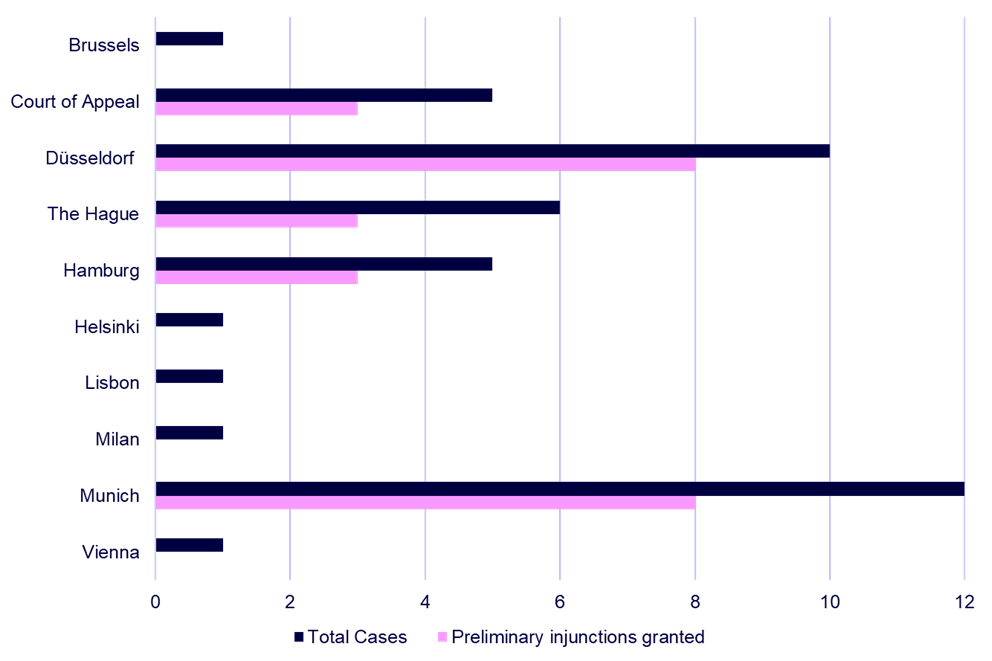
For example, the Local Divisions in Germany have shown a rather patentee-friendly stance. In this respect:
- The Local Division Düsseldorf has granted approximately 80% of the requests for preliminary injunction.
- The Local Division Munich follows, with around 67%.
- Of the 21 preliminary injunctions granted, 62% were issued by the Local Divisions located in Germany.
At the CoA level, approximately 60% of the preliminary injunctions have been granted.
Preliminary injunction grant rates by division and appeal outcomes
Legal test for preliminary injunctions
Because of the potential extraordinary impact of these preliminary measures – they carry the immediate power to either halt commercial activities or permit them to continue – the UPC applies a strict legal test to ensure that interim relief is justified. This test, rooted in Article 62 UPCA and Rule 211 of the UPC’s Rules of Procedure (RoP), defines the substantive and procedural thresholds applicants must meet to obtain a preliminary injunction.
Under Article 62(4) UPCA and Rule 211(2) RoP, the applicant must demonstrate, to a sufficient degree of certainty, that it is entitled to bring the action pursuant to Article 47 UPCA, that the patent is valid or likely to be valid, and that there is an (at least imminent) infringement.
Even where these criteria are met, the court shall, pursuant to Article 62(2) UPCA and Rule 211(3) RoP, “have the discretion to weigh up the interests of the parties and, in particular, to take into account the potential harm for either of the parties resulting” from whether or not the provisional measures will be ordered.
In order for a preliminary injunction to be granted, the court must be satisfied that it is more likely than not that these elements are met (see CoA in Boehringer Ingelheim v. Zentiva, NanoString v. 10x Genomics, and Mammut v. Ortovox).
After more than two years, the CoA and Local and Regional Divisions have further clarified these criteria.
Imminence of infringement
The requirement of “imminence,” assessed under Articles 62(1) and (4) UPCA and Rule 211(2) RoP, is met by situations where the infringement has not yet occurred but where the alleged infringer has ‘set the stage for it to occur’, as clarified in Boehringer Ingelheim v. Zentiva. Accordingly, preliminary injunctions may be ordered to prevent infringement when the allegedly infringing product has not yet been launched.
In the same case, the CoA held that, in the context of generic products, the mere application for or grant of a marketing authorization does not constitute imminent infringement. However, completion of national pricing and reimbursement procedures may amount to imminent infringement when no further steps are required before market entry.
This approach was later extended to medical devices in the case Occlutech v. Lepu, where the Local Division Hamburg found that obtaining and publicly announcing CE marking under the medical device regulation, combined with marketing efforts or participation in trade fairs, constitutes evidence of imminent infringement, as this demonstrates both regulatory readiness and a concrete intent to market within the European Union.
Urgency
The requirement of “urgency” derives from Rule 211(4) RoP, where the court must consider any “unreasonable delay in seeking provisional measures.”
The CoA has repeatedly clarified that the reasonability of a delay depends on the circumstances of each case. The relevant period is when the applicant becomes aware, or should have become aware, of the facts justifying interim relief. More precisely, the decisive point is when, after exercising due diligence, the applicant possesses the necessary evidence to support a reasonable prospect of success (Mammut v. Ortovox).
For instance, in Boehringer Ingelheim v. Zentiva, urgency was satisfied when the application was filed approximately one month after public notification of the generic’s pricing and reimbursement approval. Similarly, in Dyson v. SharkNinja, the Local Division Munich accepted a two-month delay after the detection of sales, though the preliminary injunction was later lifted by the CoA.
In Biolitec v. Lightguide, the Local Division Düsseldorf rejected the application for lack of urgency because the medical single-use product had been on the market for several years, well before the patent was granted in July 2024. The CoA confirmed this decision.
At the far end of the timeliness spectrum, the Local Division The Hague has accepted, in Amycell v. redacted, an approximately 10-month delay to be justifiable, as the applicant needed time to obtain evidence on the specific strains, given the time-consuming nature of cultivation and to anticipate the defendant’s likely arguments. This illustrates how the facts and practical constraints of a case can influence the court’s assessment of temporal urgency.
Conversely, in Merz v. Viatris, the Local Division Paris denied provisional measures for lack of urgency because the applicant waited for an actual launch of generic products before seeking provisional measures. The Local Division Paris considered that Merz should have sought such measures at an earlier stage when Viatris had completed all regulatory steps, i.e., when the subsequent launch became imminent and possibly undeniable. In other words, innovators seem to have only one shot at preliminary measures, with no second chance if the patentee waits until actual launch before starting any action. This is the second decision to go in that direction, after Cilag v. Rivolution from Local Division The Hague. Market entry does not seem to revive urgency.
Necessity
Under Rule 206(2)(c) RoP, “necessity” requires the applicant to explain why provisional measures are essential to prevent infringement. The CoA has confirmed that this is a material, not formal, requirement (NanoString v. 10x Genomics; Biolitec v. Lightguide).
Necessity will generally be established where any delay would cause irreparable harm or where only interim relief can provide effective protection. Although irreparable harm is not a mandatory criteria (Mammut v. Ortovox; Biolitec v. Lightguide), it often plays a decisive role, particularly in cases of direct competition (Biolitec v. Lightguide) and risk of price erosion (Insulet v. EOFlow). The CoA has also emphasised that evidence of clear infringement and a high probability of validity alone are insufficient; applicants must show why only interim relief can ensure effective protection (Biolitec v. Lightguide). In Boehringer Ingelheim v. Zentiva, the CoA found the requirement of necessity satisfied due to the risk of permanent price erosion and market substitution resulting from a generic product priced at least 30% lower. Similarly, in Biolitec v. Lightguide, the court emphasized that applicants must show that interim relief is required to protect market share, prices, or other interests that cannot await a decision on the merits.
Parallel US litigation and strategic considerations
Of the UPC cases considered, 14 had parallel litigation in the United States involving related patents. Only two of those cases resulted in permanent injunctions (done by stipulation of the parties). Of the remaining 12 US cases, eight settled on undisclosed terms, two resulted in the finding of noninfringement or invalidity, and the remaining cases are still pending. Only one case involved preliminary injunctions in both the US and the UPC (Alexion Pharmaceuticals v. Samsung Bioepis[2]), but both the US District Court and the UPC rejected the patent owner’s request (by Alexion) for the preliminary injunction based on invalidity concerns. Although it is too early to extract any definitive general trends from these few parallel cases, as discussed below, the increased threat of an injunction in Europe relative to the US and the UPC’s shortened timeline does appear to be affecting strategic decision making.
For example, in three of the settled cases,[3] the strategy of litigating parallel cases in the US and at the UPC played a role in the outcome. In each case, the US litigation was in the early stages when the UPC reached decisions on preliminary measures. And in each case, the denial of a preliminary injunction at the UPC resulted in a global settlement resolving the UPC and the parallel US litigation. This shows the effect that the UPC’s shortened timeline has on global enforcement strategies. Seeking a preliminary injunction at the UPC gives parties an early indication of the likelihood of success, incentivizing them to make strategic decisions early in the case about whether to proceed with the case or settle. Moreover, as discussed herein, the chance of success in seeking a preliminary injunction at the UPC is relatively high, at around 60%.
In another notable case, Edwards Lifesciences v. Meril Life Sciences,[4] the patentee filed parallel litigation in the US and at the UPC. The parallel cases involved products from Meril’s Myval line of prosthetic heart valves and delivery systems. Meril’s Myval systems have received regulatory approval in Europe but have not yet been approved by the US Food and Drug Administration. As such, the UPC case involved the commercial sale of products in Europe, whereas the parallel US litigation addressed the products in pre-commercial state, specifically importation for a medical conference in association with seeking regulatory approval. In the US, the court denied relief based on the Hatch-Waxman safe harbor of 35 US Code (USC) § 271(e)(1), which allows the use of patented material solely for purposes reasonably related to obtaining regulatory approval.[5] But in the UPC, Edwards obtained broad injunctive relief based on findings of infringement, far earlier than would have been available in the US.
In another situation, Headwater Research sued Samsung Electronics in multiple cases in the US and at the UPC. In one US case, Headwater won a jury verdict of $278 million,[6] which led to settlement of related cases. However, Samsung succeeded on a counterclaim for revocation at the UPC with the court finding that Headwater added new matter during prosecution. While these results partially reflect the difference in prosecution standards between US and European patents, they also highlight the differences in how each jurisdiction approaches validity in litigation and how one can be deployed to impact the other. The parallel revocation action in the UPC served to put downward pressure on the overall economics of the dispute, potentially lowering the amount at stake.
Accordingly, early data suggests that there are strategic advantages in litigating parallel cases in the US and at the UPC. In general, the UPC’s condensed timeline relative to US courts allows parties to get an early indication of strength of case and positions, and potentially leverage early wins in settlement negotiations.
Conclusions
The UPC applies a substantive, evidence-driven test for preliminary injunctions, close to a merit-level analysis by analyzing patent validity. Applicants must present a comprehensive case demonstrating validity, infringement, imminence, urgency, and necessity. In addition to the substantive merits, courts carefully assess the urgency and necessity of interim relief before granting it. In general, preliminary injunctions in the UPC have had about a 60% success rate, which is far higher than is found in US cases. Permanent injunctions remain a standard form of final relief in UPC cases. Case strategies that integrate both US and UPC parallel actions have the potential to leverage the comparative advantages of each jurisdiction, potentially leading to more efficient case resolutions.






New Illinois law provides coverage for HRT care for menopause
ARTICLE / CLIENT ALERT
New Illinois law provides coverage for HRT care for menopause
December 29, 2025
Read time: 3 min
On January 1, 2026, Illinois House Bill (HB) 5295 becomes effective. The legislation provides that, under the Illinois Insurance Code, coverage for hormonal and non-hormonal therapies for menopause care is mandatory for all group and individual insurance managed care and Medicaid plans, in certain circumstances.
In February 2024, State Representative Laura Faver Dias introduced HB 5295 to ensure that all people going through menopause have sufficient medical care, regardless of their income. In July 2024, Illinois enacted the legislation, which amended two critical aspects of the Illinois statutes related to healthcare insurance coverage and added a new section to the insurance code related to coverage under the Medicaid program.
The legislation amended 215 ILCS 5/356z.56, related to all group, individual, and managed care plans in the state, as follows:
A group or individual policy of accident and health insurance or a managed care plan that is amended, delivered, issued, or renewed on or after January 1, 2026 shall provide coverage for medically necessary hormonal and non-hormonal therapy to treat menopausal symptoms if the therapy is recommended by a qualified health care provider who is licensed, accredited, or certified under Illinois law and the therapy has been proven safe and effective in peer-reviewed scientific studies. Coverage for therapy to treat menopausal symptoms shall include all federal Food and Drug Administration-approved modalities of hormonal and non-hormonal administration, including, but not limited to, oral, transdermal, topical, and vaginal rings.
The legislation also created a new section, codified at 305 ILCS 5/5-52, that provides coverage for hormonal therapy for medically necessary treatment for menopause that has been induced by a hysterectomy. On November 12, 2024, the Illinois Department of Healthcare and Family Services issued a provider notice confirming the above coverage and its applicability to fee-for-service Medicaid and Medicaid managed care plans.
Why it matters
- These updates remove barriers to coverage for patients seeking medically necessary menopause care.
- The updates acknowledge the impact of peer-reviewed scientific studies and developments in the medical community that have supported the safety and efficacy of both hormonal and non-hormonal therapy.
- Providers, including digital health platforms, that provide covered services to Illinois patients should be aware that services will be reimbursed by plans starting in 2026.
If you have any questions about the new law, please reach out to one of the authors or your regular McDermott Will & Schulte lawyer.





Federal government continues efforts to prohibit gender-affirming care for minors
ARTICLE
Federal government continues efforts to prohibit gender-affirming care for minors
December 23, 2025
Read time: 4 min
On December 18, 2025, the US Department of Health and Human Services (HHS) unveiled several actions targeting gender-affirming care (GAC), including the use of puberty blockers, hormone therapy, and surgical interventions to treat gender dysphoria in minors.
The Centers for Medicare & Medicaid Services (CMS) issued two proposed rules, Prohibition on Federal Medicaid and Children’s Health Insurance Program (CHIP) Funding for Sex-Rejecting Procedures Furnished to Children and Hospital Condition of Participation: Prohibiting Sex Rejecting Procedures for Children, that would eliminate federal Medicaid funding for GAC services for minors and place hospital participation in Medicaid or Medicare at risk if they perform these services. The HHS Office of Civil Rights (OCR) also proposed a rule, Nondiscrimination on the Basis of Disability in Programs or Activities Receiving Federal Financial Assistance, which would clarify that individuals with certain gender identity disorders are not protected by the disability discrimination rules issued pursuant to Section 504 of the Rehabilitation Act.
Following the release of these rules, HHS issued a declaration that GAC services for children and adolescents are neither safe nor effective as treatment for gender dysphoria, gender incongruence, or other related disorders and, therefore, fail to meet professionally recognized standards of healthcare. Concurrently, the US Food and Drug Administration (FDA) issued warning letters to 12 companies for marketing chest binders as treatment for gender dysphoria in minors.
HHS’s actions stem from a January 2025 executive order (EO) from the Trump administration that directed HHS, the US Department of Justice, and other agencies to begin reviewing and promulgating specific actions to eliminate GAC for individuals under the age of 19. These actions represent a significant escalation of the Trump administration’s efforts against the provision of GAC to minors, and state attorneys general and advocacy groups have already signaled an intent to challenge these actions in federal court.
State attorneys general and advocacy groups have succeeded to date in preventing HHS from enforcing key aspects of the EO. PFLAG v. Trump and Washington v. Trump have temporarily blocked Section 4 of the EO, and the federal judge in PFLAG prohibited federal agencies from “conditioning, withholding, or terminating federal funds . . . based on the fact that a healthcare entity or health professional provides gender-affirming medical care to a patient under the age of 19.”
These injunctions are currently under appeal. HHS does not believe that these lawsuits prevent it from taking any of the actions announced on December 18, 2025. HHS states that it based these actions on Section 5 of the EO, which is not subject to any injunction. Section 5 of the EO directs HHS to take steps to eliminate GAC for minors, such as through Medicare or Medicaid conditions of participation or conditions of coverage, thereby allowing the rules to proceed through notice and comment rulemaking.
The proposed rules cite additional Trump administration actions regarding GAC for minors as support, including an HHS report reviewing best practices for pediatric gender dysphoria treatment, a state Medicaid director letter alerting states to CMS’s concerns about GAC, and a safety special alert memo for hospitals. View the press release regarding the proposed rules. Comments on the proposed rules are due February 17, 2026. The HHS declaration and FDA warning letters do not provide an opportunity for comment.
HHS’s actions follow the passage of two bills in the US House of Representatives on December 17, 2025, and December 18, 2025, that would criminalize the provision of GAC to minors and deny federal Medicaid funding for these services, respectively. Both bills now move to the US Senate, where passage is less likely. Taken together, HHS’s actions and the House passage of these bills demonstrate continued regulatory and legislative interest in GAC and increase the pressure on providers of these services.
Understanding how HHS’s actions, if finalized, will limit GAC services for minors requires an appreciation of how states partner with the federal government to fund Medicaid and CHIP. Several of HHS’s actions also include terminology never previously used in federal law or regulation. This client alert provides a brief overview of Medicaid/CHIP financing and the new defined terms before turning to the HHS actions themselves.



CFTC restores registration exemption for many private fund managers
ARTICLE / CLIENT ALERT
CFTC restores registration exemption for many private fund managers
December 23, 2025
Read time: 6 min
The regulatory framework governing the intersection of derivatives markets and the private fund industry has reached a pivotal inflection point. On December 19, 2025, the Market Participants Division of the Commodity Futures Trading Commission (CFTC) issued no-action relief that effectively restores the CFTC Rule 4.13(a)(4) commodity pool operator (CPO) exemption, which was rescinded in 2012. Rulemaking to restore the exemption may follow, but the no-action relief is immediately applicable.
Many private fund managers will be able to rely on the restored exemption, including managers who registered with the CFTC after the exemption was rescinded and managers who have been relying on the de minimis exemption.
Historical context
Rule 4.13(a)(4) was initially established in 2003 and grounded in the realization that US Securities and Exchange Commission (SEC) registered investment advisers (RIAs) were already subject to a comprehensive regulatory regime under the Investment Advisers Act of 1940. Unlike Rule 4.13(a)(3), Rule 4.13(a)(4) was conditioned on who the fund is being sold to rather than on the specific instruments being utilized. Rule 4.13(a)(4) was only available to RIAs of private funds that limited its offering to qualified eligible persons (QEP).[1] RIAs to registered investment companies (Registered Funds) had an analogous blanket exemption provided by CFTC Rule 4.5.[2]
As part of a series of Dodd-Frank-related rulemakings in 2012, Rule 4.13(a)(4) was rescinded and a de minimis component was added to Rule 4.5.[3] The impact of those recissions was as follows:
- Private funds. Most private fund managers who utilized any derivatives faced a choice of either limiting their CFTC-regulated derivatives trading to comply with one of the de minimis thresholds provided by Rule 4.13(a)(3)[4] or registering with the CFTC as a CPO and utilizing the post-registration Rule 4.7 relief.[5]
- Registered funds. The addition of the de minimis component gave Registered Fund managers a similar choice: remain exempt by complying with one of the de minimis thresholds under Rule 4.5 or register as a CPO and rely on post-registration Rule 4.12(c) relief.
Other vehicles. Some (perhaps unintended) consequences of the recission were various entities that were primarily subject to other regulatory regimes but had historically relied on Rule 4.13(a)(4). The CFTC issued several relief letters and rulemakings to remedy those situations.[6] Similarly, CFTC staff issued no-action relief to fund of funds (FOF), given Rule 4.13(a)(3)’s incompatibility with them.
Staff relief
Relief conditions
In what is framed as an interim solution, CFTC staff issued no-action relief that provides a Rule 4.13(a)(4)-analogous “bridge” exemption (4.13(a)(4) Relief) until the CFTC can formally reinstate the rule. The 4.13(a)(4) Relief is available to a CPO that (i) is an RIA, (ii) operates a commodity pool that is offered on a private placement basis (e.g., Regulation D offering),[7] and (iii) reasonably believes at the time of investment[8] that each pool participant meets the QEP definition. CFTC staff also conditioned the relief on the CPO filing Form PF with the SEC with respect to such pool, as well as complying with several other Rule 4.13 components, all of which an exempt or registered CPO that is an RIA would already be subject to.[9] Unlike Rule 4.13 exemptions, which are claimed on NFA’s website, 4.13(a)(4) Relief is claimed by submitting an email to CFTC staff.[10]
Additional components
Generally, a CPO that intends to “step down” from registration (e.g., reliance on Rule 4.7) to a Rule 4.13 exemption is required by Rule 4.13 to first offer investors the right to redeem; the 4.13(a)(4) Relief also provides relief from such requirements.[11]
Finally, CFTC staff confirmed that this relief extends to the Commodity Trading Advisor (CTA) Rule 4.14(a)(5) exemption as well (i.e., a CPO relying on the 4.13(a)(4) Relief is also eligible to rely on Rule 4.14(a)(5) with respect to such pool).[12]
Next steps
The impact of this letter will vary:
- Registered CPOs looking to utilize the 4.13(a)(4) Relief can consider two approaches: fully deregistering with the CFTC and relying on the 4.13(a)(4) Relief or transitioning to the 4.13(a)(4) Relief while remaining registered.[13] CPOs considering the utilization of the 13(a)(4) Relief should nonetheless consider the appropriate deregistration timeline. Such CPOs should also confirm whether there are any contractual obligations to provide notification or receive consent from clients before changing CFTC status or any other client sensitivities.
- Exempt CPOs can also consider whether to transition from the more restrictive Rule 4.13(a)(3) to this new exemption.
- Managers of vehicles that are utilizing one of the CFTC no-action letters described above (e.g., securitization vehicles, real estate investment trusts (REITs)) should consider whether transitioning to 4.13(a)(4) Relief would provide more flexibility. Similarly, FOF managers relying on the 12-38 relief and non-US managers relying on Rule 3.10(c)(5)[14] may also find that the 4.13(a)(4) Relief provides greater flexibility.
- Institutional investors such as family offices, pension plans, and FOF should consider whether the change in CFTC status of the commodity pools they are invested in has any downstream impact. RIAs to 3(c)(7) funds[15] have an easy path to satisfying the investor suitability component of the 4.13(a)(4) Relief as all of its investors most likely already qualify as QEPs.[16] Other private fund managers (e.g., operating funds that rely on Section 3(c)(1)) should consider whether all of its investors meet the QEP conditions. (Note that the CFTC recently raised the QEP monetary thresholds.)[17]
While the relief can be highly useful for most managers, there are certain managers that may be unable to utilize it. Specifically, advisers that are not RIAs (e.g., non-US advisers that are exempt reporting advisers). Additionally, while both private funds and Registered Funds were similarly impacted by the 2012 rule changes (the recission of Rule 4.13(a)(4) and amendments to Rule 4.5, respectively), this relief only addresses private fund managers. Advisers to Registered Funds and certain business development companies continue to be limited to relying on a de minimis exemption or registering. Finally, CTAs to non-pool clients may have more limited relief available, relative to CTAs of commodity pool clients relying on the 4.13(a)(4) Relief.
This action represents a significant departure from the post-2012 regulatory status quo and signals a broader institutional shift toward reducing duplicative oversight. Increased coordination between the two agencies is particularly welcome with the implementation of a full crypto-asset regulatory framework expected. Nonetheless, while this development offers a substantial opportunity to streamline compliance programs, managers should carefully consider various factors before utilizing the 4.13(a)(4) Relief, including the lack of certainty regarding a permanent solution, the impact of any future associated rulemakings, and potential downstream contractual or operational commitments. While reliance on the exemption may certainly be feasible for many managers, given these complexities, a thorough, case-by-case evaluation is recommended before proceeding.

