
ARTICLE
On the Stand with Paul Hughes
July 24, 2023
Read time: 4 min
Paul Hughes serves as co-head of the Firm’s practices focusing on Supreme Court & Appellate Litigation as well as Government & Regulatory Litigation. He has argued 10 times at the Supreme Court of the United States and more than 70 times in federal and state appellate and trial courts across the country.
In this Q&A, Paul shares his career highlights, advice for junior trial lawyers and preparation tactics.
What is the proudest moment of your career to date?
Every win—especially at the Supreme Court—is a proud moment. For example, we recently secured a unanimous decision by the Supreme Court for a transgender individual that revived her claims and brought her new, real hope that she’ll be allowed to remain in the United States.
My McDermott team also won a trio of Supreme Court cases that drastically expanded the scope of federal court jurisdiction over immigration proceedings. Dozens of people subsequently won their cases from removal and received protection from persecution in their countries of origin.
How do you prepare for each day when you’re at trial?
I am relentless in ensuring that I am the most prepared person in the courtroom. Preparation is different for me than for most trial lawyers. My “trial,” or oral argument, time is measured in minutes, or at most an hour, and rarely longer than that. To be ready for a 30-minute argument, I’ll often prepare for seven to 10 days.
I spend the greatest amount of time outlining the various issues that may be presented and distilling those down to the most important points that we want to address to the court. Then, I think through what questions are likely to come from the court and how to answer them succinctly and effectively to create a powerful narrative for my client. It’s easy to spend time practicing your strong points. I instead focus on where the court will think our position is weakest.
What advice do you give junior lawyers before their first trial?
You can’t necessarily control the strength of your case or the abilities of the other lawyers. What you can control is the time and work you put in to be the most prepared person in the courtroom.
I tell junior lawyers to think about how much time they believe is necessary to prepare for an argument, and then triple it. There shouldn’t be a question to which you don’t know the answer or a record site that you can’t immediately identify. Credibility matters immensely, and you establish credibility with the court if it believes you know every aspect of your case and that you fairly present it.
What is one thing about your practice that you want people to know?
The appellate team at McDermott dedicates a significant portion of practice to designing affirmative litigation adverse to local, state and federal governments that pose challenges to our clients’ businesses. I work with clients to assess the odds of prevailing through litigation and to develop litigation strategies if they do decide to litigate. In this area of my practice, I help clients use litigation to find solutions to the government regulatory challenges that they face and achieve a business objective, which can be very rewarding.
What do you enjoy about appellate litigation?
Standing at the podium before an appellate court is the ultimate high-leverage situation for a lawyer. It is our profession’s analog to being the closer in Game 7 of the World Series. A tremendous amount of effort—years and years of work—have come before. Yet, at that moment, one lawyer takes the stage and is grilled by the court—with everyone watching. You either perform or you don’t. It is high-pressure, and I thrive on it. I enjoy appellate litigation because I want the client to trust me with the ball when it matters the most.
Check out more trial lawyer interviews in our On the Stand series.




Early Adoption of the Unified Patent Court
ARTICLE / CLIENT ALERT
Early Adoption of the Unified Patent Court
July 21, 2023
Read time: 3 min
The Unified Patent Court (UPC) opened its doors on June 1, 2023. Nineteen actions were initiated during the first six weeks, across a range of subject areas and case values.
It had been widely assumed that large companies would opt-out their high-value patents, particularly in the pharmaceutical sector. However, there are two cases valued at EUR 100 million in progress. Amgen, Inc. has brought an infringement action against Regeneron Pharmaceuticals and Sanofi-Aventis for infringement of EP 3666797—a patent claiming antigen binding proteins for treating conditions related to raised cholesterol levels—while Sanofi-Aventis has applied for revocation of the patent in a separate action. These cases show that the potential of the UPC as a forum for cross-border enforcement and damages can outweigh the risk of centralized revocation.
Other notable companies asserting patents at the UPC include Edwards LifeSciences, Philips, and Huawei, while the companies on the receiving end of the infringement actions include Tesla, Nestlé Health Science, Netgear and Belkin.
The EP 797 cases have the highest values by a considerable margin. The other cases range between EUR 150,000 and EUR 15 million. As expected, Germany is the busiest location for UPC litigation. Three revocation actions have been allocated to the Munich Central Division, while the most popular local divisions are Munich (nine of the 16 infringement cases) and Düsseldorf (three cases).
| PATENTEE / LICENSEE | OTHER PARTIES | SUBJECT MATTER | ACTIONS FILED | TOTAL VALUE OF ACTIONS (EUR) |
| Amgen Inc. | Sanofi-Aventis; Regeneron | Antigen binding proteins | 1 Infringement; 1 Revocation | 200 million |
| Edwards Life Sciences | Meril and others | Prosthetic heart valve | 2 Infringement | 16 million |
| AIM Sport Vision | Supponor | Image processing | 1 Infringement | 15 million |
| Ocado Innovation Ltd | Autostore System | Storage systems | 3 Infringement | 14 million |
| 10x Genomics | Vizgen, Inc. | Analyte detection | 1 Infringement | 10 million |
| Philips / Access Business Group | Belkin and others | Inductive power transfer | 2 Infringement | 5 million |
| KraussMaffei Extrusion | Troester | Extrusion apparatus | 1 Infringement | 2 million |
| Avago Tech | Tesla | Power supply control; Transmitter | 2 Infringement | 2 million |
| Healios Osaka Uni | Astellas Institute | Retinal pigment epithelial cells | 2 Revocation | 1 million |
| Huawei | Netgear | Networks | 1 Infringement | 1 million |
| Franz Kadewei | Bette | Bathtub sanitation | 1 Infringement | 0.5 million |
| N.V. Nutricia | Nestlé Health Science | Respiratory Tract Infection treatment | 1 Infringement | 0.15 million |





Guarding the Gateway: Florida Tightens Grip on Electronic Health Records Storage
ARTICLE / CLIENT ALERT
Guarding the Gateway: Florida Tightens Grip on Electronic Health Records Storage
July 21, 2023
Read time: 5 min
In May 2023, the Florida Legislature amended the Florida Electronic Health Records Exchange Act to add a provision regarding the security and storage of patient information. It took effect on July 1, 2023. To ensure compliance, Florida healthcare providers should review where their electronic patient information is physically maintained.
BACKGROUND
The act provides a legal framework for the creation, storage, access and exchange of digital health records. It includes requirements for patient authorization and penalties for violations, aimed at promoting interoperability and ensuring data privacy in the healthcare sector.
ANALYZING THE NEW PROVISION
The new provision prohibits healthcare providers that utilize certified health record technologies from physically maintaining electronically stored patient information outside the continental United States, its territories or Canada. Specifically, the act establishes that healthcare providers in Florida that utilize certified electronic health record technologies are subject to the onshore physical maintenance requirements. These healthcare providers include licensed practitioners (e.g., physicians, nurses and dentists), healthcare facilities and related services (e.g., hospitals, nursing homes, pharmacies and labs under the Drug-Free Workplace Act) and licensed entities offering mental health or substance abuse services, along with their supporting staff. “Certified electronic health record technology” is defined as “a qualified electronic health record that is certified pursuant to s.3001(c)(5) of the Public Health Service Act as meeting standards adopted under s.3004 of such act which are applicable to the type of record involved, such as an ambulatory electronic health record for office-based physicians or an inpatient hospital electronic health record for hospitals.” Fla. Stat. § 408.051(2).
The act further outlines that all patient information stored in an offsite physical or virtual environment is subject to the new provision. Interestingly, the act excludes Hawaii as a permitted electronic storage location by referencing the continental United States but includes Canada, Guam, Puerto Rico and American Samoa.
The final sentence of the security and storage provision is less clear and has caused some confusion. The sentence states that “[t]his subsection applies to qualified electronic health records that are stored using any technology that can allow information to be electronically retrieved, accessed, or transmitted.” Some commentators have interpreted this provision to mean that patient information may not be remotely accessed by offshore personnel, even when the patient information physically remains within the continental United States. However, we believe the sentence was intended to ensure that all qualified electronic health records that are stored using certain technologies are subject to the previously mentioned physical maintenance requirement. “Qualified electronic health record” is defined as “an electronic record of health-related information concerning an individual which includes patient demographic and clinical health information, such as medical history and problem lists, and which has the capacity to provide clinical decision support, to support physician order entry, to capture and query information relevant to health care quality, and to exchange electronic health information with, and integrate such information from, other sources.” Fla. Stat. § 408.051(2).
It follows that offshore third-party contractors (e.g., call centers and customer service centers) may access and process patient information from anywhere in the world, provided they do not physically maintain the patient information offshore in any format. The act does not appear to consider accessing, processing or transmitting patient information as physically maintaining it. The bill analysis from the Florida Legislature also focuses on the need for information stored to be physically maintained in the United States and does not suggest that offshore access is prohibited.
TAKE ACTION
The new provision took effect on July 1, 2023, so it is crucial for healthcare providers to review where their electronic patient information is physically maintained. Additionally, providers should review their contracts with third-party service providers that are not located in the continental United States, its territories or Canada to ensure that the contracts prohibit storage of patient information. Healthcare providers may also request that service providers furnish a copy of their internal storage policy to ensure that the service providers prohibit the physical maintenance of patient information offshore. By taking these steps now, providers can ensure compliance with the new requirements of the act and continue to protect patient information effectively.





Can the Government Sue for Tax Debts Outside Internal Revenue Code Procedures?
ARTICLE / CLIENT ALERT
Can the Government Sue for Tax Debts Outside Internal Revenue Code Procedures?
July 20, 2023
Read time: 6 min
On June 1, 2023, in United States v. Liberty Global, Inc.[1], the US District Court for the District of Colorado held that the US Department of Justice (DOJ) can assert and seek judgment for federal income tax deficiencies using a common law right of action, bypassing the usual statutory tax deficiency procedures outlined in the Internal Revenue Code (IRC). This decision might encourage the DOJ to seek tax collections through court judgments moving forward without following the IRC’s deficiency procedures.
On its 2018 income tax return, Liberty Global, Inc. (LGI), a multinational telecommunications company, took the position that income earned by some of its controlled foreign corporations (CFCs) between January 1 and the close of the CFCs’ respective non-calendar tax years was not subject to certain IRC sections, including 951A (global intangible low-taxed income) and 965 (repatriation tax), and distributions of income from its CFCs during such period were tax-free under IRC Section 245A. LGI undertook a series of transactions that triggered CFC income and repatriated CFC profits during this period. The Internal Revenue Service (IRS) introduced retroactive temporary regulations to deny the benefits of this tax planning.[2]
LGI originally filed its 2018 tax return in accordance with the temporary regulations,[3] but later filed an amended return claiming a refund. The amended return took the position that the temporary regulations were invalid under the Administrative Procedure Act (APA).[4] LGI prevailed on that position before the district court after filing a refund action.
The DOJ subsequently filed (and later amended) a separate complaint against LGI seeking to recover approximately $237 million in tax and $47 million in penalties, asserting that the transactions at issue lacked economic substance, and the substance of the transactions should be recognized over the form.[5] The complaint was filed four days prior to the expiration of the three-year period prohibiting assessments.[6]
LGI moved to dismiss the amended complaint on the ground that the IRS did not issue a notice of deficiency pursuant to IRC Section 6213(a). A notice of deficiency is a prerequisite to assessing income tax.[7] The government objected to the motion on the ground that it had a common law right to sue for an outstanding tax debt independent of the deficiency procedures.
The district court denied the motion to dismiss in a strongly worded order, concluding that “dual avenues of tax collection exist and are well recognized” and finding that the LGI’s interpretation of IRC Section 6213(a) was erroneous.[8] To reach its conclusion, the district court had to determine that (1) there was sufficient support for the DOJ’s asserted common law right to sue on a tax deficiency and (2) that IRC Section 6213 does not prohibit such an action.
Regarding the first point, the district court acknowledged that this was a question of first impression in the US Court of Appeals for the Tenth Circuit but relied on a group of cases that, while distinguishable on various grounds, arguably endorsed the notion that the DOJ had such a right. The court also relied on the fact that neither it nor the parties could find any case law that explicitly rejected a dual process for tax collection. Regarding the second point, the court concluded that IRC Section 6123 was not a bar to the DOJ’s common law action and thereby rejected the key basis for LGI’s motion:
Defendant’s argument that section 6213(a) requires a notice of deficiency to issue before any recovery of unpaid income taxes can occur is based on a misleading alteration of the cited provision. The section provides in relevant part that “no assessment of a deficiency in respect of any tax imposed by subtitle A, or B, chapter 41, 42, 43, or 44 and no levy or proceeding in court for its collection shall be made, begun, or prosecuted until such notice has been mailed to the taxpayer” and the taxpayer has had the opportunity to challenge that assessment in Tax Court if desired. See 26 U.S.C. § 6213(a). Defendant, purporting to quote this provision, asserts that “no levy or proceeding in court for [the collection of a tax deficiency] shall be made, begun or prosecuted until such notice has been mailed to the taxpayer.
The bracketed substitution of the phrase “collection of a tax deficiency” for “assessment of a deficiency” does nothing to enhance the clarity of the quoted language and in fact contorts its meaning. Defendant would rework the notice requirement to apply not only after administrative assessment but presumably to any recovery of unpaid income taxes. Section 6213 applies to the IRS’s assessment and collection of tax deficiencies; it does not refer to the government’s full panoply of remedies for recovery of unpaid taxes.[9]
The district court interpreted the statute as requiring Section 6213(a) notice before collecting the assessed taxes. An “assessment” is a formal recording of a tax debt by the IRS.[10] According to the court, it’s not the exclusive means through which the government can seek to obtain a judgment against a taxpayer for asserted deficiencies. Thus, because the government’s amended complaint did not operate to make an assessment, the court concluded that it is not barred by IRC Section 6213(a).
Although raised in LGI’s motion to dismiss, the LGI order declined to consider the implications of IRC Section 7422(e). This section allows a taxpayer to challenge a notice of deficiency in the US Tax Court after initiating a refund suit and gives the Tax Court jurisdiction over both the deficiency and refund suit. Is the common law right of action inconsistent with IRC Section 7422(e) in that it avoids the need for a notice of deficiency and eliminates the taxpayer’s ability to move their refund action to the Tax Court, or is the common law right more akin to the government’s right to offset in refund court? Under what circumstances might a taxpayer want to convert a common law action where the government has the burden of proof into a deficiency proceeding where the taxpayer would then have the burden of proof?
Practice Point: Liberty Global may embolden the DOJ to attempt to collect tax deficiencies by way of court judgment outside of the deficiency procedures provided by the IRC. We will closely monitor this case as it develops because it may require a new strategy when considering disputing a tax issue in courts other than the Tax Court.
Olivia Sica, a summer associate in the Miami office, also contributed to this article.





Remote Monitoring: CMS Clarifies Guidance, Proposes Rural Provider Payment, Requests Information on Digital Therapeutics
ARTICLE / REPORT
Remote Monitoring: CMS Clarifies Guidance, Proposes Rural Provider Payment, Requests Information on Digital Therapeutics
July 20, 2023
Read time: 2 min
Over the past several years, the Centers for Medicare and Medicaid Services (CMS) has expanded payment for care management and remote monitoring services in an effort to recognize and pay for non-face-to-face services that improve care coordination for Medicare beneficiaries. In connection with the calendar year 2024 Medicare Physician Fee Schedule (MPFS) proposed rule, CMS clarifies its existing guidance for remote monitoring services, including both remote physiological monitoring (RPM) and remote therapeutic monitoring (RTM) services, and proposed several additional clarifications. CMS requests additional information from healthcare providers and other stakeholders regarding the use of remote monitoring, remote cognitive behavioral therapy (CBT) and other digital therapeutic modalities.
CMS also proposes modifications to the way rural health centers (RHCs) and federally qualified health centers (FQHCs) are reimbursed for care management services, and proposed to establish reimbursement for remote monitoring services furnished by RHCs and FQHCs. Comments and responses to the requests for information included in the proposed rule are due to CMS by September 11, 2023.




FDI Screening: When Does National Interest Override Investment?
ARTICLE / CLIENT ALERT
FDI Screening: When Does National Interest Override Investment?
July 20, 2023
Read time: 3 min
A recent decision from the European Court of Justice (ruling C-106/22) has significant impact on EU foreign investment screening mechanisms.
The Court begins with two useful reminders: i) that the regulation establishing a framework for the screening of foreign direct investment in the European Union does not apply to an investment made by a company established in the European Union, even if it is directly or indirectly controlled by a company established in a non-member country; and ii) any company established in the European Union may avail itself of the freedom of establishment guaranteed by Article 54 TFEU, irrespective of the nationality or origin of its shareholders.
On the merits, the Court firmly reiterates that, insofar as they constitute a restriction on the fundamental freedoms guaranteed by the Treaty, the grounds of public policy or public security likely to justify an investment screening mechanism “must be understood strictly, so that their scope cannot be determined unilaterally by each of the Member States without control by the institutions of the European Union”. According to the Court, public policy and public security, or the objective of security of supply, can only be invoked where there is a genuine and sufficiently serious threat affecting a fundamental interest of society.
The case in question concerned the decision to prohibit the acquisition of a Hungarian company deemed “strategic” by a company established in the European Union, forming part of a group of companies established in several Member States, in which a company from a third country has a decisive influence, on the grounds that this acquisition would pose a risk to the security of supply of basic raw materials for the benefit of the local construction sector. In this context, the Court held that freedom of establishment precludes a mechanism for filtering foreign investment, which makes it possible to prohibit, on such grounds, the acquisition of a company deemed “strategic”.
This decision could mark a halt to the trend towards the extension of foreign investment screening mechanisms by various Member States, by requiring them to exercise closer control over the grounds of public policy and public security that may be invoked, which cannot be purely hypothetical, but must be based on a real and sufficiently serious threat that has been duly established.



Is the Top-Down FRAND Approach Officially Trending in Europe?
ARTICLE / CLIENT ALERT
Is the Top-Down FRAND Approach Officially Trending in Europe?
July 18, 2023
Read time: 7 min
The High Court of Justice in London recently issued its third judgment on a fair, reasonable and non-discriminatory (FRAND) rate for a license to cellular standard-essential patents (SEPs). In the two prior UK FRAND decisions—Unwired Planet Int’l Ltd. v. Huawei Techs. (UK) Co. Ltd., 2017 EWHC 711, and Interdigital Tech. Corp. v. Lenovo Group Ltd., 2023 EWHC 539—the Court determined a FRAND benchmark rate after analyzing comparable licenses and considered alternative calculations based on the top-down approach only as a potential cross-check on the benchmark rate. In its latest decision—Optis, 2023 EWHC 1095 (Ch)—the Court applied a somewhat unique top-down approach to the exclusion of the comparable licenses analysis.
Optis owns a portfolio of SEPs that cover various cellular standards and asserted some of the patents in litigation. The Court was presented with several alternative approaches to calculating the FRAND rate for Optis’s portfolio, including proposed comparable licenses. Optis relied on licenses it previously granted to other implementers on the exact portfolio (or at least a subset of it) asserted in the litigation. The defendant, by contrast, relied on licenses it previously took to other licensors’ SEP portfolios on the same standards.
Dismissing Optis’s previous licenses to the portfolio at issue as non-comparable, the Court instead sought to answer the “FRAND Question” by first determining the “stack value” (i.e., the aggregate royalty) and then apportioning to Optis its slice of that value. Optis thus departs from prior case law in the United Kingdom, which favored the comparable licenses analysis for determining benchmark FRAND rates and considered the top-down approach only as a cross-check on those benchmark rates.[1]
The top-down approach is a two-step method for calculating the FRAND rate owed to a particular SEP licensor according—at least in its simplest “patent counting” form—to the following formula:
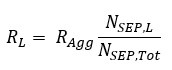
where RL is the royalty owed to SEP licensor L; RAgg is the aggregate royalty for all SEPs on a given standard; NSEP,L is the number of SEPs (or SEP families) owned by SEP licensor L; and NSEP,Tot is the total number of SEPs (or SEP families) on the standard. There are numerous ways to determine the aggregate royalty, and various adjustments can be made to account for factors such as patent quality, the relative contribution of a licensor’s IP to the standard, the geographic scope of patent coverage and patent expiration. However, the defining characteristic of the top-down approach is first determining the aggregate royalty and then apportioning it among the various SEP owners.
Every judicial application of top-down to date has its own quirks regarding how the various inputs to the top-down formula are calculated. Optis is no different.
Compared to other top-down cases, the Court took a simple approach to calculating NSEP,L and NSEP,Tot (the ratio of which the Court referred to as Optis’s “stack share”). It used patent families (rather than individual patents) as the relevant unit of accounting and relied on simple family count data from a third-party source. In particular, the Court preferred the data from Innography (relied on by the defendant) because Innography counted all declared SEPs. By contrast, Optis’s source (PA Consulting) attempted the “judgemental exercise” of filtering declared SEPs for essentiality, which the Court viewed as too “ambitious” and a potential source of error. The Court also rejected the parties’ attempts to adjust the stack share for quality, finding no basis to determine that Optis’s patents were any better or worse than the average cellular SEP.
Two additional details on the Court’s stack share analysis are worth noting. First, the Court seemingly presumed that only patents formally declared to the relevant standards-setting organization should count in the denominator. This would exclude patents that are, as a technical matter, essential to the standard—and thus could be asserted in litigation to derive royalties from or enjoin standard implementers—but whose owners (for one reason or another) do not formally declare them as such.[2] Second, the Court admonished against mixing sources for the numerator and denominator. In particular, the Court criticized Optis’s reliance on data from PA Consulting to count Optis-owned SEP families but factual findings from Unwired Planet to determine the total SEP family count as an inappropriate “apples and oranges” approach.
Perhaps the most interesting aspect of the Court’s top-down analysis is its method for calculating the aggregate royalty. Previously, courts have divined the aggregate royalty from indicators such as the profit margin on the smallest saleable patent practicing unit (SSPPU) (Innovatio, 2013 WL 5593609 (N.D. Ill. 2013)), licensors’ pre-standardization public statements about the appropriate stack value (TCL, 2018 WL 4488286 (C.D. Cal. 2018)) and Unwired Planet (2017 EWHC 711 (2017)), and the rate charged by a large patent pool on the same standard (Microsoft, 2013 WL 2111217 (W.D. Wash. 2013)).
In Optis, by contrast, the Court calculated the stack value based on comparable licenses from the defendant-licensee.[3] At a high level, the Court started by determining the royalties the defendant paid for those licenses, scaled the royalties up to determine the implied stack value based on the proportion of the SEP universe in each portfolio and then applied several subjective adjustments to reduce potential sources of error. The Court declined to consider 19 licenses Optis previously granted to all or a subset of its portfolio, finding these licenses to be non-comparable and a poor indicator of the aggregate royalty.
The Court’s approach is somewhat surprising. What others paid for the Optis portfolio would seem, at first blush, to be the most direct evidence of the market price for that portfolio. But two observations fueled the Court’s skepticism about the Optis licenses. First, the previous Optis licensees were smaller, less sophisticated players with less incentive and power to negotiate compared to the defendant. The Court concluded that these smaller licensees had different incentives and that Optis likely entered the prior licenses to develop a “forensically advantageous” precedent that it could wield against larger players, such as the defendant. Second, the Court was committed to calculating the FRAND rate via a top-down approach. To ensure an accurate result, it sought the most accurate assessment of the inputs (including the stack value) to the top-down formula. The Court noted, however, that the Optis licenses (at most) indicate the price of only the Optis portfolio—a small fraction of the relevant SEP universe. By contrast, the defendant’s proposed comparable licenses indicate what it paid for portfolios collectively covering a broader, more diverse swath of the SEP universe and, thus, the Court viewed them as more reliable indicators of the overall stack value.
Optis is the latest indicator of a geographical shift in top-down jurisprudence. In TCL, 943 F.3d 1360 (Fed. Cir. 2019), the US Court of Appeals for the Federal Circuit relegated FRAND rate determinations to the jury, all but ending the development of the top-down approach in US district courts. But top-down is far from dead. As evidenced by the recently-proposed EU regulations on SEP licensing and now Optis, European authorities continue to explore the top-down approach as a tool to resolve FRAND royalty disputes.


CMS Releases CY 2024 Physician Fee Schedule Proposed Rule
ARTICLE
CMS Releases CY 2024 Physician Fee Schedule Proposed Rule
July 17, 2023
Read time: 2 min
On July 13, 2023, the Centers for Medicare & Medicaid Services (CMS) released the Calendar Year (CY) 2024 Revisions to Payment Policies Under the Physician Fee Schedule (PFS) and Other Revisions to Medicare Part B [CMS-1784-P] Proposed Rule, which includes proposals related to Medicare physician payment and the Quality Payment Program (QPP). Physicians and other clinicians are once again facing large, proposed cuts of more than 3.36% for CY 2024. While Congress has provided temporary partial fixes to physician payment in the last several years, its latest fix in the Consolidated Appropriations Act, 2023 (CAA, 2023), enacted at the end of 2022, does not offset all the proposed cuts in this rule. In all, the budget neutrality constraints of the fee schedule continue to result in a negative proposed conversion factor (CF) update. Beyond the cut to the CF, CMS proposes significant policies related to telehealth services, updates to the Medicare Shared Savings Program (MSSP), initiatives promoting health equity and other changes to further develop physician quality initiatives.


Forfeitures: Changing the Rules of the Game for Retirement Plans
ARTICLE / CLIENT ALERT
Forfeitures: Changing the Rules of the Game for Retirement Plans
July 18, 2023
Read time: 4 min
Earlier this year, the Department of the Treasury and the Internal Revenue Service (IRS) issued proposed regulations on the use of forfeitures by tax-qualified retirement plans. The changes, published in the Federal Register, provide clarity in a previously murky area for plan sponsors.
BACKGROUND
Forfeitures generally arise when a participant terminates employment before fully vesting in the retirement plan. A participant forfeits non-vested retirement benefits, usually following a plan distribution or a statutory period of consecutive one-year breaks in service.
What should a qualified retirement plan do with these accumulated forfeited benefits? Previous regulations for forfeitures under defined benefit plans did not reflect more recent minimum funding legislation and guidance. Adding to the confusion, recent forfeiture guidance for defined contribution plans was found only in an informal IRS newsletter. To address these issues and clarify permitted use of retirement plan forfeitures, the IRS issued proposed regulations that could apply to tax-qualified retirement plans beginning as early as January 1, 2024.
DEFINED BENEFIT PLANS
For defined benefit plans, the proposed regulations remove outdated guidance and eliminate the prior requirement that forfeitures be used as soon as possible to reduce employer contributions, which conflicted with more recent minimum funding rules. Instead, the proposed regulations require employers to use reasonable actuarial assumptions in determining the effect of plan forfeitures and the amount of plan contributions. The proposed regulations also continue to prevent forfeitures from increasing other participants’ pension plan benefits prior to terminating the plan or completely discontinuing employer contributions.
DEFINED CONTRIBUTION PLANS
The proposed regulations clarify that all defined contribution plans (including money purchase plans) may use forfeitures either to:
- Pay plan expenses
- Reduce employer contributions
- Increase retirement benefits in participant accounts
The proposed regulations require that a defined contribution plan expressly state whether plan forfeitures can be used for one, two or all three of the above purposes.
In addition, the proposed regulations extend permitted forfeiture use by a defined contribution plan to 12 months after the plan year in which the forfeiture arose. Prior informal IRS guidance suggested that defined contribution forfeitures must be used no later than the year in which the forfeitures occurred, which proved challenging for plan administrators, particularly with respect to forfeitures that arose late in the year. This proposed change should give plan sponsors a bit more breathing room and certainty when dealing with plan forfeitures.
Under the proposed regulations, there is also a transition rule for forfeitures that occurred prior to January 1, 2024. Forfeited amounts in a defined contribution plan before January 1, 2024, are treated as occurring in the first plan year that begins after this date. Thus, for a calendar-year plan, forfeitures that arose prior to January 1, 2024, must be used for plan expenses, contributions or increased benefits by December 31, 2025.
WHAT’S NEXT?
The comment period for the proposed regulations officially closed on May 30, 2023, and the IRS and Treasury ultimately should issue final regulations. In the interim, defined contribution plan sponsors should review their plan forfeiture administration and plan documents and, if needed, consider amending them for forfeiture use consistent with proposed regulations. Both defined contribution and defined benefit plan sponsors should seek input from legal advisors as to any plan amendments needed to reflect final regulations.


Global Legal Insights: Merger Control 2023 | Belgium & European Union
ARTICLE
Global Legal Insights: Merger Control 2023 | Belgium & European Union
July 2023
Read time: 2 min
The GLI Merger Control 2023 covers key topics including law & enforcement, investigative powers, cartel enforcement activity, decision making procedures, leniency / amnesty, settlement of cases, third party complaints, sanctions and cross-border issues.
Hendrik Viaene and Elisabeth Vanden Kerchove have contributed an extensive chapter relating to the law in Belgium.
Hendrik Viaene, Stéphane Dionnet and Mélissa Hui have contributed an extensive chapter relating to the law in the European Union.