Content Type: Article

  • Recent Developments in Tax Law: Draft Law Introducing a Licence Barrier

    ARTICLE

    Recent Developments in Tax Law: Draft Law Introducing a Licence Barrier

    April 2017

    Read time: 2 min

    Key takeaways
    Overview

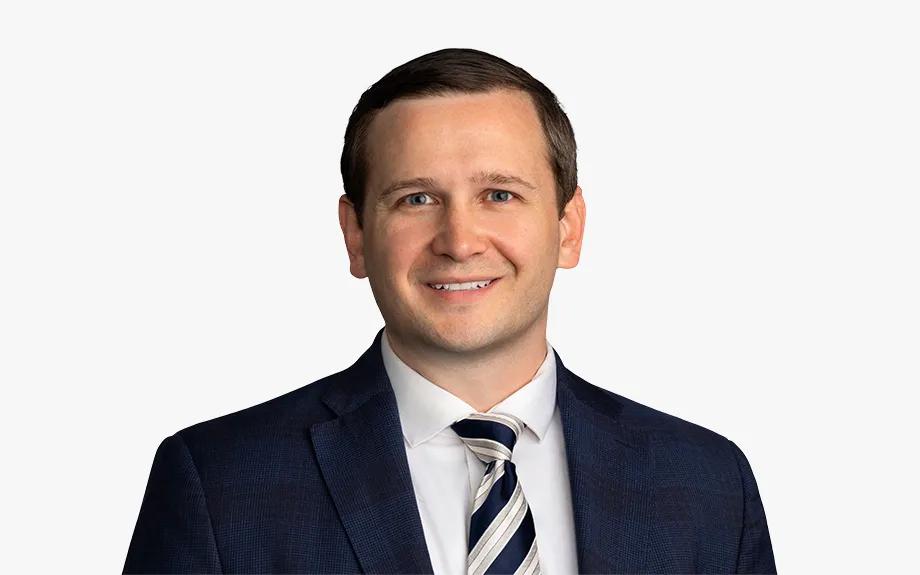
    Dr. Gero Burwitz authored the article “Recent Development in Tax Law: Draft Law Introducing a Licence Barrier”, featured in Neue Zeitschrift für Gesellschaftsrecht (NZG), p. 414-416 in April, 2017.

    In depth
    Authors

    Dr. Gero Burwitz

    Partner

    Munich

    More insights

  • New York City to Ban Employer Inquiries and Reliance on Salary History

    New York City to Ban Employer Inquiries and Reliance on Salary History

    ARTICLE / CLIENT ALERT

    New York City to Ban Employer Inquiries and Reliance on Salary History

    April 7, 2017

    Read time: 4 min

    Key takeaways
    Overview

    On April 5, 2017, by a 47-3 vote, the New York City Council passed a bill that bans New York City employers from inquiring about an applicant’s “salary history” or relying on a job applicant’s “salary history” in determining the applicant’s salary, benefits or other compensation. New York City Mayor Bill de Blasio is expected to sign the bill, and the new law will go into effect 180 days after he signs it.

    The new law, which applies to New York City employers with four or more employees, is intended to help eliminate pay inequality and amends the New York City Human Rights Law to make it “an unlawful discriminatory practice” for an employer to inquire about an applicant’s salary history or conduct any public search to determine the applicant’s salary history. In addition, the new law makes it “an unlawful discriminatory practice” for an employer to rely on an applicant’s “salary history” in determining the salary or benefits of an applicant during the hiring process. “Salary history” means an “applicant’s current or prior wage, benefits or other compensation.”

    Although the bill restricts employers from inquiring about or relying on salary history, employers are permitted to, “without inquiring about salary history,” discuss with the applicant his or her expectations with respect to salary or benefits, “including but not limited to unvested equity or deferred compensation that an applicant would forfeit or have cancelled by virtue of the applicant’s resignation from their current employer.” Further, an employer may lawfully rely on salary history in determining salary and benefits if an applicant “voluntarily and without prompting discloses salary history.”

    The law does not bar employers from verifying an applicant’s background information, but if an employer inadvertently learns salary history information during the verification process, the employer cannot rely on the information. If an applicant has voluntarily disclosed salary history information, the employer is permitted to verify the information provided.

    As with other violations of the New York City Human Rights Law, employers found in violation of the new law may be liable for compensatory damages (including front pay and back pay), punitive damages, and attorneys’ fees and costs, as well as a civil penalty of up to $250,000 for violations that “are the result of willful, wanton or malicious conduct.”

    Employers should carefully review their interview and hiring processes as a result of the new law. For example, employment applications should not ask for salary information. Employers should revise their neutral reference policies to not provide salary history information unless specifically requested by an employee. Employers should take steps to ensure that any discussions about salary or benefits are limited to applicants’ expectations, and not to compensation the applicant has received from a prior employer. Further, to ensure an employer does not inadvertently obtain salary history information, employers should ensure that any background checks specifically exclude salary history information.

    Authored by Mark E. Brossman, Ronald E. Richman, Holly H. Weiss, Adam B. Gartner and Aaron S. Farovitch.

    If you have any questions concerning this Alert, please contact your attorney at Schulte Roth & Zabel or one of the authors.


    This information has been prepared by Schulte Roth & Zabel LLP (“SRZ”) for general informational purposes only. It does not constitute legal advice, and is presented without any representation or warranty as to its accuracy, completeness or timeliness. Transmission or receipt of this information does not create an attorney-client relationship with SRZ. Electronic mail or other communications with SRZ cannot be guaranteed to be confidential and will not (without SRZ agreement) create an attorney-client relationship with SRZ. Parties seeking advice should consult with legal counsel familiar with their particular circumstances. The contents of these materials may constitute attorney advertising under the regulations of various jurisdictions.

    In depth
    Authors

    Mark E. Brossman

    Partner

    New York – 919 Third Avenue

    Ronald E. Richman

    Partner

    New York – 919 Third Avenue

    Holly H. Weiss

    Retired Partner

    New York – 919 Third Avenue

    Adam B. Gartner

    Special Counsel

    New York – 919 Third Avenue

    More insights

  • Interpreting and Applying the New HCCA-OIG Compliance Resource Guide

    Interpreting and Applying the New HCCA-OIG Compliance Resource Guide

    ARTICLE

    Interpreting and Applying the New HCCA-OIG Compliance Resource Guide

    April 7, 2017

    Read time: 2 min

    Key takeaways
    Overview

    Michael Peregrine, Tony Maida and Joshua Buchman wrote this bylined article assessing the new “Compliance Program Resource Guide” issued by the HHS Office of Inspector General and the Health Care Compliance Association. The authors called the Guide “helpful” but not “all-encompassing,” adding that it “should be one of several factors referenced by the general counsel and the chief compliance officer as they work together” with board audit and compliance committees.

    In depth
    Authors

    Tony Maida

    Partner

    New York – One Vanderbilt Avenue

    More insights

  • Commercial Solar Power Purchase Agreements: 6 Key Points

    Commercial Solar Power Purchase Agreements: 6 Key Points

    ARTICLE

    Commercial Solar Power Purchase Agreements: 6 Key Points

    April 6, 2017

    Read time: 2 min

    Key takeaways
    Overview

    Heather Cooper, Joel Hugenberger and William Friedman wrote this bylined article detailing six standard contract terms which, if used by solar power developers in power purchase agreements, will (as the authors wrote) “assist the commercial-scale solar market by increasing standardization and cutting down transaction costs.”

    In depth
    Authors

    Heather Cooper

    Partner

    Miami

    Joel A. Hugenberger

    Partner

    New York – One Vanderbilt Avenue

    More insights

  • Taxpayer Rights Around the World: Part 1

    ARTICLE

    Taxpayer Rights Around the World: Part 1

    April 6, 2017

    Read time: 2 min

    Key takeaways
    Overview

    Andrew Roberson wrote this bylined article on the second International Conference on Taxpayer Rights was held in Vienna, Austria in March 2017. More than 150 individuals from more than 40 countries attended the conference, where tax practitioners from multiple countries discussed how taxpayer rights globally serve as the foundation for effective tax administration.

    In depth
    Authors
    More insights

  • NY Attorney General Sanctions Highlight Need for Higher Standards for mHealth Research and Development

    NY Attorney General Sanctions Highlight Need for Higher Standards for mHealth Research and Development

    ARTICLE / CLIENT ALERT

    NY Attorney General Sanctions Highlight Need for Higher Standards for mHealth Research and Development

    April 5, 2017

    Read time: 5 min

    Key takeaways
    Overview

    On March 23, 2017, the New York Attorney General’s office announced that it has settled with the developers of three mobile health (mHealth) applications (apps) for, among other things, alleged misleading commercial claims. This settlement highlights for mHealth app developers the importance of systematically gathering sufficient evidence to support their commercial claims.

    In depth

    On March 23, 2017, the New York Attorney General’s office announced that it has settled with the developers of three mobile health (mHealth) applications (apps) for, among other things, alleged misleading commercial claims. As part of the settlement, each developer must revise its advertising, consumer warnings and privacy practices, and must pay a monetary penalty to the Office of Attorney General. This settlement underscores for all mHealth developers the importance of having sufficient scientific evidence to support their commercial claims.

    According to Attorney General Eric Schneiderman, two of the apps claimed to accurately measure heart rate after vigorous exercise, using only a smartphone camera and sensors. The third app claimed that it could cause a smartphone to function as a fetal heart monitor and be used to play an unborn baby’s heart rate, even though the app was not approved by the Food and Drug Administration (FDA) as a fetal heart monitor.

    This settlement highlights for mHealth app developers the importance of systematically gathering sufficient evidence to support their commercial claims. When mHealth apps are subject to the jurisdiction of the FDA, the FDA approval process ensures that any labeling claims are appropriately supported by clinical evidence. Many mHealth apps, however, are not medical devices (meaning such mobile apps do not meet the definition of a device under the US Federal Food, Drug, and Cosmetic Act), and the FDA does not regulate them. Where FDA rules do not apply, determining whether research and development efforts are adequate for health care-related applications may be a different calculation than what might be appropriate or typical in the standard minimum viable product (MVP) calculus. As the health care industry as a whole is accustomed to products, services and claims that are backed by strong scientific evidence, hospitals, health plans, patients, consumers and other health care stakeholders have an expectation that mHealth apps will meet those traditional evidentiary standards. Understanding —and meeting—the expectations of regulators as well as consumers and their health care providers by conducting sufficient research to support commercial claims will be critical to gain acceptance, approval and commercial success.

    mHealth app developers also need to be aware that the law governing human subjects research often extends to individuals whose data is used even when there is no human interaction with the researchers. Though many developers may think of their research activities from a traditional software development perspective, when developing products to be used with patients or by consumers for health and wellness applications, development activities may unexpectedly constitute research involving human subjects when the development process uses consumer or patient data. For example, research and development efforts that mine patient medical records, deploy surveys that collect personally identifiable information or aggregate and analyze data collected from wearable technology could all constitute research with human subjects. This additional, and perhaps unanticipated, legal consideration could open the door to significant additional regulatory requirements. As such, developers should familiarize themselves with human subjects research requirements and their potential application when consumer data is used in the development process and structure their research accordingly. When identified at the outset, research regulations should not pose a barrier to the design and implementation of studies.

    As evidenced by this settlement, state enforcement actors can impose penalties if the regulator or law enforcement agency believes that an app is not properly developed, supported and/or marketed. Given that mHealth solutions are deployed on a national scale, the enforcement efforts of just a few attorneys general are relevant to mHealth developers everywhere. mHealth developers can take immediate and concrete steps to align their research and development and marketing efforts with the expectations of health consumers and the broader health care community by focusing on clinically valid evidence in developing and marketing their apps.

    Authors

    Jennifer S. Geetter

    Partner

    Washington, DC

    More insights

  • DOL Finalizes New Disability Claim Rules for Welfare and Retirement Benefit Plans

    ARTICLE

    DOL Finalizes New Disability Claim Rules for Welfare and Retirement Benefit Plans

    March/April 2017

    Read time: 2 min

    Key takeaways
    Overview

    Amy Gordon, Michael Graham, Megan Mardy and Susan Nash wrote this bylined article on a Department of Labor Final Rule to adjudicate disability claims under welfare and retirement plans. The authors wrote that the Rule “significantly increases the duties of plan administrators and fiduciaries in reviewing and rendering decisions on disability claims, [so they] must be diligent in performing their claims and appeals decision duties and responsibilities.”

    In depth
    Authors
    More insights

  • View From McDermott: Employee Benefit Plan Considerations for Health Systems in 2017

    ARTICLE

    View From McDermott: Employee Benefit Plan Considerations for Health Systems in 2017

    March 31, 2017

    Read time: 2 min

    Key takeaways
    Overview

    Amy Gordon, Jeffrey Holdvogt, Susan Nash and Mary Samsa wrote this bylined article on health system employee benefit opportunities and challenges in 2017. The authors urged health systems to review internal controls for 403(b) and 457(f) plan compliance, and to review their short- and long-term health plan operation in light of any Affordable Care Act replacement.

    In depth
    Authors

    Jeffrey M. Holdvogt

    Partner

    Chicago

    More insights

  • A Race Against the Clock, Ethically Run: Conducting Witness Interviews in the Shadow of the DOJ’s Leniency Program

    ARTICLE

    A Race Against the Clock, Ethically Run: Conducting Witness Interviews in the Shadow of the DOJ’s Leniency Program

    Spring 2017 Meeting

    Read time: 2 min

    Key takeaways
    Overview

    Mary Strimel and Ashley McMahon authored this paper on the DOJ Antitrust Division leniency program, which gives immunity from prosecution only to the first company admitting cartel participation. Because some executives “may stand to win if the company obtains a valid leniency marker [while] other executives may lose their freedom if their employer comes in second in the leniency race,” the authors wrote, counsel must carefully handle the ethical issues involved.

    In depth
    Authors
    More insights

  • Expansion of Liability

    ARTICLE

    Expansion of Liability

    March 31, 2017

    Read time: 2 min

    Key takeaways
    Overview

    J. Christian Nemeth and Daniel Campbell wrote this bylined article describing how “several states are affording new opportunities to attack [food] ingredient labels” for use of words like organic and healthy, despite the fact, as the authors noted, that “federal courts have traditionally found [such efforts] to be pre-empted (barred) by the Food and Drug Administration.”

    In depth
    Authors

    J. Christian Nemeth

    Partner

    Chicago, Miami

    Daniel Campbell

    Partner

    Chicago

    More insights