Content Type: Article

  • AI platforms and privilege: Tax departments should be wary about what they share

    AI platforms and privilege: Tax departments should be wary about what they share

    ARTICLE

    AI platforms and privilege: Tax departments should be wary about what they share

    Mar 23, 2026

    Read time: 3 min

    Today’s artificial intelligence (AI) platforms have shown impressive capabilities that keep evolving. As those capabilities improve, tax departments may be inclined to leverage AI’s analytical power. While this technology has led to incredible efficiencies, we’ve been warning in-house tax departments about which platforms they use and what information they share to avoid waiving privilege or creating documents that cannot be protected.

    The US District Court for the Southern District of New York recently held that a criminal defendant’s communications with a publicly open AI platform were not protected by attorney-client privilege nor the work product doctrine. United States v. Heppner, No. 1:25-cr-00503-JSR (S.D.N.Y. Feb. 17, 2026).

    In Heppner, the defendant transmitted confidential information to a public AI system and generated various documents that incorporated the information. The district court concluded that the documents created were not protected by attorney-client privilege nor the work product doctrine. The AI platform was a public and open system that did not provide confidentiality, the documents created by the AI platform were not prepared by or at the direction of counsel (in fact, counsel had no idea the client was using AI), and documents (regardless if created by AI or other means) can never be cloaked with privilege simply because they are later sent to a lawyer.

    Practice point:

    While the facts of Heppner are probably distinguishable from how tax departments typically use AI platforms, the case serves as a reminder for tax professionals to have good hygiene when using them. All in-house tax professionals should exercise caution when inputting confidential information into AI platforms and, where possible, rely on closed, internal AI systems that are only accessible by relevant persons within their corporation. Even then, Heppner makes clear that AI platforms are not lawyers, and disclosures of privileged information to such platforms risk waiving that privilege.

    Given this risk, tax professionals should use great caution when using AI for sensitive legal issues. At a minimum:

    • Do not input any sensitive, confidential, or privileged information into publicly open AI systems.
    • Remember that AI is not a lawyer, so asking AI legal questions is not the same as asking a lawyer for legal advice.
    • For tax issues that are likely to result in a contentious audit or litigation, work with in-house or outside counsel to establish best practices on AI use to maximize attorney-client privilege and work product protection.
    In depth
    Authors

    Susan E. Ryba

    Partner

    Chicago

    More insights
    Endnotes

  • A second chance to get it right: Washington’s ESSB 5814 penalty relief program offers critical compliance window

    A second chance to get it right: Washington’s ESSB 5814 penalty relief program offers critical compliance window

    ARTICLE

    A second chance to get it right: Washington’s ESSB 5814 penalty relief program offers critical compliance window

    Mar 20, 2026

    Read time: 4 min

    Key takeaways
    Overview

    If your business has been struggling to keep pace with Washington State’s sweeping expansion of retail sales tax under Engrossed Substitute Senate Bill (ESSB) 5814, you are not alone. And, more importantly, you may not be too late. The Washington Department of Revenue (DOR) announced a temporary penalty relief program specifically designed to help businesses that have not yet complied with their new tax obligations. For affected taxpayers, this program represents an opportunity to resolve outstanding liabilities without penalty exposure.

    Background: ESSB 5814 and the expansion of taxable services

    ESSB 5814 represents a significant expansion of Washington’s retail sales tax regime. The legislation expanded the statutory definition of “retail sale” to encompass several service transactions that were subject only to Washington’s business and occupation (B&O) tax under the “service and other” classification.

    The categories of services newly subject to retail sales tax include:

    • Advertising services
    • Information technology consulting and technical support services
    • Custom software development and customization of prewritten software
    • Custom website development services
    • Investigation and security services, including monitoring and armored car services
    • Temporary staffing services
    • Certain live presentations and event-related services

    As a result of the legislative change, providers of these services must now:

    • Collect and remit retail sales tax on taxable transactions.
    • Report the receipts under the retailing B&O tax classification rather than the service and other classification that historically applied. This change generally will help compliant taxpayers as the retailing B&O tax rate (0.471%) is lower than the services and other B&O tax rate (between 1.5% and 1.75%).

    The law took effect October 1, 2025, but transitional rules applied to certain preexisting contracts through March 31, 2026. Given the quick implementation of ESSB 5814, the breadth of the change, and the number of industries affected, many taxpayers faced uncertainty regarding compliance. To address these transition challenges, the DOR has announced a temporary penalty relief program for taxpayers that failed to collect or remit the newly applicable taxes during the early stages of implementation. The program is also intended to encourage voluntary compliance with the new law.

    Overview of the penalty relief program

    To be eligible for relief, businesses must meet the following criteria:

    • Covered liabilities: The program covers uncollected retail sales tax and unpaid use tax for the new categories of taxable services created by ESSB 5814.
    • Covered reporting periods: Eligible reporting periods run from October 1, 2025, through December 31, 2026. For businesses with preexisting contracts that qualified for temporary sales tax relief, penalty relief begins when the contract no longer qualifies for such relief or on April 1, 2026 (whichever occurs first). Relief for businesses with preexisting contracts also ends on December 31, 2026.
    • Application process: Applications must be submitted via the DOR’s Voluntary Disclosure Application system. Once the DOR determines that a taxpayer qualifies, it will issue a Penalty Relief Agreement that the taxpayer must sign and return within 30 days. After execution, the DOR will work with the taxpayer to determine the appropriate tax liability and issue a formal assessment. (Note that Washington law requires disclosure of taxpayer identity in the Voluntary Disclosure Agreement process.)
    • Application deadline: Taxpayers must apply for penalty relief on or before September 30, 2027.
    • Excluded penalties: Critically, not all penalties are on the table. The evasion, negligence, and tax avoidance penalties are not eligible for relief via this program.
    • Taxes and interest still apply: The program does not eliminate the underlying tax liability. Businesses must still pay the full amount of tax due and any applicable statutory interest.

    Ongoing legal challenges and proposed legislation

    ESSB 5814 is not without legal controversy. There is pending litigation challenging the tax expansion as contrary to the Internet Tax Freedom Act, among other issues. Comcast Cable Communications Management LLC v. Washington. Additionally, the Washington Legislature has passed a bill (SB 6346), now sitting before the governor for signature, that would repeal the sales and use taxes for retail services included under ESSB 5814 – except for advertising services – as of January 1, 2029.

    Key takeaways

    The DOR’s penalty relief program provides some relief to taxpayers affected by ESSB 5814.

    Companies that provide or purchase newly taxable services should evaluate their exposure promptly and consider whether participation in the penalty relief program may mitigate potential penalties while bringing their Washington tax compliance into alignment with the new law.

    Authors

    Mary Kay Martire

    Partner

    Chicago

    More insights
    Endnotes

  • Trending in Telehealth: February 2026

    Trending in Telehealth: February 2026

    ARTICLE

    Trending in Telehealth: February 2026

    Mar 20, 2026

    Read time: 5 min

    Key takeaways
    Overview

    Trending in Telehealth highlights monthly state legislative and regulatory developments that impact the healthcare providers, telehealth and digital health companies, pharmacists, and technology companies that deliver and facilitate the delivery of virtual care.

    Trending in February:

    • Teledentistry
    • License compacts

    A CLOSER LOOK

    Proposed legislation & rulemaking:

    • The first chamber of the South Carolina legislature passed S. 453, which would set outdetailed practice standards for teledentistry, including a “bona fide relationship” framework, emergency-related procedures, and informed consent requirements. The bill clarifies that a bona fide relationship between a patient and a licensee only exists if the licensee has reviewed the patient’s relevant history, medical records, and diagnostic records; has performed an appropriate in-person physical examination of the patient; and has a reasonable expectation that the licensee will provide in-person follow-up care and treatment to the patient on a regular basis.
    • In Mississippi, the first chamber passed HB 1152, which would permit the use of telemedicine for medical cannabis certification.
    • Both chambers of the Tennessee legislature passed SB 2118 to prohibit TennCare from covering or reimbursing any medical procedures performed to help an individual identify with or live as a gender that differs from their biological sex assigned at birth. The term “procedures” includes those performed or administered via telehealth.
    • Both chambers of the New Mexico legislature passed HB 306, which seeks to eliminate facility fees for certain outpatient preventive healthcare, vaccination, and telehealth services, except in rural areas. The bill defines “facility fee” as a fee charged or billed by a hospital or health system for outpatient hospital services that is intended to compensate the health system or hospital for operational expenses. A facility fee is separate and distinct from a professional fee charged or billed by a hospital or health system for professional medical services.
    • In Virginia, both chambers passed SB 813 to establish the Sickle Cell Coordinated Access Network. This network, in collaboration with the Virginia Commonwealth University Health System Authority, focuses on telehealth consultations with sickle cell specialists for guidance on pain management, treatment protocols, and care coordination.
    • Virginia’s first chamber also passed SB 555, mandating that all nursing homes conduct monthly medical visits for each resident. Two visits per year must be in person with a physician, while the rest can occur via telehealth.
    • In Florida, both chambers passed HB 89, requiring veterinarians to inform clients of their right to receive a written prescription before dispensing medication. If the visit is conducted via telehealth, clients must be informed electronically.

    Finalized legislation & rulemaking:

    • The Washington State Health Care Authority issued emergency rules regarding the Apple Health Expansion Program for immigrants. The rules clarify that the requirements for the authorized use of telemedicine and store-and-forward technology are applicable to program benefits, including those administered by the health plan.
    • Washington’s Health Care Authority also issued a final rule requiring the state’s Medicaid program to cover designated maternal support services provided in person or through telemedicine. These services include screenings for risk factors related to pregnancy and birth outcomes, education that aims to improve pregnancy and parenting outcomes, and case management services.
    • Virginia’s Board of Dentistry issued a final rule amending several teledentistry definitionsand requirements for digital scan technicians. The rule clarifies that the definition of “remote supervision” as applied to digital scan technicians requires a directing dentist to be both accessible and available for communication and consultation in the practice of teledentistry.
    • The Wisconsin Department of Health Services issued a final rule establishing telehealth requirements for crisis urgent care and observation facilities. The rule requires each such facility to implement written policies and procedures related to telehealth, artificial intelligence, and consultation via electronic communication, including the client’s right to decline such services.
    • New Mexico’s Physical Therapy Board issued a final rule clarifying that the New Mexico Telehealth Act does not alter the scope of practice of any healthcare provider or authorize the delivery of healthcare services in a setting or manner not otherwise authorized by law. The rule also provides that the act does not alter the supervision requirements set forth by a healthcare provider’s applicable licensing board, and that a healthcare provider mustprovide telehealth services under the same level of supervision as required for in-person practice.
    • Alaska’s Department of Commerce, Community, and Economic Development passed a final rule that moves the telemedicine business registry provisions from the centralized professional licensing regulations to the business license regulations, and combines the application for general business licenses and the telemedicine business registration. The rule requires businesses performing telemedicine services to register with the telemedicine business register before providing services to recipients located in the state.

    Compact activity:

    Why it matters:

    • The increasing specificity of teledentistry legislation and rulemaking reflects states’ recognition of teledentistry as a permanent component of dental care delivery, rather than an experimental or temporary model. Clarified definitions and requirements will allow virtual platforms and dentists to scale services with greater confidence and design compliant workflows.
    • Licensure compacts continue to gain momentum as states prioritize cross-state practice and workforce mobility.

    Telehealth is an important development in care delivery, but the regulatory patchwork is complicated. The McDermott Will & Schulte digital health team works alongside the industry’s leading providers, payors, and technology innovators to help them enter new markets, break down barriers to delivering accessible care, and mitigate enforcement risk through proactive compliance.

    Authors

    Stacey L. Callaghan

    Partner

    Chicago

    Amanda Enyeart

    Partner

    Chicago

    Lauren Ellison

    Associate

    Washington, DC

    More insights
    Endnotes

  • Out with the new, in with the old: Fifth Circuit reinstates legacy HSR forms

    Out with the new, in with the old: Fifth Circuit reinstates legacy HSR forms

    ARTICLE / CLIENT ALERT

    Out with the new, in with the old: Fifth Circuit reinstates legacy HSR forms

    March 20, 2026

    Read time: 3 min

    Key takeaways
    Overview

    Following an order from the US Court of Appeals for the Fifth Circuit, and effective immediately, the Federal Trade Commission (FTC) will return to using the prior Hart-Scott-Rodino (HSR) form that was in effect before February 2025, when the updated forms implementing the new HSR rules took effect.

    In depth

    We previously wrote about the vacatur of the new HSR forms, which had been in use since February 2025, by a federal district court in East Texas. That order was later temporarily stayed by the Fifth Circuit while the parties briefed the FTC’s motion to stay the district court order pending appeal. On March 19, 2026, the Fifth Circuit denied the FTC’s motion for a further stay pending appeal. As a result, the legacy HSR form (i.e., the pre-February 2025 form) has now been reinstated.

    The FTC’s Premerger Notification Office (PNO) has issued guidance stating that it is now “accepting HSR filings using the Form and Instructions that were in place before the February 10, 2025, effective date of the new rule.” According to the FTC’s guidance, parties may choose to submit HSR filings on the new HSR forms voluntarily. We expect that deal teams for transactions in their incipiency will elect to immediately return to filing on the old HSR forms.

    The McDermott team is equipped to handle and timely file on both forms and will continue to advise clients on a case-by-case basis. For deals that raise no antitrust concerns, completing the HSR forms will likely be less burdensome. But for transactions that may raise antitrust issues, it may be in the parties’ interests to provide a cover letter or other materials containing some advocacy, as was done often in the past.  We encourage clients to discuss this with their antitrust counsel.

    We will continue to monitor any further developments with the Fifth Circuit appeal and any additional FTC guidance. If you have questions regarding the impact of the transition back to the legacy HSR forms, reach out to your McDermott Will & Schulte counsel.

    Authors

    Gregory E. Heltzer

    Partner

    Washington, DC

    Payton T. Thornton

    Associate

    Washington, DC

    More insights

  • HPE Miami 2026: Where healthcare dealmakers see opportunity

    HPE Miami 2026: Where healthcare dealmakers see opportunity

    ARTICLE

    HPE Miami 2026: Where healthcare dealmakers see opportunity

    March 19, 2026

    Read time: 2 min

    Key takeaways
    Overview

    At HPE Miami, the industry’s leading investors and operators came together to share what’s now—and what’s next. Dive into the highlights, from key stats to candid conversations and real-time perspectives, to see where opportunity is emerging, how dealmakers are navigating market headwinds, and the strategies driving healthcare investing forward.

    In depth

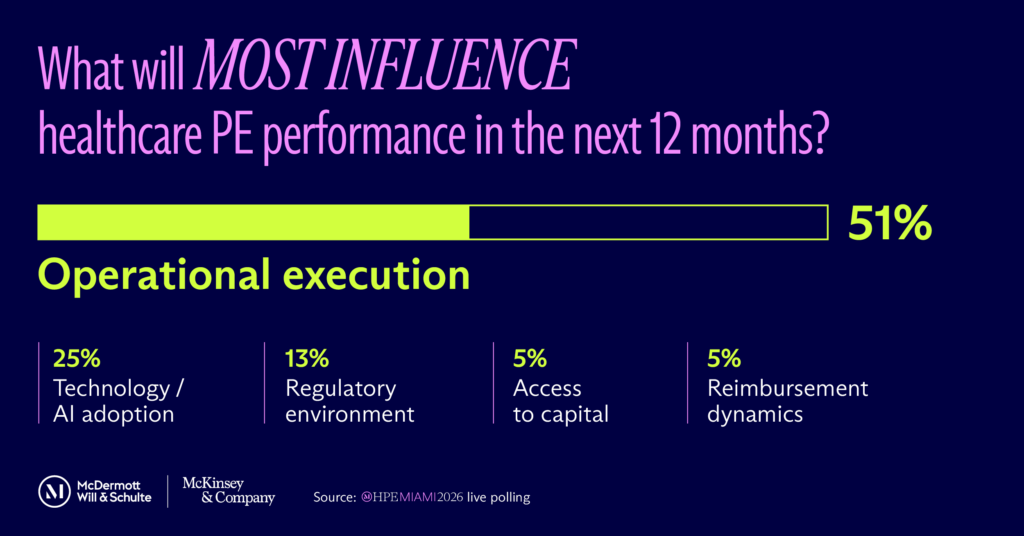
    What will most influence healthcare PE performance in the next 12 months?

    Survey stats graphic with attendee stats from HPE Miami 2026, answering the question ‘What will most influence healthcare PE performance in the next 12 months?’(source: McDermott Will & Schulte and McKinsey & Company)


    Video: McDermott Will & Schulte Chairman Ira Coleman and other HPE Miami 2026 attendees discuss what will influence healthcare private equity most in the coming year (runtime: 3m35s)

    What is the biggest challenge facing healthcare transactions in the next 12 months?

    Survey stats graphic with attendee stats from HPE Miami 2026, answering the question ‘What is the biggest challenge facing healthcare transactions in the next 12 months?’ (source: McDermott Will & Schulte and McKinsey & Company)

    What will unlock deal flow in 2026?

    Survey stats graphic with attendee stats from HPE Miami 2026, answering the question ‘What will unlock deal flow in 2026?’ (source: McDermott Will & Schulte and McKinsey & Company)


    Video: McDermott Will & Schulte Partner Sarah Kim discusses what current trends in healthcare private equity matter most during HPE Miami 2026 (runtime: 21s)

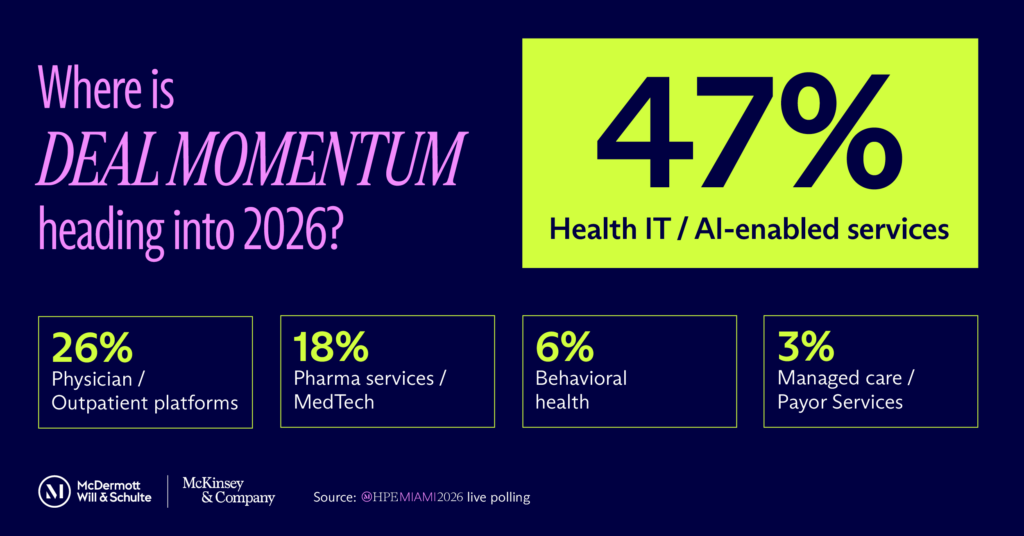
    Where is deal momentum heading into 2026?

    Survey stats graphic with attendee stats from HPE Miami 2026, answering the question ‘Where is deal momentum heading into 2026?’ (source: McDermott Will & Schulte and McKinsey & Company)

    Authors
    More insights

  • FTC seeks public input on revamp of Negative Option Rule

    FTC seeks public input on revamp of Negative Option Rule

    ARTICLE / CLIENT ALERT

    FTC seeks public input on revamp of Negative Option Rule

    March 19, 2026

    Read time: 8 min

    Key takeaways
    Overview

    On March 11, 2026, the Federal Trade Commission (FTC) announced that it is seeking public comments on an Advance Notice of Proposed Rulemaking (ANPRM) regarding the Negative Option Rule (the Rule). The FTC previously adopted amendments to the Rule in 2024, which were scheduled to go into effect in July 2025. However, on July 8, 2025, the US Court of Appeals for the Eighth Circuit vacated the Rule, finding that the FTC had failed to perform the required preliminary regulatory analysis under Section 22 of the FTC Act (Custom Communications Inc. v. FTC, No. 24-3137, 8th Cir. July 8, 2025).

    Businesses with subscription, automatic renewal, or other negative option plans should pay close attention to the FTC’s proposal, the outcome of which could require businesses to redesign user flows to ensure compliance with new requirements.

    Below, we discuss the ANPRM and the FTC’s focus on negative option practices and outline key takeaways for businesses to consider as they design their products and compliance programs. The ANPRM was published in the Federal Register on March 13, 2026, and the comment period will close on April 13, 2026.

    In depth

    What are negative option programs?

    As the FTC explains in the ANPRM, a negative option is “any type of sales term or condition that allows a seller to interpret a customer’s silence, or failure to take an affirmative action, as acceptance of an offer.” The FTC notes that negative option programs typically fall into four key categories:

    • Prenotification plans, in which a seller makes periodic offers of goods to consumers who are enrolled in a program and then sends and charges for the goods if consumers do not decline the offer
    • Continuity plans, in which consumers agree to receive periodic shipments of goods or provision of services until they cancel
    • Automatic renewals, in which a seller automatically renews consumers’ subscriptions once the current subscription period expires unless the consumer cancels
    • Free-to-pay or nominal-fee-to-pay conversion offers, in which consumers receive goods or services during a trial period for free or at a nominal fee and are then charged a fee or higher fee when the trial period ends unless they cancel or return the goods

    What are the current regulatory requirements for negative option programs?

    The FTC addresses harmful negative option practices through a patchwork of laws and regulations, which include:

    • The Rule, which defines disclosure and other requirements applicable to one specific type of negative option: prenotification programs for the sale of goods
    • Section 5 of the FTC Act, which prohibits unfair and deceptive acts or practices and which the FTC has interpreted to require sellers to:
      • Disclose material terms of the negative option offer
      • Ensure these disclosures are clear and conspicuous
      • Provide these disclosures before the consumer agrees to the offer
      • Obtain consumer consent to these offers
      • Not impede promised cancellation procedures, and honor cancellation requests that conform to these procedures
    • Restore Online Shoppers’ Confidence Act (ROSCA), which sets forth disclosure, consent, and cancellation requirements for goods and services sold through negative option programs online
    • Telemarketing Sales Rule, which applies to negative option offers made by phone and requires disclosure of material terms, prohibits misrepresentation, and imposes specific requirements regarding payment authorization and acceptable payment methods

    Additional federal statutes, including the Unordered Merchandise Statute and the Electronic Fund Transfer Act, also affect certain negative option marketing practices.

    Most states have also enacted laws that set forth requirements for automatic renewal plans. For example, California’s Automatic Renewal Law applies to business-to-consumer plans that charge consumers after a free trial, continue until consumers cancel, or feature automatic renewals. Under California’s law, businesses must follow requirements relating to preorder disclosure, obtainment and retainment of consumer consent, post-order acknowledgements, pre-renewal notifications, annual reminders, and cancellation methods. A group of cities and counties in the state have formed the California Automatic Renewal Task Force to investigate unlawful autorenewal practices.

    State autorenewal laws cover different transactions and impose different requirements on businesses offering negative option programs. States also pursue individual enforcement actions under these regimes, as well as state-level consumer protection statutes and, where applicable, ROSCA.

    Why is the FTC interested in negative option rulemaking?

    The FTC has sought to address unfair and deceptive negative option programs through rulemaking, most recently in October 2024 when it issued a final rule that overhauled the Negative Option Rule. Since the Rule applies to one, now less-common, type of negative option, the 2024 Rule set forth general requirements applicable to almost all sellers marketing negative option programs, regardless of the kind of negative option program being offered or the marketing medium being used. In July 2025, the Eighth Circuit vacated the final Rule before it could go into effect.

    In the wake of the Eighth Circuit’s decision, the FTC continues to bring enforcement actions under other authorities, such as Section 5 of the FTC Act and ROSCA, challenging what it alleges are deceptive enrollment and onerous cancellation practices.

    While acknowledging the potential benefits of negative option offers for sellers and consumers alike, the FTC explains in the ANPRM that negative option programs raise concerns when inadequate disclosures, failure to obtain consumer consent, or onerous cancellation processes result in “saddling consumers with recurring payments for goods and services they did not intend to purchase or they no longer want.”

    As stated in the ANPRM, the FTC believes that the existing statutory and regulatory regime “does not provide industry and consumers with a consistent legal framework for negative option marketing across different media and types of plans.” Meanwhile, the FTC reports that it “continues to receive thousands of complaints each year regarding problematic negative option marketing” and that it has brought five cases and settled six others since January 2025 that all alleged negative option misconduct. The FTC maintains that all of these factors “suggest there is prevalent, unabated consumer harm in the marketplace.”

    What information is the FTC seeking?

    The FTC seeks comment about the status of the current negative options marketplace and the prevalence of unlawful negative option conduct.

    The FTC’s request focuses on certain practices, including:

    • Marketing practices or disclosures that make it difficult for consumers to recognize that they are enrolling in a negative option program or to understand its material terms
    • Enrollment of consumers without their express informed consent
    • Cancellation methods that impede or delay consumers’ attempts to cancel their enrollments
    • Use of third parties, such as payment service providers, subscription management providers, or customer relationship management providers, to handle aspects of the enrollment and cancellation process
    • The offering of discounts and incentives for continued participation in the program

    The FTC asks the public for comment on how it might address unlawful conduct arising from those and other negative option practices. The FTC’s request is far reaching, asking about the costs and benefits involved in maintaining the current Rule, incorporating provisions of the vacated Rule, adopting other provisions, or addressing negative option practices through alternatives to regulation like business and consumer education.

    The FTC will also consider procedures for businesses to request exemptions and whether to adopt general exemptions for certain businesses or industries.

    Implications for businesses with subscription plans

    If the FTC finalizes the Rule as proposed, as we believe is likely, businesses that offer subscription or autorenewal programs may face heightened compliance requirements. The ANPRM frames harms in terms of inadequate disclosure, lack of informed consent, and cancellation impediments, suggesting that the FTC’s rulemaking could address enrollment and cancellation processes. Once a revised Rule takes effect, businesses should be aware that the FTC could seek civil monetary penalties for violations.

    Businesses should also remain mindful that the FTC is actively pursuing enforcement actions in this area under Section 5 of the FTC Act and ROSCA, focusing on inadequate disclosures, failure to obtain express consumer consent, and cancellation processes that are difficult or impossible to complete. Settlements in these cases have required payments of millions of dollars in consumer redress, along with commitments to implement clear and conspicuous upfront disclosures about negative option offers and simple, easy-to-find mechanisms for cancellation.

    At the same time, states are increasingly regulating negative option offers and autorenewal practices through their own statutes and enforcement actions, further heightening compliance risk across jurisdictions.

    As the FTC sharpens its focus on negative option programs through this latest round of rulemaking, businesses may wish to use this opportunity to review their subscription and renewal practices, including enrollment flows, renewal reminders, cancellation processes, and any incentives offered during cancellation attempts.

    If you have questions about the ANPRM or its implications for your products and services, please contact one of the authors or your McDermott Will & Schulte lawyer.

    Authors

    Teresa Kosmidis

    Partner

    Washington, DC

    Michael Roberts

    Counsel

    New York – One Vanderbilt Avenue

    Phoebe Flint

    Associate

    Washington, DC

    James S. Mann

    Associate

    Los Angeles

    More insights

  • New York proposes expansive regulation of buy now, pay later products

    New York proposes expansive regulation of buy now, pay later products

    ARTICLE / CLIENT ALERT

    New York proposes expansive regulation of buy now, pay later products

    March 18, 2026

    Read time: 8 min

    Key takeaways
    Overview

    On February 23, 2026, the New York State Department of Financial Services (NYDFS) published a proposed regulation (the Proposed Regulation) implementing the state’s Buy Now, Pay Later (BNPL) Act, which was signed into law by Governor Kathy Hochul on May 9, 2025. The Proposed Regulation would require state-level licensing and oversight of BNPL providers and comes amid an ongoing policy debate about whether BNPL products should be treated more like credit cards and subject to credit-card-like compliance.

    At the federal level, the Consumer Financial Protection Bureau (CFPB) addressed this issue in May 2024 via an interpretive rule, stating that certain BNPL products are covered by Regulation Z (CFPB Interpretive Rule), which the CFPB later withdrew in May 2025. Against that backdrop, New York is moving forward with a BNPL-specific regulatory framework that is tailored to products that, in several respects, is more prescriptive than the CFPB’s now-withdrawn interpretive approach. The Proposed Regulation particularly incorporates concepts reflected in the CFPB Interpretive Rule and would require licensing for BNPL lenders, impose fee caps, mandate consumer disclosures, include robust data privacy protections, and establish a dispute resolution procedure.

    High-level takeaways

    • Broad definitions: The Proposed Regulation broadly defines “BNPL lender,” “BNPL loan,” and “offer,” potentially capturing not only entities that make BNPL loans, but also entities that operate the platforms, software, and systems where consumers can obtain BNPL credit and entities to whom ownership of a BNPL loan is transferred.
    • Licensing and supervision framework: The Proposed Regulation provides a first-ever licensing and supervision regime for BNPL products in New York.
    • Credit-like compliance: The Proposed Regulation includes Truth in Lending Act (TILA)/Regulation Z-like requirements for disclosures, periodic statements, and dispute resolution.
    • Prohibited fees: The Proposed Regulation prohibits excessive fees, such as convenience charges, and limits late fees and other types of penalty fees.
    • Underwriting requirements: The Proposed Regulation requires “reasonable, risk-based” underwriting, including assessing a consumer’s income and indebtedness.
    • Data privacy: The Proposed Regulation includes prohibitions regarding the use and sale of consumer data and requires consumer disclosures.
    In depth

    Scope and coverage

    The Proposed Regulation broadly defines key coverage terms, including “BNPL lender,” “BNPL loan,” and “offer.” As defined in the Proposed Regulation, a “BNPL lender” is a person who offers BNPL loans in New York, including a person who makes BNPL loans, and a person to whom ownership of a BNPL loan is transferred. For purposes of the definition of BNPL lender, “offer” includes extending credit directly to a consumer and operating a platform, software, or system with which a consumer interacts directly or indirectly where a substantial purpose of the consumer’s interaction is to obtain BNPL loans from third parties (which may be relevant for certain platform and bank-partner models). The definition also includes an exception for isolated, incidental, or occasional transactions. Importantly, federally chartered banking institutions and foreign banking corporations licensed by the Office of the Comptroller of the Currency (Exempt Organizations) that otherwise meet the definition of BNPL lender are exempted from the requirements of the Proposed Regulation.

    A “BNPL loan” is closed-end credit provided to a consumer in connection with the consumer’s particular purchase of goods and/or services, excluding motor vehicles, and subject to specified exclusions (including certain seller-credit structures and credit extended other than for personal, family, or household use). This scope is broader than the CFPB Interpretive Rule, which stated that for purposes of that interpretive rule “BNPL” refers to a consumer loan for a retail transaction repaid in four (or fewer) interest-free installments with no finance charge.

    Licensing, authorization, and supervision

    The Proposed Regulation would establish two frameworks for BNPL lenders.

    The first is the “Authorization Framework,” which requires New York-chartered banking organizations; foreign banking corporations licensed by NYDFS to transact business in New York or originate loans from a branch in New York; and lenders licensed under Article 9 of the Banking Law to obtain written authorization from NYDFS to offer BNPL loans (each such authorized lender is considered an “authorized BNPL lender”).

    The second is the “Licensing Framework,” which requires a BNPL lender who is not otherwise an authorized BNPL lender to obtain a license with NYDFS. Licensed BNPL lenders also must post their license across consumer interfaces and in BNPL terms and conditions.

    Authorized BNPL lenders and licensed BNPL lenders must have a category permission for the category of BNPL loans they offer (e.g., interest-free, interest-bearing, or both). Authorized BNPL lenders have an additional obligation to post that they are authorized and list their category permissions on the interfaces where their BNPL loans are offered or advertised.

    The Proposed Regulation also includes ongoing supervisory hooks that go beyond the initial license, such as prior superintendent approval for a “change of control”; reporting of changes in principals, officers, or directors; and books-and-records expectations designed to make loan files readily accessible for NYDFS review/examination.

    Finally, under the Proposed Regulation, entities already acting as BNPL lenders in New York will need to apply for a BNPL lender license within 45 days of the effective date to become a “provisional licensee,” pending NYDFS action.

    Fee caps

    In response to growing concerns that BNPL lenders were charging excessive or “junk fees,” the Proposed Regulation also fee caps, including limiting the interest rate that can be offered, limiting fees for violation of a BNPL loan agreement to $8, prohibiting charging multiple fees for a single event, and putting limitations on the solicitation of tips.

    Disclosures

    The Proposed Regulation requires both pre- and post-transaction disclosures and periodic statements. The disclosure requirements are very similar to the requirements for creditors under TILA/Regulation Z.

    Underwriting

    The Proposed Regulation also requires BNPL lenders to engage in reasonable risk-based underwriting, which must include, at a minimum, assessing a consumer’s income and indebtedness. The policies and procedures for underwriting BNPL loans shall be maintained in writing and disclose factors considered in the underwriting process.

    Notably, the Proposed Regulation’s underwriting requirements for BNPL lenders go beyond any federal framework, as they are absent from both TILA and the CFPB Interpretive Rule. This shows that New York is not merely filling the void left by federal inaction but is staking out a more expansive vision of consumer protection in the BNPL space.

    Refunds

    When a retail seller agrees to issue a refund, the BNPL lender must make reasonable efforts to ensure the seller sends a credit statement to the BNPL lender within seven business days of that agreement. Once the BNPL lender receives the credit statement, they have three business days to apply the refund to the consumer’s account.

    Dispute resolution procedure, billing errors, and unauthorized use

    The Proposed Regulation also imposes new requirements for billing errors. Under the Proposed Regulation, consumers can submit a billing error notice and, while that dispute is pending, a BNPL provider may not attempt to collect any portion of any required payment, threaten to harm the person’s credit standing, or accelerate any part of the consumer’s indebtedness. The dispute resolution, billing errors, and unauthorized use sections broadly track TILA, including giving consumers a 60-day window from receipt of the first periodic statement with an error to submit a billing notice and limiting consumer liability for unauthorized use to $50.

    Data privacy

    For a BNPL lender to use, sell, or share covered data (other than in connection with making a particular BNPL loan to the consumer), affirmative, informed consent is needed for each specific use case. The BNPL lender must also disclose to the consumer what they intend to use the data for.

    The right to use, sell, or share the data expires after one year and can be renewed. Consumers also maintain the right to withdraw consent.

    The inclusion of robust data privacy protections in what is primarily a lending regulation is notably unusual but reflects the documented concerns about BNPL apps specifically. Research has found that BNPL apps collect an average of 14 data types concerning their users and share an average of five data types with third parties, including sensitive information. New York’s decision to embed these protections directly into a financial services regulation signals that regulators view data exploitation as an inherent risk of the BNPL business model.

    Looking ahead

    The Proposed Regulation signals that, even in the wake of the now-withdrawn CFPB Interpretive Rule, the broader regulatory direction has not disappeared. New York is moving forward with a BNPL-specific framework that, in several respects, reflects similar credit-like concepts and operationalizes them through a state licensing and supervision regime. The proposal would particularly treat BNPL more like a regulated consumer credit product by layering in credit card-style compliance expectations in areas such as disclosures, periodic-statement-type requirements, billing error and dispute processes, and refund/credit mechanics. For BNPL providers, merchants, and bank partners, the key takeaway is that BNPL compliance planning increasingly needs to account for state-by-state requirements, especially where program design, servicing workflows, fee practices, and data-use models could trigger New York-style expectations.

    The Proposed Regulation is currently in the formal 60-day public comment period. We will continue to closely follow any developments.

    If you have questions concerning this client alert or would like assistance in preparing and submitting a comment, please contact your regular McDermott Will & Schulte lawyer or one of the authors.

    Authors

    Donald J. Mosher

    Partner

    New York – 919 Third Avenue

    Adam J. Barazani

    Partner

    New York – 919 Third Avenue

    Teresa Kosmidis

    Partner

    Washington, DC

    Leel Sinai

    Partner

    New York – 919 Third Avenue

    Jonice Q. Jackson

    Associate

    Washington, DC

    More insights

  • BIOSECURE and the shift to secure biotech supply chains

    BIOSECURE and the shift to secure biotech supply chains

    ARTICLE / CLIENT ALERT

    BIOSECURE and the shift to secure biotech supply chains

    March 18, 2026

    Read time: 5 min

    Key takeaways
    Overview

    The BIOSECURE Act, enacted on December 18, 2025, introduces new parameters for biotechnology companies seeking US government funding and procurement. Although framed as a national security measure, BIOSECURE underscores how biotechnology supply chains, genomic data, and advanced manufacturing have come to be seen as strategic infrastructure. The legislation’s practical effects will extend into supply chain design, vendor selection, and data governance practices, shaping how organizations position themselves for federally connected research and manufacturing work.

    At a high level, the statute establishes two related restrictions:

    • Federal agencies may not procure or use biotechnology equipment or services produced or provided by a designated biotechnology company of concern (BCC).
    • Agencies may not award, extend, or renew contracts, grants, loans, or cooperative agreements to entities that rely on covered BCC equipment or services in the performance of federally supported work.

    The definition of “biotechnology equipment or services” is broad, encompassing instruments, reagents, sequencing technologies, data platforms, contract development and manufacturing services, and associated software or support components. BIOSECURE exposure may arise not only from direct suppliers, but also from third-party software, data platforms, or service providers that support biotechnology workflows. Prior reliance on a BCC does not create disqualification if those inputs have been removed from federally supported activities.

    In depth

    Designation and implementation

    Rather than naming specific companies in the statute, the US Congress adopted an administrative designation model led by the Office of Management and Budget (OMB). Agencies will assess entities that may pose national security risks based on foreign-adversary ties, access to sensitive biological or genomic data, or control of critical biotechnology capacity. The statute does not require any particular number of designations, and the size and character of the BCC list may evolve over time as the framework develops. Early designations are expected to focus on companies involved in genomic data aggregation, biospecimen access, or large-scale biologics manufacturing. Organizations should therefore plan for potential shifts in scope, including the possibility that affiliate relationships, data-access arrangements, or corporate restructurings could affect exposure.

    Timeline

    • December 18, 2025: BIOSECURE Act enacted.
    • By December 2026: Initial BCC list published by OMB.
    • 2027 – 2028: Federal Acquisition Regulation (FAR) updated to incorporate BIOSECURE requirements.
    • Following FAR implementation: Procurement and funding restrictions become effective.
      • Five-year transition period for pre-existing contracts starts: Agreements entered into before the effective date may continue for up to five years while covered suppliers or services are replaced.

    Enforcement

    BIOSECURE implements its restrictions through established procurement and grant compliance mechanisms. Contracting officers may treat proposals as nonresponsive, decline renewals or options, or disallow costs tied to noncompliant performance. Required representations and certifications, clause flow-downs, and supplier attestations will likely become central compliance tools, and inaccurate compliance representations could lead to termination, adverse performance reporting, or loss of eligibility for future awards. In more serious cases, knowingly seeking payment while using covered BCC inputs in performance could support False Claims Act theories, along with suspension or debarment risk. In the grants context, agencies may impose special conditions, suspend drawdowns, disallow costs, or terminate awards. Documentation of supplier diligence and audit-ready compliance records will therefore be important for demonstrating compliance.

    Rise of trusted supply chains

    Although BIOSECURE operates through procurement and funding restrictions, its influence will likely extend beyond federal agencies. Universities, federal laboratories, academic medical centers, and government contractors that depend on federal funding will likely reassess sourcing decisions, vendor diligence, and data governance practices. Over time, this may encourage a gradual shift toward suppliers that can demonstrate transparent ownership structures, strong audit frameworks, secure data practices, and reliable manufacturing footprints. Increased scrutiny of subcontractors, software layers, firmware, and data infrastructure will likely follow, along with closer attention to chain-of-custody and traceability controls in biotechnology manufacturing and research workflows.

    For companies with federal exposure, preparation may begin with mapping biotechnology dependencies across equipment, platforms, manufacturing partners, and data systems used in federally supported work. Where feasible, separating federally connected environments from commercial operations can preserve flexibility and help manage compliance risk. Companies may also consider evaluating alternative suppliers, updating vendor agreements to address designation-trigger transitions, and incorporating BIOSECURE-related diligence questions into collaborations, licensing arrangements, and mergers and acquisitions activity. Monitoring designation developments and implementation guidance through a coordinated internal process will be important.

    Conclusion

    The BIOSECURE Act reflects a broader policy shift: biotechnology supply chains are increasingly viewed as strategic infrastructure. In the near term, the legislation will push organizations to understand their dependencies and build flexibility into supplier relationships. Over time, BIOSECURE may influence competitive dynamics by placing a premium on traceable supply chains, reliable manufacturing partners, and strong data governance controls. Companies that treat BIOSECURE solely as a compliance obligation may miss the larger signal. Those that use the implementation period to strengthen transparency, documentation, and operational resilience will be better positioned to manage regulatory risk and compete for federally connected research, development, and manufacturing opportunities as procurement expectations continue to mature.

    We will continue to track the effects of the BIOSECURE Act on the life sciences industry. For more information, please contact any of the authors of this article or a member of McDermott Will & Schulte’s Food, Drug & Medical Device Regulatory Practice Group.

    Authors

    James R. Ravitz

    Partner

    Washington, DC

    Michael W. Ryan

    Partner

    Washington, DC

    Paul S. Gadiock

    Partner

    San Francisco

    Marissa Hill Daley

    Law Clerk

    Washington, DC

    Jeff Weinstein

    Counsel

    Washington, DC

    More insights

  • MIPIM 2026: Conviction through connection

    MIPIM 2026: Conviction through connection

    ARTICLE / CLIENT ALERT

    MIPIM 2026: Conviction through connection

    March 18, 2026

    Read time: 5 min

    Key takeaways
    Overview

    In the weeks and months leading up to MIPIM, sentiment across European real estate markets had been steadily improving. Geopolitical and economic pressures were increasingly being absorbed into pricing and were no longer seen as a barrier to transaction activity.

    In a market previously constrained by uncertainty discussions heading into MIPIM week, saw the time in Cannes as a temperature test of long-term confidence and whether the escalation of the Iran conflict would derail the hard-won shift in market sentiment.

    1. Conviction built on connection

    Despite ongoing geopolitical tensions, there was no meaningful dilution of investment conviction in core sectors such as operational real estate, prime offices, logistics and data centres as well as residential investments in core European markets such as Germany. Instead, MIPIM highlighted how long-term investment decisions are increasingly underpinned by the strength of relationships between capital and operating partners. Trust and alignment between partners are seen as critical tools for managing risk. At the same time, there is a clear shift away from thematic portfolio acquisitions to achieve scale towards specialist asset class expertise and rigorous, site-specific diligence and the need to build new platforms based on that premise.

    2. Private capital is active, but it is targeting scale through asset class specialism

    Private equity investors, family offices and other capital sources appear more willing to deploy, but they are focusing on specific higher quality or high conviction assets and specific opportunities rather than backing sectors wholesale. The emphasis was on long-term demand, strong sponsorship, operational resilience and credible delivery. Where well-capitalised investors do have an edge is in their ability to move quickly and underwrite conviction-led opportunities in building platforms by matching capital to sector specialism, particularly in parts of the market where quality and execution matter most.

    3. Debt markets regain momentum

    Debt products continue to attract interest in this dislocated market, as investors are drawn to their attractive risk-adjusted returns. Offsetting any perceived market softness through reduced basis remains a key theme. Debt financing continues to be highly brokered and competitive and consequently remains a “borrower’s market”, with sponsors prizing certainty of execution with trusted advisors and counterparties in order to trade through macro headwinds. Private Lenders are increasingly able to position themselves more competitively by offering more aggressive pricing. This does not stem from taking on distressed or special‑situations risk; rather, these players are targeting core+ and value‑add acquisitions to lend against, enabling them to capture deal flow while staying within conservative underwriting boundaries.

    4. Refocus on asset classes

    “Beds, Meds and Sheds” remain the focus, but with the emphasis much more firmly on “Meds and Sheds”. Within living, the mood was notably more cautious: “PBSA jitters” were in the air, and conventional multifamily/BTR is no longer delivering the kind of return profile many investors had become used to. The more convincing living stories were single-family rental and senior living, where institutional appetite continues to deepen. Logistics and light industrial remained among the market’s highest-conviction asset classes, although the discussion was increasingly shaped by geopolitics and supply-chain resilience; appetite is still strong, but availability of genuinely investable stock remains tight. In some markets, a clear “phase 2” in logistics is emerging, marked by disposals – including several large portfolio sales – from sponsors to other sponsors. This is creating more structured, institution-to-institution trading dynamics, pointing to a more mature and capital-driven market. Healthcare real estate, meanwhile, was more firmly in focus than ever, supported by compelling long-term fundamentals and its attraction as a durable, needs-driven investment play.

    Hotels remain a highly attractive asset class, and in several markets the operating companies (OpCo) managing them are proving just as appealing as the real estate itself. Long‑term franchise agreements with well‑known brands can be a meaningful advantage in negotiations – although in certain cases they can also create hurdles, particularly when they constrain flexibility for operators or investors.

    5. Data Centres & AI: From niche to mainstream

    MIPIM 2026 showed how far data centres have moved from a niche sector into a mainstream focus, with AI-led demand making digital infrastructure one of the clearest growth stories in real estate. At the same time, the key constraints remain tangible: land, grid access, power supply, planning, sustainability and the ability to deliver AI-ready facilities at scale. The wider AI discussion also became more practical, focusing on how technology can improve underwriting, asset management and building performance. The common thread was connection: not only in the physical and digital sense, but in the human sense too, with successful delivery depending on close alignment between investors, developers, operators, local authorities and infrastructure providers. The markets best placed to benefit will be those able to bring these elements together most effectively.
    A final word: Conviction is back, but it’s more disciplined

    MIPIM 2026 made one thing clear: conviction has not disappeared, it has evolved. In a more complex and selective market, success depends on the strength of relationships, the depth of expertise, and the ability to execute with clarity and confidence.

    In the uncertain waters of 2026, we predict a phase where personal connection and trust will become fundamental to investment decisions.

    Learn more about our real estate practice.

    In depth
    Authors

    Dr. Jens Ortmanns

    Partner

    Düsseldorf, Cologne

    Darren Rogers

    Partner

    London – 22 Bishopsgate

    Devina Rana

    Partner

    London – 22 Bishopsgate

    Owen Jones

    Partner

    London – 22 Bishopsgate

    Andrea Giaretta

    Partner

    Milan

    Neeraj Tah

    Senior Associate

    London – 22 Bishopsgate

    More insights

  • FDA proposes new evidence playbook for individualized therapies

    FDA proposes new evidence playbook for individualized therapies

    ARTICLE / CLIENT ALERT

    FDA proposes new evidence playbook for individualized therapies

    March 16, 2026

    Read time: 7 min

    Key takeaways
    Overview

    On February 23, 2026, the US Food and Drug Administration (FDA) released draft guidance outlining a new “plausible mechanism framework” that offers sponsors of certain individualized rare disease treatments an alternative way to demonstrate safety and effectiveness when the unique nature of the individualized therapies (such as genome editing and RNA-based treatments) make traditional randomized controlled trials (RCTs) potentially infeasible.

    The draft guidance emphasizes that the FDA is not creating a new approval pathway and that sponsors must still satisfy existing statutory standards for approval or licensure. However, the FDA indicates that in some cases substantial evidence of effectiveness could potentially be established through a single adequate and well-controlled clinical investigation with confirmatory evidence. Tracy Beth Høeg, acting director of the FDA’s Center for Drug Evaluation and Research, stated that the FDA believes this guidance will “inspire [the] industry to place increased focus on individualized therapies” and “driv[e] innovation” for treatments of ultra-rare diseases.

    Background

    In recent months, the FDA has focused significant attention on initiatives designed to reduce regulatory barriers and facilitate the development of novel therapies for rare diseases. For example, the FDA took steps in January 2026 to offer cell and gene therapy manufacturers certain regulatory flexibilities related to chemistry, manufacturing, and control (CMC) requirements. The agency also recently issued guidance addressing the use of alternative statistical methods in the context of small clinical studies.

    One common point of friction in the development of rare disease therapies is that, as suggested by their name, affected patient populations tend to be extremely limited, which often makes it difficult for sponsors to use the gold standard method of RCTs and other traditional study designs to evaluate effectiveness. These difficulties are exacerbated in the case of individualized treatments for rare, severely debilitating or life-threatening diseases (SDLTs), where the disease may progress rapidly, patients may be one of only a few individuals with their specific condition, and the therapy may rely on a patient specific mechanism of action. In many cases, the highly individualized nature of these treatments may also mean that the first-in-human study must simultaneously serve as the pivotal trial underlying an eventual application for marketing approval. These challenges have increased pressures on regulators to identify development pathways for therapies targeting extremely small patient populations.

    In part to address these challenges, the FDA recently published guidance titled “Considerations for the Use of the Plausible Mechanism Framework to Develop Individualized Therapies that Target Specific Genetic Conditions with Known Biological Cause.” The “plausible mechanism framework” outlined in the guidance is designed to allow sponsors to demonstrate the safety and effectiveness of individualized treatments for SDLTs where RCTs prove unworkable. Although the guidance contains specific recommendations related to genome editing and RNA-based therapies for SDLTs, the FDA has suggested that the concepts described in the guidance may be generally applicable to other categories of individualized therapies.

    In depth

    The plausible mechanism framework does not establish a new regulatory approval pathway for sponsors of individualized therapies. Instead, the framework describes how sponsors may be able to assemble evidence from focused clinical trials, mechanistic analysis, and natural history to support the safety and effectiveness of individualized therapies where traditional trial designs are infeasible.

    The FDA identified the following actions as core tenets that should be demonstrated to support development under the plausible mechanism framework:

    • Identifying a specific genetic, cellular, or molecular abnormality with a clear connection between specific alteration and disease indication
    • Developing a therapy that targets the underlying or proximate pathogenic biological alterations
    • Relying on a well-characterized natural history of the disease in an untreated population
    • Confirming that the target was successfully drugged or edited or both
    • Demonstrating improvement in clinical outcomes or course

    In illustrating how the framework might be applied, the FDA provided specific recommendations for the structure of both nonclinical and clinical programs, as well as CMC considerations, in the context of genome editing and RNA-based therapies.

    In the case of nonclinical programs, the FDA emphasized that studies should be aimed at generating enough evidence to support initiation of a first-in-human study by, for example, showing that the route of administration works as intended and gathering safety-related data to identify potential risks to participating patients. The FDA encouraged early engagement with the agency to ensure that nonclinical programs are effective, efficient, and properly structured and suggested that sponsors leverage new approach methodologies, such as organs-on-chips and artificial intelligence predictive models, where applicable. The FDA also encouraged sponsors relying on the plausible mechanism framework to initiate observational protocols while conducting nonclinical activities to gather data that can be used to support an eventual pivotal trial.

    For clinical programs, the FDA noted that sponsors relying on the plausible mechanism framework would have to provide sufficient justification for the proposed trial design, including a discussion of why an RCT would not be feasible. In cases where the plausible mechanism framework is determined to be appropriate, sponsors may incorporate nontraditional trial design elements, such as relying on natural history data as an external control or altering follow-up periods to reflect the episodic nature of a disease. The FDA made clear, however, that even when utilizing the plausible mechanism framework to design a clinical study, other standard regulatory requirements are still applicable. For example, if the study is both the first-in-human and pivotal study, it must be designed to be adequate and well controlled. Moreover, the sponsor is still subject to regulatory requirements related to the submission of an investigational new drug application and must properly obtain participants’ informed consent.

    With regard to CMC considerations, the FDA emphasized that manufacturing for individualized therapies must still comply with applicable current good manufacturing practice requirements, and that CMC development should evolve in parallel with what may be a condensed research and submission timeline. To maximize efficient CMC development, sponsors are encouraged to leverage prior manufacturing and analytical knowledge to define and control critical quality attributes, validate processes and assays appropriately, and minimize manufacturing changes that could otherwise trigger extensive comparability assessments.

    The FDA indicated that, as with other rare diseases, its ultimate assessment of whether substantial evidence exists to establish an individualized therapy’s effectiveness will rely on factors such as the clinical context of use, the existence of unmet patient need, and potential recruitment challenges for corresponding clinical trials. Given the potential limitations of data gathered from pivotal trials relying on the plausible mechanism framework and small patient populations, the FDA suggested that it will likely require or request that sponsors conduct additional studies after approval.

    Next steps

    Sponsors developing therapies for extremely small patient populations may wish to consider how the principles described in the draft guidance could inform early development planning and engagement with the FDA.

    The McDermott difference

    McDermott Will & Schulte will continue to monitor the FDA’s implementation of the plausible mechanism framework and its broader efforts to reduce regulatory barriers for rare disease therapies. If you have questions about how these developments may affect your business, please contact a member of our Food, Drug & Medical Device Group.

    Authors

    James R. Ravitz

    Partner

    Washington, DC

    Michael W. Ryan

    Partner

    Washington, DC

    Paul S. Gadiock

    Partner

    San Francisco

    Jeff Weinstein

    Counsel

    Washington, DC

    Henry Fisher

    Associate

    Washington, DC

    More insights