
ARTICLE / CLIENT ALERT
FTC swipes right on consumer protection, alleging dating app overshared with third parties
April 8, 2026
Read time: 4 min
On March 30, 2026, the Federal Trade Commission (FTC) announced a settlement with the online dating service provider Humor Rainbow, Inc., d/b/a OkCupid, and its parent, Match Group Americas (Match), alleging that the companies engaged in deceptive practices by sharing users’ personal information with a third party in violation of their privacy representations.
Allegations
According to the FTC’s complaint, OkCupid and Match violated Section 5 of the FTC Act in 2014 by sharing user data, including profile photos, demographic details, and location information, with a third-party company without adequate notice or user consent. The FTC claimed that OkCupid shared the data because its founders were financially invested in the third-party company, but that OkCupid had no existing business relationship with it. This conduct allegedly was not covered by OkCupid’s privacy policy, which indicated data sharing was limited to affiliates, business partners, service providers, and in response to legal obligations. The agency further alleged that users were not given an opportunity to opt out of the sharing, despite the privacy policy indicating that such an opportunity would be given.
Required remediation
OkCupid and Match Group are required to submit a compliance report to the FTC annually for 10 years, including a list of covered services and steps they have taken to comply with the order. In addition, OkCupid and Match are required to maintain records related to their services, including consumer complaints and refund requests, revenues, and all records necessary to demonstrate full compliance with each provision of the order.
Lastly, for 20 years, both OkCupid and Match are:
- Required to submit notices to the FTC prior to corporate restructuring activities.
- Prohibited from misrepresenting the extent to which they collect, maintain, use, disclose, or delete, or protect any consumer’s information; the purpose(s) for which they collect, maintain, use, or disclose any consumer’s information; and the function of privacy control(s) presented to consumers through their user interfaces.
- Required to respond to any further requests from the FTC for compliance reports or information within 14 days of receipt.
For the duration of the order, the FTC is authorized to obtain discovery without further leave of the court.
Takeaways
This enforcement provides several important reminders:
- Privacy enforcement is alive at the FTC. Despite a slow start, the FTC will continue privacy enforcement under the current administration.
- Details matter. The FTC looked carefully at the exact words used in OkCupid’s privacy policy and determined that the third-party data recipient didn’t qualify as a “business partner” or “service provider” to OkCupid, even though these are common descriptors used in privacy policies.
- FTC expects data-sharing contracts. The complaint mentioned that OkCupid never executed a formal agreement or set forth instructions governing the data recipient’s access to, or use of, the shared data. Similar to state privacy regulators, the FTC cares about contracting and formal data governance.
- Investigations have long lifespans. The alleged conduct at issue occurred more than a decade ago. The FTC is not afraid to aggressively pursue enforcement even against conduct that occurred in the distant past.
Companies should:
- Review their privacy policies to ensure they accurately represent their data-sharing practices.
- Review governance controls to ensure they properly function, including third-party contracting.
- Ensure consumers are allowed to exercise any rights promised in privacy policies, including the opportunity to opt out of data sharing if they are told they will have that opportunity.
If you have questions or would like to discuss any issues related to this enforcement action, contact your regular McDermott Will & Schulte lawyer or one of the authors.






From hype to execution: Scaling health tech platforms
ARTICLE
From hype to execution: Scaling health tech platforms
April 8, 2026
Read time: 6 min
The next wave of healthcare dealmaking will be won by tech-enabled platforms driving value and efficiency at scale.
At McDermott Will and Schulte’s HPE Miami 2026 conference, discussions among investors, operators, regulatory experts, and strategic buyers reinforced that healthcare technology is no longer a speculative growth category. It has become a core value driver and investment differentiator.

The proliferation of tech-enabled platforms – like those touching revenue cycle management, AI-enablement, and payor-provider services integration – has set a new standard for what constitutes a premium asset in healthcare. Investors are eschewing standalone growth stories to focus on proven, scalable businesses, like those that can seamlessly integrate AI and digital infrastructure into everyday healthcare operations and make a measurable difference in care delivery (e.g., clinical productivity, care quality, margin expansion, etc).
In an increasingly complex regulatory environment, where investors and operators are rethinking what operational rigor must look like, diligence, discipline, and execution have replaced exuberance about potential in healthcare technology investing.
Timely trends that stood out among healthcare dealmakers’ reflections at HPE Miami 2026 include:
AI strategy is now a diligence requirement
Key takeaway: AI enablement has firmly shifted from excitement to execution, with investors looking past “AI potential” in favor of use cases showing demonstrated success and regulatory readiness.
Investors need a clear understanding of how companies are using AI, not just that they are.
Platforms that embed AI directly into provider and payor workflows – whether through clinical decision support, revenue cycle optimization, or administrative automation – are continuing to gain traction, while raising a new set of validation questions among buyers, including:
- Does the AI solution meaningfully improve outcomes or efficiency?
- Is adoption measurable and sustained within end-user workflows?
- Can performance claims be validated with real-world data?
Failure to validate these areas could negatively affect deal outcomes, impacting everything from pricing and structure to willingness to transact.
Investors must prepare for heightened scrutiny around issues such as data governance, model validation, algorithm transparency, clinical decision support frameworks, patient privacy implications, and other risk management considerations.
Legal teams should work closely with operator deal teams to evaluate all AI-related representations, data rights, and compliance frameworks early on, while investors should treat regulatory readiness as a core underwriting input and necessary scalability driver instead of a post-close consideration.

Tech-enabled behavioral health and PPM platforms are scaling
Key takeaway: The most important investor consideration is whether a platform can scale operationally and digitally across multi-site networks, with less focus on geographies.
While behavioral health and PPM platforms continue to attract significant investor interest, the investment strategy behind these deals is shifting, because they’re operating more like technology-enabled platforms than standalone businesses.
Because multi-site platforms in behavioral health and PPM face more complex regulatory requirements related to billing compliance, licensure, supervision models, and corporate practice of medicine doctrines, investor diligence must touch each of these areas.
Diligence must also include identifying distinct platform growth drivers and compliance gaps, particularly those related to billing and clinical operations, as these can materially affect valuation and post-close integration planning.
RCM and health IT still anchor deal activity, but require nuance
Key takeaway: While revenue cycle management (RCM) and health IT services continue to drive investment interest, buyers can no longer rely on broad enthusiasm as a proxy for asset quality and growth potential. Investors today must focus on sustainable margins and integration ability rather than category-level enthusiasm.
Tech-enabled services that are embedded directly into behavioral health and PPM workflows tend to make them “stickier” for users, because they support recurring revenue models and higher switching costs. This deeper end-user integration often translates to long-term value creation.
Buyers are increasingly underwriting these features directly into valuation assumptions, particularly where platforms can show standardized workflows, scalable infrastructure, and evidence of repeatable performance across locations.
Investor diligence here should assess areas like integration depth and platform defensibility, including whether a solution creates meaningful switching costs and can sustain margins in an increasingly competitive technology market.
Exit appetite favors integrated, proven assets
Key takeaway: Investors seeking exits must look for data-rich assets with a track record of performance and proven defensibility over early-stage promises or narrative-driven growth stories.
Exit opportunities in today’s environment are strong, but selective. Strategic investors are looking for platforms that can seamlessly integrate into existing operations versus those requiring significant transformation post-acquisition. This shift places a premium on:
- Standardized processes across multi-site platforms
- Interoperable technology systems
- Strong compliance and governance frameworks
- Demonstrated performance (e.g., improvements in outcomes, efficiency, or revenue)
Data is also a central component of exit valuations. Platforms with demonstrated successes in distinct use cases are more likely to command premium valuations, especially when they show measurable outcomes and improvements across key performance indicators.
From a transaction perspective, this environment reinforces that early exit planning, with data to support impact, is critical. Investors must understand platform growth and defensibility mechanics with the end user in mind, aligning operational, technological, and compliance capabilities with buyer expectations.
Looking ahead: Making disciplined health IT investment decisions
Across all sectors discussed at the forum, a common theme emerged: discipline is replacing exuberance in healthcare technology investing. Success increasingly depends on diligence processes, ROI from deeply embedded tech (especially AI), and the ability to execute in volatile regulatory and fragmented clinical environments.
For healthcare investors, growth equity firms, and corporate development leaders, the implications are clear. Successful transactions will require deeper, more integrated diligence processes; stronger alignment between legal, regulatory, and operational teams; and strong technology and operational understanding of how to grow and optimize healthcare platform investments.

Recent developments in tax law – Taxation of management shareholdings
ARTICLE
Recent developments in tax law – Taxation of management shareholdings
March 2026
Read time: 2 min
New BFH rulings bring greater certainty to the taxation of management equity participation. The court confirms that related income is generally treated as capital income rather than employment income – provided an independent corporate – law relationship exists.
Dr. Gero Burwitz and Jonathan Storz outline the key criteria and practical implications for companies in their article “Recent developments in tax law: Taxation of management shareholdings” published in NZG.






Extraterritoriality confirmed: Parent company liability under the French Duty of Vigilance law
ARTICLE / CLIENT ALERT
Extraterritoriality confirmed: Parent company liability under the French Duty of Vigilance law
April 7, 2026
Read time: 3 min
On March 12, 2026, the 34th Chamber of the Paris Court of Justice issued a significant ruling regarding the duty of vigilance under the French “Duty of Vigilance Law”.
The Court found the parent company of a French group liable for failing to properly develop its vigilance plan, as required by the Duty of Vigilance Law.
The case concerns a wave of layoffs at a Turkish subsidiary of the group, which occurred after certain workers established a labour union.
A lawsuit was filed against the French parent company, alleging the violation of a fundamental right, namely the freedom of association, within the scope of French law on the duty of vigilance.
The court identified major shortcomings in the group’s vigilance plans published in 2017 and 2018. In particular, the risk mapping seemed to have excluded the group’s subsidiaries. According to the court, this exclusion prevented the identification of potential violations of the freedom of association, and therefore, further preventing its remediation.
The court established a causal link between the absence of a tailored vigilance plan (including the associated required risk mapping) and the harm suffered. In particular, it highlights the legislature’s intent to strengthen Article L.225-102-2 of the Commercial Code in order to hold companies accountable for breaches of their duty of care, in accordance with the European CS3D Directive (2024/1760).
Key takeaways
- Parent companies could now be deemed liable for ensuring compliance with and the implementation of vigilance plans by their subsidiaries in France
- All subsidiaries of any French group must be covered by the group’s vigilance plan and its related risk mapping
- Freedom of association should be taken into account regardless of the subsidiary’s geographic location and local legal system
It is therefore important to ensure that a company’s global compliance program includes a risk mapping exercise related to the duty of vigilance, based on an in-depth review of processes across all group local and foreign subsidiaries.
As a reminder, the Duty of Vigilance Law creates an obligation to implement a compliance program to prevent any breaches of environmental law, human rights, and health and safety law. This program must be based on various pillars and includes, amongst others, risk mapping related to the existence and effectiveness of preventive measures in place. This law often applies in parallel to French anti-corruption Sapin II Law, depending on the applicable thresholds of each of the laws.




IRS roundup: March 23 – March 31, 2026
ARTICLE
IRS roundup: March 23 – March 31, 2026
Apr 3, 2026
Read time: 3 min
Check out our summary of significant Internal Revenue Service (IRS) guidance and relevant tax matters for March 23, 2026 – March 31, 2026.
March 23, 2026: A US Treasury Inspector General for Tax Administration (TIGTA) report found that the IRS’s approach to auditing large partnerships has been ineffective due to resource constraints and inefficient selection processes, resulting in missed audit opportunities before the statute of limitations expired. The report highlighted delays caused by duplicative review steps, prompting TIGTA to recommend improvements to streamline procedures and better target high-risk partnerships.
March 30, 2026: The IRS released its annual Advance Pricing Agreement (APA) report for 2025, summarizing the operations of the Advance Pricing and Mutual Agreement Program and transfer pricing agreement trends. The report shows that 178 APA applications were filed and 110 APAs were executed in 2025, with 622 cases pending at year-end, reflecting continued demand for advance certainty in transfer pricing. Bilateral APAs remained the dominant category, and a significant portion of cases involved jurisdictions such as India (26%) and Japan (24%) for filings, with similar trends reflected in executed agreements.
The report further indicates that most APAs covered intercompany service transactions, and the comparable profits method/transactional net margin method was used in approximately 86% of cases involving tangible and intangible property, with the operating margin as the most common profit level indicator. The average time to complete an APA was approximately 44 months overall (about 50 months for new bilateral APAs), and the typical APA term averaged six years, often including rollback years to prior tax periods.
The IRS also released its weekly list of written determinations (e.g., Private Letter Rulings, Technical Advice Memorandums, and Chief Counsel Advice).
Recent court decisions
March 26, 2026: The Tax Court held that taxpayers involved in a micro-captive insurance arrangement were liable for a 40% accuracy-related penalty under Internal Revenue Code (Code) § 6662(i) because the transaction lacked economic substance and was not adequately disclosed. The Court analyzed economic substance within the meaning of Code § 7701(o). The Court found that the arrangement did not meaningfully change the taxpayers’ economic position, involved a circular flow of funds among related entities, and was undertaken primarily to obtain tax benefits.
The Court noted that a “circular flow of funds among related entities” may be a strong indication that a transaction lacks economic substance. The Court further emphasized that the taxpayers failed to satisfy the adequate disclosure requirements under Code § 6662(i)(2), judging that merely reporting an “insurance” deduction without providing details of the micro-captive structure was insufficient for alerting the IRS to the potential issue.
March 26, 2026: The Tax Court rejected a $180 million conservation easement deduction, finding that the partnership’s valuation exceeded the property’s actual value and imposing a 40% gross valuation misstatement penalty. The Court rejected the taxpayer’s income-based valuation, which it considered “inherently speculative and unreliable,” and instead relied on comparable sales to determine a substantially lower value.
The Court also disallowed most related business expense deductions and emphasized that the transaction was driven by investor demand for tax benefits rather than economic reality, noting that the partnership’s valuation bore no relationship to the underlying land value.


Executive Order 14398 imposes new DEI restrictions on Federal contractors
ARTICLE / CLIENT ALERT
Executive Order 14398 imposes new DEI restrictions on Federal contractors
April 3, 2026
Read time: 5 min
Update: The Federal Acquisition Regulatory Council issued implementing guidance on EO 14398 on April 17, 2026. This guidance provides the text of FAR 52.222-90, the new FAR Clause implementing the EO, and which substantively mirrors the language set forth in Section 3 of the EO. Pursuant to the implementing guidance, agencies are required to include the clause in all solicitations beginning April 24, 2026, and to modify existing contracts to include the clause no later than July 24, 2026. Contracting Officers have discretion on whether to include FAR 52.222-90 in contracts that end in 2026.
On March 26, 2026, President Trump issued Executive Order No. 14398, Addressing DEI Discrimination by Federal Contractors (the EO), 91 Fed. Reg. 16147 (Mar. 31, 2026). The EO sets forth a new contract clause to be inserted into contracts, contract-like instruments, and subcontracts at every level to prohibit Federal contractors from engaging in “racially discriminatory DEI activities” as defined by the EO.
The EO requires all Executive departments and agencies to insert the clause into contracts and contract-like instruments within 30 days, additionally directing the Federal Acquisition Regulatory Council to amend the Federal Acquisition Regulation (FAR) consistent with the EO. Federal contractors and subcontractors should review their hiring, promotion, and compensation programs, as well as their purchasing and subcontracting programs, and work with legal counsel to ensure that those programs comply with existing laws while maintaining alignment with company values.
The EO follows a series of executive orders focused on “racially discriminatory DEI activities,” including Executive Order No. 14173, Ending Illegal Discrimination and Restoring Merit Based Opportunity, 90 Fed. Reg. 8633 (Jan. 31, 2025), which we have previously discussed in a February 2025 client alert and via a set of frequently asked questions for employers and federal contractors. The EO also follows changes issued by the General Services Administration to the representations and certifications that Federal financial assistance recipients are required to make related to DEI, which changes we discussed in a February 2026 client alert. EO No. 14398 is specifically aimed at Federal contractors and subcontractors, and directs the FAR Council to amend the FAR to incorporate the proposed provision.
Notably, the clause applies only to work performed in connection with performance under the Federal contract. The draft clause, to be incorporated into all contracts within 30 days, requires the contractor to agree to the following:
In connection with the performance under this contract, [the contractor/appropriate party (contractor)] agrees as follows:
1. The contractor will not engage in any racially discriminatory DEI activities, as defined in section 2 of the Executive Order of March 26, 2026 (Addressing DEI Discrimination by Federal Contractors);
2. The contractor will furnish all information and reports, including providing access to books, records, and accounts, as required by the contracting agency pursuant to the Executive Order of March 26, 2026 (Addressing DEI Discrimination by Federal Contractors), for purposes of ascertaining compliance with this clause;
In contrast to prior executive orders which broadly reference “illegal” DEI activities, the EO defines “racially discriminatory DEI activities” as:
[D]isparate treatment based on race or ethnicity in the recruitment, employment (e.g., hiring, promotions), contracting (e.g., vendor agreements), program participation, or allocation or deployment of an entity’s resources.
Consequences for noncompliance
Consistent with the representations made for Federal financial assistance recipients, the clause notes that compliance with the requirements of the clause are material to the Government’s payment decisions, setting up the possibility of liability under the False Claims Act (FCA), 31 U.S.C. § 3729, for failure to comply. The EO, however, also explicitly directs the Attorney General to consider bringing FCA claims against contractors that violate this clause, and instructs the Attorney General and relevant contracting agencies to promptly review actions brought by private persons under the FCA.
In addition to FCA liability, the clause also provides that failure to comply with the clause may result in the contract being “canceled, terminated, or suspended in whole or in part, and the contractor or subcontractor may be declared ineligible for further Government contracts.”
What is unique to this clause is the utilization of contractors as part of the enforcement mechanisms. Specifically, the clause places reporting requirements on the contractor, for violations made by the subcontractor:
4. The contractor will report any subcontractor’s known or reasonably knowable conduct that may violate this clause to the contracting department or agency and take any appropriate remedial actions directed by the contracting department or agency;
5. The contractor will inform the contracting department or agency if a subcontractor sues the contractor and the suit puts at issue, in any way, the validity of this clause;
Path to implementation
The EO requires that the new contracting clause be included in all executive department and agency contracts and subcontracts within 30 days of March 26, 2026. It also requires that the Office of Management and Budget issue guidance to contracting agencies to ensure compliance.
This is to be implemented in a new Federal Acquisition Regulation (FAR) provision, and the FAR is to be revised to remove conflicting provisions. To ensure compliance prior to its amendment of the FAR, the Federal Acquisition Regulatory Council is required to issue deviation and interim guidance on implementation of this new clause.
Key considerations
Although implementation is not immediate, the timeline is swift: Federal contractors and subcontractors should therefore carefully review their existing hiring, promotion, and compensation programs, as well as their purchasing and subcontracting programs, and work with legal counsel to ensure compliance with this new clause.



Muddy paws? Franchisor’s unclean hands precludes full equitable relief
ARTICLE
Muddy paws? Franchisor’s unclean hands precludes full equitable relief
Apr 2, 2026
Read time: 4 min
The US Court of Appeals for the Sixth Circuit affirmed a district court’s partial denial of a franchisor’s request for a preliminary injunction, finding that the franchisor’s inequitable conduct barred broader injunctive relief, even where the franchisor showed a likelihood of success on certain claims. Fetch! Pet Care, Inc. v. Atomic Pawz Inc., Case No. 25-1638 (6th Cir. Mar. 20, 2026) (Gibbons, Larsen, Murphy, JJ.)
Fetch! sued several former franchisee locations for breach of contract, trademark infringement, and trade secret misappropriation after the franchisees stopped paying royalties, downloaded client contact information, prepared transition plans, and continued operating competing businesses following termination of system access. Fetch! sought a temporary restraining order and then a preliminary injunction to bar operation of the competing businesses, use of alleged trade secrets, infringement of its registered trademarks, and interference with its business relationships.
The district court granted limited relief prohibiting use of Fetch!’s trademarks and restricting communications with existing Fetch! franchisees but declined to enjoin the defendants from continuing to operate competing businesses. The court concluded that although Fetch! was likely to succeed on certain claims, equitable relief was limited by Fetch!’s own conduct, including evidence that it aggressively marketed and sold its “2.0” franchise model while obscuring material differences from its legacy “1.0” model, and that it cut off certain franchisees’ system access under disputed circumstances. Fetch! appealed.
The Sixth Circuit emphasized that a preliminary injunction is an extraordinary equitable remedy and that equitable doctrines, including unclean hands, may independently bar relief. The Court agreed that the record supported a finding that Fetch!’s conduct in marketing and selling its 2.0 and managed-services franchises (particularly Fetch!’s removal of distinctions in disclosure materials and aggressive profitability representations) could constitute bad faith sufficient to deny broader injunctive relief.
The Sixth Circuit also addressed the three legacy 1.0 franchisees for which the district court had not applied unclean hands. Affirming on an alternative ground, the Court found that unclean hands likewise barred injunctive relief as to those defendants. The Court relied on evidence that Fetch! terminated or restricted their system access while they were current on payments and before they began operating competing businesses, and that Fetch! may have failed to comply with applicable state franchise law requirements governing notice and opportunity to cure.
Although it affirmed on unclean hands, the Sixth Circuit clarified aspects of its preliminary injunction jurisprudence:
- It rejected the district court’s suggestion that a heightened showing of irreparable harm applies when claims are subject to arbitration, confirming that the traditional four-factor test governs.
- It found that the district court erred in applying a clear-and-convincing standard for irreparable harm rather than the federal standard requiring a likelihood of irreparable injury.
- It explained that competitive harms, such as loss of goodwill and customer relationships, can qualify as irreparable precisely because they are difficult to quantify.
Because Fetch!’s inequitable conduct supported denial of broader relief, the Sixth Circuit affirmed the district court’s refusal to enjoin the defendants’ competing operations while leaving in place the narrower injunction prohibiting use of Fetch!’s trademarks and certain communications.





Healthcare private equity outlook: Takeaways from HPE Miami 2026
ARTICLE
Healthcare private equity outlook: Takeaways from HPE Miami 2026
March 30, 2026
Read time: 6 min
At McDermott Will & Schulte’s HPE Miami 2026 conference, more than 2,000 healthcare founders, investors, advisors, and leaders came together to discuss the structural and policy forces reshaping the health and life sciences investment landscape.
As HPE Miami’s official knowledge partner, McKinsey & Company joined the conversations and, together with McDermott, we outline the key trends buyers and sellers discussed as they position transactions for 2026 and beyond.

Performance and investment considerations
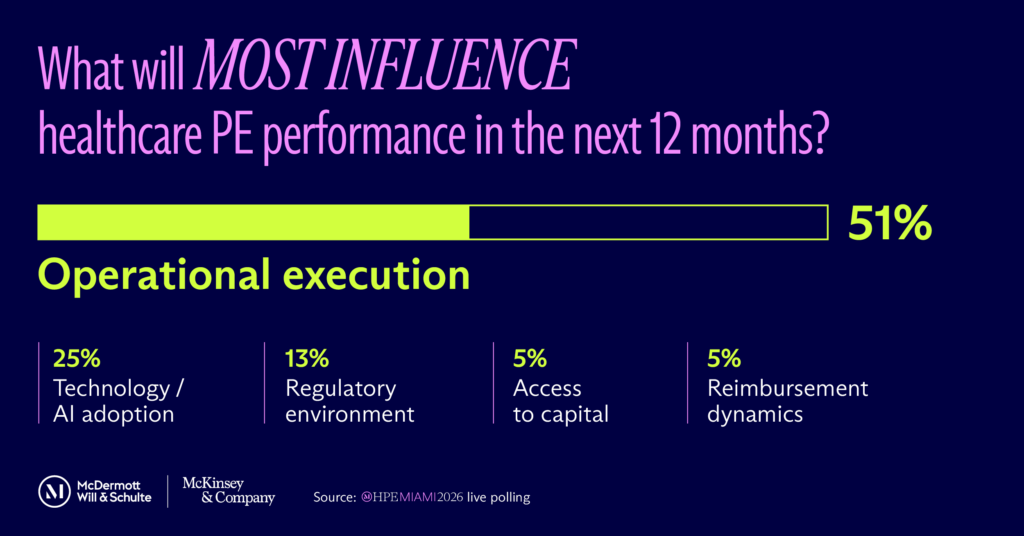
1. Operational execution, not financial engineering, is expected to be a primary driver of PE performance over the next 12 months
In a live poll during an HPE Miami panel, participants ranked “operational execution” as the most significant determinant of near-term investment performance.
According to the sentiment among attendees, gone is the traditional model of acquiring strong healthcare businesses and relying primarily on strategic guidance from the boardroom. Instead, PE firms are expected to have deep operational capabilities and specialized expertise within portfolio companies to move beyond high-level strategy and actively support operational improvements.
2. Compliance and quality will continue driving value creation
Panelists spoke to how compliance, quality management, and overall operational rigor are increasingly central to private equity value creation strategies. In healthcare, regulatory oversight can materially affect enterprise value and transaction outcomes. Quality failures, billing compliance issues, or regulatory enforcement actions can impact growth strategies or exit timelines.
3. Talent and leadership will be a key investment criterion
Attendees also heard that, because many healthcare service platforms operate across multi-site networks, effective execution requires leadership capabilities that extend beyond the executive team. For private equity investors, talent diligence at target organizations is becoming as important as financial diligence. Evaluating leadership depth, succession planning, and management scalability can significantly influence investment decisions and outcomes.
4. Strategic discipline will be important when evaluating healthcare platforms
Panelists noted that top-performing healthcare platforms frequently succeed by focusing on a limited number of high-impact operational priorities rather than attempting to pursue too many initiatives simultaneously.
5. Creative deal structures can address valuation gaps
Differences in buyers’ and sellers’ valuation expectations can delay transactions or even stall the sale process, as several panelists cautioned. To help, investors are looking to more creative deal structures for smoother transactions, including corporate carve-outs, management partnerships, smaller initial acquisitions for platform builds, and tying transaction structure to future growth milestones.
Rebounds and regulatory readiness
1. Tech and AI-enabled services are driving deal momentum
In terms of deal momentum, 47% of HPE Miami poll respondents cited health IT/AI-enabled services as the main driver, reflecting growing investor interest in platforms to help healthcare organizations navigate mounting cost and regulatory complexity. Buyers may consider prioritizing targets with scalable technology infrastructure and clear pathways for integrating AI into core healthcare workflows.
2. Replenished pharma pipelines are driving M&A recovery
Pharmaceutical companies largely continue to drive recovery in life sciences M&A activity as they seek to replenish drug pipelines, panelists told attendees – a priority, given patent expirations are projected to eliminate nearly $300 billion in revenue by 2028 (McKinsey). Because the majority of new molecular entity revenues since 2018 have originated from externally sourced innovations (McKinsey), the industry has seen an increasing reliance on strategic partnerships, acquisitions, and licensing agreements as growth drivers.
3. Drug development is going global, and life cycles are being compressed
Panelists also reflected that a recent flurry of activity emerging from Asia, particularly in China and South Korea, has led to significant drug innovations. Companies pursuing cross-border licensing and development partnerships must have the right support in place to navigate regulatory frameworks involving intellectual property (IP) protections, export controls, data governance rules, and international clinical trials approvals.
They further noted that faster biosimilar entry, pricing reforms, and regulatory changes are shortening the window during which new therapies come to market and generate peak revenue. These shifts have forced pharmaceutical companies to accelerate development timelines and engage CROs, CDMOs, and regulatory advisors even earlier in the drug development process.
McDermott’s key ideas and actions for healthcare investors and platform operators
McDermott expanded on these discussions to identify sharp insights and suggestions from the conversations at HPE Miami.
- Consider creating a value creation playbook that incorporates compliance and regulatory oversight as core operational priorities, including structured initiatives around:
- Clinical quality monitoring
- Billing and coding compliance
- Regulatory risk management
- Data governance and privacy compliance
- Operational process improvements supported by automation and AI
Evaluate these focus areas throughout the diligence phase of transactions, rather than solely after closing. In that way, investors are underwriting value creation based on these areas’ ability to improve operational discipline and compliance infrastructure within portfolio companies.
- Deep operational experience is a core differentiator of the shrewdest buyers and investors. Firms with the right level of expertise – those capable of making significant operational improvements in strategic, discrete focus areas – have the greatest potential to drive efficiencies that generate outsized returns.
- Regulatory compliance and quality management must be central components of any value creation strategy. Investors must increasingly evaluate these capabilities during diligence and incorporate them into post-acquisition operational plans.
- Strong leadership development processes and talent pipelines are critical for successfully scaling healthcare platforms, particularly in multi-site businesses where operational efficiencies and consistency directly affect performance. High-performing healthcare organizations should consider investing in leadership development pipelines several layers below the C-suite to ensure operational consistency across regional markets and service lines.
- Creative transaction structures and early exit preparation are becoming essential in navigating today’s healthcare deal environment, where valuation expectations, regulatory complexity, and diligence scrutiny continue to shape transaction outcomes.
As always, we look forward to continuing the dialogue with our clients and partners. Please reach out to explore any of these themes further.
A version of this recap was also published to the McKinsey Healthcare Blog.




Green claims under scrutiny in Italy: Stricter rules and rising litigation risks for businesses
ARTICLE / CLIENT ALERT
Green claims under scrutiny in Italy: Stricter rules and rising litigation risks for businesses
March 31, 2026
Read time: 10 min
1. Green Claims under the scrutiny of Italian courts
The so-called greenwashing – a deceptive marketing activity aimed at presenting products or companies as environmentally friendly, while their environmental impact is negative – is not new and Italian courts have already had the chance to sanction it.
Just to mention one of the most recent rulings, in July 25, 2025, the Court of Milan, when called upon to rule on a class action brought by a consumers’ association, set out a structured approach for the assessment of environmental claims (or “green claims”, as the Tribunal itself called them), aligning domestic practice with the case law of the Court of Justice of the European Union (among others, C-646/22 and C-139/22).
The Court of Milan stated that greenwashing is a misleading practice, i.e. it may distort the economic behavior of the “average consumer”, meaning a consumer who is reasonably well-informed and observant. In particular, the Court found several sustainability-related statements in the case examined to be misleading, including claims referring to:
- high environmental and social standards;
- “zero impact” supply chains;
- general commitments to sustainability and transparency.
These statements were not supported by adequate and verifiable evidence.
The Milan Court clarified that participation in a private certification system (such as the “B Corp network”) does not constitute conclusive evidence of environmental performance, as such systems merely refer to a private standard and do not necessarily guarantee objective, measurable or publicly recognized compliance.
This approach significantly raises the evidentiary threshold to demonstrate that environmental communications are based on objective and verifiable data. Misleading or untrue green claims have also been sanctioned several times by the Italian Competition Authority (Autorità Garante della Concorrenza e del Mercato, “AGCM”) across different sectors. For instance, in a decision of July 29, 2025, the AGCM imposed a fine of €1 million on Infinite Styles Services Co. Ltd, the company responsible for managing Shein’s product trading websites in Europe, for the use of misleading and/or deceptive green claims in the promotion and sale of clothing products. Another AGCM’s decision, adopted on January 21, 2025 against General Logistics Systems (GLS), resulted in a fine of €8 million due to the company’s ambiguous and unsubstantiated use of environmental claims, in particular by blurring the distinction between emission reduction and emission offsetting, thereby suggesting that its services had a lower environmental impact than was actually the case.
These judgements and sanctioning measures are aligned with and anticipate the rules set out under the European Union’s Directive 2024/825 (“empowering consumers for the green transition through better protection against unfair practices and through better information”), which has now been implemented in Italy with Legislative Decree No. 30/2026 (the “Greenwashing Decree”).
2. The Greenwashing Decree: what is new?
Italy has now specific legislation on greenwashing, implementing Directive (EU) 2024/825.
The Greenwashing Decree – entered into force on March 24, 2026 and applicable from September 26, 2026 – systematically integrates environmental claims into the existing framework on unfair commercial practices, thereby expanding both the scope and the intensity of scrutiny, by (i) introducing a statutory definition of “environmental claim” (Article 18 of the Italian Consumer Code); (ii) expanding the list of misleading commercial practices under Articles 21-23 of the Italian Consumer Code, in order to include new practices relating to environmental claims and (iii) reinforcing the existing enforcement framework under Article 27 of the Italian Consumer Code, with direct implications on both administrative proceedings and civil litigation.
The Greenwashing Decree introduces binding definitions within Article 18 of the Italian Consumer Code, including:
- “Environmental claim”: Any message or representation (not mandatory under EU law) used in a commercial context – including visual or symbolic elements, that conveys, expressly or implicitly, that a product, a category of products, a brand or an economic operator has a positive or neutral impact on the environment, or it is less or lower impact on the environment compared with other products, categories of products, brands or an economic operators or it has improved its environmental impact in the course of time.
- “Generic environmental claim”: Any oral or written environmental statement expressed in broad or nonspecific terms which is not incorporated into a sustainability label and is not accompanied by clear and sufficiently explanatory information clarifying its meaning.
- “Sustainability label”: Any voluntary sign, mark or certification, whether issued by a public or private body, intended to distinguish and promote a product, a process or a business based on its environmental or social characteristics.
- “Certification system”: A system under which an independent third party verifies compliance with predefined criteria, enabling the use of a corresponding sustainability label in relation to a product, process or business activity, and those preconditions and requirements are publicly available and compliant with the following:
- the system is open to any economic operator available to comply with its and requirements;
- systems requirements are set by owner of the same after having heard the relevant stakeholders;
- the system establishes the procedures to address non-compliance, including providing for the suspension or revocation of the sustainability label;
- an objective procedure, handled by a third independent party, is set for the monitoring of economic operators compliance with system requirements.
The Greenwashing Decree broadens the range of commercial practices that may be qualified as misleading or potentially misleading, by targeting several recurring patterns in environmental marketing.
Potentially misleading practices, i.e. those practices which are likely to mislead the average consumer or to cause him to take a decision that he would not otherwise have taken, they include:
- any practice potentially misleading with regard to the main characteristics of the product, such as its availability, benefits, risks, performance, composition, environmental or social characteristics, accessories, aspects relating to circularity, such as durability, reparability or recyclability, after-sales customer support and the handling of complaints, the method and date of manufacture or provision of the service, delivery, fitness for purpose, uses, quantity, description, geographical or commercial origin, or the results that may be expected from its use, or the results and key characteristics of tests and checks carried out on the product;
- any environmental claim relating to future environmental performance without including clear, objective, publicly available and verifiable commitments set out in a detailed and realistic implementation plan that includes measurable targets with specific deadlines, as well as other relevant elements necessary to support its implementation, such as the allocation of resources, and which is periodically verified by an independent third party, whose conclusions are made available to consumers;
- any advertising that presents as benefits to consumers factors that are irrelevant and do not stem from the characteristics of the product or the business.
These practices may sanctioned only where they would likely mislead the average consumer, based on a case-by-case assessment.
Statutory misleading practices, i.e. those practices which are always prohibited, regardless of their likelihood of influencing the average consumer, they are as follows:
- displaying a sustainability label that is not based on a certification system or has not been established by public authorities;
- making a generic environmental claim for which the professional is unable to demonstrate the recognized excellence of the environmental performance relevant to that claim;
- make an environmental claim concerning the product as a whole or the economic operator’s business as a whole, while it relates only to a specific aspect of the product or a specific element of the economic operator’s business;
- claiming, on the basis of greenhouse gas emissions offsetting, that a product has a neutral, reduced or positive impact on the environment in terms of greenhouse gas emissions;
- presenting the compliance with legal requirements applicable in the EU for all products in each category as if they were a distinctive feature of the economic operator’s offer;
- failing to inform the consumer that a particular software update will adversely affect the functioning of goods that include digital elements, or the use of digital content or digital services;
- presenting a software update as essential when it merely improves certain functional features;
- any commercial communication relating to a good that contains a feature designed to limit its durability, even though information about that feature and its effects on the durability of the good is available to the economic operator;
- falsely claiming that, under normal conditions of use, the product has a certain lifespan in terms of time or intensity of use;
- presenting the item as repairable when it is not;
- inducing the consumer to replace or replenish consumable parts of the product sooner than required by technical reasons;
- failing to disclose that the performance of a product will be impaired by the use of consumables, spare parts or accessories not supplied by the original manufacturer or falsely claim that such impairment will occur.
3. Information obligations and product-related transparency
Alongside these prohibitions, the reform strengthens pre-contractual information obligations, requiring traders to provide consumers with clear and accessible information before the purchase. In particular, traders must inform consumers about:
- the existence of the legal guarantee of conformity for goods and its main features, including the minimum duration of two years;
- manufacturer’s offer of a commercial guarantee of durability at no extra cost;
- the legal guarantee of conformity applying to digital content and digital services;
- for goods comprising digital elements, for digital content and for digital services, where the manufacturer or supplier makes the information available to the economic operator, the minimum period during which the manufacturer or supplier provides software updates;
- the goods repairability index or, if impossible, information about availability, estimated cost and ordering procedure for spare parts.
Failure to provide the above information constitutes an unfair commercial practice, punishable by the AGCM, and it may also lead to civil litigation started by consumers or consumers’ associations.
4. Public and private enforcement
Enforcement continues to be governed by Article 27 of the Italian Consumer Code, which empowers AGCM to investigate and sanction unfair commercial practices, including through cease-and-desist orders and the imposition of administrative fines of up to €10 million, depending on the seriousness and extension of the infringement as well as on the company’s turnover.
Beyond public enforcement, the reform increases exposure to civil litigation on multiple fronts.
First, companies may face claims brought by consumers, including actions grounded in misleading commercial practices and, potentially, collective proceedings or class actions. Italy has recently reformed class actions, with Legislative Decree 28/2023, significantly broadening the scope of class action proceedings, now covering collective damage stemming from defective products, unfair contractual terms, data breaches, environmental issues and climate change.
Second, where environmental claims imply acts of unfair competition under Article 2598, paragraph 3 of the Italian Civil Code (in the form of misleading advertising), or trademarks, violations, companies may face actions by competitors before Civil Courts, including by means of urgent precautionary proceedings.
Third, the new framework is expected to have a direct impact on contractual relationships. Sustainability-related statements, such as those concerning environmental performance, traceability of supply chains, carbon footprint or compliance with Environmental, Social, and Governance (ESG) standards, are increasingly embedded in commercial transactions, including supply agreements, procurement contracts, technology arrangements and M&A transactions, where they may form part of the economic rationale of the deal.
Businesses are required to prepare in view of the application, starting from September 26, 2026, of the rules, including by:
- assessing existing environmental statements and consumers pre-contractual information compliance with the new restrictions, especially in connection with the (quite frequent) generic green claims;
- documenting methodologies, assumptions, and data sources to prove that green claims are properly substantiated;
- selecting and appointing accredited certifiers;
- updating contracts with suppliers with appropriate safeguards, including (i) obligation to provide data and certifications; (ii) audit rights; (iii) obligations to cooperate in case of investigations; (iv) appropriate representation and warranties specifically addressing environmental information; (v) termination rights, etc.;
- preparing for regulatory investigations and collective actions.
*Valeria Kiseleva (trainee) contributed to this article.



UK Financial Conduct Authority continues to focus on private market funds
ARTICLE / CLIENT ALERT
UK Financial Conduct Authority continues to focus on private market funds
March 31, 2026
Read time: 9 min
On 16 March 2026, the UK Financial Conduct Authority (FCA) published its Regulatory Priorities Report for the Wholesale Buy Side sector (the Report). The Report is intended to replace the FCA’s portfolio letters going forward and helpfully summarise the FCA’s areas of focus for the next 18 months, alongside a forward-looking timeline of key milestones and events.
We have summarised the priorities and key takeaways from the Report below.
Regulatory priorities and key takeaways
Reinforcing consistent and high standards across private markets
Overview of the FCA’s priorities
Private markets will remain a key supervisory priority for the FCA in the next 18 – 24 months, with the launch of several supervisory initiatives to promote growth and competition whilst maintaining investor protection and supporting financial stability.
The Report highlights the following steps that the FCA expects firms to take to maintain high standards across private markets:
- Review and update governance and processes for valuations. Firms should take account of the recent FCA Private Valuations Review;
- Ensure the robustness of processes and procedures around the identification, management, and mitigation of conflicts of interest; and
- Where applicable, align product design frameworks for retail distribution and ensure that this is consistent with consumer duty expectations. The FCA notes that firms should focus on product governance, valuation processes, liquidity terms, and management of conflicts.
The FCA will provide more detailed guidance on its expectations on the identification and management of conflicts of interests in the private markets in due course, and firms should expect enhanced engagement from the FCA on their risk management practices and controls.
We note that whilst the FCA supports retail access to private markets, the Report emphasises that this must be done in a thoughtful and responsible manner and that firms must not ‘design products in a way that prioritises ease of distribution over the characteristics of the underlying assets.’
What to expect from the FCA?
In relation to reinforcing high standards, firms should expect the FCA to:
- Continue to engage with firms on valuation practices, management of conflicts of interest, risk management, and plans to broaden retail access to private markets products responsibly;
- Continue its multi-firm review of conflicts of interest. The FCA intends to communicate good practice to the private market during the course of 2026;
- Continue to support the Bank of England as it conducts a new private markets system-wide exploratory scenario exercise. This exercise will focus on how the private markets ecosystem operates under stress and the potential implications for UK financial stability and the UK real economy.
- Undertake focused supervisory work on firms’ approaches to risk management in private markets; and
- Support the Financial Stability Board’s deep dive on private credit and its workstream assessing definitions of private finance activities and data gaps across jurisdictions.
Evolving regulation and innovation
Overview of the FCA’s priorities
The FCA indicates that it wishes to support the UK’s status as an international investment hub and will progress policy initiatives that are designed to foster growth and competition and ensure that regulation remains fit for purpose.
Whilst the FCA remains open to innovation and proportionate regulation in the private markets space, firms will be required and expected to be able to demonstrate that they have implemented appropriate and robust governance, oversight, and risk management procedures when incorporating AI, tokenisation, and distributed ledger technology into their business processes and service offering. This should include clear accountability, robust oversight, and senior management engagement.
Firms that are developing new products or operating structures which utilise new technology should expect enhanced scrutiny from the FCA.
What to expect from the FCA?
In relation to evolving regulation and innovation, firms should expect the FCA to:
- Consult on proposed streamlining and simplification of the rules applicable to alternative investment fund managers (AIFMs);
- Implement changes to the FCA’s regulatory data model to remove unnecessary reporting and incorporate global data standards. The FCA states that these changes are intended to complement the FCA’s proposed changes to the transaction reporting regime. However, it notes that, where gaps exist, they may require more data from firms to allow the FCA to monitor concentration and leverage risks that may harm financial stability and market integrity;
- Work to digitise and simplify the fund authorisation process;
- Progress its work on fund tokenisation. In this regard, the FCA encourages firms that are developing tokenised products to highlight any current barriers to entry;
- Continue to support innovation through the Digital Securities Sandbox; and
- Consult on streamlining product-level Task Force on Climate-related Disclosures reporting requirements.
Preserving market integrity and resilience
Overview of the FCA’s priorities
The Report focuses on cybersecurity threats, third party dependencies, leverage, and concentration risks, and how markets and firms function during stress periods. It emphasises the need for firms to demonstrate that they have robust controls in place to mitigate such threats and risks.
Firms should expect enhanced engagement from the FCA, including via the completion of self-assessment questionnaires, to enable the FCA to better assess the robustness of their risk management procedures.
The FCA expects firms to focus on:
- Strengthening operational resilience and embedding it into their processes such as new product design and change management;
- Maintaining robust incident response and recovery plans. In this regard, the FCA states that firms should be aware of and mitigate the risks they pose to other firms and their clients;
- Assessing and managing dependencies on material third-party providers, ensuring robust due diligence and ongoing monitoring of resilience capabilities;
- Strengthening governance frameworks to manage the firm’s impact on markets. The FCA notes that this should focus on effective risk management of investment models and strategies employing leverage, concentrations, and the use of newer technologies; and
- Implementing robust systems and controls to detect and prevent market abuse.
What to expect from the FCA?
In relation to preserving market integrity and resilience, firms should expect the FCA to:
- Continue to monitor and identify outlier firms and funds with high leverage, illiquidity, or concentrated investment strategies to ensure appropriate risk management and liquidity management procedures are in place;
- Collect information from a cross section of firms to understand the maturity of their insider risk management;
- Consult on enhancing fund liquidity risk management for alternative investment funds;
- Finalise the new rules under the FCA transaction reporting regime (the policy statement is expected in Q3 2026);
- Enhance engagement on cybersecurity oversight through firm self-assessment questionnaires;
- Continue to review asset manager and custody bank operational resilience self-assessments; and
- Fast-track the authorisation of investment funds focused on the defence sector (reducing approval times to one month).
Delivering good outcomes
Overview of the FCA’s priorities
In line with the consumer duty regime, the FCA expects firms to deliver good outcomes for customers. In this regard, the FCA identifies areas of focus for firms and expects them to take the following actions:
- Provide clear communications to investors to enable them to make informed investment decisions; and
- Principal firms should maintain strong oversight of appointed representatives and make sure that consumer duty expectations are met in relation to such arrangements (where applicable). Compliance with the consumer duty will be of limited to relevance to firms who do not undertake business with retail clients or ‘in scope’ clients (pursuant to the applicable FCA conduct of business rules).
What to expect from the FCA?
In relation to delivering good outcomes, firms should expect the FCA to:
- Finalise its policy in relation to client categorisation and conflicts of interest;
- Consult on clarifying the application of the consumer duty across the distribution chain and to wholesale firms. The FCA will issue a consultation in the middle of this year;
- Focus on outlier firms that design products and services that do not consider consumers’ best interests. This will be relevant to private funds that market to retail investors;
- Engage with firms as they implement the new Consumer Composite Investments framework (which will replace UK PRIIPS). This will be relevant in the context of private funds that are marketed to retail investors;
- Continue its supervisory work with depositaries to understand how effectively they are delivering against their regulatory obligations; and
- Support further implementation of the sustainable disclosure and labelling regime.
Other potential reforms
The Report also makes reference to potential reforms of the remuneration and prudential rules applicable to AIFMs, as well as highlighting the upcoming post-implementation review of the prudential regime for investment firms (which also applies to AIFMs with MIFID top up permissions) and the Senior Managers and Certification Regime.
The FCA will continue to finalise its rules for cryptoasset firms, with the gateway for authorisation opening on 30 September 2026.
What does all this mean?
Firms should expect significant and ongoing supervisory engagement with the FCA in the coming 18 months to two years. The Report’s focus on market volatility and stress events suggest that the press coverage over the recent high profile failure of private credit funds has caused a degree of alarm at the FCA. This may have an impact on some of the policy choices and options explored by the FCA in the upcoming consultation paper on reform of the UK AIFM regime (AIFM Consultation).
Whilst the FCA is supportive of retailisation in principle, it has reservations around the appropriateness of such products for the retail market in the absence of appropriate product governance processes and thoughtful consideration of liquidity terms and arrangements. Again, this may be an issue that the FCA addresses in the upcoming AIFM Consultation.
It will be important for firms to demonstrate that they have actively engaged and, as necessary, implemented changes to their policies, procedures, and controls in light of FCA supervisory and thematic reviews, and senior management and internal stakeholders should expect engagement with the FCA on the steps taken to address weaknesses and deficiencies in their processes.
If you have any questions, please contact Karen Butler, Josh Dambacher, or Christopher Hilditch.