Content Type: Article

  • Disclaimer Planning in Uncertain Times Under the Virginia Uniform Disclaimer of Property Interests Act

    Disclaimer Planning in Uncertain Times Under the Virginia Uniform Disclaimer of Property Interests Act

    ARTICLE

    Disclaimer Planning in Uncertain Times Under the Virginia Uniform Disclaimer of Property Interests Act

    Spring/Summer 2021

    Read time: 2 min

    Key takeaways
    Overview

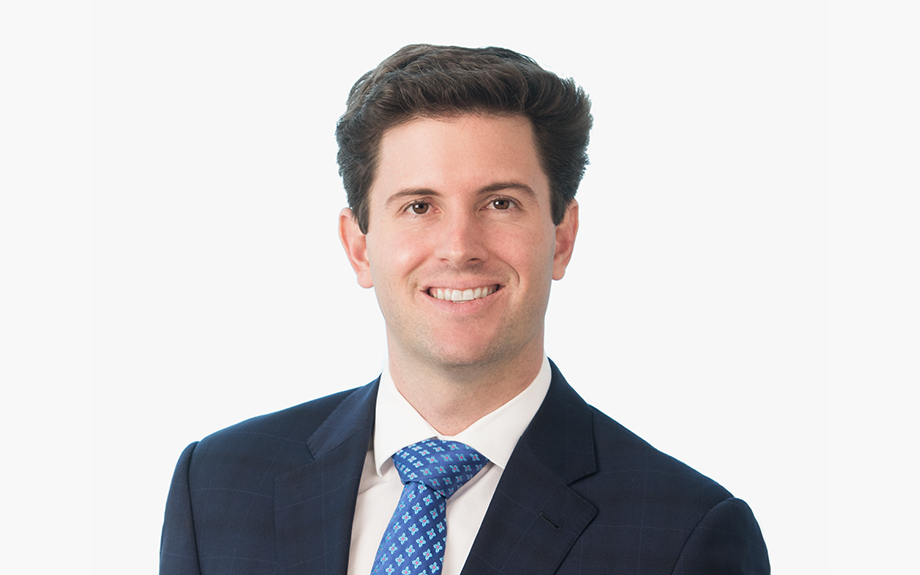
    Caitlin Orr and Travis Harrison authored this bylined article discussing how, under the right circumstances, it may be possible through one or more qualified disclaimers to unwind a gift transaction in whole or in part, including for federal transfer tax purposes, especially with thoughtful advance planning and careful drafting to take advantage of certain unique features of Virginia law. It also discusses how disclaimers may present planning opportunities for those with unused federal transfer tax exemptions remaining.

    In depth
    Authors

    Travis Harrison

    Partner

    Washington, DC

    More insights

  • Supreme Court Assigns PTO Director a New Gig: Reviewing the PTAB’s Inter Partes Decisions

    Supreme Court Assigns PTO Director a New Gig: Reviewing the PTAB’s Inter Partes Decisions

    ARTICLE / CLIENT ALERT

    Supreme Court Assigns PTO Director a New Gig: Reviewing the PTAB’s Inter Partes Decisions

    June 24, 2021

    Read time: 7 min

    Key takeaways
    Overview

    Through a splintered set of opinions, the Supreme Court of the United States held that appointment of administrative patent judges (APJs) serving on the Patent Trial and Appeal Board (PTAB) violated the Appointments Clause of the Constitution, and the proper remedy was to vest the US Patent and Trademark Office (PTO) Director (Director) with discretion to overturn the PTAB’s decisions. United States v. Arthrex, Inc., Case Nos. 19–1434; –1452; –1458 (June 21, 2021). Chief Justice John Roberts delivered the opinion of the Court, with opinions by Justice Neil Gorsuch (concurring in part and dissenting in part), Justice Stephen Breyer (concurring in part in the judgment and dissenting in part) and Justice Clarence Thomas (dissenting).

    In depth

    BACKGROUND

    Arthrex, a medical device company, appealed an inter partes review (IPR) decision holding that prior art anticipated its patent. On appeal, Arthrex argued that the appointment of the PTAB judges by the US Secretary of Commerce—rather than by the President of the United States with US Senate confirmation—violated the Appointments Clause. Under the Appointments Clause, principal officers must be appointed by the President and confirmed by the Senate whereas inferior officers may be appointed by a department head (like the Secretary of Commerce). Thus, the issue was whether PTAB judges were inferior or principal officers.

    On appeal at the Federal Circuit, the panel held that the inability of the Director to review the PTAB judges’ decisions, combined with the for-cause limitation on the Director’s removal authority, rendered the PTAB judges principal officers. Since they were not subject to Presidential appointment and Senate confirmation, the PTAB judges were unconstitutional officers. However, the Federal Circuit did not invalidate their decisions. Rather, to remedy the constitutional violation, the Federal Circuit removed the tenure protections to make the PTAB judges removable at will by the Secretary. After an unsuccessful bid for rehearing en banc, the Supreme Court granted certiorari “to consider whether the PTAB’s structure is consistent with the Appointments Clause, and the appropriate remedy if it is not.”

    OVERVIEW

    At the Supreme Court, the case resulted in a set of four opinions with ultimately two key takeaways: A five-justice majority voted to find that the appointment of the PTAB judges was unconstitutional, and a seven-justice slate concluded that the proper remedy was to vest the Director with authority to overrule PTAB decisions.

    APPOINTMENT OF THE PTAB JUDGES VIOLATED THE APPOINTMENTS CLAUSE

    In the portion of Chief Justice Roberts’s opinion joined by Justices Samuel Alito, Amy Coney Barrett, Gorsuch and Brett Kavanaugh, the Court held (just as the Federal Circuit had) that the appointment of PTAB judges by the Secretary of Commerce violated the Appointments Clause. The majority primarily relied on Edmond, a Supreme Court precedent that explained that an inferior officer must be “directed and supervised at some level by others who were appointed by Presidential nomination with the advice and consent of the Senate.” In Edmond, the Court found dispositive that the adjudicator had “no power to render a final decision on behalf of the United States unless permitted to do so by other Executive officers.” Thus, Edmond established that an inferior officer is supervised by someone directly above them.

    Applying the Edmond test, the Court found that the PTAB judges’ authority to issue patentability decisions without oversight gave them the authority of principal officers but without having been appointed as such. Though the Director exercises administrative oversight over the PTAB judges, the Director is not “the boss” with respect to the PTAB’s power to issue decisions on patentability because the Director had no authority to review the PTAB’s final decisions. The Court also noted that only the PTAB has the authority to grant rehearings, which makes its decisions essentially unrestricted. Furthermore, the Court cited historical sources to support that unreviewable power of PTAB judges is incompatible with their appointment as inferior officers. Accordingly, the Court said the Appointments Clause was violated, and reaffirmed the rule from Edmond “that the exercise of executive power by inferior officers must at some level be subject to the discretion and supervision of an officer nominated by the President and confirmed by the Senate.”

    Penning a partial concurrence and partial dissent, Justice Breyer, joined by Justices Elena Kagan and Sonia Sotomayor, expressed that Edmond should be overruled in light of a more “functional approach” that favored deference to the legislature’s decision to “grant the APJs a degree of independence.” Justice Thomas, authoring a dissent that garnered support from Justices Breyer, Kagan and Sotomayor regarding whether the Appointments Clause had been violated, contended that PTAB judges are clearly inferior officers because they are both formally and functionally inferior to the Director and Secretary. Although he argued that APJs were inferior officers even if one applied Edmund, he further explained that the Edmund test deviated from the original meaning of the Appointments Clause and that neither the Court’s precedent nor the original meaning of the Appointments Clause supported finding PTAB judges to be principal officers.

    THE PROPER REMEDY IS VESTING THE DIRECTOR WITH THE AUTHORITY TO OVERRULE THE PTAB

    The issue of remedy proved far less divisive. None of the justices believed the Federal Circuit correctly decided that the removal of tenure protections was a satisfactory solution. Instead, the Chief Justice, joined by Justices Alito, Kavanaugh and Barrett, concluded that the appropriate fix was to hold 35 U.S.C. § 6(c) unenforceable because it prevented the Director from reviewing final decisions rendered by PTAB judges. The Court reasoned that without § 6(c), which provides that “each…inter partes review shall be heard by at least 3 members of the [PTAB]” and that “only the [PTAB] may grant rehearings,” decisions by PTAB judges will be subject to review by the Director, thus remedying the unreviewable principal officer-like power. The Court said this revision was consistent with the “powers and duties” statutorily afforded to the Director and aligned the PTAB with “the almost universal model of adjudication in the Executive Branch,” including the Trademark Trial and Appeal Board.

    In concurrence, Justice Gorsuch, writing only for himself, would have found that the Appointments Clause violation could not be remedied other than by invalidating the PTAB. He reasoned that statutory severance was itself a questionable concept, and that vesting the Director with authority to countermand the PTAB denied appropriate legislative deference.

    Finally, Justice Thomas’s dissent, in a portion joined by no one, would have concluded that the Court had two options before it: Vacatur of the PTAB’s decisions, as they were rendered by unconstitutionally appointed principal officers, or dismissal of the case for lack of injury because the Director had inherent power to review the PTAB judges’ decisions.

    Practice Note: The implications of the Director’s newfound authority are uncertain and will likely spur new types of challenges. Is the Director’s exercise of discretion (or lack thereof) appealable? What standards guide the Director’s discretion, and what procedures will the PTO implement to allow for Director review? Can the Director be sued under Administrative Procedures Act? Beyond the authority of the Director, how will this decision shape future challenges (and decisions) related to the various adjudicative bodies in the executive? These questions (and surely many others) will hopefully be answered in suits to come.

    Lillian Spetrino, a summer associate in the Washington, DC, office, also contributed to this article.

    Authors
    More insights

  • What does it take to plead trade secret misappropriation under the DTSA?

    What does it take to plead trade secret misappropriation under the DTSA?

    ARTICLE

    What does it take to plead trade secret misappropriation under the DTSA?

    June 24, 2021

    Read time: 7 min

    Addressing the pleading standard under the Defend Trade Secrets Act (DTSA) and New Jersey Trade Secrets Act (NJTSA), the US Court of Appeals for the Third Circuit vacated the district court’s dismissal of a third amended complaint for trade secrets misappropriation and remanded for further proceedings. Oakwood Labs. LLC v. Thanoo, Case No. 19-3707 (3d Cir. May 8, 2021) (Jordan, J.)

    Thanoo was a key player in Oakwood Laboratories’ Microsphere Project, a 20-year, $130 million project to develop injectable sustained-release drug products using a complex and rare microsphere technology. In 2013, Aurobindo approached Oakwood about a possible collaboration, specifically to involve Aurobindo’s manufacture of an active pharmaceutical ingredient for Oakwood. Subject to a nondisclosure agreement, Oakwood shared with Aurobindo confidential information, including a 27-page memorandum describing the Microsphere Project. Ultimately, Aurobindo declined to proceed, citing financial considerations. Aurobindo subsequently hired Thanoo. Although Thanoo told Oakwood that he was going to Aurobindo to work on standard injectable drugs and not microspheres, he immediately set up a research and development program concerning microspheres for Aurobindo. Aurobindo, which had no previous experience in microspheres, announced that it would have products ready for clinical testing in just one to four years, despite a relatively small investment of only $6 million. Oakwood sued Thanoo and Aurobindo for trade secret misappropriation under the DTSA and NJTSA, and for breach of contract and tortious interference.

    On Thanoo’s motion, the district court dismissed Oakwood’s complaint, finding that it failed to provide specific allegations of what trade secrets were allegedly misappropriated and how Aurobindo allegedly used the trade secrets. Oakwood filed first, second and third amended complaints, each alleging with greater specificity the trade secrets associated with the Microsphere Project and expanding on the allegation that Aurobindo could not have proceeded so quickly from no experience to announcing near-complete development of microsphere products without using Oakwood’s trade secrets. Nonetheless, the district court dismissed each complaint as being insufficiently specific as to which particular trade secrets were allegedly misappropriated and the particular way in which Aurobindo allegedly used the trade secrets. The district court also held that, absent any product launch from Aurobindo, any harm from the alleged misappropriation was too speculative to support a claim. After dismissal of the third amended complaint, Oakwood appealed.

    The Third Circuit reversed, concluding that Oakwood’s complaint sufficiently pled a claim for trade secret misappropriation under either the DTSA or the NJTSA. The Court explained that Oakwood had sufficiently identified its trade secrets by its allegation that information laying out its design, research and development (including identification of variables that affect the development), test methods and results, manufacturing processes, quality assurance, marketing strategies and regulatory compliance related to its development of a microsphere system were trade secrets. Oakwood had also identified a specific memorandum disclosed to Aurobindo under a confidentiality agreement as containing trade secrets, and attached other documents specifying in detail secrets related to the Microsphere Project.

    The Court further found that Oakwood had sufficiently alleged misappropriation. Although there are several ways to misappropriate trade secrets, the Court focused on “use” of the trade secret. The Court found error in the district court’s narrow interpretation of “use” to mean “replicate” (which, it noted, is a separate ground for culpability under the DTSA) and embraced the broader interpretation of “use” to mean (generally) deriving any economic benefit that has been widely used to interpret, e.g., the Uniform Trade Secrets Act. The Court concluded that Oakwood’s allegation that Aurobindo could not have achieved its level of advancement in microsphere technology without use of Oakwood’s trade secret information to be sufficient because, taking all inferences in Oakwood’s favor, it was at least plausible that Aurobindo actually used the trade secrets (which Aurobindo knew were proprietary to Oakwood).

    Finally, the Third Circuit found error in the district court’s view that Oakwood had only pled speculative harm, explaining that trade secret misappropriation is a harm in itself because the misappropriation destroys the value of the trade secret. Thus, Oakwood need not have alleged harm beyond the misappropriation itself to survive a motion to dismiss.

    Authors

    Paul Devinsky

    Senior Counsel

    Washington, DC

    More insights

  • OSHA’s COVID-19 Requirements for Healthcare Employers Take Effect

    OSHA’s COVID-19 Requirements for Healthcare Employers Take Effect

    ARTICLE / CLIENT ALERT

    OSHA’s COVID-19 Requirements for Healthcare Employers Take Effect

    June 22, 2021

    Read time: 6 min

    Key takeaways
    Overview

    On June 21, 2021, the US Occupational Safety and Health Administration’s (OSHA) long-anticipated Emergency Temporary Standard (ETS) for COVID-19 requirements in the healthcare industry went into effect. Most of the requirements must be followed by July 6, 2021; the remainder (on implementing physical barriers, improved ventilation systems and employee trainings) must be implemented no later than July 21, 2021.

    In depth

    WHO IS COVERED

    OSHA’s COVID-19 safety requirements are workplace-specific; this means that employers who have some employees working in a patient setting and other employees working in a corporate setting may need to follow the requirements only for the patient-based setting.

    Covered settings include those where any employee provides “healthcare services” or “healthcare support services.”

    “Healthcare services” mean “services that are provided to individuals by professional healthcare practitioners (e.g., doctors, nurses, emergency medical personnel, oral health professionals) for the purpose of promoting, maintaining, monitoring or restoring health. Healthcare services are delivered through various means including: hospitalization, long-term care, ambulatory care, home health and hospice care, emergency medical response, and patient transport. For purposes of this section, healthcare services include autopsies.”

    “Healthcare support services” mean “services that facilitate the provision of healthcare services, such as patient intake/admission, patient food services, equipment and facility maintenance, housekeeping services, healthcare laundry services, medical waste handling services and medical equipment cleaning/reprocessing services.”

    EXCEPTIONS TO COVERED EMPLOYERS

    There are a number of situations in which the full ETS, or sections of the ETS, do not apply. These include:

    • Non-hospital ambulatory care settings where all non-employees are screened prior to entry, and people with suspected or confirmed COVID-19 are not permitted to enter those settings;
    • Well-defined hospital ambulatory care settings where all employees are fully vaccinated and all non-employees are screened prior to entry, and people with suspected or confirmed COVID-19 are not permitted to enter those settings;
    • Home healthcare settings where all employees are fully vaccinated and all non-employees are screened prior to entry, and people with suspected or confirmed COVID-19 are not present; and
    • Well-defined areas (in any setting) where there is no reasonable expectation that any person with suspected or confirmed COVID-19 will be present. In this case, the ETS requirements for personal protective equipment (PPE), physical distancing and physical barriers do not apply to employees who are fully vaccinated. Employers seeking to avail themselves of this exception must establish procedures for determining employee vaccination status, and they must document those procedures in the COVID-19 plan.

    This chart provides additional details for determining whether an employer’s workplace is covered by the ETS.

    COVID-19 PLAN

    Employers must develop a COVID-19 plan for each workspace. If multiple workspaces are similar, the same plan can be used.

    Employers must designate at least one COVID-19 safety coordinator to implement the COVID-19 plan. This person must be knowledgeable in infection control principles, and their identity must be documented in the COVID-19 plan.

    Employers must conduct a workplace-specific hazard assessment to identify potential hazards related to COVID-19. The COVID-19 plan must address each of these hazards, including policies to minimize the risk of transmitting COVID-19.

    Where multiple employers have employees in a shared workplace—such as a hospital that employs healthcare providers but contracts with a third party to provide food service workers—the employers must communicate and coordinate with each other regarding the COVID-19 plans.

    Employers must solicit the involvement of non-managerial employees (or their representative, such as a union) in conducting the hazard assessment and in developing the COVID-19 plan.

    OTHER REQUIREMENTS

    Employers must provide PPE, impose social-distancing requirements, install physical barriers, ensure that existing HVAC systems are working properly (or install new ones) and screen employees before each work day and each shift.

    If an employer learns that an individual with suspected or confirmed COVID-19 has been in the workplace, the employer must notify employees that share the same well-defined workspace with that individual. Employees who have been in close contact with the individual, without appropriate PPE, must be removed from the workplace under US Centers for Disease Control and Prevention (CDC) guidance.

    VACCINATION

    Employers must provide reasonable time and paid leave to employees for COVID-19 vaccination and for side effects experienced following vaccination. The ETS is silent as to whether employers must retroactively provide paid leave for vaccination and related side effects, but the remainder of the ETS is intended to apply only prospectively. Employers need not reimburse employees for time away from work due to vaccination and side effects if the leave took place before July 5, 2021.

    TRAINING

    Employers must ensure that all employees receive training on COVID-19, including methods of transmission; the employer’s policies on patient screening and management; workplace situations that could result in COVID-19 transmission; and related topics. Employers may rely on trainings that took place before June 21, 2021, if the trainings meet the ETS’s basic requirements.

    ANTI-RETALIATION

    Employers must inform employees that retaliation is prohibited against employees for seeking to follow the requirements of the ETS, or for seeking to avail themselves of any other rights available to them under the Occupational Safety and Health Act.

    RECORDKEEPING

    Employers must retain copies of all final versions of the COVID-19 plan, and they must establish a COVID-19 log to record all instances in which an employee tests positive (even if the instance is not deemed work-related) for contact-tracing purposes. Employers with 10 or fewer employees as of June 21, 2021, are not required to maintain these records.

    EFFECTIVE DATE

    The ETS is effective as of June 21, 2021. Covered employers must comply with its requirements by July 6, 2021; however, the compliance regarding the establishment of physical barriers, ventilation systems and employee trainings is not required until July 21, 2021. OSHA has stated that it will use its enforcement discretion in situations where an employer can demonstrate that it has made good-faith efforts to comply with the ETS by the specified dates, even if the employer has been unable to do so.

    Authors

    Abigail M. Kagan

    Partner

    New York – One Vanderbilt Avenue

    More insights

  • 2020 American Heart Association and American College of Cardiology Consensus Conference on Professionalism and Ethics

    2020 American Heart Association and American College of Cardiology Consensus Conference on Professionalism and Ethics

    ARTICLE

    2020 American Heart Association and American College of Cardiology Consensus Conference on Professionalism and Ethics

    June, 21, 2021

    Read time: 1 min

    Key takeaways
    Overview


    In depth
    Authors
    More insights

  • Key International Tax Proposals in the Biden Administration’s Green Book and Their Potential Impact on Businesses

    Key International Tax Proposals in the Biden Administration’s Green Book and Their Potential Impact on Businesses

    ARTICLE / CLIENT ALERT / US POLICY

    Key International Tax Proposals in the Biden Administration’s Green Book and Their Potential Impact on Businesses

    June 21, 2021

    Read time: 12 min

    Key takeaways
    Overview

    On May 28, 2021, the US Department of the Treasury (Treasury) released the Fiscal Year (FY) 2022 budget and Green Book, which provides detailed insights into the proposals of US President Joe Biden’s recently released American Jobs Plan and American Families Plan. This article summarizes the key proposals affecting businesses and provides further insight on planning considerations.

    In depth

    COUNTRY-BY-COUNTRY REGIME TO APPLY TO GILTI AND FOREIGN BRANCH INCOME

    The current global intangible low-taxed income (GILTI) regime operates on a global blended basis such that excess taxes paid in high-tax jurisdictions may be used to offset residual US taxes on income earned in low-tax jurisdictions. The Green Book raises a concern that global blending incentivizes US companies that have operations in high-tax jurisdictions to invest in low-tax jurisdictions, and US companies that have operations in low-tax jurisdictions to invest in high-tax jurisdictions. In either case, per the Treasury, US companies are encouraged to invest outside the United States whether the foreign tax rate is higher or lower than the US tax rate. Thus, the Green Book proposes to create a new standard under which a US taxpayer’s GILTI inclusion and foreign tax credit limitation would be determined on a country-by-country (CBC) basis. If enacted, this proposal would constitute both a significant tax increase and a major compliance and tax administration burden for taxpayers and the Internal Revenue Service (IRS).

    Similar to computing a US shareholder’s GILTI inclusion and foreign tax credit limitation on a CBC basis, the Green Book would expand the CBC regime to foreign branch income, citing the same global blending concerns that exist in the GILTI context. The Treasury was, presumably, concerned that taxpayers might shift from GILTI structures into branch structures if the CBC approach were to extend only to GILTI. However, taking a CBC approach to foreign branch income will introduce additional complexity to foreign tax credit limitation determinations, particularly where there is a foreign branch loss in a particular country.

    REPEAL OF SUBPART F AND GILTI HIGH-TAX EXCEPTIONS

    The Green Book proposes to repeal the Subpart F and GILTI high-tax exceptions. This proposal goes significantly further than simply revising the high-tax threshold upward along with the proposed increase in US corporate tax rates. Many may criticize the Green Book proposal as overly burdensome on companies with overseas operations driven by business necessities as opposed to tax benefits. The proposal to repeal the high-tax exceptions would be especially impactful to companies that use these exceptions to mitigate residual US taxation on GILTI or Subpart F income where the application of the expense allocation and apportionment provisions results in a foreign tax credit limitation under section 904 principles or where the utilization of losses adversely impacts the section 250 taxable income limitation.

    REPLACING BEAT WITH SHIELD

    Additionally, the Green Book proposes to replace the existing Base Erosion and Anti-Abuse Tax (BEAT) with a new tax regime, Stopping Harmful Inversions and Ending Low-Tax Developments ( SHIELD) According to the Green Book, the current BEAT regime does not adequately address the concern of erosion of the US corporate tax base by inefficiently favoring certain activities over others. Instead of imposing a minimum tax, SHIELD would disallow deductions to domestic corporations or branches with respect to gross payments made to “low-taxed members” of the same “Financial Reporting Group.” As in the case of the proposed excess indebtedness interest disallowance rule, a Financial Reporting Group is any group of business entities that prepares consolidated financial statements, as determined in accordance with US generally accepted accounting principles (GAAP), international financial reporting standards (IFRS) or other method authorized by the US Secretary of the Treasury (Secretary), and includes at least one domestic corporation, domestic partnership or foreign entity with a US trade or business. Accordingly, the majority of multinational enterprises with US presence would be treated as one or more Financial Reporting Groups for this purpose.

    “Low-taxed members” generally means any members of a Financial Reporting Group whose income is subject to an effective tax rate that is below a “designated minimum tax rate.” The “designated minimum tax rate” is either the rate agreed to under Pillar Two of the Organisation for Economic Co-operation and Development (OECD)/G20 Inclusive Framework on base erosion and profit shifting (BEPS) project (Pillar Two Agreement) or before a Pillar Two Agreement is reached. (The US global minimum tax would be 21% under the Green Book proposal.) This means US-parented multinational groups would not be subject to SHIELD (as GILTI prevents any relevant payments from being “low-taxed”). Thus, this element of President Biden’s plan would be a rare win for US-based multinationals in that BEAT concerns would be eliminated without any need to contend with the BEAT replacement regime.

    Similar to BEAT, SHIELD provides a de minimis exception under which SHIELD does not apply to Financial Reporting Groups with global annual revenues that do not exceed $500 million. Notably, while BEAT does not treat cost of goods sold (COGS) as base eroding payments, the Green Book specifically indicates that under SHIELD, other types of costs (such as COGS) would be disallowed up to the amount of the payment made to low-taxed members, which would be an extremely harsh outcome for those subject to the new regime

    In addition, SHIELD includes rules that apply to disallow deductions of domestic corporations on an aggregate basis with respect to the entire Financial Reporting Group. These rules would treat a portion of payments made to members that are not low-taxed as payments made based on the aggregate ratio of the Financial Reporting Group’s low-taxed profits to its total profits. In other words, if the Financial Reporting Group as a whole is subject to an effective tax rate lower than the designated minimum tax rate, all deductible payments made to other members of the Financial Reporting Group would be subject to SHIELD.

    Finally, SHIELD provides the Secretary with authority to exempt from SHIELD payments that meet a minimum effective level of taxation on a jurisdiction-by-jurisdiction basis.

    EXPANSION OF SECTION 265 TO DISALLOW PARTIAL DEDUCTIONS UNDER SECTIONS 245A AND 250

    Section 265(a)(1) generally disallows a deduction for any amount that is allocable to certain classes of income that is wholly exempt from US taxation. This rule does not apply to the 100% dividend-received-deduction for the foreign-sourced portion of certain dividends under section 245A or the 50% deduction of foreign-derived intangible income (FDII) under section 250 because those provisions constitute deductions as opposed to rendering any income “wholly exempt” from US taxation. The existence of section 904(b)(4), which the Green Book would repeal as no longer relevant, demonstrates that Congress understood that present-law section 265 does not apply to deny these deductions. The Green Book includes an interesting footnote that implies present-law section 265 could be interpreted as already applying to disallow these deductions, but there appears to be no basis for that statement under the current Code and regulations.

    The Green Book describes the current rules as effectively providing a tax subsidy for multinationals’ foreign investments by allowing a domestic corporation (or a foreign corporation with US corporate subsidiaries) to receive a deduction against US taxation with respect to certain income derived outside the United States. Thus, the Green Book proposes to reduce the 50% deduction under section 250 to 25%. Further, the proposal would expand the application of section 265 to disallow deductions allocable to income taxed at a preferential rate through a deduction in addition to deductions allocable to wholly exempt income. With respect to such partially exempt income, the new section 265 under the proposal would disallow a portion of the deductions under sections 245A and 250 and provide rules for determining the amount disallowed.

    As noted above, the Green Book would also repeal section 904(b)(4), which applies to disregard deductions allocable to income from foreign stock other than GILTI or Subpart F income inclusions for determining a taxpayer’s section 904 foreign tax credit limitation.

    EXCESS INDEBTEDNESS INTEREST DISALLOWANCE RULE

    Originally proposed – but not enacted – as part of the Tax Cuts and Jobs Act (TCJA) legislative process, section 163(n) would limit interest deductions of multinational corporations, specifically members of multinational groups that prepare consolidated financial statements (Financial Reporting Groups). The Green Book revisits this concept and proposes a limitation on a Financial Reporting Group member’s deduction for interest expense. Generally, the limitation would apply where the member’s net interest expense for financial reporting purposes exceeds the member’s proportionate share of the Financial Reporting Group’s net interest expense reported on the group’s consolidated financial statements. Recognizing some groups may have an administrative burden in calculating and/or substantiating their relative US and international interest expense, the proposal provides an alternative calculation. Under this alternative, the member’s interest deduction would be limited to the member’s interest income plus 10% of their adjusted taxable income. Either limitation would apply in addition to a taxpayer’s limitation under section 163(j), which was introduced by the TCJA. Section 163(j) generally limits a taxpayer’s business interest expense deduction to business interest income, 30% of their adjusted taxable income and floor plan financing interest.

    The Green Book describes this change as a way to prevent multinationals from reducing their US tax on income earned from US operations by incurring a disproportionate amount of their debt financing in the United States. Multinationals may respond by asserting numerous non-tax motivated reasons for why their US operations and non-US operations might require differing amounts of leverage. More importantly, unlike earlier versions of the proposal, the Green Book version would not apply to US-based multinationals.

    FDII REPEAL AND INTRODUCTION OF R&D REGIME

    The Green Book proposes to repeal the FDII deduction and use the resulting revenue to expand on more effective research and development (R&D) incentives but provides no details on what those incentives might be.

    15% BOOK TENTATIVE MINIMUM TAX ON LARGE CORPORATIONS

    As part of his campaign, President Biden proposed a 15% alternative minimum tax on book earnings of large corporations. The Green Book proposes to impose a “book tentative minimum tax” (BTMT) on corporations with an income over $2 billion. A corporation’s BTMT equals (1) 15% of the corporation’s worldwide pre-tax book income minus (2) certain business credits such as R&D, clean energy and housing tax credits. It remains to be seen whether there will be any appetite in Congress for allowing such an unprecedented encroachment of financial accounting principles to override provisions of the tax code and adopting a new regime that would be tremendously complex and controversial internationally.

    NEW TAX INCENTIVES TO CREATE JOB OPPORTUNITIES IN THE UNITED STATES

    According to the Green Book, the current tax regime encourages offshoring US jobs while providing limited tax incentive to onshore foreign job opportunities.

    To provide a tax incentive for relocating foreign jobs to the United States, the Green Book proposes to create a new general business credit equal to 10% of the eligible expenses incurred in connection with onshoring a US trade or business. Onshoring a US trade or business means reducing or eliminating a trade or business currently conducted outside the United States and moving the same trade or business within the United Sates to the extent that this action results in an increase in US jobs. In the event the eligible expenses are incurred by a foreign affiliate of a US taxpayer, the business credit can be claimed by the US taxpayer for the expenses.

    Additionally, to address offshoring concerns, the Green Book proposes to disallow deductions for expenses incurred in connection with offshoring a US trade or business. For this purpose, offshoring a US trade or business means reducing or eliminating a trade or business currently conducted inside the United States and moving the same trade or business outside the United States to the extent that this action results in a loss of US jobs.

    For example, in determining a US shareholder’s Subpart F inclusion or GILTI, no deduction would be allowed for expenses a controlled foreign corporation (CFC) incurred in moving a US trade or business outside the United States to the extent offshoring results in a loss of US jobs.

    SIGNIFICANT EXPANSION OF ANTI-INVERSION RULES

    The Green Book proposes to modify the anti-inversion rules in several ways. First, the current inversion rules would be modified to treat a foreign corporation as a domestic corporation based upon a 50% continuity ownership threshold as opposed to the existing 80% threshold. Second, the Green Book proposes that, regardless of the level of shareholder continuity, an inversion transaction would occur if (1) immediately prior to the acquisition, the fair market value of the domestic entity is greater than the fair market value of the foreign acquiring corporation, (2) after the acquisition the expanded affiliated group (EAG) is primarily managed and controlled in the United States and (3) the EAG does not conduct substantial business activities in the country in which the foreign acquiring corporation is created or organized.

    The Green Book would expand the scope of an acquisition to also include a direct or indirect acquisition of substantially all of the US trade or business assets of a foreign partnership. Furthermore, the Green Book also proposes to cause a distribution of stock of a foreign corporation by a domestic corporation or a partnership that represents either substantially all of the assets or substantially all of the assets constituting a trade or business of the distributing corporation or partnership to be treated as a direct or indirect acquisition of substantially all of such assets.

    EFFECTIVE DATES

    In general, most of the proposals of the American Jobs Plan and American Families Plan take effect for taxable years beginning after December 31, 2021, but there are a few notable exceptions. The BEAT repeal and SHIELD enactment would take effect for taxable years beginning after December 31, 2022.

    For calendar year taxpayers, the US corporate tax rate would increase to 28% beginning after December 31, 2021. However, for fiscal taxable years beginning after January 1, 2021, and before January 1, 2022, the current rate would apply to that portion of the taxable year occurring in calendar 2021, and the new rate would apply to that portion occurring in calendar 2022.

    The capital gains tax rate would be effective for capital gains required to be recognized after the date in which the increase was announced, which is presumably April 28, 2021(the date in which the American Families Plan was released). It remains to be seen whether such a broadly applicable retroactive tax increase will be viable in a closely divided Congress.

    Authors

    Michael J. Bruno

    Partner

    Miami

    Alex Cheng-Yi Lee

    Partner

    Washington, DC

    More insights

  • Finance Update: Fictitious Consent in General Terms and Conditions

    Finance Update: Fictitious Consent in General Terms and Conditions

    ARTICLE

    Finance Update: Fictitious Consent in General Terms and Conditions

    June 21, 2021

    Read time: 2 min

    Key takeaways
    Overview

    Do amendments to general terms and conditions require the active consent of the contractual partner? The XI Civil Senate of the Federal Court of Justice (BGH) dealt with this question in its ruling of 27 April 2021 (Ref. XI ZR 26/20). The BGH ruled that a clause was ineffective which provided for the possibility of amending the GTC without limiting the content in the event that the contractual partner did not object to the proposed amendments within a certain period of time.

    In depth
    Authors
    More insights

  • Cal/OSHA Approves New COVID-19 Workplace Standards

    Cal/OSHA Approves New COVID-19 Workplace Standards

    ARTICLE / CLIENT ALERT

    Cal/OSHA Approves New COVID-19 Workplace Standards

    June 18, 2021

    Read time: 6 min

    Key takeaways
    Overview

    On June 11, 2021, California’s Division of Occupational Safety and Health (Cal/OSHA) Board released its latest set of proposed revisions to its COVID-19 Emergency Temporary Standards (ETS). On June 17, 2021, Cal/OSHA met and voted to adopt the new COVID-19 Emergency Temporary Standards (New ETS).

    Shortly thereafter, California Governor Gavin Newsom signed an Executive Order to make the New ETS go into effect immediately, eliminating the usual 10-day administrative law review process.

    The New ETS, adopted after three previous versions, attempts to align with guidance from the US Centers for Disease Control and Prevention (CDC) and the California Department of Public Health (CDPH). The New ETS is applicable to most California employers.

    In depth

    The key components of the new standards are as follows:

    • Employees who are fully vaccinated do not have to wear masks indoors. The New ETS exempts “fully vaccinated” employees from wearing face coverings indoors. Employees who are not fully vaccinated are required to wear face coverings while indoors or in vehicles. Masks are not required when an unvaccinated employee is alone in a room, eating or drinking while maintaining physical distancing or while wearing a respirator. The New ETS also provides that employees who are fully vaccinated should be able to wear face coverings indoors without retaliation.

    • If an employer allows vaccinated employees to work indoors without a mask, it must maintain records of employees’ vaccination status. The New ETS defines “fully vaccinated” as employees who an employer has documented proof of full vaccination. The New ETS does not specify the method by which employers must document and maintain records of vaccination. Cal/OSHA has clarified that acceptable options of documentation include employee proof of vaccination (a vaccine card or health care record) or a self-attestation. Employers must ensure to keep records of vaccination status confidential. Further, the ETS does not require that employers require employees to submit proof of being fully vaccinated. If an employee declines to provide proof of vaccination status, the employer must treat an employee as unvaccinated.
    • Upon request, employers must provide respirators to unvaccinated employees. The New ETS requires that upon request, employers must provide respirators to all employees who are not fully vaccinated and who are working indoors or in vehicles with more than one person. Employers need only provide respirators upon request by the employee, not mandate their actual use.
    • Training requirements. Employers must continue to provide COVID-19 training, including new training subjects like COVD-19 vaccination and testing access and policies, respirator policies and leave policies.
    • Vaccination documentation. The New ETS requires that employers have documentation of employee vaccination status to take advantage of provisions specifically applicable to vaccinated employees. What is not clear is exactly what documentation will be appropriate (proof of vaccination card or an employee self-certifying that he or she has been vaccinated). We expect Cal/OSHA to issue additional clarification in forthcoming guidance.
    • No physical distancing. The New ETS eliminates physical distancing altogether. However, employers who experience an outbreak or major outbreak will need to evaluate whether to reinstate physical distancing requirements.
    • Notice of exposure may need to be also provided verbally. The New ETS requires that in addition to providing written notice to employees if there is a COVID-19 case in the workplace, employers must also provide “verbal notice” if an employer does not believe the employee would have reasonably received written notice or has limited literacy in the language in which the written notice was provided.

    The New ETS also modifies steps employers must take in the event of an “Outbreak” (defined as three or more employee COVID-19 cases within an exposure group who visited an employer’s workplace within a 14-day period) or “Major Outbreak” (defined as 20 or more COVID-19 cases within an exposure group who visited a workplace during a high-risk exposure period within a 30-day period).

    In an Outbreak or Major Outbreak, employers must:

    • Make testing available at no cost to employees within “an Exposed Group.” The New ETS defines an “Exposed Group” as “all employees at a work location, working area, or a common area at work, where an employee COVID-19 case was present at any time during the high-risk exposure period.” In the event of an Outbreak or Major Outbreak, testing must be provided during working hours to the Exposed Group at proscribed intervals. However, in the case of an Outbreak, testing need not be provided to employees who are fully vaccinated and who do not have COVID-19 symptoms, or who had COVID-19 in the last 90 days but never developed COVID-19 symptoms. In the case of a Major Outbreak, testing must be available to all employees in the Exposed Group, regardless of vaccination status.
    • Provide a respirator to all employees in the Exposed Group for voluntary use.
    • Consider implementing social distancing requirements.
    • Provide notice to the Exposed Group of their right to request a respirator and notice of the outbreak.
    • Require that employees wear face coverings when indoors or outdoors, unless the employee can social distance.

    In addition, in a Major Outbreak, an employer must:

    • Separate employees in the Exposed Group who are wearing respirators six feet away from those who are not wearing respirators unless doing so is not feasible. If it is not feasible to implement this separation, an employer must install cleanable solid partitions that reduce transmission between employees.
    • Make testing available to all employees in the Exposed Group, regardless of vaccination status.

    Cal/OSHA promised that additional guidance will be forthcoming which will hopefully address additional issues, including whether an employer must provide respirators immediately upon request.

    Authors
    More insights

  • The Second Leadership Positions Act (FüPoG II)

    ARTICLE

    The Second Leadership Positions Act (FüPoG II)

    Juni 2021

    Read time: 2 min

    Key takeaways
    Overview

    Renate Prinz with a brief overview of the current status and changes to the FüPoG I.

    In depth
    Authors
    More insights

  • Convertible Loans in the Private Equity Environment

    Convertible Loans in the Private Equity Environment

    ARTICLE

    Convertible Loans in the Private Equity Environment

    June 16, 2021

    Read time: 2 min

    Key takeaways
    Overview

    Dr. Nikolaus von Jacobs and Matthias Weingut authored this by-lined article on convertible loans in the private equity environment.

    In depth
    Authors
    More insights