














ARTICLE / CLIENT ALERT
FTC Issues Policy Statement Expanding Interpretation of Health Breach Notification Rule’s Scope
September 20, 2021
Read time: 5 min
On September 15, 2021, the Federal Trade Commission (FTC) voted 3–2 along party lines (with Republican commissioners dissenting) to issue a policy statement announcing an expansive interpretation of the FTC’s Health Breach Notification Rule, 16 CFR Part 318 (the Rule). According to the policy statement, the Rule applies to health apps and connected devices that are not subject to the Health Insurance Portability and Accountability Act (HIPAA) but are capable of drawing information from multiple sources—for example, through a combination of consumer inputs and application programming interfaces (APIs).
The Rule was first promulgated by the FTC in 2010 and does not apply to HIPAA covered entities or business associates (acting in their capacity as a business associate). The Rule requires vendors of personal health records (PHR), PHR-related entities and third-party service providers of PHR vendors to notify US consumers, the FTC and, in some cases, the media if a breach of unsecured identifiable health information occurs. The Rule imposes civil penalties of $43,792 per day, per violation. Since the Rule took effect more than a decade ago, the FTC has received only four notifications under the Rule and has not initiated any enforcement actions.
The Rule defines a PHR as an electronic record of individually identifiable health information that can be drawn from multiple sources and that is managed, shared and controlled by or primarily for an individual. The Rule cross-references the HIPAA definition of individually identifiable health information, which, in relevant part, is defined as information that is created or received by a healthcare provider, health plan or healthcare clearinghouse, and relates to the past, present or future physical or mental health or condition of an individual, the provision of healthcare to an individual, or payment for the provision of healthcare to an individual.
During the FTC’s virtual meeting on September 15, 2021, the commissioners voted 3–2 along party lines to approve the policy statement, which clarifies the FTC’s position that:
- Developers of mobile health apps or connected devices are healthcare providers for purposes of the Rule because the developer furnishes healthcare services or supplies by offering the app or connected device; and
- Any mobile health app is covered by the Rule if it is capable of drawing information from multiple sources, even if health information is collected from only one source.
The FTC provided specific examples of apps subject to the Rule, explaining that an app is covered if it collects information directly from consumers and has the technical capacity to draw information through an API that enables syncing with a consumer’s fitness tracker. The FTC also clarified that the Rule applies to apps that pull information from multiple sources, even if only one of those sources provides health information (e.g., an app that collects health information inputted by a consumer and also gathers non-health information from another source, such as dates from the consumer’s phone calendar).
The policy statement also reminds developers of mobile health apps or connected devices that a breach under the Rule is not limited to cybersecurity intrusions or nefarious behavior, but can also include incidents of unauthorized access, such as sharing of covered information without an individual’s authorization.
The policy statement concludes by stating that the FTC expects to begin enforcing the Rule consistent with this new guidance.
In separate statements, the dissenting Republican FTC commissioners asserted that the FTC’s interpretation was too expansive and raised procedural concerns about the use of a policy statement to outline the scope of the Rule. The dissenting commissioners argued that the statement served as an “end run” around ongoing rulemaking processes, including a public comment period the FTC opened in May 2020 regarding potential modifications to the Rule that specifically requested comments on whether the Rule’s definitions should be modified and potential enforcement implications raised by the proliferation of direct-to-consumer mobile health apps and platform health tools.
Next Steps
The policy statement has broad implications for mobile health, fitness and other apps that fall within the scope of this new guidance. For example, a covered app developer’s disclosure of individually identifiable health information to a third-party analytics provider without the consumer’s authorization likely triggers the breach notification provisions of the Rule, unless the entity “has reliable evidence showing that there has not been, or could not reasonably have been, unauthorized acquisition of such information.”
Developers of mobile health apps and connected devices should evaluate their products and services in light of this policy statement, including whether to obtain individual authorization for disclosures of individually identifiable health information made by the developer.
The policy statement will likely gain considerable attention in the digital health community. We will continue to monitor FTC enforcement activity and any related litigation. If you have questions about the policy statement or its implications for your products and services, please contact any of the authors or your regular McDermott lawyer.






Investing in European Healthcare | What’s on the Horizon for 2022?
ARTICLE / REPORT
Investing in European Healthcare | What’s on the Horizon for 2022?
September 2021
Read time: 2 min
Today’s global healthcare marketplace is marked by unprecedented transformation. The seismic shifts in healthcare delivery and drug development during COVID-19 have, in 2021, continued to demonstrate the power and capacity for changes in the market. A deep understanding of future regulatory and political risks is more important than ever. Within this dynamic environment, McDermott’s international health lawyers are passionate about our role in shaping the alliances that will lead to next-generation digital health technologies, new pharmaceuticals and superior healthcare delivery.
In this European guide, you will find an overview of regulatory changes in 2021 and an insight on issues on the horizon in 2022.
If you’re doing something that’s never been done before, or looking to do something better than it’s ever been done before, we’re here to help. Together, we’re pushing boundaries and knocking down barriers to usher in a new age of healthcare.




Sixth Circuit Insulates ‘Arguably Bad Faith’ Secured Lender from Fraudulent Transfer Attack
ARTICLE / CLIENT ALERT
Sixth Circuit Insulates ‘Arguably Bad Faith’ Secured Lender from Fraudulent Transfer Attack
September 20, 2021
Read time: 11 min
A secured lender’s “later arguably bad-faith … actions [cannot] undermine its earlier perfected security interest,” held the U.S. Court of Appeals for the Sixth Circuit on Sept. 10, 2021. In re Fair Finance Company, 2021 WL 4127430, *1 (6th Cir Sept. 10, 2021). Affirming the district court’s dismissal of a trustee’s fraudulent transfer attack based on the lender’s later conduct, the Court of Appeals reasoned that the debtor’s “payments [to the lender were] not avoidable” because “a ‘valid lien’ encumbered the transferred assets.” Id., at *3. The Ohio Uniform Fraudulent Transfer Act,[1] made applicable by Code (“Code”) § 544(b), “creates an avenue for unwinding fraudulent transfers of ‘assets,’ but it excludes property encumbered by a valid lien from the definition of asset.” Id., at *2. “Because “transfers” are limited by the statute to “asset” transfers, the payments here were not “transfers and could not be fraudulent transfers.” Id. at *3. “[A] ‘valid lien’ encumbered the transferred assets,” making the debtor’s payments “not avoidable.” Id. More importantly, the court rejected the trustee’s argument that the lender’s “troubling post-lien-creation” conduct invalidated its earlier security interest, “regardless of whether [the lender] directed [its] bad faith toward the debtor’s creditors.” Id., at *4. The trustee had based this argument on the lender’s having allegedly “acted in bad faith after it learned about the [debtor’s] Ponzi scheme … [—] knowingly propping up the [debtor’s] Ponzi scheme.” Id., at *2, *3, and *5.
Relevance
Secured lenders are generally at the top of the bankruptcy hierarchy. If they have a valid lien on the debtor’s assets, they are least theoretically unaffected by the debtor’s bankruptcy. They are entitled to reclaim the property subject to their lien or receive its “indubitable equivalent.” United Sav. Ass’n of Texas v. Timbers of Inwood Forest Assocs. Ltd., 484 U.S. 365 (1988) (value of secured lender’s collateral entitled to “adequate protection” under Code § 361, which may be in the form of cash payments, replacement liens or other methods that result in “realization … of the indubitable equivalent” of the lender’s property interest). For that reason, junior unsecured creditors try to challenge the validity of the lender’s lien by looking for misconduct that prejudices other creditors. Fair Finance underscores the practical problems that a bankruptcy trustee, representing unsecured creditors, may have in attacking a secured lender who has engaged in “arguably bad faith” conduct.
Facts
The debtor had “entered into a $22 million revolving loan agreement with [T, the lender here] and another bank in 2002”, giving T a “perfected … security interest in all” of the debtor’s assets. Shortly thereafter, “new owners (later convicted criminals) bought [the debtor] and began to run it into the ground by using the company to perpetuate a Ponzi scheme.” Id., at *1. In 2004, the parties “renewed and extended the revolver with conditions designed to protect [T’s] interests”, with T’s being paid in full by 2007. Id. Unsecured creditors forced the debtor into bankruptcy during 2010. The debtor’s principals were later convicted “of crimes in connection with the Ponzi scheme.” Id., at *1. T knew nothing about the debtor’s fraud when it made the secured loan in 2002, but, by 2003, knew about the debtor’s “house of cards,” “shaky” related-party loans, and suspicious “financials,” among other things. Id. But it continued to lend, insuring that its loans “stay out of [the debtor’s] shaky loans,” making a “side deal” before extending its loan in 2004, helping to “prevent public exposure of” the debtor’s “precarious financial condition,” and “encouraging [the debtor] to inject more insider-loan money into failing related entities.” Id., at *2.
The district court “rejected the trustee’s attempt to unwind the transfers [i.e., payments by the debtor]” to T as fraudulent. On appeal, the trustee unsuccessfully argued that the district court “mistakenly rejected its arguments at summary judgment and erroneously instructed the jury at trial on an unrelated [novation] claim.” Id.
Sixth Circuit Analysis
The Sixth Circuit rejected the trustee’s argument that T’s “2002 security interest is not a ‘valid lien’ because [T] acted in bad faith after it learned about the [debtor’s] Ponzi scheme.” Id. at *3. It explained why the “payments encumbered by the 2002 security interest [were] not avoidable” here: only if T’s “2002 security interest is not valid” might the later loan repayments be “potentially avoidable” as fraudulent transfers. Id. See, e.g., In re O’Day Corp., 126 B.R. 370 (Bankr. D. Mass. 1991) (debtor’s granting of security interest on all assets held to be fraudulent transfer).
The UCC Priority Test. The Ohio version of the Uniform Commercial Code (“UCC”), like its counterpart in other states, determines the validity of a lien and whether a lien would be “effective against a later judicial lien” Id., at *4. “[C]onflicting perfected security interests … rank according to priority in time of … perfection [i.e., usually recording].” Id. “Perfection is thus the key to determining priority between a creditor’s security interest and a competing lien creditor — [the] first security interest to attach … has priority.’” Id.
“[T]he priority test is not about invalidation.” Id., at *6. But the trustee in Fair Finance argued that if the lender “acts in bad faith after perfecting his security interest he … forfeits his right to claim priority over” a later lien creditor “regardless of whether [the lender] directed his bad faith toward” that lien creditor, relying on the UCC’s duty of good faith.” Id., at *4.
The Limited UCC Good Faith Test. The UCC imposes an obligation of good faith in the “performance and enforcement of contracts and duties” within the article covering secured transactions. It only limits a “bad-faith actor’s ability to ‘enforce’ its security interest priority rights.” Id., at *5. The Sixth Circuit stressed that “the duty of good faith does not alter the question that the UCC priority rules answer — relative priority among competing interests.” Id., at *5. The duty of good faith, therefore, only applies to the “performance and enforcement of contracts and duties.” Id.
Rejecting the trustee’s bad faith argument, the court explained that “the only enforcement right that bad faith can impact is enforcement of a senior priority vis-à-vis a junior creditor’s rights — a question of priority, not validity.” Id. According to the court, “the question is whether as between two or more specific competing creditor interests, a junior interest should jump in line … And that means as a practical matter that reordering based on bad faith would only ever happen based on a senior creditor’s actions directed at, or taken within a relationship with, the junior creditor seeking to jump ahead of the bad actor in line.” Id., at *6. See, e.g., Thompson v. United States, 408 F. 2d 1075, 1084 (8th Cir. 1969) (“lack of good faith toward the government” justified “alter[ing] priorities … under [UCC] Article 9.”).
“The analysis is necessarily specific to the relationship between the parties in the priority contest. And that means the type of bad faith needed to reorder priority is bad faith within a relationship that involves at least two competing creditors.” Id. See, e.g., Affiliated Foods Inc. v. McGinlay, 426 N.W.2d 646, 648 (Iowa Ct. App. 1988) (senior secured creditor “estopped from asserting [its] secured interest prior to the interests of” a junior creditor because senior creditor had “induced [the junior creditor] to believe that [it] would be given” a higher priority than the senior creditor). According to the Sixth Circuit in Fair Finance, this “distinction between the usual priority dispute and the [Uniform Fraudulent Transfer Act] definitional one decides this case.” Id. T’s “perfected 2002 security interest would prevail over” a later judicial lien “absent priority reordering.” Id.
The Inapplicable Fraudulent Transfer Test. The UFTA “test[, in contrast,] requires ranking the security interest priority against a hypothetical generic subsequent judicial lien.” Id. at *7. Because “a perfected interest is by definition a ‘valid lien’ under” the UFTA, the district court had “correctly rejected the trustee’s bad-faith-invalidation argument at summary judgment.” “[S]ubordination would never happen” in Fair Finance because the senior lender, T, never “direct[ed] its bad faith at a non-existent entity.” Id.
The Trustee’s Convoluted Novation Argument. T and the debtor “renewed, extended and altered the revolver” in 2004 when it “was set to expire.” Id., at *7. But only if the parties had “novated the 2002″ security agreement rather than renewing it, would the debtor “have transferred a new security interest” in 2004 that could be potentially “avoidable as a fraudulent transfer given [T’s] knowledge of the Ponzi scheme at that time,” as the trustee alleged. Id. The jury, however, found “that the [parties’] 2004 changes did not amount to novation.” Id. Because novation, under applicable state law, extinguishes “a previous valid obligation” and replaces it with “a different one,” and because the 2004 agreement “renewed rather than novated the 2002 debt, [the debtor] did not incur a new obligation in 2004 that could be avoidable as a fraudulent transfer.” According to the Sixth Circuit, the “district court correctly rejected [the trustee’s] convoluted argument” about the debtor’s “new obligation” — “a semantic re-cloaking of the novation theory.’” Id. at *8.
* * *
Comments
- The debtor’s property interest in T’s collateral was defined by applicable state law. If this case arose under the federal fraudulent transfer provision, Code § 548, the debtor’s property interests would also be defined by state law. Butner v. United States, 440 U.S. 48, 55 (1979). A perfected secured creditor, such as T, would prevail over the trustee on the record developed here. As the Sixth Circuit noted, though, had T’s 2002 security interest not been “valid,” the debtor’s payments to T would be “transfers” and “thus potentially avoidable under state or federal law. Id., at *3.
- The trustee significantly failed to seek equitable subordination of T’s lien under Code § 510(c). To do so, he would have had to prove by a preponderance of the evidence that T (a) engaged in inequitable conduct; (b) T’s conduct harmed creditors or gave T an unfair advantage; and that (c) equitable subordination would be consistent with the Code. See, e.g., In re Fabricators Inc., 926 F.2d 1458, 1467-69 (5th Cir. 1991) (creditor’s secured claim equitably subordinated when creditor caused “other creditors to extend new credit to [debtor]” and “[caused the debtor] to abstain from collecting” its receivables; obtained “a lien on [debtor’s] assets to secure its capital contributions”; presented “a fraudulent corporate resolution to open a checking account” in debtor’s name to deposit debtor’s receivables “beyond the reach of creditors”; and interfered with debtor’s contract to extract benefits for itself); In re Winstar Communications Inc., 554 F.3d 382, 412-13 (3d Cir. 2009) (inequitable conduct may be unrelated to “acquisition … of … particular claim”; “threats” to “force debtor” to buy “unneeded equipment”; “deliberately delayed issuing … refinancing notice”; prevented “public disclosure” of debtor’s “poor financial health” so as to induce “other creditors to provide funds” to debtor).
- The Second Circuit has held that a lender has no fiduciary duty to its borrower or other creditors, broadly limiting any lender’s good faith obligation. In re Sharp Int’l Corp & Sharp Sales Corp., 403 F.3d 43, 52 (2d Cir. 2005) (New York State law fraudulent transfer suit; Sharp raised new funds from its Noteholders to pay off its debt to a bank; the bank “gave no warnings and blew no whistles, ignored inquiring calls from the Noteholders, preserved Sharp’s line of credit when it had the right to foreclose and pull the plug, and gave [the borrower] its needed consent to the new indebtedness … . One could say that [the bank] failed to tell someone that his coat was on fire; or one could say that it simply grabbed a seat when the music stopped. The moral analysis contributes little. Whatever [the bank] knew about [management’s] fraud, [it came] by that information through diligent inquiries that any other lender could have made. Sharp fails to identify any duty on [the bank’s] part to precipitate its own loss in order to protect lenders that were less diligent”). The Seventh Circuit reached the same result in E.L.T. Inc. v. Wachovia Corp., 403 F.3d 474, 476 (7th Cir. 2005) (“Illinois, like most other states, does not require business ventures to do good turns for their rivals.”); In re Actrade Financial Technologies Ltd., 337 B.R. 791, 810 (Bankr. S.D.N.Y. 2005) (following Sharp and applying its rule to the Bankruptcy Code, dismissed intentional fraudulent transfer claim because no specific allegation was made that defendant “was complicit with or had knowledge of an intentional scheme to defraud creditors”).
Authored by Michael L. Cook.
If you have any questions concerning this Alert, please contact your attorney at Schulte Roth & Zabel or the author.
[1] Section 270(b)(1) of New York’s Uniform Voidable Transactions Act (“UVTA”), based on the earlier Uniform Fraudulent Transfer Act, is identical: “‘Asset’ means property of a debtor, but does not include (1) property to the extent it is encumbered by a valid lien.”
This communication is issued by Schulte Roth & Zabel LLP for informational purposes only and does not constitute legal advice or establish an attorney-client relationship. In some jurisdictions, this publication may be considered attorney advertising. ©2021 Schulte Roth & Zabel LLP.
All rights reserved. SCHULTE ROTH & ZABEL is the registered trademark of Schulte Roth & Zabel LLP.


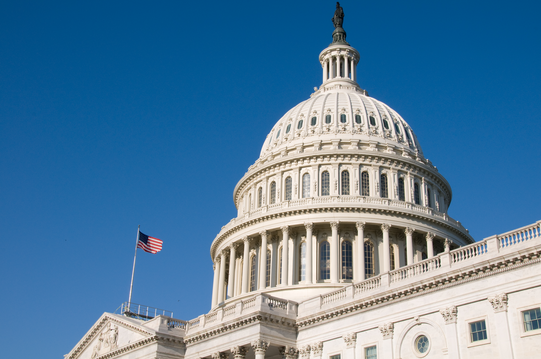
Tax Reform Is Coming: What It Could Mean for You
ARTICLE / CLIENT ALERT
Tax Reform Is Coming: What It Could Mean for You
September 17, 2021
Read time: 6 min
The $3.5 trillion “Build Back Better” reconciliation spending program is currently working its way through the US Congress. On September 13, 2021, the US House of Representatives Committee on Ways and Means published its set of proposed revenue raisers intended to pay for the program. The proposal would substantially increase the extent to which family wealth would be subject to income, estate and gift taxes but, in many respects, is not as harsh as had been proposed by US President Joe Biden. The summary below describes those portions of the proposal that are most likely to affect individual taxpayers. It’s too early to predict which parts of the proposal will actually be enacted, but it is useful to know what possibilities are being seriously considered.
EXCLUSION AND EXEMPTION AMOUNTS
Proposed Change: The current estate and gift tax exclusion amount will be cut in half from its current level ($11.7 million) and will be reduced to $5 million per individual, indexed for inflation (estimated to be $6.02 million in 2022), effective for decedent’s dying and gifts made after 2021. The generation-skipping transfer tax exemption will also be reduced in the same manner.
Recommendation: Individuals who have remaining exclusion amounts should consider utilizing them before the end of the year.
GRANTOR TRUSTS
Proposed Changes: Grantor trusts created after the law’s enactment—and contributions to pre-existing grantor trusts made after the law’s enactment—would be included in their grantors’ gross estates. Distributions from trusts subject to this new regime to anyone other than their grantors and the grantor’s spouse would be treated as taxable gifts. If the grantor ceases to be treated as the owner of any portion of a trust during the lifetime of the grantor, the assets attributable to such portion shall be treated as transferred by gift. In each case, appropriate adjustments would be made to reflect any prior taxable gifts made to the trusts. This new rule does not apply to any trust that would be includable in the gross estate of the deemed owner of the trust in the absence of the new rule.
In addition, sales between a trust and the person who is deemed to be the owner of the trust (whether or not the deemed owner is the grantor of the trust) would be treated as sales to third parties (except that losses would be disallowed) unless the trust is fully revocable by the deemed owner. This provision does not apply to trusts created and funded before the law’s enactment.
Recommendation: Individuals who can act quickly might consider either establishing new grantor trusts or making additional gifts to existing grantor trusts before enactment date. Timely additions may be particularly important for those planning to fund premiums on trust-owned life insurance policies with future gifts. The recipient trust should provide the possibility of promptly eliminating grantor trust status in the event the effective date of the legislation predates the funding of the trust.
VALUATION RULES
Proposed Change: After enactment, donors and other transferors will no longer be permitted to utilize traditional valuation discounts when valuing an interest in an entity that holds non-business assets (passive assets not used in the active conduct of a trade or business) for gift or estate tax purposes.
Recommendation: Any contemplated gifts of interests in entities that would no longer be eligible for discounts under the proposal should be completed before enactment. Consideration should be given to using a formula based on the value of the gifted property for gift tax purposes to limit the size of the gifts in order to minimize the tax consequences of missing the effective date of the new provision.
INDIVIDUAL RETIREMENT ACCOUNTS (IRAS)
Proposed Changes: Taxpayers with an adjusted gross income above $400,000 ($450,000 for married filing jointly) would be prohibited from completing Roth conversions starting in 2032. In addition, the proposal includes a general prohibition on Roth conversion of amounts held in qualified retirement plans, except to the extent the conversion is taxable, starting in 2022.
Taxpayers with adjusted gross incomes above $400,000 ($450,000 for married filing jointly) would be prohibited from making contributions to retirement accounts (other than SEP and SIMPLE IRAs) when the total value of all defined contribution accounts and IRAs (including inherited accounts) is $10 million or greater. Those taxpayers would also be required to receive mandatory distributions of 50% of the excess over $10 million held in retirement accounts (other than Roth accounts) and mandatory distributions of the entire excess over $20 million held in Roth accounts.
IRAs would be restricted from holding certain investments, such as private placement investments and investments in entities in which the account holder owns substantial interests either directly or constructively. In the case of a non-public company, “substantial” means ownership of 10% or more of the voting power or value of a company. IRAs also could not own an interest in a company in which the IRA owner is an officer or director. IRAs holding such investments would have until the start of 2024 to distribute or divest from such interests to avoid disqualification of the entire IRA.
INCOME TAX
Proposed Changes. Effective after December 31, 2021, the top marginal income tax rate, with the top bracket starting at $400,000 for individuals and $450,000 for married couples, would be raised to 39.6%. There would be an added 3% surtax on modified adjusted gross income above $5 million ($2.5 million for a married individual filing separately; $100,000 for estates and trusts).
The top long-term capital gains rate would be increased from 20% to 25% for taxpayers in the highest ordinary income tax bracket, effective for sales after September 13, 2021, unless the seller had a binding contract entered into on or before that date and the sale occurs by year-end. Taking into account the 3.8% tax on net investment income and the proposed surtax of 3%, next year’s tax on long term capital gains and ordinary income could be as high as 31.8%. The capital gain exclusion rates for qualified small business stock (QSBS) would be limited to a 50% exclusion (down from 75% and 100%) for those earning more than $400,000.





German Federal Court of Justice: Lesees Have No Right of Revocation for Kilometre-Based Leasing Contracts
ARTICLE
German Federal Court of Justice: Lesees Have No Right of Revocation for Kilometre-Based Leasing Contracts
September 17, 2021
Read time: 2 min
BGB § 355, § 495, § 506 Abs. 1, Abs. 2
The Federal Court of Justice ruled: The regulations on paid financial aid are not applicable to leasing contracts with mileage accounting. The verdict was preceded by a long controversy in literature and jurisprudence. The court’s decision has far-reaching consequences for practice. Dr. Sebastian Keding and David G. Schäfer classify the judgment.

NDA Sunset Provision Means Trade Secret Use May Not Be Misappropriation
ARTICLE
NDA Sunset Provision Means Trade Secret Use May Not Be Misappropriation
September 16, 2021
Read time: 7 min
The US Court of Appeals for the Ninth Circuit reversed a district court ruling in a trade secret misappropriation case based on a non-disclosure agreement (NDA) that resulted in an award of more than $60 million, ruling that any disclosures that occurred after the termination date of the NDA were not subject to misappropriation claims. BladeRoom Group Ltd. v. Emerson Electric Co., Case No. 19-16583 (9th Cir. Aug. 30, 2021) (Murphy, J.) (Rawlinson, J., concurring).
BladeRoom and Emerson compete for contracts to design and build data centers. In August 2011, the companies explored a potential sale of BladeRoom to Emerson. BladeRoom drafted an NDA governed by English law, and the parties signed it. Critically, the 12th paragraph of the NDA provided that “this agreement shall terminate on the date 2 years from the date hereof.” The potential acquisition ultimately fell through.
Not long after, Facebook began plans to build a data center in northern Sweden. BladeRoom pitched a design in July 2012, and Emerson pitched a design several months later. In October 2012, Facebook verbally approved Emerson’s design although it was only 10% complete. Almost a year later, Facebook contacted BladeRoom asking about updates to its proposal. In November 2013, Facebook selected Emerson’s proposal. Facebook and Emerson signed a design-build contract in March 2014, at which point BladeRoom learned about the design Emerson had pitched. BladeRoom sued Facebook and Emerson, alleging that Emerson had breached the NDA and misappropriated BladeRoom’s trade secrets.
The case was tried to a jury. During trial, BladeRoom settled with Facebook but not Emerson. Before closing arguments, Emerson proposed a jury instruction excluding information disclosed or used after August 2013 (i.e., after the NDA allegedly expired). The district court denied the instruction. BladeRoom then moved in limine to prohibit Emerson from arguing that the NDA permitted it to use BladeRoom’s information after August 2013. The district court granted the motion. The jury found Emerson liable and awarded $10 million in lost profits and $20 million in unjust enrichment damages but did not distinguish between the breach and misappropriation claims in making its award. The district court awarded $30 million in punitive damages and further awarded pre-judgment interest beginning on October 30, 2012, and $18 million in attorney’s and expert witness’ fees. Emerson appealed.
The Ninth Circuit first considered whether the NDA expired after two years. Applying English law, the Court held that it did based on a primarily textual analysis. However, the Court could not determine from the record the date on which the alleged breach/misappropriation had occurred. Accordingly, it vacated the judgment and remanded for a new trial.
The Ninth Circuit also discussed several issues in the appeal that would be relevant if Emerson was found liable on remand. The Court stated that the punitive damages award was not supported by the record where the jury did not distinguish between the breach and misappropriation claims because punitive damages are not available for breach of contract under California law. The Court also discussed prejudgment interest, observing that the start date for such interest is the date of filing of the action for breach of contract claims and the date of the loss for misappropriation claims. The Court held that the district court erred in determining that the start date should be October 30, 2012, because at that time, BladeRoom was still in contention for the data center contract. On remand, the district court is to determine the date BladeRoom lost the contract with respect to lost profits damages, whether prejudgment interest is available on unjust enrichment damages and, if so, when the unjust enrichment occurred.
In concurrence, Judge Johnnie B. Rawlinson wrote to emphasize that it is BladeRoom’s burden to prove damages and that any liability award should be offset by the amount of the Facebook settlement since Facebook and Emerson were alleged to be joint tortfeasors.
Practice note: In this case, the reasons for including a sunset provision in the NDA were unclear to both the district and appellate courts. To the extent such provisions may be otherwise desirable, parties should be aware that these provisions may operate to permit the free use of previously confidential information after the NDA expires.




Sixth Circuit: It’s a Go on Plaintiff’s Claims Despite Arbitration Clause
ARTICLE
Sixth Circuit: It’s a Go on Plaintiff’s Claims Despite Arbitration Clause
September 16, 2021
Read time: 6 min
The US Court of Appeals for the Sixth Circuit affirmed in part a district court’s grant of a stay pending arbitration, finding that as non-parties to the underlying arbitration agreement, defendants could not stay the plaintiff’s action against them by arguing that they were beneficiaries of the arbitration agreement. AtriCure, Inc. v. Meng, Case No. 19-4067 (6th Cir. Aug. 27, 2021) (Murphy, J.) (Guy, J., dissenting).
AtriCure invested millions into developing medical devices that treat a serious degenerative heart condition known as atrial fibrillation. The company sells these products to hospitals throughout the world. In the mid-2000s, AtriCure sought to enter the Chinese market. In order to do so, it needed a Chinese agent. Dr. Jian Meng approached AtriCure about partnering with one of his companies to serve as AtriCure’s Chinese distributor. AtriCure eventually entered into a relationship with Meng’s company, ZenoMed.
In 2015, AtriCure discovered that another of Meng’s companies, Med-Zenith, was attempting to market a knockoff version of one of AtriCure’s medical devices. AtriCure opted to continue the relationship with ZenoMed, and in 2016, AtriCure and ZenoMed entered into a distribution agreement. However, in 2017, AtriCure learned that Med-Zenith was attempting to develop more counterfeit versions of AtriCure’s devices. As a result, AtriCure allowed the distribution agreement to expire and demanded that ZenoMed return its inventory.
AtriCure then sued Meng and Med-Zenith in the Southern District of Ohio, alleging improper manufacturing and selling of dangerous counterfeit productions, as well as various state law claims. AtriCure also brought an arbitration demand under the distribution agreement against ZenoMed. Meng and Med-Zenith sought to stay the federal lawsuit, arguing that they were beneficiaries of the arbitration clause in the distribution agreement under equitable estoppel and agency theories. After the district court denied the motion, Meng appealed.
The Sixth Circuit explained that after the Supreme Court of the United States’ 2009 ruling in Arthur Andersen LLP v. Carlisle, circuit courts are obligated to look to relevant state common law to decide when nonparties may enforce or be bound by an arbitration agreement. As a result, the blanket federal presumption favoring arbitration even against nonparties was no longer applicable. Now, courts must examine state law to determine whether nonparties may enforce or be bound by an arbitration agreement. The Court examined Ohio contract law to determine that a nonparty cannot enforce an arbitration clause unless it is an intended third-party beneficiary. The Court rejected Meng and Med-Zenith’s equitable estoppel arguments, finding that under Ohio law, AtriCure’s state law claims did not seek to enforce the distribution agreement against Meng and Med-Zenith, or rely on any theory that they owed contractual duties to AtriCure notwithstanding their nonparty status. Finally, the Court remanded the question of whether Meng’s agency argument could prevail by determining if he was acting as an agent of ZenoMed when he engaged in the conduct AtriCure complained about in the separate arbitration.
In dissent, Judge Ralph B. Guy Jr. argued that Meng “unambiguously sought a ‘stay under Section 3 of the [Federal Arbitration Act]’” (9 U.S.C.). In his view, the Sixth Circuit was inappropriately rewriting pro-arbitration state laws under the banner of Arthur Andersen v. Carlisle.
BSG: Turning Away from the Previous Case Law on the Concept of Potential in § 137c Para. 3 SGB V
ARTICLE
BSG: Turning Away from the Previous Case Law on the Concept of Potential in § 137c Para. 3 SGB V
September 16, 2021
Read time: 2 min
Under certain circumstances, insured persons are also entitled to the provision of potential of the G-BA are entitled to the provision of potential services. Discussion of the decision by Jana Grieb and Deniz Tschammler.



Climate Change Regulation for US Insurers: September 2021 Update and Overview
ARTICLE / CLIENT ALERT
Climate Change Regulation for US Insurers: September 2021 Update and Overview
September 14, 2021
Read time: 12 min
There are less than two months before world leaders meet in Glasgow for the UN-sponsored Climate Change summit known as the Conference of the Parties (COP 26). This summer, we have been inundated with dire reports about myriad climate consequences of human activity (e.g., the UN Intergovernmental Panel on Climate Change report from early August 2021 that detailed faster warming, in all regions, intensifying rainfall and droughts, increased coastal flooding, etc.) and flooded with news items about proliferating severe weather-related events worldwide, new green investment opportunities, new or updated corporate sustainability pledges, and impending regulatory crackdowns on greenwashing.
At the same time, apart from climate change regulatory activity in a few states (see summary below) there has not been much high-profile insurance regulatory progress to report. Nevertheless, there is continuing regulatory activity that should, reasonably soon, enable the US insurance industry to spot at least the outlines of an emerging climate change regulatory framework. What are the key points to keep in mind, as of September 2021?
FEDERAL INSURANCE OFFICE ENTERS CLIMATE CHANGE DEBATE
On August 31, 2021, the Federal Insurance Office (FIO) gave notice, via publication of a Request for Information (RFI) (with responses due in 75 days), that it will take a seat at or near the head of the table around which financial services regulators are assembling to begin the development of a US climate change regulatory framework. FIO’s introductory language from the RFI is illuminating:
“FIO’s role and statutory authorities enable it to take a leadership position in analyzing how the insurance sector may be impacted by, and help mitigate, climate-related risks. FIO is engaging with the NAIC [National Association of Insurance Commissioners] and state insurance regulators through their work on climate-related topics. FIO also represents the United States at the IAIS [International Association of Insurance Supervisors], is a member of the UN’s Sustainable Insurance Forum, and is a member of the Organization of Economic Cooperation and Development’s Insurance and Private Pensions Committee—all of which are increasingly focused on climate-related issues. In addition, FIO is discussing climate-related issues with insurance authorities in both the United States and the European Union through the EU-U.S. Insurance Project. FIO also represents Treasury in the federal Mitigation Framework Leadership Group, which is a national structure to coordinate disaster mitigation efforts across the federal government and with state, local, tribal, and territorial representatives. FIO is engaging with the Securities and Exchange Commission [SEC] and other members of the FSOC [Financial Stability Oversight Council] on climate-related financial risks. More generally, FIO provides insurance expertise and technical assistance within Treasury and to other federal agencies, including to the Federal Emergency Management Agency in connection with the National Flood Insurance Program (NFIP). FIO’s engagement on climate-related issues also includes the issuance of public reports addressing natural disasters, climate change, and insurance, including through its annual report to Congress and the President.”
Those who have been following news around the early consideration of this topic will know that, earlier in 2021, US President Joe Biden directed every federal financial services regulatory body—from the Federal Reserve to the SEC to the Treasury Department (of which the FIO is a part)—to embed climate change/sustainability considerations into the regulation of financial services entities, including (controversially) in periodic financial disclosure filings by regulated entities. Developing a common language for such disclosures—including agreement on metrics and measurements—will take time, of course, but like other federal agencies, the FIO has this herculean task front and center:
“In addition, FIO plans to consider ways to address the lack of common methodology and standardization in measuring financed emissions, particularly those of nonpublic companies in which the insurance sector underwrites and invests.”
Echoing statements from Treasury Secretary Janet Yellen (in her role as FSOC chair) and SEC Chair Gary Gensler, the introduction to the RFI continued:
“The lack of available data complicates the ability to conduct such assessments. Government and private sector stakeholders have noted the significant issues caused by the lack of available data to assess climate-related financial risk within the insurance sector. These stakeholders could all potentially benefit from high-quality, consistent, comparable, and reliable data for their risk management, disclosures, and forward plans to assess and address climate-related financial risks. State regulatory tools, such as the Own Risk and Solvency Assessment (ORSA), may capture data on some climate-related financial risks if they are recognized by a reporting insurer as having a material impact on its solvency over the next one to two years, but these tools may be inadequate to assess climate-related risks, particularly over a longer time horizon. Additionally, only six states have regularly collected from insurers certain limited, high-level qualitative data directly focused on climate-related financial risks. No federal authority is collecting climate-related financial data specific to the insurance sector.”
The RFI lists out the FIO’s three priorities in the notice:
“1. Insurance Supervision and Regulation: Assess climate-related issues or gaps in the supervision and regulation of insurers, including their potential impacts on U.S. financial stability
“2. Insurance Markets and Mitigation/Resilience: Assess the potential for major disruptions of private insurance coverage in U.S. markets that are particularly vulnerable to climate change impacts; facilitate mitigation and resilience for disasters
“3. Insurance Sector Engagement: Increase FIO’s engagement on climate-related issues; leverage the insurance sector’s ability to help achieve climate-related goals.”
We mention all this because you may recall that the 2010 landmark Dodd-Frank legislation, which created the FIO, tasks the FIO with “monitor[ing] all aspects of the insurance industry, including identifying issues or gaps in the regulation of insurers that could contribute to a systemic crisis in the insurance industry or the United States financial system….” Even if the FIO has no direct role in solvency regulation of insurers, its involvement in what is shaping up to be a broad-based federal effort to develop a climate-change regulatory framework for financial institutions means that the industry—regulators and regulated insurers, including US-admitted/licensed insurers and IID-listed (International Insurers Department) surplus lines insurers—ought to be paying close attention.
NAIC STUDIES
In mid-August 2021, during the NAIC’s Summer National Meeting, the organization’s Climate and Resiliency (EX) Task Force convened to consider the work of its five workstreams:
- Pre-Disaster Mitigation: This group is monitoring a variety of developments, most notably funding arrangements in federal legislation, e.g., in the infrastructure bill passed by the Senate last month and awaiting House action that reportedly includes $3.4 billion in funding that could be used to enhance pre-disaster mitigation efforts.
- Climate Risk Disclosure: With the first phase of its work completed (including deciding whether to add or modify the organization’s own climate risk survey questions—there were no changes for 2021—and whether insurers required to respond to the annual climate risk survey should be able to submit responses using the Task Force on Climate-Related Financial Disclosures (TCFD) format—the answer to this latter question was yes, as in past years), this working group will be reconsidering climate-risk disclosures in light of a number of other projects underway at the SEC (e.g., will industry-specific metrics be mandated?) and at the Financial Stability Board (e.g., will TCFD reporting be updated?). The group will continue to evaluate whether the NAIC disclosure survey is asking the correct questions and, before making any recommendations, the Climate and Resiliency (EX) Task Force will be exposing any suggested changes or additions for public comment later in the year. This year, the NAIC will have the benefit of more climate change disclosures from US insurers to evaluate, as nine additional states are requiring domestic insurers to complete the surveys. As to timing, survey letters were sent on or about July 22, 2021, and responses were due by August 31, 2021.
- Solvency: The chair summarized the various presentations made to this group over the course of several sessions by a variety of interested parties. On or about September 20, 2021, this group will begin to pivot from receiving input to beginning to consider incorporation of various sustainability analytic tools into existing solvency measurements. Given Moody’s recently announced purchase of modelling company RMS and AM Best’s announcement in July 2021 that more than one in 10 rating actions (69% negative, 31% positive) were driven by climate-related factors, rating-agency judgments could become an increasingly important driver of climate-related change for insurers.
- Innovation: The chair summarized various presentations made to this group during the past several months; most such presentations focused on parametric insurance solutions.
- Technology: This workstream has concentrated on understanding various climate change modelling advances and how/whether states regulate the use of models in rate making. A compendium of relevant state laws is being created. The NAIC’s Catastrophe Modelling Handbook, originally produced in 2010, will be updated in due course. The group will hold an open meeting in the near future to further discuss these issues.
The NAIC’s mid-September “insurance summit” will include a number of climate change-related presentations by representatives of the UK’s Prudential Regulatory Authority (reviewing the main climate change risk analysis frameworks), by catastrophe modelers who will review the models being used in the UK’s 2021 Climate Biennial Exploratory Scenario (CBES) exercise and by the New York Department of Financial Services (NYDFS) on next steps with respect to climate change regulation in New York, as well as two presentations by Praedicat, one of which will review climate change liability lawsuits as an emerging “casualty cat risk.”
STATE-LEVEL ACTIVITY: NEW YORK, CONNECTICUT AND CALIFORNIA
New York Remains in the Lead; NYDFS Publishes Report on Transition Risks
In early summer 2021, using 2019 Schedule D invested asset data, the NYDFS published a captioned report, “An Analysis of New York Domestic Insurers’ Exposure to Transition Risks and Opportunities from Climate Change,” prepared by a multinational, non-profit climate change consultancy. The DFS explained that “The purpose of the report is to provide an example of a tool that insurers can use to assess their transition risks, as well as investment-related strategies that insurers can implement to mitigate those risks.”
“Transition risks,” for those not (yet) deep into climate change issues, are energy transition-related risks that can lead to having “stranded assets” on one’s books. The NYDFS asserts that there are three principal risks: “policy and regulation changes, low-carbon technology advancement, and changing public sentiment and demand patterns.”
While dependent on many variables, the total global value of carbon-intensive financial assets—representing ownership in upstream oil and gas production, coal mining, coal-fired power plants and the like—that are subject to transition risks clearly amounts to many trillions of dollars. The overall conclusion of the report is that “…in the aggregate, insurers’ assets were meaningfully exposed to transition risks.” At the individual company level, out of the 250 insurers whose data was studied, one P+C insurer had 100% of its equity investments in the fossil fuel sector while another had over 40% of its corporate bond portfolio devoted to fossil fuel issuers. One life company’s bond portfolio included more than 50% devoted to fossil fuel issuers.
Following explanatory webinars for New York domestic insurers and interested parties last month, we now await publication of additional climate change guidance. But with the August 24, 2021, resignations of ex-Governor Andrew Cuomo and ex-NYDFS Superintendent Linda Lacewell, it is possible that publication will be delayed.
Connecticut Legislature Requires Biennial Insurance Department Reporting on Climate Change Factors
Included in the summer 2021 Connecticut state budget legislation was a climate change section that resurrects part of a standalone climate change disclosure/reporting bill that died earlier in the year. The budget bill requires the state’s insurance commissioner to submit a report to the legislature every two years, beginning April 1, 2022, that addresses the Insurance Department’s progress in integrating climate change risks into various solvency regulatory tools and processes, including periodic financial examinations, ORSA reports and risk-based capital requirements. The insurance commissioner is directed specifically to assess the “impacts of thermal coal, tar sands and Arctic oil and gas” (presumably both on insurers’ underwriting and investment activities). The budget bill does not include aspects of the standalone bill that insurers found most objectionable, e.g., publicly available detailed climate change risk disclosures.
California Insurance Commissioner Releases Climate Insurance Working Group Report
In July 2021, Insurance Commissioner Ricardo Lara released the results of an effort to identify, assess and recommend risk-transfer approaches to reduce the impacts of climate change, with a focus on wildfires, floods and extreme heat. The report was less about how to ensure that insurers embed climate change risk analysis into core operational activities than it was about what the community as a whole can do to improve:
- Risk assessment.
- Risk communication.
- Risk reduction/mitigation.
- Risk transfer (i.e., closing protection gaps), in part by encouraging community-based insurance purchases and by developing new insurance products, including but not limited to parametric insurance policies.
OUTLOOK
There is no shortage of political, economic, public health, weather and other variables that will impact the scope and pace of development of climate change-related risk analysis for US financial services companies generally and insurers specifically. But the push to better understand the risks that climate change poses to the economy and to financial services companies seems set to continue at the federal level as long as Democrats hold the White House. Importantly, federal regulators seem determined to develop a common language to measure sustainability and to protect investors (and insureds). States such as California and New York seem likeliest to continue to advance the integration of climate change risk analysis into the regulation of insurers. Whether other states—and whether the NAIC—will follow suit remains to be seen. At the very least, however, more states are requiring insurers to file climate disclosures and, judging by the NAIC’s Insurance Summit agenda this week, the NAIC now appears to be paying close attention to climate change regulatory activity in the European Union and the United Kingdom.

Appellate Court Holds FCC Penalty Claim Survives Chapter 11 Corporate Debtor’s Discharge
ARTICLE / CLIENT ALERT
Appellate Court Holds FCC Penalty Claim Survives Chapter 11 Corporate Debtor’s Discharge
Read time: 9 min
A Chapter 11 corporate debtor’s monetary penalty obligation owed to the Federal Communications Commission (“FCC”), resulting from “fraud on consumers,” survived the debtor’s reorganization plan discharge, even when the FCC “was not a victim of the fraud,” held the U.S. District Court for the Southern District of New York on Sept. 2, 2021. In re Fusion Connect Inc., 2021 WL 3932346, *1 (S.D.N.Y. Sept. 2, 2021). On appeal, the court reversed the bankruptcy court’s dismissal of the Government’s non-dischargeability complaint, explaining that the fraud exception to dischargeability reaches debts owed to “creditors who were not themselves defrauded,” such as the Government here. Id., at *2. According to the court, the bankruptcy court had confirmed the debtor’s reorganization plan with a broad discharge (i.e., release) of pre-bankruptcy debt, but the plan confirmation order put “stakeholders… on notice that [the FCC Penalty] could attach to the newly constituted [reorganized] entity,” when its terms made the dischargeability of that liability “an open issue.” Id., at *12.
Relevance
The Fusion decision is important. A corporate debtor seeking chapter 11 reorganization relief ordinarily wants to clean up its balance sheet by eliminating unsecured liabilities with a discharge provision in a reorganization plan, permanently barring creditors from enforcing their pre-bankruptcy claims. When the bankruptcy court confirms the plan, the discharge will be a key part of the confirmation order. As the Third Circuit recently stressed in a similar context, “debtors [must] know their liabilities [in order to] implement a viable plan to obtain a fresh start.” Ellis v. Westinghouse Electric Co., LLC, 2021 WL 3852612, *7 (3d Cir. Aug. 30, 2021). According to the Third Circuit, though, “the debtor’s interest in a fresh start is not absolute, as the Bankruptcy Code tries to strike the ‘delicate balance between the competing interests of creditors pursuing their claims and debtors in obtaining a fresh start and finality.’” Id., at *4 (citation omitted).
Facts
The debtor’s predecessor’s (“B”) had been engaged in defrauding consumers “for years.” WL 3932346 at *1. As a result, B entered into a consent decree with the FCC in 2016, acknowledging its fraud, agreeing to issue refunds to consumers and to pay a “$4.2 million civil penalty to the United States (“FCC Penalty”) in equal monthly installments over five years…. By its terms the consent decree bound [B’s] successors, assigns, and transferees.” Id. B later paid $1.2 million in refunds and credits to consumers and began paying the FCC Penalty. Id. *2. During 2018, however, Fusion, the debtor here, had merged with B’s parent company, leaving “Fusion as the owner of [B’s] business, and responsible for the outstanding FCC Penalty.” Id.
Fusion filed a Chapter 11 petition in 2019 with “$2.1 million of the $4.2 million FCC Penalty” unpaid. The FCC filed a proof of claim for that amount and the bankruptcy court in late 2019 confirmed the Fusion reorganization plan. When confirming the plan, the bankruptcy court “stated that Fusion’s continuing obligation for the outstanding civil penalty [to the FCC] ‘shall depend upon a determination of whether those obligations are dischargeable’” — i.e., whether they would survive the reorganization plan. Id.
The Bankruptcy Court Litigation
The Government filed a non-dischargeability complaint in early 2020, alleging that the FCC Penalty was not dischargeable under Code §523(a)(2)(A), made applicable by Code §1141(d)(6). Although the Government conceded that the fraud exception to discharge in §523(a) applied only to bankruptcy cases “involving individual debtors…, Congress, by enacting the Abuse Prevention and Consumer Protection Act of 2005, in Code §1141(d)(6), had extended [the fraud exception to discharge] to corporate debtors in chapter 11 [cases].” Id.
The bankruptcy court granted Fusion’s motion to dismiss the Government’s complaint. It “agreed with Fusion that the exception to dischargeability for liabilities arising from fraud does not apply to the FCC Penalty because that exception does not reach debts owed to creditors who were not themselves defrauded. Because the victims of [B’s] fraud consisted of consumers, and not the Government, [reasoned the bankruptcy court,] Section 523(a)(2)(A), and hence Section 1141(d)(6)(A), does not reach the FCC Penalty.” Id. at *2.
Analysis on Appeal
The appellate court noted that the “Government’s appeal presents a pure question of law: whether a civil penalty payable to the United States rising out of [a consumer fraud] constitutes a debt arising from [fraud], such that the penalty is exempted from discharge in bankruptcy under [Code] § 1141(d)(6).” Id. at *3.
Statutory Framework and Binding Precedent. A chapter 11 reorganization plan “discharges the debtor from any debt that arose before the date of such confirmation.” Code § 1141(d)(1). “The discharge of such claims serves the bankruptcy policy of providing debtors with a ‘fresh start’ to permit their continued operation free of pre-bankruptcy debts.” DPWN Holdings (U.S.A.) Inc. v. United Airlines, 747 F.3d 145, 150 (2d Cir. 2014).
Code § 523(a)(2)(A) “has… long prohibited debtors from discharging liabilities on account of their fraud, embodying a basic policy animating the Code of affording relief only to ‘an honest but unfortunate debtor.’” Cohen v. de La Cruz, 523 U.S. 213, 217-18 (1998). This provision ordinarily applies in chapter 7 cases involving individual debtors. Congress thus intended to insure that “all debts arising out of fraud are excepted from discharge, no matter what their form.” Archer v. Warner, 538 U.S. 314, 321 (2003).
The Supreme Court affirmed in Cohen that a chapter 7 debtor’s actual fraud made his liability nondischargeable under § 523(a)(2)(A). It also held “that an award of ‘treble damages assessed on account of the fraud’” was not dischargeable because it “fell within the scope of ‘any debt’ respecting ‘money, property, services, or credit’ that the debtor has fraudulently obtained.” Id., at *4, quoting Cohen, 523 U.S. at 218 and Code § 523(a)(2)(A). The Court stressed that because the “award of treble damages” in Cohen fell within the fraud exception to discharge, “the creditor ha[d] a corresponding ‘right to payment’” of those damages. Id., at *5, quoting Cohen, 523 U.S. at 218-19.
Section 1141(d)(6)(A). Congress “imported [in 2005] the relevant content of Code § 523(a)(2)(A) into chapter 11 [cases] via § 1141(d)(6)….” Id. “Section 1141(d)(6)(A) extends § 523(a)(2)(A) to [chapter 11 cases], by exempting from ‘discharge a debtor that is a corporation from any debt… of a kind specified in paragraph (2)(A) or (2)(B) of section 523(a) that is owed to a domestic governmental unit.” Id. at *5. By extending § 523(a)(A) to corporate debtors in chapter 11 cases, reasoned the court in Fusion, Congress was “presumed… to [have] adopt[ed]” the Supreme Court’s interpretation in Cohen. Id. The district court therefore treated the Cohen analysis as “governing the issue presented” here. Id., at *6.
FCC Penalty Nondischargeable Under Code 1141(d)(6)(A). The district court thus held that the “FCC Penalty fits within the § 523(a)(2)(A) exception to dischargeability, as analyzed in Cohen, and as extended to chapter 11 corporate debtors through 1141(d)(6)(A).” Id., at *7. It first stressed the “breadth” of the Supreme Court’s Cohen reasoning: “§ 523(a)(2)(A) bars the discharge of all liability arising from fraud.” Id. (emphasis in text), quoting Cohen, 523 U.S. at 222. The district court also relied on other appellate decisions. See, e.g. In re Pleasants, 219 F.3d 372, 375 (4th Cir. 2000) (nondischargable debt “need not be owed, either in whole or part, to a victim of the fraud, or represent compensation” to the victim); Hatfield v. Thompson, 555 B.R. 1, 12 (10th Cir. BAP 2016) (“[T]here is no requirement that the debt be for something that the debtor obtains from the creditor.”).
Rejection of Fusion Arguments. Rejecting Fusion’s argument that the fraud in question “must have been directed at the creditor holding the debt,” the district court relied on “decisions by the Eleventh and Third Circuits holding that § 523(a)(2)(A)’s requirement of a fraud consistent with the common-law elements of fraud is satisfied where the defrauded party or parties were person(s) other than the creditor in the bankruptcy [case].” 2021 WL 3932, 346, at *9. For example, the Securities and Exchange Commission (“SEC”) had obtained a nondischargeable civil fraud judgment against the debtor because of his defrauding investors “[e]ven though the fraud had not been directed at the SEC.” Id., citing In re Bilzerian, 153 F.3d 1278, 1280 (11th Cir. 1998). And the Third Circuit held that the SEC’s civil fraud judgments against the debtor were “nondischargeable because the evidence of fraud had been met as to [the debtor’s] clients… even though the fraud had not been directed at the SEC.” In re Bocchino, 194 F.3d 376, 382-83 (3d Cir. 2015).
The district court also rejected as “unusually unpersuasive” Fusion’s argument that reversing the bankruptcy court “would saddle the stakeholders of the reorganized entity with the burden of [B’s] wrongdoings that occurred even prior to Fusion’s acquisition of the company.” Id., at *12. Not only did the “stakeholders knowingly” assume B’s preexisting liability to the United States, but the bankruptcy court had also put them on notice that the FCC Penalty might survive any discharge that Fusion obtained in the plan confirmation order. “A stakeholder in the new company thus had their eyes open that [this] liability, like other continuing liabilities or business costs and risk, might live on.” Id.
Policy Implications. More important, permitting Fusion “to shed a regulatory fraud penalty in this manner could invite mischief.” Id. For example, it might encourage “the strategic offloading of such a liability onto a successor entity primed soon to file for reorganization under chapter 11,” particularly when the entity “had a recent history of fraud.” Id. “…[C]ourts have warned against interpreting the Code in a manner that would create perverse incentives for debtors that do not align with the Code’s purposes.” Id., citing In re Murphy, 282 F.3d 828, 874 (5th Cir. 2002); KeyBank Nat’l Ass’n v. Franklin Advisers Inc., Co., 600 B.R. 214, 231 (S.D.N.Y. 2019) (rejecting a “rule that would… create perverse incentives for the parties to engage in delay and gamesmanship in both the bankruptcy reorganization and the related litigation”).
* * *
Fusion may likely appeal to the Second Circuit. But the district court’s thorough, carefully reasoned and sensible opinion will withstand the closest scrutiny. Chapter 11 should not be a haven for corporate debtors with a fraudulent past.
Authored by Michael L. Cook.
If you have any questions concerning this Alert, please contact your attorney at Schulte Roth & Zabel or the author.
This communication is issued by Schulte Roth & Zabel LLP for informational purposes only and does not constitute legal advice or establish an attorney-client relationship. In some jurisdictions, this publication may be considered attorney advertising. ©2021 Schulte Roth & Zabel LLP.
All rights reserved. SCHULTE ROTH & ZABEL is the registered trademark of Schulte Roth & Zabel LLP.