Content Type: Article

  • SECURE 2.0 Act and the Future of the Employee Plans Compliance Resolution System

    SECURE 2.0 Act and the Future of the Employee Plans Compliance Resolution System

    ARTICLE / REPORT

    SECURE 2.0 Act and the Future of the Employee Plans Compliance Resolution System

    June 2023

    Read time: 3 min

    Overview

    The Internal Revenue Service’s (IRS) Employee Plans Compliance Resolution System (EPCRS) allows employers to correct errors involving the maintenance and operation of tax-qualified retirement plans. Depending on the severity of the error and the length of time the error has persisted, some corrections might require a formal submission to the IRS, while others can be self-corrected by the plan sponsor without the need for IRS approval.

    The correction programs and options that make up EPCRS have, until now, been established exclusively in a series of IRS notices and revenue procedures dating back more than 30 years. However, as part of the SECURE 2.0 Act (Act), Congress took it upon itself to radically expand EPCRS to allow employers to self-correct most inadvertent failures to comply with the tax-qualification rules under the Internal Revenue Code (Code). This represents a dramatic change in how the availability of corrections has been legislated in the past. However, at its core, the Act’s EPCRS-related pronouncements reinforce the decades-long push to encourage plan sponsors to timely identify and promptly resolve plan errors.

    This Special Report discusses the history behind the creation of EPCRS, outlines some of its key features, and highlights how the growth and expansion of this program—including, most recently, under the Act—continues to improve IRS enforcement of tax-qualified plan rules by encouraging plan sponsors to establish practices and procedures designed to ensure compliance, thereby avoiding the harsh tax penalties of plan disqualification.

    In depth
    Tabs
    More insights
    Endnotes

  • Proposed Legislation Would Require Greater Transparency and Disclosure from Hospitals, Reduce Reimbursement to Certain Off-Campus Patient Departments

    Proposed Legislation Would Require Greater Transparency and Disclosure from Hospitals, Reduce Reimbursement to Certain Off-Campus Patient Departments

    ARTICLE / CLIENT ALERT

    Proposed Legislation Would Require Greater Transparency and Disclosure from Hospitals, Reduce Reimbursement to Certain Off-Campus Patient Departments

    June 9, 2023

    Read time: 8 min

    Key takeaways
    Overview

    Two bills are moving in the United States House of Representatives that have implications for hospitals and health systems, with material changes proposed regarding pricing transparency requirements, identification and payment for services at off-campus outpatient departments, and 340B Program participation. Both bills have advanced out of the Energy and Commerce Committee.

    In depth

    The first, H.R. 3561, the Promoting Access to Treatments and Increasing Extremely Needed Transparency Act of 2023 (the PATIENT Act of 2023), is a large bipartisan package that includes numerous wide-ranging healthcare provisions, generally with the goal of reducing overall healthcare costs. The PATIENT Act of 2023 was reported out of the Energy and Commerce Committee on a bipartisan vote of 49 yeas and zero nays.

    The second, H.R. 3290, To amend title III of the Public Health Service Act to ensure transparency and oversight of the 340B drug discount program, proposes to establish new reporting requirements on providers participating in the 340B Program. This bill was introduced by Rep. Bucshon (R-IN) and is often referred to in the healthcare stakeholder community as the “Bucshon bill.” The Bucshon bill advanced out of the Energy and Commerce Committee on a partisan vote of 29 yeas and 22 nays.

    Hospitals and health systems must be prepared for the operational changes and potential for revenue loss that would occur should the PATIENT Act of 2023 or the Bucshon Bill become law.

    IN DEPTH

    1. H.R. 3561: THE PATIENT Act of 2023

    H.R. 3561, the PATIENT Act of 2023, would affect hospitals most significantly by updating current federal hospital price transparency requirements, tightening federal oversight of and reducing reimbursement for off-campus hospital outpatient departments, and increasing reporting obligations and reducing reimbursement for drugs reimbursed by Medicaid Managed Care Organizations (MCOs).

    a. Hospital Price Transparency

    The portions of H.R. 3561 addressing hospital price transparency broaden existing requirements and increase potential penalties for violation of those requirements. In particular, if enacted, the bill would:

    1. Increase maximum potential penalties for hospitals with more than 550 beds as of January 1, 2024, by an additional $10 per bed per day. The maximum penalty for large hospitals in noncompliance for more than one year would be increased from just over $2 million to no less than $5 million.
    2. Establish that the price estimator tool would no longer exempt hospitals from publishing a list of their charges for shoppable services as of January 1, 2025.
    3. Require the Centers for Medicare & Medicaid Services (CMS) to implement a template for hospitals to provide standard charges.
    4. Require CMS to establish a monitoring process through notice and comment rulemaking.
    5. Require CMS to establish accessibility standards to ensure the charges and information made available by hospitals will be accessible to individuals with limited English proficiency.
    6. Expedite the corrective action timeframe, to come into compliance after receiving a notice of noncompliance, from the current 90 days to 45 days.
    7. Require CMS to submit annual reports to Congress on enforcement activities. In particular, the bill would require the Government Accountability Office (GAO) to submit a report on compliance and enforcement within one year, and it would have CMS release a request for information (RFI) on how hospitals may be required to publish quality data alongside standard charge information.

    Takeaways. The changes proposed by the PATIENT Act of 2023 are significant because they reduce options for hospitals to interpret the requirements of the price transparency rules and would materially increase the financial penalties for noncompliance. For example, under the PATIENT Act of 2023, hospitals would not be exempt from providing a list of shoppable services if they make a price estimator tool available. Further, the bill would require CMS to establish an oversight process through notice and comment rulemaking, incorporating specific additional requirements, and would significantly increase the amount of penalties for noncompliance.

    b. Provider-Based Status Approval

    Also included in H.R. 3561 is a requirement to submit a “provider-based attestation” for all off-campus outpatient departments. Provider-based attestations are voluminous documents that demonstrate that a particular hospital location complies with the Medicare provider-based rules at 42 C.F.R. § 413.65; the attestations are currently voluntary for most hospitals. The bill would require hospital off-campus provider locations to obtain location-specific National Provider Identifiers (NPIs) for each off-campus outpatient department and to use those NPIs for billing government payors.

    c. Reduction in Medicare Payments for Off-Campus Outpatient Departments

    Finally, the PATIENT Act of 2023 would continue the recent trend of “site neutral” payment provisions by reducing Medicare payments at all off-campus hospital departments to an amount equivalent to what would have been paid “under the applicable payment system.” This is similar to the current Medicare “Section 603” site neutral payment provisions, which reduced payments for services at off-campus outpatient locations opening after 2015 to 40% of the rate that would otherwise have been paid for the hospital services under the Medicare Outpatient Prospective Payment System (OPPS). The proposed language would extend these site neutral payment reductions to those hospital off-campus outpatient departments that currently receive the full OPPS payment rate (that is, those opening in 2015 or before).

    Takeaways. While the first two provisions appear to be fairly innocuous, particularly when compared to the site neutral provision, these provisions would allow for payors to more specifically identify off-campus outpatient departments and the services provided at such locations. This would facilitate any future efforts by payors to take the position that such locations are not part of the hospital and to even further reduce payment for off-campus outpatient locations or perhaps even to exclude them from coverage. Further, the requirement to provide a provider-based attestation will impose additional burdens on hospitals and may deter some hospitals from establishing new off-campus outpatient locations, particularly if non-Medicare payors begin implementing similar site-neutral payment provisions.

    2. The Bucshon bill: To amend title III of the Public Health Service Act to ensure transparency and oversight of the 340B drug discount program

    The Bucshon bill establishes provisions that would require 340B covered entities to maintain records of their use of 340B savings and would allow for the Department of Health and Human Services (HHS) to audit such records. It would further require disproportionate share hospital (DSH) covered entities, as well as others at the discretion of the Secretary of HHS, to report certain information on an annual basis. Specifically, designated covered entities and their off-campus outpatient departments would also be required to annually report to HHS data on the metrics below, which would also be made publicly available online:

    1. Number of individuals who were dispensed or administered drugs purchased through the 340B Program
    2. Number of those individuals enrolled in certain commercial insurance plans, enrolled in Medicare Part A or B, enrolled in Medicaid, enrolled in CHIP, covered by another federal payor or not covered by any federal payor
    3. Percentage of the number of individuals treated who were dispensed or administered drugs purchased through the 340B Program
    4. Percentage of the number of individuals enrolled in certain commercial insurance plans, enrolled in Medicare Part A or B, enrolled in Medicaid, enrolled in CHIP, covered by another federal payor, or not covered by any federal payor treated who were dispensed or administered drugs purchased through the 340B Program
    5. Costs incurred at each site, including costs of charity care
    6. Costs incurred for treating patients entitled to Medicare Part A benefits or enrolled in Medicare Part B, enrolled in a Medicaid plan (or a waiver of such plan), or who were uninsured, minus the sum of Medicare reimbursements, Medicaid reimbursements and payments by uninsured patients
    7. 340B Program savings.

    Takeaways. In addition to creating burdensome and costly reporting requirements for providers that are already challenged financially, the Bucshon bill perpetuates misinformation about the 340B Program and the purpose of the 340B Program. The 340B Program was established to provide additional revenue to safety-net providers to allow them to stretch scarce federal resources. It was not intended to provide reduced-price drugs to patients. Further, the eligibility qualifications for the 340B Program already require reporting of data to establish that the covered entity is providing services to low-income and underserved communities, rendering the additional reporting unnecessary unless it is intended to allow for future changes to the 340B Program eligibility criteria. In addition, the differentiation between the data for the “covered entity” and “off-campus outpatient departments” continues the theme from the PATIENT Act of 2023 of treating off-campus outpatient departments as though they are not actually part of the hospital, and could also be a prelude to excluding such locations from the 340B Program.

    Authors

    Emily Jane Cook

    Partner

    Los Angeles, Washington, DC

    Steven J. Schnelle

    Partner

    New York – One Vanderbilt Avenue

    Deepika Raj

    Associate

    Los Angeles

    More insights

  • Treasury, IRS Issue Interim Guidance on SECURE 2.0 Act’s Changes to EPCRS

    Treasury, IRS Issue Interim Guidance on SECURE 2.0 Act’s Changes to EPCRS

    ARTICLE / CLIENT ALERT

    Treasury, IRS Issue Interim Guidance on SECURE 2.0 Act’s Changes to EPCRS

    June 8, 2023

    Read time: 5 min

    Key takeaways
    Overview

    Recently issued Notice 2023-43 provides interim guidance on certain changes to the Employee Plans Compliance Resolution System (EPCRS) made by the SECURE 2.0 Act of 2022. In particular, the notice addresses how plan sponsors and individual retirement account (IRA) custodians should apply the act’s new standards for self-correction under EPCRS until the related revenue procedure (Rev. Proc. 2021-30) is updated in response to the changes mandated by the act. However, the notice does not address other EPCRS-related changes dictated by the act, such as those regarding the correction of overpayments.

    In depth

    IMPACT OF SECURE 2.0 ON SELF-CORRECTION UNDER EPCRS

    Section 305 of the SECURE 2.0 Act establishes new rules governing self-correction under EPCRS by providing that plan sponsors and IRA custodians may self-correct any “eligible inadvertent failure” to comply with the requirements of the US tax code. For this purpose, the definition of eligible inadvertent failure is very broad and generally includes any failure that meets the following conditions:

    • Is not egregious and does not involve an abusive tax avoidance transaction or the diversion or misuse of plan assets
    • Occurs despite the existence of practices and procedures reasonably designed to promote and facilitate compliance with the US tax code
    • Is not identified by the Internal Revenue Service (IRS) prior to any actions demonstrating a specific commitment to implement a self-correction with respect to the failure
    • Is corrected within a reasonable period after the failure is identified.

    This sweeping new rule opens the door to a potentially significant increase in the availability of self-correction to certain failures that were previously ineligible for the self-correction program under EPCRS. However, the act only sets forth broad, general rules governing the correction of such failures and makes it clear that the particulars will be established by future guidance—including an update to EPCRS (currently set forth in Rev. Proc. 2021-30) by December 29, 2024.

    KEY TAKEAWAYS FROM THE NOTICE

    Notice 2023-43 provides interim guidance that may be relied upon to self-correct failures under Section 305 of the SECURE 2.0 Act until EPCRS is updated to reflect the related changes. This includes the following key guideposts for plan sponsors and IRA custodians:

    • Plan sponsors may self-correct eligible inadvertent failures; IRA custodians may not until further guidance is issued.
    • Plan sponsors may self-correct a broader array of failures. For example, there is no longer a prohibition on self-correcting so-called “significant” operational failures that occurred more than three years prior to the correction, nor is there a prohibition on self-correcting significant failures under SEPs and SIMPLE IRAs.
    • Plan sponsors cannot self-correct certain failures until further guidance is issued. These failures include, for example, failures to initially adopt a written plan, failures relating to orphan plans, significant failures in a terminated plan, failures involving excess contributions to SEPs or SIMPLE IRAs corrected by leaving the contributions in affected participants’ accounts, demographic failures not corrected using a method set forth in existing regulations, operational failures corrected with retroactive amendments that are less favorable to participants or beneficiaries than the original plan terms, certain failures in SEPs and SIMPLE IRAs, and failures related to certain ESOP issues. The notice also explains that self-correction does not automatically result in the waiver of an excise or other additional tax resulting from an otherwise correctible failure.
    • Failures will be considered identified for purposes of curtailing self-correction when the plan or plan sponsor is under examination. Once a plan sponsor is notified of an IRS audit of the plan, it is considered under examination. However, if the audit instead involves the plan sponsor’s business tax return or is initiated by the US Department of Labor, the plan would not be considered under examination for this purpose.
    • Whether a plan sponsor’s actions show a sufficient commitment to self-correct a failure will be determined based on all the facts and circumstances, but the plan sponsor must demonstrate it is actively pursuing correction. Simply completing an annual compliance audit or adopting a general statement of intent to correct failures upon discovery will not suffice.
    • Whether corrections are completed within a reasonable period after the plan sponsor identifies them generally will be based on all relevant facts and circumstances. For this purpose, a failure (other than an employer eligibility failure) corrected by the last day of the 18th month following the date the plan sponsor identifies the failure will be deemed to have been completed within a reasonable period. Where the correction involves an employer eligibility failure (e.g., a 403(b) plan maintained by an ineligible employer), correction is deemed timely only if the plan sponsor stops all contributions to the plan as soon as reasonably practicable, but no later than 6 months, following the date the failure is identified.

    WHAT’S NEXT?

    The US Department of the Treasury and IRS invite public comments on the notice and other aspects of Section 305 of the SECURE 2.0 Act by August 23, 2023. Commenters are invited to suggest additional methods that should be available to correct eligible inadvertent failures, by describing both specific correction methods and general correction principles. Commenters are also invited to describe common IRA failures and suggest correction methods for those failures, and to discuss expanding EPCRS to IRA custodians and owners.

    Authors
    More insights

  • Key Takeaways | Women’s Health/Women+: Tapping into an Underserved Market

    Key Takeaways | Women’s Health/Women+: Tapping into an Underserved Market

    ARTICLE

    Key Takeaways | Women’s Health/Women+: Tapping into an Underserved Market

    June 8, 2023

    Read time: 4 min

    Key takeaways
    Overview

    During this session, investors and business leaders discussed the future of women-focused care and the exciting opportunities in the rapidly growing sector of women/women+ health.

    Session panelists:

    • Ashley Antler, former vice president, legal and head of regulatory affairs, SimpleHealth
    • Kim Boyd, M.D., chief medical officer, Caire
    • Jessica Federer, managing partner, Supernode Ventures
    • Caroline Reignley, partner, McDermott Will & Emery
    • Moderator: Stacey Callaghan, partner, McDermott Will & Emery
    In depth

    Top takeaways included:

    1. Women’s health has historically been an under-resourced and underserved area of health. It wasn’t until 1993 that Congress required women and minorities to be included in clinical research funded by the National Institutes of Health (NIH). Centering men in clinical research and medical education has led to a real lack of understanding of how diseases affect women, and the healthcare system has not been built to account for the differences between men’s and women’s health.
    2. We are finally seeing research and data that is prompting developments and investments in women’s health. The 1993 NIH policy change kicked off the collection of data on women’s health—and 30 years later, that data is finally informing the development of new therapeutics and digital health solutions, as well as building awareness of the need for patient engagement, support and relevant platforms. Now that the therapeutics and digital solutions can be built, investments are needed to help women’s health companies and solutions come to market.
    3. Women’s health is much broader than fertility and menopause. For example, 80% of autoimmune patients and two-thirds of Alzheimer’s patients are women, and women have significantly worse outcomes than men in the year following a heart attack. Neurological health, cardiology, mental health, autoimmune conditions and gastroenterology are all areas ripe for women’s health solutions and investments.
    4. Women’s health can be both mission-driven and business-driven. As the business case for fertility solutions has exploded, there is hope that the business case will be seen for other areas of women’s health. The business case for women’s health is simple: women make the majority of healthcare buying decisions in the United States. With the explosion of fertility businesses, investors are starting to realize that women’s health is not just impact investing—there is, in fact, real money to be made in the women’s health space. There are opportunities in new therapeutics and digital solutions, including digital add-ons to existing platforms and brick-and-mortar operations. At the same time, companies and employers are realizing that investing in women’s health solutions is a smart business decision; when women lack access to the care they need, there is a tangible impact on workforce productivity.
    5. Given the constrained capital market, digital health companies in the women’s health space are facing challenges similar to those of other digital health companies, while also facing unique regulatory pressures and concerns. For example, there are real concerns that there will be an attack on access to contraception. These regulatory fears can chill investment in a tight market, having an impact on investors and innovators who are otherwise willing to enter or take a risk on the space. At the same time, there is enormous opportunity for digital companies to address access issues.
    6. The Dobbs decision has had an enormous impact on women and their providers, as well as a chilling effect on innovation and investment in the women’s health space. At the same time, it has mobilized women and shone a light on the need for women’s healthcare and solutions.
    Authors

    Stacey L. Callaghan

    Partner

    Chicago

    More insights

  • Top Takeaways | How to Succeed in CMMI Payment Models

    Top Takeaways | How to Succeed in CMMI Payment Models

    ARTICLE

    Top Takeaways | How to Succeed in CMMI Payment Models

    June 8, 2023

    Read time: 3 min

    Key takeaways
    Overview

    In this session, McDermott Will & Emery partner Matthew Perreault moderated a panel that discussed the current state of value-based care in original Medicare and lessons learned from the panelists’ experiences with various Center for Medicare & Medicaid Innovation (CMMI) models.

    Session panelists included:

    • Rob Cetti, President, CareAllies
    • Stanley D. Crittenden, MD, FASN, CHS, Chief Medical Officer, Evergreen Nephrology
    • Tim Gronniger, Chief Value-Based Solutions Officer, Signify Health
    • Matthew Perreault, Partner, McDermott Will & Emery
    • Kim Phan, Chief Executive Officer, CareConnectMD
    In depth

    Top takeaways included:

    1. When evaluating participation in CMMI models, stakeholders should recognize that the models are focused on innovation and may be more susceptible to redesign and changes in CMMI priorities than Medicare Shared Savings Program (MSSP) models. Participants in CMMI value-based care models must be ready to engage with changes that will impact revenue. The desire of the Centers for Medicare & Medicaid Services (CMS) to build around full-risk models and streamline benchmarks may have larger-than-anticipated economic impacts for stakeholders with conservative investment views.
    2. High-needs populations under the Accountable Care Organizations Realizing Equity, Access, and Community Health (ACO REACH) and specialty models, such as the Comprehensive Kidney Care Contracting model, offer an opportunity to address historically neglected patient populations. To succeed, companies must align with physicians to ensure that their physicians understand and employ the right tools to improve the quality measures that CMS establishes, such as patient activation measures, and foster patient engagement.
    3. In contrast to the widespread adoption of ACO participation by primary care providers, many specialty providers still are not participating in CMMI models. Rather than waiting for CMMI to create attractive value-based payment models to increase specialty provider participation, some entrepreneurial physicians are seizing the opportunity to create unique business models, and craft value-based payment structures with local plans, that work for their patient demographics.
    Authors
    More insights

  • Key Takeaways | Global Perspectives on Data Sharing and Privacy

    Key Takeaways | Global Perspectives on Data Sharing and Privacy

    ARTICLE

    Key Takeaways | Global Perspectives on Data Sharing and Privacy

    June 8, 2023

    Read time: 3 min

    Key takeaways
    Overview

    During this session, the panel discussed strategies and business considerations when addressing compliance with the wide array of data protection and privacy laws and regulations across the United States and abroad. The panel shared insights on compliance and monitoring strategies as well as best practices in working with internal stakeholders.

    Session panelists:

    • Rebecca Daley, Esq., Senior Associate Counsel, Office of the General Counsel, University of Maryland Medical System
    • David Linestky, Senior Vice President, Life Sciences, Phreesia
    • Roshal Marshall, Managing Chief Counsel, Enterprise Data Privacy, Security and Technology Law, McKesson Corporation
    • Erik Phelps, Executive Vice President, Chief Administrative and Legal Officer, Tempus Labs, Inc.
    • Sharon Lamb, Partner, McDermott Will & Emery
    • Moderator: Amy Pimentel, Partner, McDermott Will & Emery
    In depth

    Top takeaways included:

    • Saying that the privacy landscape is “dynamic” is an understatement. The rapidly evolving landscape is challenging to operationalize, as many companies find that their lines of business operate under different (and often overlapping) areas of the regulatory framework.
    • As digital health solutions continue to be embedded in traditional health offerings, one challenge that lies ahead is the ability to “future proof” compliance strategies. It will be critical to remain flexible as future collaborations present opportunities for industry growth and development.
    • It is crucial for business leaders to understand their organization’s data collection, storage and sharing processes and how they want to leverage data as an asset. This knowledge is particularly important when designing data strategies, designing notices and consents, and leveraging contractual protections in current and future partnerships.
    Authors

    Sharon Lamb

    Partner

    London – 22 Bishopsgate

    Amy C. Pimentel

    Partner

    Boston

    More insights

  • No Lost Value Damages Despite Trade Secret Misappropriation

    No Lost Value Damages Despite Trade Secret Misappropriation

    ARTICLE

    No Lost Value Damages Despite Trade Secret Misappropriation

    Jun 8, 2023

    Read time: 7 min

    Key takeaways
    Overview

    The US Court of Appeals for the Second Circuit vacated a damages award, finding that although there was liability for appropriating trade secrets, the trade secret proprietor was only entitled to compensatory damages under federal trade secret law, not avoided cost damages based on alleged estimated research and development or loss of value. Syntel Sterling Best Shores Mauritius, Ltd., et al. v. The TriZetto Grp., Inc., et al., Case No. 21-1370 (2d Cir. May 25, 2023) (Wesley, Raggi, Lohier, JJ.)

    This case involved trade secrets concerning healthcare insurance software called Facets® that was developed by TriZetto and alleged misappropriation by a TriZetto subcontractor, Syntel Sterling. In 2010, TriZetto and Syntel entered a Master Service Agreement (MSA) under which Syntel agreed to support TriZetto’s Facets customers. In exchange, TriZetto granted Syntel access to its trade secrets related to Facets. In 2012, the parties amended the MSA to allow Syntel to compete directly with TriZetto for consulting services. A dispute arose in 2014 when Syntel’s competitor Cognizant acquired TriZetto. Syntel terminated the amended MSA and requested payment of rebates owed. TriZetto refused, raising concerns about Syntel’s continued use of confidential trade secrets post-termination.

    Syntel filed suit for breach of contract in the Southern District of New York, and TriZetto counterclaimed. During trial, TriZetto proceeded on trade secret misappropriation counterclaims related to the Facets software under the Defend Trade Secrets Act (DTSA) and New York law. Syntel argued that the amended MSA authorized Syntel to compete for Facets services business while using TriZetto’s trade secrets.

    During discovery, the district court issued a preclusion order that sanctioned Syntel for discovery misconduct, finding that “Syntel was actively creating a repository of [TriZetto’s] trade secrets on its own . . . to be used in future work.” Citing the preclusion order, the district court instructed the jury that Syntel had misappropriated two of 104 asserted trade secrets.

    With respect to damages, TriZetto presented expert testimony that established that Syntel avoided spending about $285 million in research and development costs because of the misappropriation covering the period between 2004 and 2014, an amount that covered only a portion of TriZetto’s overall $500 million research and development costs. Syntel’s expert did not counter that amount. Instead, Syntel argued that these avoided costs did not apply here for several reasons: because the alleged misappropriation did not destroy the value of Facets since Syntel could have used Facets for free by entering a third-party access agreement with TriZetto because TriZetto continued to make millions using its Facets software, and because Syntel was not a software company but a competing service provider. The jury instructions included Syntel’s avoided development costs as one form of unjust enrichment that applied to the federal claims but not the state claims.

    The jury returned a verdict in favor of TriZetto on all counts. The jury awarded TriZetto $285 million in avoided development costs under the DTSA as compensatory damages and double that amount in punitive damages. Following trial, Syntel renewed its motion for judgment as a matter of law and alternatively moved for a new trial or remitter. The district court denied the post-trial motions, decreased the punitive damages to $285 million (i.e., equal to the compensatory damages) and entered a permanent injunction against Syntel.

    Syntel did not appeal the preclusion order, the related finding of misappropriation as to the two (out of 104) trade secrets or the permanent injunction order. Syntel appealed on three grounds:

    1. That TriZetto failed to identify the trade secrets with specificity
    2. That the amended MSA authorized Syntel to use 102 of TriZetto’s 104 trade secrets to compete for the Facets services business
    3. That avoided costs were improper under the DTSA.

    The Second Circuit affirmed the district court as to the first two grounds but reversed on damages. The Court vacated the jury award of $570 million and remanded for further proceedings.

    As to the first ground for appeal, the Second Circuit, reviewing the totality of evidence, found that TriZetto met its burden under both the DTSA and New York law in presenting sufficient evidence on what the secrets were, how they were developed, their value to TriZetto and the fact that the secrets were maintained as confidential. Based on that evidence, the Court concluded that a reasonable jury could have determined that the asserted trade secrets were adequately identified and qualified as trade secrets.

    As for the second ground of appeal, Syntel attacked the district court’s deference to the jury on the legal issue of interpretation of an unambiguous contract. Syntel argued that by authorizing Syntel to compete with TriZetto, the 2012 MSA amendment made an implied change in the definition of “Services” that authorized Syntel to continue to use 102 of the 104 TriZetto trade secrets in Facets when competing with TriZetto for consulting services. On reviewing the relevant provisions of the contract, the Second Circuit found that while the 2012 amendment specifically deleted the non-compete language, no changes were made to the definition of “Services,” and such changes could not have been implied given that the amended MSA specifically prohibited Syntel from “commercially exploit[ing]” any “TriZetto Data.” Based on the record, the Court found no basis for overturning the jury’s finding on misappropriation.

    Syntel’s third ground of appeal attacked the district court’s upholding of the jury’s $285 million compensatory damages award under the DTSA. While both parties conceded that avoided costs are available under the DTSA, Syntel argued that in this specific case the DTSA did not permit recovering avoided costs under an unjust enrichment theory. The Second Circuit agreed, citing Section 1836(b)(3)(B)(i) of the DTSA. The Court noted that to avoid double counting, the statute only authorizes an award of “damages for actual loss by the misappropriation,” as well as “damages for any unjust enrichment by the misappropriation . . . that is not addressed in computing damages for actual loss.” Citing to common law principles of restitution, the Court interpreted the avoided costs provision of the DTSA to require “a comparative appraisal of all the factors of the case,” including “the nature and extent of the appropriation” and “the relative adequacy of other remedies,” to avoid an unjust windfall for trade secret holders. Based on the record, the Court found that Syntel’s misappropriation did not injure TriZetto in an amount more than its actual loss of $8.5 million in lost profits. Furthermore, because Syntel’s misappropriation did not diminish the value of the trade secrets, because Syntel did not develop its own software products based on TriZetto’s trade secrets, and because Syntel was permanently enjoined from continuing to use TriZetto’s trade secrets, the Court reasoned that TriZetto was not entitled to avoided costs as a form of unjust enrichment beyond the actual lost profits.

    Concluding that the district court impermissibly discounted a comparative appraisal of actual damages in connection with the avoided costs award, the Second Circuit reversed, vacated the damages award and remanded for further proceedings.

    Practice Note: Subcontractors of software service providers should be mindful of trade secret provisions that may still apply to non-compete language and should demand explicit clarification on whether use and confidentiality obligations extend to such non-competition activities allowed under service contracts.

    Authors

    Jayita Guhaniyogi PhD

    Partner

    New York – One Vanderbilt Avenue

    More insights
    Endnotes

  • Proposed Legislation Would Allow 403(b) Plans to Invest in Lower-Cost Collective Investment Trusts

    Proposed Legislation Would Allow 403(b) Plans to Invest in Lower-Cost Collective Investment Trusts

    ARTICLE / CLIENT ALERT

    Proposed Legislation Would Allow 403(b) Plans to Invest in Lower-Cost Collective Investment Trusts

    June 7, 2023

    Read time: 4 min

    Key takeaways
    Overview

    A new bill introduced in Congress would allow 403(b) plans maintained by tax-exempt organizations to make use of collective investment trust (CIT) investments—an alternative to mutual funds that may provide significant cost savings for 403(b) plans and their participants. The recently enacted SECURE 2.0 Act took the first steps along this path by making amendments to the Internal Revenue Code to permit 403(b) plans to invest in these vehicles; however, that legislation failed to include the necessary changes to securities laws. The Retirement Fairness for Charities and Educational Institutions Act of 2023 (H.R. 3063, 118th Cong. 2023-2024) proposes to take the next steps by amending the Securities Act and the Investment Company Act to allow 403(b) plans to make use of CITs. CITs are already widely utilized as investments for 401(k) plans.



    In depth

    CITs, which are a type of common law trust, can have a number of advantages over mutual funds. Generally, CITs can be set up more quickly than mutual funds and can also be less expensive to maintain. In particular, CITs are structured to be exempt from registration as an “investment company” (whereas mutual funds must register as investment companies). Additionally, CITs have more streamlined governance than mutual funds. CITs can also hold a larger percentage of illiquid assets, such as restricted private equity interests or commercial real estate buildings, than a mutual fund. This can make CITs attractive to longer-term investors who do not need the daily valuations and redemptions of mutual funds. This is not to say that CITs don’t come with their own set of issues, including complex banking rules and ERISA-prohibited transaction restrictions, but 403(b) plan sponsors have long wondered why they could not take advantage of the greater flexibility and cost-efficient options that CITs may provide (just like their 401(k) plan sponsor counterparts who frequently use CITs).

    The new bill seeks to give 403(b) plans the same registration exemptions that exist under securities laws for other types of plans (e.g., 401(k) plans, 457(b) plans and the federal Thrift Savings Plan) which in turn allow those plans to invest in CITs as well as unregistered insurance company separate accounts. Specifically, the bill would amend Section 3(e)(11) of the Investment Company Act so that the definition of an “investment company” would exclude a CIT that holds assets of a 403(b) plan.

    The bill was introduced in early May by Rep. Frank Lucas (R-Okla.), Rep. Andy Barr (R-Ky.), Rep. Bill Foster (D-Ill.) and Rep. Josh Gottheimer (D-N.J.). It was referred to the House Financial Services Committee, which advanced the bill so that it can be considered by the full House. For tax-exempt organizations, such as health systems, charities and schools that sponsor 403(b) plans, the proposed legislation may bring new investment options and welcome relief from higher than necessary fees.

    For more information about the new bill or 403(b) plans in general, please contact your regular McDermott lawyer or one of the authors below.

    Authors

    Todd A. Solomon

    Partner

    Chicago

    Brian J. Tiemann

    Partner

    Chicago

    More insights

  • Healthcare Regulatory Check-up | April 2023

    Healthcare Regulatory Check-up | April 2023

    ARTICLE / REPORT

    Healthcare Regulatory Check-up | April 2023

    June, 2023

    Read time: 2 min

    Overview

    This issue of McDermott’s Healthcare Regulatory Check-Up highlights significant regulatory activity for April 2023. We discuss several criminal and civil enforcement actions related to the Anti-Kickback Statute (AKS) and the physician self-referral law (Stark Law). We also highlight the recently modified Office of Inspector General (OIG) Advisory Opinion (AO) 20-04, as well as other notable developments, including the release of new fraud tools to assess telehealth claims.

    In depth
    Tabs

    Emily Jane Cook

    Partner

    Los Angeles, Washington, DC

    Tony Maida

    Partner

    New York – One Vanderbilt Avenue

    Monica Wallace

    Partner

    Chicago

    Deepika Raj

    Associate

    Los Angeles

    More insights
    Endnotes

  • The Proposed EU SEP Regulations: A Quiet Move Toward a Top-Down World?

    The Proposed EU SEP Regulations: A Quiet Move Toward a Top-Down World?

    ARTICLE / CLIENT ALERT

    The Proposed EU SEP Regulations: A Quiet Move Toward a Top-Down World?

    June 7, 2023

    Read time: 7 min

    Key takeaways
    Overview

    We previously reported on a leaked draft of European Commission regulations for standard-essential patent (SEP) licensing. The Commission has since released its official proposal. An underreported aspect of the proposed European regulations is their compatibility with the so-called “top-down” approach to calculating fair, reasonable and non-discriminatory (FRAND) rates for SEPs—a compatibility that, despite the absence of any explicit reference to top-down in the regulations, seems too coincidental to be accidental.

    In depth

    At a high level, the top-down approach is a simple two-step method to calculate the FRAND rate owed to a particular SEP licensor. First, the appropriate aggregate royalty for a given standard (that is, a reasonable price for a license to all patents covering the standardized technology) is determined. This can be done in any number of ways. For example, courts have calculated aggregate royalties based on rates for comparable patent pools and portfolios (Microsoft Corp., 2013 WL 2111217 (W.D. Wash. 2013)), profit margins of accused products (In re Innovatio IP Ventures, LLC, 2013 WL 5593609 (N.D. Ill. 2013)) and SEP holders’ public statements on the appropriate rate (TCL Comm. Tech. Holdings, Ltd., 2018 WL 4488286 (C.D. Cal. 2018)). Theoretically, the aggregate top-down royalty could even be based, in whole or in part, on a patent-by-patent valuation of individual SEPs, a method colloquially known as “bottom-up” and often viewed as a competitor to the top-down approach (although to prevent royalty stacking, such a calculation may require more than merely summing up the individual values of all SEPs on a standard).

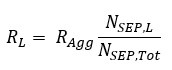
    Second, the aggregate royalty is apportioned among the various SEP owners. This apportionment might be as simple as multiplying the aggregate royalty by a ratio representing a given SEP licensor’s share of patents essential to the pertinent standard, according to the following formula:

    where RL is the royalty owed to SEP licensor L; RAgg is the aggregate royalty; NSEP,L is the number of SEPs (or SEP families) owned by SEP licensor L; and NSEP,Tot is the total number of SEPs (or SEP families) on the standard. More sophisticated adjustments can also be made to account for factors such as patent quality, the relative contribution of a licensor’s IP to the standard, the geographic scope of patent coverage and patent expiration.

    The top-down approach is viewed as a solution to two perceived problems with a pure “bottom-up” approach: uncertain licensing costs and royalty stacking. These issues can be particularly vexing in the context of standardization, where it is not unusual for numerous licensors to independently demand royalties on hundreds or even thousands of alleged SEPs.

    Several courts in the United States and the United Kingdom have applied top-down in the SEP context. In Innovatio, Microsoft and TCL, three different US district courts used top-down approaches to calculate FRAND rates for SEPs. The record at the US appellate level is mixed, however. The US Court of Appeals for the Ninth Circuit blessed the district court’s top-down analysis in Microsoft (See 795 F.3d 1024, 1056-57 (9th Cir. 2015)), while in TCL the US Court of Appeals for the Federal Circuit remanded on Seventh Amendment right-to-jury-trial grounds without addressing the trial court’s top-down methodology (943 F.3d 1360, 1375-76 (Fed. Cir. 2019)).  In the United Kingdom, courts have been open to the top-down approach at least as a cross-check on benchmark royalties derived from comparable licenses analysis (See Unwired Planet Int’l Ltd. v. Huawei Techs. (UK) Co. Ltd., 2017 E.W.H.C. 711 (2017) (applying top-down as a cross-check on benchmark rate based on comparable license analysis) and Interdigital Tech. Corp. v. Lenovo Group Ltd., 2023 E.W.H.C. 539 (2023) (considering top-down cross-check but ultimately rejecting it as out of line with what the court found to be the correct comparable licenses analysis)).

    In addition to courts, commentators, lawmakers and interested parties also continue to explore the top-down approach to SEP licensing. Academics have suggested interpleader as a procedural route to a more holistic top-down determination compared to ad hoc litigations. In 2022, reports emerged that the US Senate Judiciary Committee was reviewing draft legislation known as the Standard Essential Royalty Act that would establish a special-purpose court and exclusive cause of action to determine FRAND rates for US SEPs based on a top-down approach. SEP owners often band together in patent pools, which apply a top-down approach of their own: licensees obtain rights to practice all patents in the pool in exchange for a single royalty, which is apportioned among the pool’s members (often based, at least in part, on their respective pro rata share of the SEPs or SEP families in the pool).

    Despite its appeal for reducing royalty stacking and uncertainty, the top-down approach has drawn criticism. Some commentators argue that it is difficult if not impossible to identify all SEPs on a given standard; that the lack of quality control in SEP declaration procedures of the pertinent standard-setting organizations could skew royalty apportionment in favor of low-quality, high-volume patent filers; and that the relevant industry—not courts—should determine the aggregate royalty rate (See, e.g., Nikolic, Licensing Standard Essential Patents, Hart Publishing (2021) at 110-114 (discussing objections to the top-down approach)).

    The proposed European regulations include provisions that seem tailor-made for the top-down approach and address its primary criticisms head-on. In particular, the regulations outline procedures that would help quantify each input to the basic top-down formula:

    • RAgg – Title III, Chapter 2 specifies a procedure whereby SEP owners can submit their view of, and both SEP owners and implementers can request a non-binding expert opinion on, the aggregate royalty.
    • NSEP,L and NSEP,Tot – The requirements that SEP owners register their European SEPs (Title III, Chapter 3) and that the EU Intellectual Property Office spot-check registered patents for essentiality (Title V) would help quantify the share of SEPs owned by a given licensor.

    These procedures also are designed such that they would avoid (or at least mitigate) the alleged pitfalls of the top-down approach. Although limited to patents in force in an EU Member State, the mandatory SEP registry and essentiality checks could improve the accuracy of top-down apportionment. Compared to current declaration policies in force at various standard-setting organizations, which often allow “blanket” FRAND declarations, the proposed SEP registry would require specifically identifying each alleged SEP. The essentiality checks would also provide a measure of quality control on SEP counting and combat the problem of over-declaration. And because the aggregate royalty determination would be driven primarily by SEP owners (potentially with input from implementers), it would give the industry a significant voice in setting the aggregate rate.

    Even under the proposed regulations, however, top-down calculations of FRAND rates would remain merely advisory. The Commission considered but ultimately declined to propose an “SEP clearing house” feature that would have given binding effect to the aggregate royalty determination and apportioned that royalty among SEP licensors. But by implementing deliberative procedures that would quantify the key inputs to the top-down formula and mitigate its potential pitfalls, the proposed regulations would at least lend additional credibility to litigants and negotiating parties advocating for a top-down approach to calculating FRAND rates.

    Authors
    More insights