











Newsroom Categories: Coverage

  • McDermott Will & Schulte partners discuss continuation vehicles and fund ABS with Private Funds CFO

    McDermott Will & Schulte partners discuss continuation vehicles and fund ABS with Private Funds CFO

    COVERAGE

    McDermott Will & Schulte partners discuss continuation vehicles and fund ABS with Private Funds CFO

    Oct 9, 2026

    Read time: 2 min

    Key takeaways

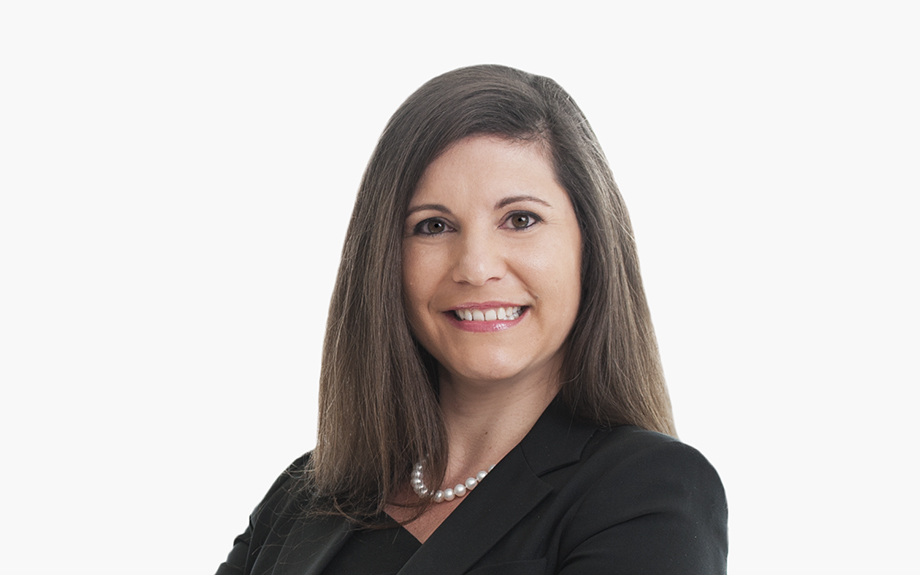
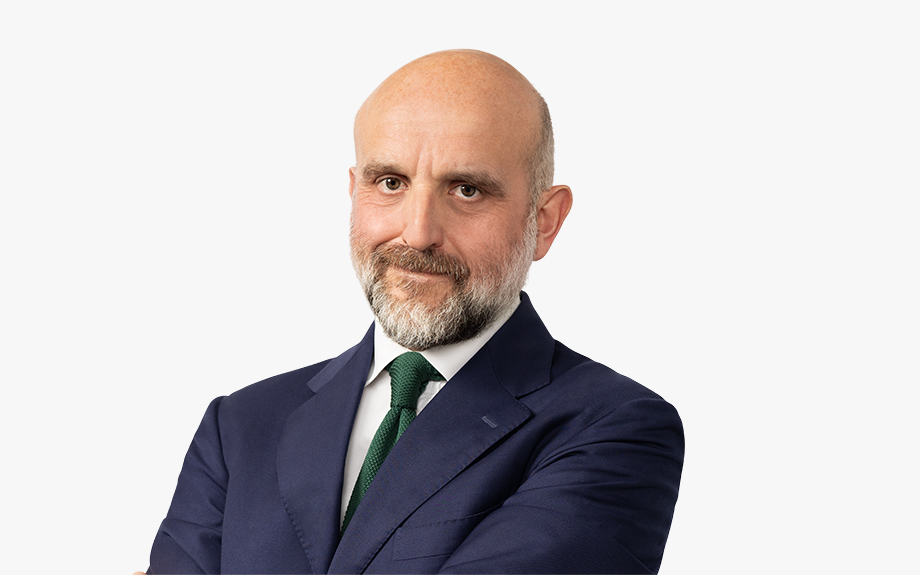
    Daniel Oshinsky and Joseph Gambino were featured in Private Funds CFO discussing the growing convergence of continuation vehicles (CVs) and fund asset-backed securities (ABS) as sponsors seek to provide liquidity to limited partners and attract insurance capital.

    Commenting on the trend toward combining CVs and collateralized fund obligations (CFOs), Joe said, “I think it’s probably a natural progression of the growth of CFOs and CVs in general.” Dan discussed the inclusion of interests in new primary funds as additional CFO collateral, noting that the firm frequently encounters this approach.

    Dan also highlighted the role rating agencies can play in monitoring potential conflicts of interest in CFOs. On the operational side, he discussed how sponsors manage the various service providers they engage when working on both CV and CFO transactions.

    Read the full article in Private Funds CFO: “Continuation vehicles meld with fund ABS.”

    In this article

    Daniel V. Oshinsky

    Partner

    New York – 919 Third Avenue

    Joseph Gambino

    Partner

    New York – 919 Third Avenue

    You may also like

  • Healthcare private equity: navigating a non-standard deal process, Investors in Healthcare

    Healthcare private equity: navigating a non-standard deal process, Investors in Healthcare

    COVERAGE

    Healthcare private equity: navigating a non-standard deal process, Investors in Healthcare

    Oct 9, 2026

    Read time: 2 min

    Key takeaways
    Lorem Ipsum

    Partner Fatema Orjela spoke with Investors in Healthcare following a panel discussion she moderated at McDermott Will & Schulte’s HPE Europe conference, exploring the changing dynamics of healthcare private equity transactions and how investors are adapting to an increasingly unpredictable dealmaking environment.

    The discussion highlighted longer transaction timelines, valuation challenges and a shift away from traditional auction processes. Panellists emphasised the growing importance of sector expertise, strong relationships and transaction certainty in securing investment opportunities.

    Fatema summarised the approach investors should take: “Know what you want, be connected to the right people, make those people know what you want, and be able to move when people bring you what you say you want.”

    Read the full Investors in Healthcare article >>

    Subscription may be required.

    In this article

    Fatema Orjela

    Partner

    London – 22 Bishopsgate

    You may also like

  • International arbitration can serve as critical tool in Hormuz crisis, Law360

    International arbitration can serve as critical tool in Hormuz crisis, Law360

    COVERAGE

    International arbitration can serve as critical tool in Hormuz crisis, Law360

    Aug 11, 2026

    Read time: 2 min

    Key takeaways

    McDermott Will & Schulte partners Lisa Richman, Fabio Cozzi and Milo Molfa authored an article for Law360 examining how international arbitration can help businesses manage disputes arising from disruptions to global energy supply chains, including the ongoing Strait of Hormuz crisis.

    The authors explore how emergency and expedited arbitration procedures can provide timely relief, alongside potential claims involving force majeure, breach of contract and pricing disputes.

    They also highlight the importance of strengthening contractual protections, preserving evidence and developing mitigation strategies to manage future disruptions.

    Read the full Law360 article>>
    *Subscription may be required 

    In this article

    Lisa M. Richman

    Partner

    Washington, DC

    Milo Molfa

    Partner

    London – 22 Bishopsgate

    Fabio Cozzi

    Partner

    Milan

    You may also like

  • UK corporate crime landscape raises global governance stakes, Law360

    UK corporate crime landscape raises global governance stakes, Law360

    COVERAGE

    UK corporate crime landscape raises global governance stakes, Law360

    Aug 18, 2026

    Read time: 2 min

    Key takeaways

    Partners Simon Airey, Fabio Cozzi, Vincenzo Giannantonio and Nicolette Kost De Sèvres authored an article for Law360 examining how recent changes to the UK’s corporate criminal liability framework are raising governance and compliance expectations for multinational businesses.

    The article explores the implications of the Crime and Policing Act 2026, which expands corporate criminal liability for offences committed by senior managers, alongside broader regulatory developments across Europe.

    The authors highlight the growing overlap between litigation, compliance and cross-border investigations, and explain why integrated governance, effective risk management and investigation readiness are increasingly important for businesses operating internationally.

    Read the full article in Law360.

    Subscription may be required.

    In this article

    Simon Airey

    Partner

    London – 22 Bishopsgate

    Fabio Cozzi

    Partner

    Milan

    Nicolette Kost De Sèvres

    Partner

    Washington, DC, Paris

    You may also like

  • Jamie Ravitz discusses the challenges facing the next FDA commissioner on The Federal Drive with Terry Gerton

    Jamie Ravitz discusses the challenges facing the next FDA commissioner on The Federal Drive with Terry Gerton

    COVERAGE

    Jamie Ravitz discusses the challenges facing the next FDA commissioner on The Federal Drive with Terry Gerton

    Read time: 2 min

    Key takeaways

    In a recent interview on Federal News Network’s The Federal Drive with Terry Gerton, Jamie Ravitz, head of McDermott’s FDA practice, discussed the challenges awaiting the next FDA commissioner.

    Jamie explained that one of the hardest tasks for any commissioner is translating an administration’s policy priorities into consistent, evidence-based decisions that the agency’s career scientists and regulators can carry out. He pointed to pending issues like vaccines, mifepristone, peptides, clinical trial reform, and AI-enabled medical products, and discussed how the new commissioner must work to balance speed to market against safety and cost.

    In this article

    James R. Ravitz

    Partner

    Washington, DC

    You may also like

  • Michelle Lowery discusses California COMPETE Act implications

    Michelle Lowery discusses California COMPETE Act implications

    COVERAGE

    Michelle Lowery discusses California COMPETE Act implications

    Oct 6, 2026

    Read time: 2 min

    Key takeaways

    Partner Michelle Lowery spoke with Global Competition Review about potential legal uncertainty created by the signing of the COMPETE Act, California’s first monopolization law.

    Michelle noted that the COMPETE Act says that federal laws are “at most instructive” for California’s competition laws.

    “There are parts of the bill that basically say that they’re not going to follow federal precedent,” Michelle said. “I think just that statement creates uncertainty.”

    Michelle also said she expects federal monopolization precedent to be persuasive for courts interpreting the law. However, defendants still face risks as California prosecutors may pursue broader theories of competitive harm, she said.

    Read the full Global Competition Review article.

    Subscription may be required.

    In this article

    Michelle Lowery

    Partner

    Los Angeles, Chicago

    You may also like

  • Ele Klein discusses evolving shareholder activism strategies with Skytop

    Ele Klein discusses evolving shareholder activism strategies with Skytop

    COVERAGE

    Ele Klein discusses evolving shareholder activism strategies with Skytop

    Oct 6, 2026

    Read time: 2 min

    Key takeaways

    Ele Klein spoke with Skytop about how activists and companies are adapting to changing market conditions, universal proxy rules and regulatory developments.

    “It’s not so much a new playbook as an evolving one,” Ele said. “Sophistication has grown on both the activist side and the company side.”

    Ele explained that universal proxy has contributed to more settlements and fewer contested votes by allowing shareholders to select individual nominees from both sides. Activists may find it easier to win a small number of board seats but harder to win a larger slate, giving both activists and companies reasons to resolve disputes before a vote.

    He also discussed regulatory developments affecting shareholder proposals, proxy advisors and activist investment structures, emphasizing that investors continue to adjust rather than fundamentally change their approach. The conversation also explored how capital investments accompanying board appointments can help address a company’s governance and financing needs together.

    Read the full article in Skytop: “Ele Klein on Activism: Adapting in an Era of Fast Change.”

    In this article

    Ele Klein

    Partner

    New York – 919 Third Avenue

    You may also like

  • Charles Larsen and Laura Woll author Managing IP article on the UPC’s first three years in life sciences

    Charles Larsen and Laura Woll author Managing IP article on the UPC’s first three years in life sciences

    COVERAGE

    Charles Larsen and Laura Woll author Managing IP article on the UPC’s first three years in life sciences

    Oct 6, 2026

    Read time: 2 min

    Key takeaways

    Charles Larsen and Laura Woll authored a Managing IP article reviewing how medtech, pharma, and biotech companies have used the Unified Patent Court during its first three years, and why the two sectors have taken noticeably different approaches.

    Medtech has been the early adopter, with roughly 60 cases, strong year-over-year growth, and a high rate of preliminary injunction requests, driven by fast product cycles and the commercial value of quick cross-border relief. Pharma and biotech companies, with around 24 cases, have been more selective, largely because of the risk of central revocation on the high-value patents that often anchor their exclusivity strategies.

    The article concludes that the divergence reflects differences in product life cycles, portfolio structures, and risk tolerance rather than courage versus caution. It also suggests that medtech’s early litigation is building the case law that will apply to pharma and biotech companies before bringing more valuable assets to the court.

    In this article
    You may also like

  • Boehringer, Dr. Reddy’s tee up For ‘skinny label’ showdown, Law360

    Boehringer, Dr. Reddy’s tee up For ‘skinny label’ showdown, Law360

    COVERAGE

    Boehringer, Dr. Reddy’s tee up For ‘skinny label’ showdown, Law360

    Oct 2, 2026

    Read time: 2 min

    Key takeaways

    Partner Henrik Holzapfel spoke with Law360 for an article looking at the patent dispute between Boehringer Ingelheim and Dr. Reddy’s over generic empagliflozin and the use of “skinny labels” in the UK.

    The case considers whether Dr. Reddy’s can market a generic version of empagliflozin solely for the treatment of Type 2 diabetes while carving out uses that remain patent protected.

    Henrik noted that the case “could provide important guidance in an area that has remained unsettled in the U.K. since the Warner-Lambert case.”

    Read the full article in Law360

    (subscription may be required).

    In this article
    You may also like

  • Clarification or quiet revolution? Inside the EU’s 2026 Draft Merger Guidelines, Concurrences

    Clarification or quiet revolution? Inside the EU’s 2026 Draft Merger Guidelines, Concurrences

    COVERAGE

    Clarification or quiet revolution? Inside the EU’s 2026 Draft Merger Guidelines, Concurrences

    Oct 2, 2026

    Read time: 2 min

    Key takeaways

    Partner Stéphane Dionnet examines the European Commission’s 2026 Draft Merger Guidelines in Concurrences and the potential implications for EU merger review.

    Stéphane explores the proposed greater emphasis on innovation, resilience, sustainability and competitiveness, alongside expanded theories of harm and increased scrutiny of internal documents. He also considers what the evolving framework means for transaction planning, including the need for earlier antitrust assessment and stronger evidentiary preparation.

    Read more in Concurrences.

    *Subscription may be required

    In this article

    Stéphane Dionnet

    Partner

    Brussels

    You may also like