











Newsletter Archives | McDermott Newsletter Archives | McDermott

McDermott Will & Schulte, a global law firm

Keywords – Hidden: Newsletter

  • Healthcare Regulatory Check-Up Newsletter | April 2026 Recap

    Healthcare Regulatory Check-Up Newsletter | April 2026 Recap

    REPORT

    Healthcare Regulatory Check-Up Newsletter | April 2026 Recap

    May 2026

    Read time: 21 min

    Key takeaways
    Overview

    This issue of McDermott Will & Schulte’s Healthcare Regulatory Check-Up highlights regulatory activity for April 2026, including recent enforcement actions involving the False Claims Act (FCA), two favorable Office of Inspector General (OIG) advisory opinions, and proposed and final rules issued by the Centers for Medicare & Medicaid Services (CMS). We also discuss OIG’s updates to its fraud and abuse frequently asked questions (FAQs) page, OIG’s report on CMS’s oversight of compounded drugs prescribed to Medicare beneficiaries, and OIG’s intent to publish reports on laboratory tests and GLP-1 drug compounding.

    In depth

    Click each heading below to view the newsletter content.

    NINTH CIRCUIT INVALIDATES CALIFORNIA DIALYSIS STATUTE

    On April 7, 2026, the US Court of Appeals for the Ninth Circuit affirmed in part and reversed in part a district court decision addressing the constitutionality of California Assembly Bill 290, which regulates financial relationships between dialysis providers and nonprofit charities offering premium assistance to dialysis patients.

    The Ninth Circuit held that several core provisions of the law, including a reimbursement cap placed on providers who donate to such charities, violate the First Amendment because they impermissibly burden providers’ and charities’ associational rights. The Court concluded that although California identified legitimate state interests for maintaining the law, such as protecting insurance risk pools and preventing potentially abusive practices, the challenged provisions were overbroad and therefore could not survive the “exacting scrutiny” standard of review relied upon by courts in this and other similar cases. The Court also struck down requirements that applicable charities disclose patient identities to insurers and refrain from conditioning financial assistance on certain eligibility criteria.

    Although the Court ruled that it was constitutional for California to require charities to inform patients of “all available health coverage options” on an annual basis, it ultimately concluded that this provision could not be severed from the rest of the statute and therefore invalidated it along with the law’s other provisions.

    SIXTH CIRCUIT INVALIDATES TENNESSEE PBM LAW UNDER ERISA PREEMPTION

    On April 7, 2026, the Court of Appeals for the Sixth Circuit affirmed a district court’s ruling that the Employee Retirement Income Security Act of 1974 (ERISA) preempts certain Tennessee laws regulating pharmacy benefit managers (PBMs).

    The challenged state laws attempt to curtail PBMs’ efforts to steer patients to their own PBM-managed pharmacies by requiring PBMs to include any pharmacy “willing to accept the same terms and conditions” in their preferred and non-preferred networks and prohibiting PBMs from offering financial or other incentives to patients to influence their choice of pharmacy. The Court held that because these provisions interfere with employers’ ability to structure their self-funded plans in a particular way, govern central matters of plan administration, and interfere with nationally uniform plan administration requirements, they maintain an “impermissible connection” to ERISA and are therefore preempted.

    FTC TARGETS HEALTH INSURANCE TELEMARKETING SCHEME

    On April 15, 2026, the Federal Trade Commission (FTC) obtained a temporary restraining order halting a nationwide health insurance marketing operation, demonstrating that FTC enforcement remains a key risk area for healthcare-related business arrangements. According to the FTC’s complaint, several entities operated a telemarketing scheme that impersonated government agencies, insurance carriers, and state health insurance marketplaces to sell purported comprehensive health coverage that did not provide meaningful benefits.

    The defendants allegedly marketed products as “state issued” low-cost preferred provider organization plans with no deductibles and broad coverage while offering limited discount programs and capped payouts that exposed consumers to significant out-of-pocket costs. Telemarketers allegedly used deceptive scripts, impersonated Medicaid and private insurers, and targeted both uninsured individuals and consumers with existing coverage, sometimes claiming that payment was required to maintain current insurance.

    This action demonstrates that alongside US Department of Justice (DOJ) enforcement, the FTC continues to actively police deceptive marketing practices in the healthcare space, reinforcing the need to carefully assess representations and sales practices directed towards consumers.

    INSURANCE BROKER, PARENT COMPANY PAY $135M+ TO RESOLVE ALLEGED FALSE CLAIMS IN ACA ENROLLMENT SCHEME

    A Florida-based insurance brokerage and its former parent company, a national partnership of insurance brokers, agreed to a settlement of $135 million related to fraudulent enrollment practices involving subsidized Patient Protection and Affordable Care Act (ACA) health insurance plans. The insurance brokerage pleaded guilty to criminal charges and will pay more than $27.6 million in restitution for its role in the scheme. In a parallel civil resolution, the former parent company agreed to pay $107.3 million to resolve FCA allegations that the brokerage and its parent company submitted or caused to be submitted false claims for advance premium tax credits to the ACA health insurance exchanges.

    The settlement resolves allegations that the brokerage targeted vulnerable individuals, such as those experiencing homelessness and substance abuse, to fraudulently enroll them into plans under the ACA by misrepresenting the individuals’ income and eligibility for federal subsidies. The brokerage admitted that it used “street marketers” to recruit these individuals, sometimes offering them cash or gift cards, then inflated individuals’ income information to ensure qualification for government subsidies and higher commissions from insurers. The brokerage also manipulated eligibility processes, including by submitting false information to Medicaid programs to generate denials that would trigger special ACA enrollment periods.

    In addition to the alleged financial harm to the government, the brokerage’s conduct allegedly caused significant disruption to consumers’ healthcare coverage, with some individuals being unknowingly removed from Medicaid or other similar programs in favor of plans that imposed unaffordable costs or failed to cover necessary treatments. The former president of the brokerage was convicted at trial in November 2025 and sentenced to 20 years’ imprisonment.

    PHARMACY EXECUTIVE SENTENCED FOR ROLE IN COMPOUNDED DRUG FRAUD SCHEME

    A senior executive at a New Jersey-based mail order pharmacy was sentenced to 24 months in prison for his role in a $33 million healthcare fraud and kickback operation involving medically unnecessary compounded drugs billed to federal and commercial healthcare programs. From 2014 to 2016, the defendant orchestrated an arrangement in which marketing firms promoted lucrative compounded drug formulas to telemedicine companies and physicians, in exchange for which the marketing firms received kickbacks tied to prescription volume and reimbursement amounts. In addition to the prison sentence, the court ordered the defendant to forfeit $27 million illegally obtained through the scheme and pay an additional $33 million in restitution.

    MEDICAL PRACTICE, PHYSICIAN RESOLVE ALLEGATIONS OF IMPROPER BILLING FOR DIAGNOSTIC TESTS

    A Florida ophthalmology practice and its former owner agreed to pay $415,000 to resolve FCA allegations arising from improper billing for transcranial doppler tests reimbursed by Medicare and the Veterans Health Administration. The government alleged that from 2018 to 2020, the practice caused the submission of false claims for transcranial doppler tests that were not medically necessary and were improperly justified because the practice falsely indicated that patients suffered from a rare vascular condition. The government further alleged that the practice received per‑referral payments from an independent medical diagnostics company even though the parties’ contractual arrangement included compensation terms that were to be based on fair market value for rent and administrative services.

    COMMUNITY HEALTH CENTER RESOLVES ALLEGATIONS OF IMPROPER BILLING FOR MEDICARE ANNUAL WELLNESS VISITS

    A federally qualified health center (FQHC) operating six different clinic locations in Virginia agreed to pay more than $500,000 to resolve allegations that it submitted false claims for annual wellness visits provided to Medicare beneficiaries. The government alleged that for a three-year period, the FQHC billed for annual wellness visits furnished to patients by pharmacists without physician oversight or supervision. No physician was present physically or virtually, and the FQHC allegedly billed these visits under the names of physicians who were not involved in their delivery. This settlement appears to have been initiated by an OIG investigation.

    PENNSYLVANIA PROVIDER PAYS $1.2M+ TO RESOLVE ALLEGATIONS THAT IT RELIED ON UNQUALIFIED DIRECT SUPPORT PROFESSIONALS

    A Pennsylvania home- and community-based services provider agreed to pay more than $1.21 million to resolve FCA allegations that it submitted improper claims to Medicaid by knowingly allowing unqualified and insufficiently trained direct support professionals to provide one‑on‑one services to Medicaid beneficiaries in violation of program rules.

    CMS RELEASES CY 2027 POLICY AND RATES FOR MA AND PART D

    On April 2, 2026, CMS issued a final rule setting forth policy and technical changes to the Medicare Advantage (MA) and Part D programs for 2027 and beyond. Key takeaways include:

    • CMS finalized its proposal to remove the EHO4all reward (also known as the Health Equity Index) from the 2027 star ratings and to continue applying the existing reward factor.
    • CMS finalized provisions aimed at reducing existing regulatory requirements, including several focused on health equity. Examples include exempting account-based plans from creditable coverage disclosure requirements and rescinding the requirement for MA plans to send mid-year notices about unused supplemental benefits.
    • CMS finalized several changes to rules governing marketing and communications, including reducing restrictions on beneficiary outreach and third-party marketing organizations and removing state health insurance programs as a recommended source of information for enrollment assistance. It also modified the requirement related to retention of marketing and sales calls.
    • CMS finalized proposals to codify several changes to the Part D benefit design, as required by the Inflation Reduction Act of 2022, including elimination of the coverage gap phase and the annual out-of-pocket threshold, removing cost sharing for enrollees in the catastrophic phase, and implementing the Manufacturer Discount Program.

    On April 6, 2026, CMS also released the final Announcement of Calendar Year (CY) 2027 MA Capitation Rates and Part C and Part D Payment Policies. The policies in this announcement are projected to result in a net average increase of 2.48% (more than $13 billion) in MA payments to plans in CY 2027. This compares with a projected net increase of 0.09% in the advance notice. CMS declined to finalize proposed changes to its Part C risk adjustment model that would have updated the underlying risk adjustment data to reflect more current costs. However, CMS finalized policies to exclude diagnosis information from “unlinked chart review records” (diagnosis information that is not associated with a specific beneficiary encounter) and diagnoses from audio-only encounters.

    CMS RELEASES FY 2027 IPPS, LONG-TERM CARE HOSPITAL PROPOSED RULE

    On April 10, 2026, CMS issued the fiscal year (FY) 2027 proposed rule for the Hospital Inpatient Prospective Payment System (IPPS) and Long-Term Care Hospital (LTCH) Prospective Payment System. CMS proposed a 2.4% increase in operating payment rates for general acute care hospitals paid under the IPPS that successfully participate in the Hospital Inpatient Quality Reporting Program and are meaningful electronic health record users. CMS also proposed a 2.4% increase in payments to LTCHs that submit quality reporting data.

    CMS proposed to expand the Care for Joint Replacement (CJR) model nationwide and to refer to this new expanded model as Comprehensive Care for Joint Replacement Expanded (CJR-X). The CJR-X model is proposed to start October 1, 2027. Each acute care hospital that initiates lower extremity joint replacement episodes and is paid under either IPPS or the Outpatient Prospective Payment System would be required to participate, unless the hospital participates in the current Transforming Episode Accountability Model or is located in Maryland.

    CMS also proposed narrowing the criteria for off-campus provider-based departments located more than 35 miles from the main provider. Under the Medicare provider-based regulation at 42 C.F.R. § 413.65, a facility or organization located more than 35 miles from the main provider may still qualify as “provider-based” if, among other requirements, it “serves the same patient population as the main provider.” To satisfy that requirement, the off-campus facility or organization must demonstrate that it meets at least one of two tests during rolling 12-month periods. Specifically, the facility or organization must demonstrate one of the following:

    • “At least 75 percent of the patients served by the facility or organization reside in the same zip code areas as at least 75 percent of the patients served by the main provider.”
    • “At least 75 percent of the patients served by the facility or organization who required the type of care furnished by the main provider received that care from that provider.”

    CMS has proposed limiting the application of the latter test so that it would be available only to outpatient departments seeking provider-based status. This would limit the establishment of new off-campus inpatient departments more than 35 miles from the hospital’s main campus.

    Comments are due on June 9, 2026. For additional information, consult the McDermott+ summary.

    CMS RELEASES FY 2027 SNF PROPOSED RULE

    On April 2, 2026, CMS issued a proposed rule containing changes and updates to the policies and payment rates used under the Skilled Nursing Facility (SNF) Prospective Payment System (PPS) for FY 2027. CMS proposed to increase SNF PPS rates in 2027 by 2.4%. It also proposed to refine the Patient-Driven Payment Model and shorten data submission deadlines for the SNF Quality Reporting Program.

    CMS RELEASES FY 2027 INPATIENT REHABILITATION FACILITY AND INPATIENT PSYCHIATRIC FACILITY PROPOSED RULES

    On April 2, 2026, CMS released a proposed rule to update the PPS for inpatient rehabilitation facilities for FY 2027 and another proposed rule to update the PPS for inpatient psychiatric facilities for FY 2027. CMS proposed to increase the PPS rate for the former by 2.4% and the latter by 2.3% for FY 2027.

    CMS RELEASES FY 2027 HOSPICE PROPOSED RULE

    On April 2, 2026, CMS released a proposed rule to update the hospice wage index, payment rates, and aggregate cap amount for FY 2027. CMS proposed to increase the hospice payment rate by 2.4%. It also proposed to introduce the service and spending variation index, which would use claims data to identify potential inappropriate utilization and other concerns. CMS proposed to make the hospice election statement addendum mandatory for all Medicare beneficiaries at the time of hospice election and add an icon to the Medicare.gov Care Compare Tool to flag hospice facilities that fail to meet hospice outcomes and patient evaluation reporting requirements.

    CMS, ONC RELEASE PROPOSED RULE ON INTEROPERABILITY, PRIOR AUTHORIZATION FOR DRUGS

    On April 10, 2026, CMS and the Office of the National Coordination for Health Information Technology (ONC) released a proposed rule setting out interoperability standards and electronic prior authorization requirements for drugs. This rule would impact MA organizations, Medicaid and Children’s Health Insurance Program programs, and qualified health plan issuers on the federally facilitated exchanges. The agencies proposed to require impacted payors to support electronic prior authorization, to make decisions on requests within shorter timeframes, and to increase transparency for the prior authorization of drugs. The agencies also proposed to require impacted payors to update health information technology standards and to report interoperability authorization application programming interface endpoints and usage metrics to CMS.

    Comments are due on June 15, 2026.

    OIG ISSUES FAVORABLE AO ON WAIVER OF COST-SHARING BY STATE-DESIGNATED DOMESTIC CRISIS PROVIDER

    In Advisory Opinion (AO) 26-06, OIG analyzed a proposal by a state-designated domestic violence crisis provider to bill Medicare and Medicaid for therapy services while continuing its long-standing practice of not charging patients any cost-sharing amounts (e.g., copays or deductibles). Because routine waivers of cost-sharing can constitute remuneration to beneficiaries, the arrangement would implicate both the federal Anti-Kickback Statute (AKS) and the beneficiary inducement statute.

    OIG issued a favorable opinion, emphasizing the unique, mission-driven context in which the services are furnished. The provider serves a highly vulnerable population, namely survivors of domestic violence, who often face significant financial, safety, and access barriers. The waiver of cost-sharing was not newly introduced to attract federally insured patients; rather, it reflected a preexisting policy of providing free services regardless of insurance status, and patients were not informed of the waiver as a marketing tool or inducement. The services were also clinically appropriate and not conditioned on the receipt of other reimbursable services, reducing concerns about overutilization.

    OIG highlighted several risk-limiting safeguards supporting its conclusion:

    • The absence of any link between the cost-sharing waiver and referrals or generation of other federal healthcare program business.
    • No advertising or promotion of “free” services to influence patient choice.
    • The provider’s narrow, specialized service line focused on crisis and recovery support rather than broad, revenue-generating care.
    • The fact that many patients would be unable to access care at all without the waiver, supporting a legitimate access-to-care rationale.

    OIG reiterated, however, that its approval is highly fact-specific and that routine or commercially motivated waivers of cost-sharing remain subject to OIG’s long-standing concern about blanket waivers and significant enforcement risk outside the narrow facts of the opinion.

    OIG ISSUES FAVORABLE AO ON COST-SAVINGS-SHARING ARRANGEMENT BETWEEN MA ORGANIZATION, EMPLOYER GROUP WAIVER PLANS

    In AO 26-07, OIG reviewed a proposal by an MA organization offering employer group waiver plans (EGWPs) to employers, trusts, and union groups (collectively, groups) pursuant to which the requester would share a set percentage of its cost savings with the groups (gainshare payment).

    Under the proposed arrangement, the requestor would give the groups the opportunity to receive a gainshare payment. The requestor would enter into agreements with the groups to provide the groups’ enrollees with basic benefits under Medicare Parts A and B, and prescription drug coverage under Part D plans, if applicable. MA organizations offering EGWPs may negotiate with groups with respect to the scope of benefits and any additional premium amounts to be paid by either a group or its enrollees. Accordingly, the agreements between the requestor and the groups would also specify whether the plan would cover any supplemental benefits and whether there would be any additional premium amounts charged.

    The contracts between the requestor and the groups would also include the conditions under which a group would be eligible to receive a gainshare payment. The gainshare payment would be determined based on a negotiated medical expense ratio (MER), which would be calculated by dividing certain expenses incurred by the requestor by certain revenues the MA organization received. Each group would negotiate its MER percentage and the terms that must be satisfied to receive the gainshare payment with the requestor. Such terms could include minimum enrollment numbers for the applicable plan year and any renewal requirements. If the final negotiated MER was below the target, then the requestor would pay the group the gainshare payment.

    Any group that received a gainshare payment would be contractually obligated to use the payment to benefit enrollees. This could include funding enhanced or additional benefits or other group health-benefit-related expenses, such as administrative expenses, or other benefits not covered by the group plan, such as wellness or retiree support programs.

    OIG concluded that the proposed arrangement would implicate the federal AKS because the requestor would offer remuneration (in the form of the gainshare payment) to the groups, which could induce the group to refer its enrollees to the requestor so that the requestor would arrange for the furnishing of items or services reimbursable by a federal healthcare program.

    Because no safe harbor would apply, OIG analyzed the proposed arrangement under a facts and circumstances analysis and determined that the arrangement would pose a sufficiently low risk under the AKS. OIG concluded that while the arrangement could result in increased costs to federal healthcare programs or steering concerns, the arrangement nonetheless presented sufficiently low risk for OIG to issue a favorable opinion. OIG noted that costs to federal healthcare programs could increase if the costs associated with the EGWPs were higher than those associated with Medicare fee-for-service, but that such increase would be attributable to program design, not the proposed arrangement. The gainshare payment or the calculations used to arrive at the gainshare payment would not impact the amounts CMS paid to the requestor for the groups’ EGWPs.

    OIG also noted that the proposed arrangement would present a risk of patient steering because groups would be given the opportunity to receive a gainshare payment, creating an incentive to choose a particular plan that would arrange for federally reimbursable items and services for its enrollees. However, gainshare payments would not be guaranteed and would not be made if the plan performed as actuarially predicted. OIG also highlighted that any gainshare payment would be used to benefit enrollees. OIG further noted that CMS permits MA organizations to negotiate supplemental benefits and the total cost of EGWPs for groups and their enrollees. OIG determined that the offer and receipt of any potential gainshare payment would be an element of the negotiation between the parties and would be used for the benefit of enrollees. Based on these features, OIG concluded that it would not impose administrative sanctions on the requestor with respect to the proposed arrangement under the civil monetary penalties provision at Section 1128A(a)(7) of the Social Security Act or under OIG’s exclusion authority at Section 1128(b)(7).

    The requirement that the groups use the gainshare payment to benefit enrollees appears to have been a significant factor in this favorable AO. In AO 24-08, OIG rendered an unfavorable opinion on a similar arrangement that did not include any restrictions on the use of the proposed gainshare payment.

    OIG REVISES FAQS ON CERTAIN FRAUD AND ABUSE AUTHORITIES

    On April 23, 2026, OIG made two updates to its General Questions Regarding Certain Fraud and Abuse Authorities page.

    First, OIG supplemented and expanded FAQ 4 related to financial arrangements that satisfy an exception under the physician self-referral law (Stark Law). OIG elaborated on the relationship between the Stark Law and the AKS and emphasized that Stark Law exceptions and AKS exceptions are different, even when the exceptions have “similar titles, use similar terms, or include similar conditions.” The revised narrative also includes a new example to illustrate how a financial arrangement that satisfies a Stark Law exception could nonetheless violate the AKS. Specifically, entities that furnish designated health services may furnish tickets to sporting events and other entertainment to physician referral sources. Although these arrangements may be protected under various Stark Law exceptions, OIG cautioned that this would be “unlikely to receive protection under any safe harbor” under the AKS.

    Second, OIG added a new FAQ 17 regarding whether “fair market value arrangements” can violate the AKS. The FAQ discusses how an arrangement may violate the federal AKS even where it involves remuneration consistent with fair market value. OIG cautioned that there may be unlawful remuneration under the AKS even where the remuneration offered, paid, solicited, or received in the arrangement is consistent with fair market value. OIG cited to the statutory language, regulatory safe harbors, and both recent and dated OIG guidance in support of this position.

    OIG EXAMINES CMS OVERSIGHT OF COMPOUNDED DRUGS PRESCRIBED TO MEDICARE BENEFICIARIES

    OIG issued a report reviewing CMS’s oversight of compounded drugs prescribed to Medicare Part D beneficiaries and recommending actions that CMS could take to strengthen its monitoring efforts.

    OIG’s audit found that CMS obtains incomplete data from Part D sponsors on what ingredients comprise compounded drug products and otherwise fails to review these ingredients, limiting its ability to perform effective oversight of Part D sponsors and identify potential medication errors or overutilization. For example, OIG identified instances in which US Food and Drug Administration (FDA)‑approved injectable drugs were incorrectly reported as compounded drugs, patients received compounded drugs containing gabapentin while also receiving separate prescriptions for brand name versions of gabapentin, and compounded drugs included controlled substances that were not reflected on CMS’s data systems.

    As a result of its findings, OIG issued three recommendations to CMS, each of which CMS concurred with:

    • That CMS work with Part D sponsors, as appropriate, to ensure sponsors’ claims for Part D compounded drugs are accurately reported on prescription drug event records consistent with CMS guidance.
    • That CMS provide guidance to Part D sponsors on enhancing their oversight of compounded drugs containing controlled substances and gabapentin, such as ensuring that their quality assurance programs monitor full ingredient lists for compounded drugs.
    • That CMS provide guidance to sponsors regarding monitoring active pharmaceutical ingredients in bulk powder form used in compounded drugs.

    OIG AUDIT IDENTIFIES IMPROPER PAYMENTS FOR VIRTUAL CHECK-IN AND E-VISIT SERVICES

    OIG conducted a data-driven audit of Medicare payments for virtual check-in and e visit services and identified about $2.3 million in potential improper payments for the period between January 1, 2019, and December 31, 2022. As background, beginning in 2019, CMS established separate payment for providers who furnish virtual check-in and e-visit services to patients. These services allow providers to receive reimbursement for communications with patients made through online patient portals, by telephone, or via other communication technology modalities.

    OIG identified these potentially improper payments by identifying payments for virtual check-ins and e-visits billed within seven days of evaluation and management services with the same diagnosis. OIG also highlighted the use of modifiers on evaluation and management claim lines that were billed close in time to virtual check-ins and e-visits, which may have been billed inappropriately to circumvent claim edits. OIG did not actually review medical records associated with the reviewed claims data.

    OIG issued three recommendations to CMS:

    • Develop claims system billing edits for billing communication-technology-based services.
    • Strengthen the code descriptions for virtual check-ins.
    • Further educate providers on the proper billing requirements for virtual and e-visit services.

    CMS agreed with OIG’s recommendations for claims system edits and for additional provider education related to virtual check-in and e-visit services. CMS did not agree with OIG’s suggestion to modify the HCPCS code descriptions for these services but indicated that subregulatory guidance would potentially be more appropriate to further educate providers on appropriate billing for these services.

    OIG ANNOUNCES INTENT TO EVALUATE FDA’S EFFORTS TO OVERSEE GLP-1 DRUG COMPOUNDING

    On April 15, 2026, OIG announced its plan to assess FDA’s efforts to oversee the compounding of GLP-1 drugs, including the extent to which FDA inspects compounders and leverages available data to identify and address potential risks. OIG’s estimated completion date is FY 2028.

    Stay up to date on the latest health regulatory developments. Subscribe to receive this newsletter directly in your inbox each month and never miss an update.


    Authors

    Tony Maida

    Partner

    New York – One Vanderbilt Avenue

    Monica Wallace

    Partner

    Chicago

    Sarah Kitchell

    Partner

    Boston

    Caroline Reignley

    Partner

    Washington, DC

    Dexter Golinghorst

    Associate

    Chicago

    Alan LeBlang

    Associate

    Chicago

    Henry Fisher

    Associate

    Washington, DC

    More Insights

  • Healthcare Regulatory Check-Up Newsletter | March 2026 Recap

    Healthcare Regulatory Check-Up Newsletter | March 2026 Recap

    REPORT

    Healthcare Regulatory Check-Up Newsletter | March 2026 Recap

    April 2026

    Read time: 4 min

    Key takeaways
    Overview

    This issue of McDermott Will & Schulte’s Healthcare Regulatory Check-Up highlights regulatory activity for March 2026, including three favorable Office of Inspector General (OIG) advisory opinions and the US Department of Health and Human Services’ (HHS’s) final rule adopting standards for healthcare claims attachments and electronic signatures. We also discuss the US Department of Justice’s (DOJ’s) recent antitrust suit against hospital systems; HHS and the Centers for Medicare & Medicaid Services’ (CMS’s) announcement of a new Healthcare Advisory Committee; and Florida’s implementation of a parallel Medicaid durable medical equipment, prosthetics, orthotics, and supplies (DMEPOS) enrollment moratorium after CMS’s nationwide Medicare moratorium. This issue also covers recent enforcement activity involving antitrust actions, the False Claims Act (FCA), and suits involving the Health Resources and Services Administration (HRSA) and the US Food and Drug Administration (FDA).

    Read below for an overview of this month’s regulatory and enforcement activity roundup. For a deeper dive, subscribe to the newsletter to get our detailed analysis of all updates.

    In depth

    Click each heading below for a sneak peek of related content.

    MEDICAL DEVICE COMPANY ENTERS DEFERRED PROSECUTION AGREEMENT

    A medical device company entered into a three-year deferred prosecution agreement, and its former chief regulatory officer pleaded guilty, in connection with failing to file adverse event reports with the intent to defraud and mislead the FDA.

    DOJ FILES ANTITRUST SUIT AGAINST HOSPITAL SYSTEM

    DOJ filed suit against a New York-based hospital system, alleging that the system imposed anticompetitive contractual restrictions that limited insurers’ and employers’ ability to offer lower-cost health plan options.

    HRSA BLOCKED FROM REINSTATING PRE-PANDEMIC 340B POLICY

    The US District Court for the District of Columbia ruled that HRSA improperly reinstated a pre-pandemic policy requiring 340B child sites to register to access discounted drugs, finding that the agency imposed an extra-statutory eligibility condition without proper rulemaking or rulemaking authority.

    HHS FINALIZES STANDARDS FOR HEALTHCARE CLAIMS ATTACHMENTS, ELECTRONIC SIGNATURES

    On March 24, 2026, HHS issued a final rule adopting standards for electronic healthcare claims attachment transactions and electronic signatures (CMS-0053-F), implementing HIPAA administrative simplification requirements.

    OIG ISSUES FAVORABLE ADVISORY OPINION ON SOFTWARE-CONTINGENT DISCOUNTS FOR CATARACT SURGERY SUPPLIES

    On March 4, 2026, OIG issued Advisory Opinion 26-03, a favorable opinion analyzing a proposed bundled discount arrangement involving different customers with common ownership.

    OIG ISSUES FAVORABLE ADVISORY OPINION ON ASC OWNERSHIP TRANSFERS IN CONNECTION WITH RETIREMENT SUCCESSION PLANNING

    On March 4, 2026, OIG issued Advisory Opinion 26-04, a favorable opinion analyzing a proposed transfer of physician ownership interests in a Medicare-certified ASC in connection with retirement.

    OIG ISSUES FAVORABLE ADVISORY OPINION ON COST-SHARING SUBSIDIES FOR DEVICE CLINICAL TRIAL PARTICIPANTS

    On March 11, 2026, OIG issued Advisory Opinion 26-05, a favorable opinion analyzing a medical device company’s proposal to subsidize certain cost-sharing obligations for federal healthcare program beneficiaries in a clinical trial.

    OIG ANNOUNCES WORK PLAN AUDIT OF CCM PAYMENTS

    On March 16, 2026, OIG added a new Work Plan item, announcing an audit of Medicare Part B payments for chronic care management (CCM) services.

    FLORIDA FOLLOWS CMS WITH MEDICAID DMEPOS ENROLLMENT MORATORIUM

    After CMS imposed a six-month nationwide freeze effective February 27, 2026, on new Medicare enrollment by DMEPOS companies, Florida announced a parallel six-month halt on enrollment of new durable medical equipment providers in the Florida Medicaid program.

    HHS, CMS ANNOUNCE MEMBERS OF NEW HEALTHCARE ADVISORY COMMITTEE

    On March 27, 2026, HHS and CMS announced the members of a new Healthcare Advisory Committee that will provide non-binding advice to HHS Secretary Robert F. Kennedy Jr. and CMS Administrator Dr. Mehmet Oz on care delivery and financing issues across Medicare, Medicaid, CHIP, and the Health Insurance Marketplace. HHS said the committee was selected through a competitive process that drew more than 400 nominations nationwide.

    Interested in reading the full newsletter? Sign up today and get a copy of the March 2026 Recap issue immediately.

    Ashley Anumba, a law clerk in the New York office, also contributed to this newsletter.

    Authors

    Tony Maida

    Partner

    New York – One Vanderbilt Avenue

    Monica Wallace

    Partner

    Chicago

    Sarah Kitchell

    Partner

    Boston

    Steven J. Schnelle

    Partner

    New York – One Vanderbilt Avenue

    Marissa Hill Daley

    Associate

    Washington, DC

    Dane Chapman

    Associate

    Miami

    More Insights

  • Healthcare Regulatory Check-Up Newsletter | February 2026 Recap

    Healthcare Regulatory Check-Up Newsletter | February 2026 Recap

    REPORT

    Healthcare Regulatory Check-Up Newsletter | February 2026 Recap

    March 2026

    Read time: 5 min

    Key takeaways
    Overview

    This issue of McDermott Will & Schulte’s Healthcare Regulatory Check-Up highlights regulatory activity for February 2026, including two False Claims Act (FCA) settlements, a new Office of Inspector General (OIG) advisory opinion, and the US Department of Health and Human Services’ (HHS’s) 2027 Notice of Benefit and Payment Parameters proposed rule. We also discuss recent actions from the Centers for Medicare & Medicaid Services (CMS), including the agency’s moratorium on certain Medicare durable medical equipment, prosthetics, orthotics, and supplies (DMEPOS) supplier enrollments; the deferment of millions in Medicaid funding to Minnesota over fraud, waste, and abuse concerns; and the agency’s joint pledge with health plans to launch a new payment program aligned with CMS’s ACCESS model. This issue also covers recent activity by the Health Resources and Services Administration (HRSA) and the US Food and Drug Administration (FDA).

    Read below for an overview of this month’s regulatory and enforcement activity roundup.

    In depth

    Click each heading below for a sneak peek of related content.

    HHS TERMINATES 340B REBATE MODEL PILOT PROGRAM

    Following a successful lawsuit filed by the American Hospital Association alleging that HRSA’s 340B rebate model pilot program violated the Administrative Procedure Act, HRSA agreed to rescind the previously approved rebate models.

    DOJ AND SLEEP SPECIALIST SETTLE FCA ALLEGATIONS

    A sleep specialist practice, two physicians, and a medical supply company agreed to pay more than $750,000 to resolve three sets of allegations stemming from a whistleblower lawsuit.

    SURGICAL HOSPITAL AGREES TO PAY $5.6M TO RESOLVE FCA LIABILITY FOLLOWING SELF-DISCLOSURE

    An Arizona surgical hospital agreed to pay $5.6 million to resolve FCA allegations that from 2011 through 2018, the hospital made improper financial contributions to a physician group that referred patients to the surgical hospital.

    CMS DEFERS $259.5M IN MEDICAID FUNDING TO MINNESOTA OVER FRAUD CONCERNS

    Following a review of Minnesota’s Medicaid spending in the fourth quarter of fiscal year 2025, CMS announced it will defer nearly $259.5 million in federal matching funds to Minnesota’s Medicaid program until the agency is satisfied with the state’s corrective action plan to address ongoing program integrity concerns.

    CMS ANNOUNCES NATIONWIDE MORATORIUM ON CERTAIN MEDICARE DMEPOS ENROLLMENTS

    On February 27, 2026, CMS published a notice in the Federal Register announcing a six-month moratorium on Medicare enrollments for certain DMEPOS suppliers, effective immediately.

    CMS RELEASES UPDATED MEDICARE OUTPATIENT OBSERVATION NOTICE

    On February 20, 2026, CMS released an updated Medicare Outpatient Observation Notice (MOON), which hospitals and critical access hospitals are required to provide to Medicare beneficiaries who receive observation services as outpatients for more than 24 hours.

    HHS PROPOSES SWEEPING CHANGES TO ACA EXCHANGE POLICIES

    In the 2027 Notice of Benefit and Payment Parameters proposed rule, published in the Federal Register on February 11, 2026, HHS pitched an expansive set of changes to the standards that qualified health plans participating in the Affordable Care Act (ACA) marketplace must comply with and new requirements for state-based exchanges, brokers, and agents.

    OIG ISSUES FAVORABLE ADVISORY OPINION 26-02 ON LAB SERVICES ARRANGEMENT

    On February 12, 2026, OIG issued Advisory Opinion 26-02, concluding that a proposed arrangement in which an urgent care management entity would provide laboratory services to its affiliated urgent care centers would not generate prohibited remuneration under the AKS.

    OIG ISSUES AUDIT REPORTS FOR MISSOURI, WEST VIRGINIA ON FAILURE TO OBTAIN REBATES FOR MEDICAID OUTPATIENT DRUGS

    Two recent OIG audits conducted in Missouri and West Virginia resulted in recommendations that the states refund the federal government for their failure to obtain rebates from manufacturers for certain Medicaid physician-administered drugs.

    HRSA REQUESTS INFORMATION ON 340B REBATE PROGRAM

    After withdrawing the previously approved 340B rebate models earlier this month, the HRSA issued an RFI seeking stakeholder input on the potential use of rebates to “effectuate the ceiling price under the 340B Program, including the standards and procedures that should govern the approval of manufacturer rebate plans and the impacts on all stakeholders.”

    FDA TO DROP TWO-STUDY REQUIREMENT FOR NEW DRUG APPROVALS

    On February 18, 2026, FDA Commissioner Marty Makary and a top deputy, Vinay Prasad, published an article in the New England Journal of Medicine announcing FDA’s plan to drop its two-study requirement for new drug approval with the goal of reducing sponsor costs and speeding drugs to market.

    FDA ISSUES UNTITLED LETTER TO JANSSEN BIOTECH FOR FALSE OR MISLEADING ADVERTISING

    On February 6, 2026, FDA sent an untitled letter to Johnson & Johnson’s Janssen Biotech unit regarding its advertising of the ulcerative colitis drug Tremfya.

    CMS ANNOUNCES PLEDGE BY HEALTH PLANS TO LAUNCH DIGITAL PAYMENT MODELS

    Health plans representing 165 million beneficiaries across Medicare Advantage, Medicaid managed care, and private insurance signed a pledge with CMS to adopt an outcomes-based payment model aligned with CMS’s Advancing Chronic Care with Effective, Scalable Solutions (ACCESS) model, according to an announcement from CMS.

    Interested in reading the full newsletter? Sign up today and get a copy of the February 2026 Recap issue immediately.


    Authors

    Tony Maida

    Partner

    New York – One Vanderbilt Avenue

    Monica Wallace

    Partner

    Chicago

    Sarah Kitchell

    Partner

    Boston

    Amanda Enyeart

    Partner

    Chicago

    Nathan Gray

    Associate

    Washington, DC

    Lauren Ellison

    Associate

    Washington, DC

    Emica Kim

    Associate

    Los Angeles

    More Insights

  • Healthcare Regulatory Check-Up Newsletter | January 2026 Recap

    Healthcare Regulatory Check-Up Newsletter | January 2026 Recap

    REPORT

    Healthcare Regulatory Check-Up Newsletter | January 2026 Recap

    February 2026

    Read time: 6 min

    Key takeaways
    Overview

    This issue of McDermott Will & Schulte’s Healthcare Regulatory Check-Up highlights regulatory activity for January 2026. The US Department of Health and Human Services (HHS) Office of Inspector General (OIG) issued two advisory opinions and a special bulletin analyzing direct-to-consumer prescription drug platforms, including TrumpRx. The US Department of Justice (DOJ) issued two reports discussing enforcement activity in 2025. The Centers for Medicare & Medicaid Services (CMS) withdrew local coverage determinations for skin substitutes, released the Outpatient Prospective Payment System drug acquisition cost survey, introduced a new Innovation Center model, and published the advance notice of changes to calendar year (CY) 2027 Medicare Advantage (MA) and Part D rates. Several notable settlements also occurred in January, resulting from qui tam False Claims Act (FCA) investigations and civil cases.

    In depth

    Click each heading below for a sneak peek of related content.

    OIG issues unfavorable advisory opinion on home care attendant sign-on bonuses

    OIG issued Advisory Opinion 25-12, analyzing a proposal by a home care agency to advertise sign-on bonuses as a mechanism to recruit home care attendants.

    OIG issues favorable advisory opinion on clinical laboratory’s waiver of cost-sharing obligations

    OIG issued Advisory Opinion 26-01, concluding that a clinical laboratory’s proposal to waive cost-sharing obligations for certain commercially insured patients receiving a US Food and Drug Administration (FDA)-approved colorectal cancer screening test would not pose significant fraud and abuse concerns under the federal AKS or the beneficiary inducements CMP.

    OIG issues special advisory bulletin on TrumpRx

    The Trump administration recently launched TrumpRx, a platform to connect cash-paying patients seeking lower-cost prescription drugs with direct-to-consumer (DTC) programs offered by manufacturers and other private companies. On January 27, 2026, OIG issued a Special Advisory Bulletin to address the application of the AKS to a pharmaceutical manufacturer’s offer and sale of lower-cost prescription through a DTC program to cash-paying patients, including federal healthcare program enrollees.

    OIG issues Fall 2025 Semiannual Report to Congress

    On January 21, 2026, OIG released its Fall 2025 Semiannual Report to Congress, which highlights OIG’s fraud detection and enforcement activities from April 2025 to September 2025.

    DOJ releases 2025 report on FCA settlements

    The DOJ issued a press release announcing that settlements and judgments under the FCA exceeded $6.8 billion in the fiscal year ending September 30, 2025, representing the highest amount in a single year in the history of the FCA.

    DOJ issues 2025 year-in-review report

    The DOJ Criminal Division Fraud Section published a year-in-review report summarizing notable accomplishments and developments in 2025.

    CMS withdraws local coverage determinations for skin substitutes

    Medicare Administrative Contractors withdrew Local Coverage Determinations (LCDs) for skin substitute grafts and cellular and tissue-based products for the treatment of diabetic foot ulcers and venous leg ulcers.

    CMS releases OPPS Drug Acquisition Cost Survey

    The Outpatient Prospective Payment System (OPPS) Drug Acquisition Cost Survey is available for submission until March 31, 2026. CMS implemented this survey in November 2025 when it published the CY 2026 Hospital OPPS and Ambulatory Surgical Center Payment System final rule.

    CMS introduces WISeR model to improve claim review process

    CMS created the Wasteful and Inappropriate Service Reduction (WISeR) model to expedite the claims review process for services that are susceptible to fraud and abuse.

    CMS releases advance notice of changes to CY 2027 MA and Part D rates

    CMS announced proposed changes to the CY 2027 MA and Medicare Part D capitation rates. The net payment increase is projected to be 2.54%.

    Health plans sue pharmaceutical manufacturer over alleged anticompetitive practices

    After health plans filed an amended complaint, a federal judge in Illinois allowed a class action to proceed against a pharmaceutical manufacturer.

    DOJ, lab settle allegations of inflated bills

    A Seattle-based medical testing laboratory resolved allegations that it improperly billed Medicare when it requested permission to bill a series of urinary tract infection tests as a panel, had its request denied, and then billed the tests under multiple billing codes instead of a single code.

    Home health company will pay $34M to resolve FCA liability

    A home healthcare company agreed to pay $34 million to resolve allegations under the FCA that it billed medically unnecessary home health claims to Medicare and provided financial benefits to physicians in exchange for referrals.

    Lab owner pleads guilty to $52M fraud scheme involving genetic tests

    A Florida man pleaded guilty for his role in a scheme to defraud Medicare by submitting more than $52 million in false and fraudulent claims for medically unnecessary genetic testing ordered for Medicare beneficiaries based on prescriptions purchased through illegal kickbacks and bribes.

    Lab agrees to pay at least $6.8M to settle kickback allegations

    A South Carolina laboratory company and its founder and CEO agreed to pay at least $6.8 million to resolve FCA allegations involving payment of illegal kickbacks to physicians.

    HHS announces 2026 Federal Civil Penalties adjustments

    Pursuant to the Federal Civil Penalties Inflation Adjustment Act Improvements Act of 2015, on January 28, 2026, HHS updated its regulations to reflect required annual inflation-related increases to the CMP amounts in its statutes and regulations.

    Department of Labor proposes PBM fee disclosure rule

    The US Department of Labor proposed disclosure requirements for PBMs to fiduciaries of employer-sponsored self-insured health plans.

    FDA releases 2026 priority deliverables for Human Foods Program

    On January 23, 2026, the FDA announced its 2026 priority deliverables for the Human Foods Program (HFP) in furtherance of the Trump administration and HHS Secretary Robert F. Kennedy, Jr.’s Make America Healthy Again initiative.

    Trump Administration releases “Great Healthcare Plan”

    On January 15, 2026, US President Donald Trump unveiled the “Great Healthcare Plan,” a policy framework intended to lower prices and maximize transparency.

    Executive Order calls for initiatives to address addiction crisis

    On January 29, 2026, President Trump issued an executive order to create the White House Great American Recovery Initiative to address the US addiction crisis.

    Authors

    Tony Maida

    Partner

    New York – One Vanderbilt Avenue

    Monica Wallace

    Partner

    Chicago

    Sarah Kitchell

    Partner

    Boston

    Jamie B. Gelfman

    Partner

    Miami

    Kelsey R. Reinhardt

    Associate

    Los Angeles

    Margaret Houtz

    Associate

    Boston

    Olivia Andrews

    Associate

    New York – One Vanderbilt Avenue

    More Insights

  • A window into the latest EU and UK antitrust M&A activity: Clearance trends and CMA remedies

    A window into the latest EU and UK antitrust M&A activity: Clearance trends and CMA remedies

    ARTICLE

    A window into the latest EU and UK antitrust M&A activity: Clearance trends and CMA remedies

    February 2026

    Read time: 6 min

    Key takeaways
    Overview

    The fourth quarter of 2025 underscored evolving merger control frameworks in the European Union and United Kingdom, marked by greater flexibility, streamlined processes, and pragmatic enforcement. Competition authorities are showing increased openness to behavioral remedies, encouraging deeper pre‑notification engagement, and prioritizing proportionate solutions that preserve pro‑competitive transactions. These developments highlight a regulatory environment in which strategic planning, early dialogue with authorities, and well‑crafted remedies are essential to securing timely approvals in both jurisdictions.

    In depth

    European Union

    Early and close engagement with the Commission results in clearances

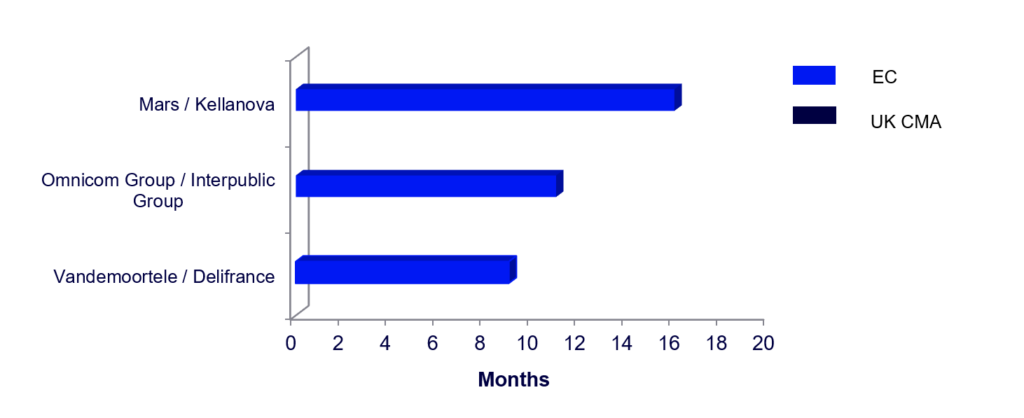
    In the last quarter, the European Commission reviewed several complex transactions requiring significant regulatory scrutiny: (i) Mars’ acquisition of Kellanova, in which the Commission considered in-depth supplier power vis-à-vis supermarkets; and (ii) Omnicom’s acquisition of IPG, which was formally notified to the Commission in October 2024 and cleared in Phase 1, some 10 months after the deal was first announced.

    In each case, the Commission eventually cleared the transaction, but only after requesting, reviewing, and considering thousands, if not hundreds of thousands, of documents submitted by the parties.

    Unconditional clearance for Mars’ acquisition of Kellanova

    One of the quarter’s most notable decisions saw the Commission unconditionally clear Mars’ acquisition of Kellanova in Phase 2 almost 16 months after deal announcement. The review focused on how the deal might affect bargaining dynamics with retailers for snack and cereal products. The Commission ultimately concluded that there was no credible risk of increased power leading to competitive harm, relying on the differentiated nature of the relevant product categories and the lack of evidence supporting increased brand loyalty or a “basket effect” on the part of consumers.

    The investigation into portfolio effects highlights that the Commission will closely scrutinize transactions in markets where broad product portfolios play a large role and where products could be perceived as “must-stock.” Nevertheless, the unconditional clearance demonstrates that the Commission is unlikely to challenge under a portfolio effects theory without persuasive economic evidence and robust data.

    Unconditional clearance for Omnicom’s acquisition of IPG

    The Commission also unconditionally approved Omnicom’s acquisition of Interpublic Group (IPG), a merger that creates one of the world’s largest advertising and marketing services networks. The assessment found that existing competitive constraints – from players such as WPP, Publicis, and others – along with high customer mobility and relatively low switching costs, meant the deal was unlikely to significantly impede effective competition in the European Economic Area.

    The parties did not formally file the transaction with the Commission until 10 months after deal announcement, after having obtained approval from multiple other jurisdictions. This transaction demonstrates that for complicated transactions parties need to spend a significant amount of time in pre-notification discussions with the Commission.

    United Kingdom

    CMA revises approach to remedies in year of streamlining merger control investigations

    On December 19, 2025, the new guidelines for merger remedies, issued by the Competition and Markets Authority (CMA), took effect. The changes to the merger remedy guidelines are the latest installment in the CMA’s implementation of the “4Ps” framework – pace, predictability, proportionality, and process – which seeks to make merger control more transparent and business friendly. Key points include the following:

    Behavioral remedies are more acceptable

    While structural remedies remain the preferred option and the test remains the same (i.e., will the remedy be effective, and if so is the remedy proportionate?), the guidelines suggest a more open approach to behavioral remedies, especially if the CMA’s concern relates to specific activities and there is no other alternative remedy to “fix” an otherwise pro-competitive transaction.

    Similarly, the CMA relaxed its position on accepting behavioral remedies during the first phase of the investigation. Behavioral remedies still must meet the “clear cut” standard, which requires that remedies must provide obvious and straightforward resolutions to competition concerns and be capable of ready implementation. However, the CMA highlights that early engagement on a remedy that aligns with established market practices and has a degree of market transparency, as well as the parties’ appointing a monitoring trustee, are all factors that increase the likelihood of the CMA accepting behavioral remedies early in the investigation.

    Willingness to discuss remedies earlier in the review process

    The CMA’s updated guidelines open the door for early, pre-notification discussions around remedies, with such discussions being “without prejudice” to the substantive analysis. Particularly with more-complex remedy packages that include carve-outs (as opposed to standalone businesses), the CMA seeks early engagement from the parties to provide measures to mitigate concerns such as the inclusion of an upfront buyer, the use of a monitoring trustee or independent expert to assess compliance, as well as potential alternative solutions should the remedy deal fall through.

    The new guidelines bring to a close a year of realignment for the CMA and make the UK a much more deal-friendly environment.

    After introducing new service standards that streamline the merger control process (reducing the average timeline from five to three-and-a-half months) and updating guidelines on jurisdiction and process, the CMA rounded out the year by publishing its latest annual merger investigation outcomes.

    For calendar year 2025, the CMA considered 881 mergers (compared to 1,037 mergers in 2024), investigating 39 at phase 1 (compared to 38 in 2024), with only 4 referred to in-depth phase 2 review (compared to 6 in 2024). Of those phase 2 investigations, two were unconditionally cleared (compared to 2 in 2024), 1 resulted in acceptable remedies (compared to 2 in 2024), one was blocked (same as in 2024), and none was abandoned by the parties (compared to one in 2024). Overall, only 0.1% of all considered mergers were blocked or abandoned in 2025 (same as in in 2024).

    EU and UK Q4 2025 M&A activity: By the numbers

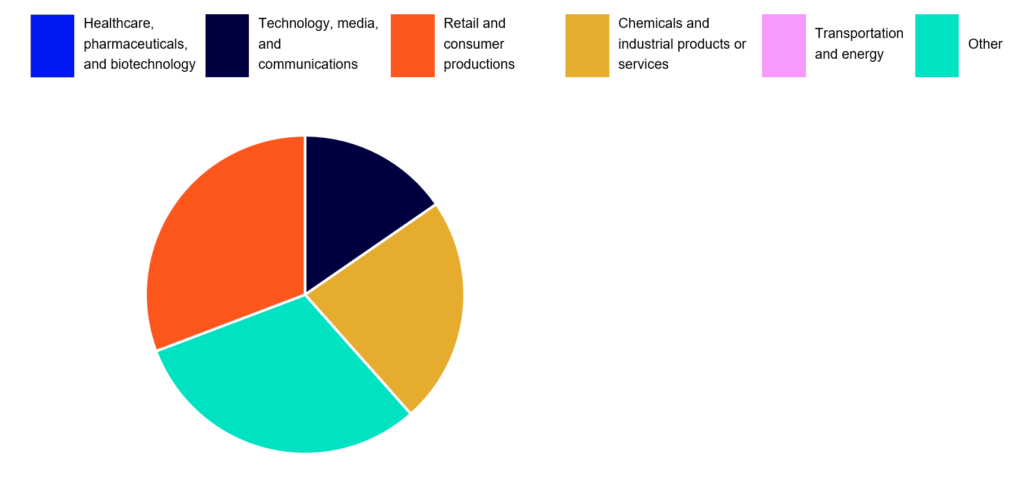
    Number of enforcement actions in key industries1

    Pie graph depicting the makeup of enforcement actions across key industries for EU and UK M&A activity in Q4 of 2025 (credit: McDermott Will & Schulte)

    Snapshot of selected enforcement actions2

    Time from signing to clearance

    Bar graph showing a snapshot of the time it took from signing to clearance for enforcement actions related to EU and UK M&A activity for Q4 2025 (credit: McDermott Will & Schulte)

    Authors

    Claire E. Danberg

    Associate

    Washington, DC

    Jon B. Dubrow

    Partner

    Washington, DC

    Joel R. Grosberg

    Partner

    Washington, DC

    Stéphane Dionnet

    Partner

    Brussels

    Graham J. Hyman

    Associate, Law Clerk

    New York – One Vanderbilt Avenue

    Max Küttner

    Associate

    Düsseldorf

    More Insights

  • 5 lessons learned from US litigation wins/losses in 2025

    5 lessons learned from US litigation wins/losses in 2025

    ARTICLE

    5 lessons learned from US litigation wins/losses in 2025

    February 2026

    Read time: 6 min

    Key takeaways
    Overview

    2025 proved to be a challenging year in court for the Federal Trade Commission (FTC), as it was unsuccessful in challenging the Tempur Sealy/Mattress Firm acquisition, the GTCR/Surmodics acquisition, a decade-old Meta Platforms acquisition, and (on appeal) the Microsoft/Activision Blizzard acquisition. These decisions provide several key takeaways for companies contemplating future M&A.

    In depth

    Overly aggressive, narrow product markets hurt the agencies’ claims

    Courts have rejected relevant markets proposed by the FTC where the narrow segmentation is belied by the record and industry norms. In Tempur Sealy, the FTC alleged a “premium” market for mattresses over $2,000. The district court disagreed, finding competition for mattresses “fierce” and noting that the FTC’s own expert admitted that he picked $2,000 as a threshold merely because it gave Mattress Firm higher shares. In the retroactive challenge to Meta, the FTC’s proposed market included Facebook, Instagram, Snapchat, and MeWe but excluded YouTube and TikTok (which are not owned by Meta). The district court disagreed, finding that YouTube and TikTok were competitive substitutes to Facebook and Instagram. Ultimately, market definition is very fact dependent, and the agencies have won many cases by proving narrow markets where facts supported them, especially when business documents align with the narrow-alleged market. The FTC announced on January 20, 2026, that it will appeal the district court’s decision in Meta, and it remains unclear whether retroactive challenges — brought after market conditions have significantly changed since the original acquisition — will gain traction on appeal.

    Courts are inclined to accept remedies as a fix to merger challenges

    In Tempur Sealy and GTCR, the courts found that the merging parties’ proposed remedies mitigated any antitrust concerns. In GTCR, to address the horizontal overlap, the merging parties proposed a fix during the course of litigation to sell portions of GTCR’s Biocoat to Integer. In Tempur Sealy, to address vertical concerns, the judge found that behavioral remedies (e.g., slot commitments and supply agreements) and a small divestiture of stores undermined the FTC’s concerns. Similarly, in Microsoft, the court found that Microsoft’s licensing agreements and pledge to keep Activision’s key games on all platforms addressed the vertical foreclosure issues. Even when the regulators are unwilling to accept the proposed remedy, these cases demonstrate that courts are giving significant weight to remedies, enabling the parties to “litigate the fix” and prevail at trial.

    Vertical challenges are hard to win

    The courts have rejected vertical foreclosure theories of harm that rely solely on market share or a “big is bad” approach. In both the Microsoft/Activision Blizzard acquisition and the Tempur Sealy acquisition, the FTC failed to provide concrete evidence of likely foreclosure of competitors, post-acquisition. In Microsoft, the court found that Microsoft lacked profit incentives to only make games available on Microsoft’s gaming system, Xbox. In Tempur Sealy, in addition to the behavioral remedies offered, the court found the potential foreclosure harm for competitors was overstated, as Mattress Firm was not a critical sales channel for mattress manufacturers. While Mattress Firm was a large retail outlet, there were many other channels through which mattress suppliers could reach customers.

    The FTC is moving away from in-house challenges

    In its most recent transaction challenge, the FTC signalled a significant change in its enforcement practices, opting only to challenge the Henkel and A-Paint merger in federal court via a permanent injunction, rather than initiating an administrative action in parallel. Historically, the FTC has utilized Section 13(b) of the FTC Act, which allows the agency to seek a preliminary injunction in federal court where an administrative challenge is pending at the FTC. Under Section 13(b), a court can grant a preliminary injunction enjoining the merger until the case is heard in the administrative action if the FTC raises questions on the merits of the deal that are “serious, substantial, difficult and doubtful.” A permanent injunction, on the other hand, requires the FTC to succeed on the merits in proving that the merger may substantially lessen competition or tend to create a monopoly. While this change in practice means parties will only have to litigate one case at a time, the timeline for that challenge is likely to increase because of the additional legal and evidentiary standards that must be evaluated by the court. This change also aligns FTC antitrust enforcement more closely to that of the US Department of Justice (DOJ), which only utilizes a permanent injunction standard when challenging a merger.

    Increased lobbying efforts in M&A prompts more state intervention

    Twelve states and the District of Columbia have intervened in the latest settlement between the DOJ and merging parties, Hewlett Packard Enterprise (HPE) and Juniper Networks (Juniper). The HPE/Juniper settlement raised concerns after internal DOJ disagreements surrounding the deal became public, with former US Deputy Attorney General Roger Alford even calling the consent agreement “pay-to-play.” The intervening states have decried the settlement as the product of undue influence by well-connected lobbyists.

    The publicity surrounding the settlement agreement has also called renewed attention to the Antitrust Procedures and Penalties Act (Tunney Act). Under the act, the DOJ must file proposed settlements in federal court for review, and the court evaluates the settlement agreement to see if it is in the public interest.

    The states’ intervention in the HPE/Juniper settlement shows a pattern of increased state antitrust action amidst perceived politicized federal antitrust enforcement. Companies that are considering M&A activity should be cognizant that their lobbying efforts are likely to be monitored more closely, not just by the courts, but by state actors as well.


    US Q4 2025 M&A activity: By the numbers

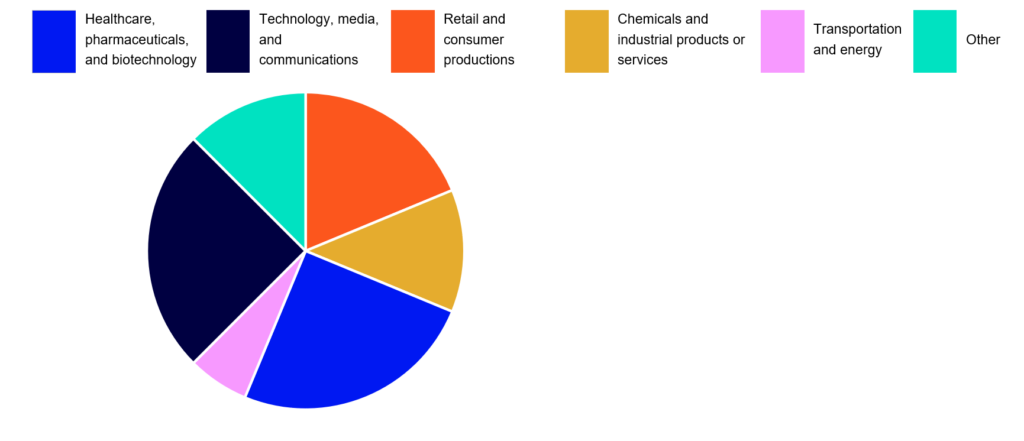
    Number of enforcement actions in key industries1

    Pie graph depicting the makeup of enforcement actions in key industries for US M&A activity in Q4 of 2025 (credit: McDermott)

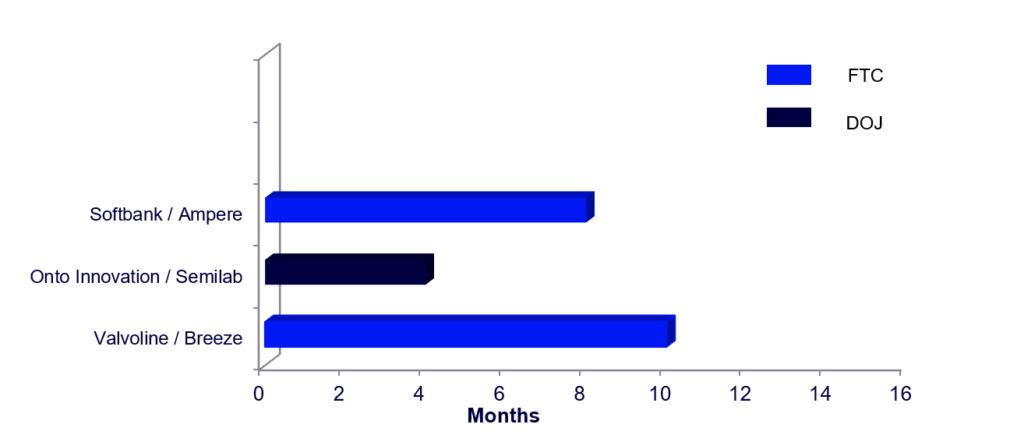
    Snapshot of selected enforcement actions2

    Time from signing to consent or investigation closing

    Bar graph depicting a snapshot of the time it took from signing to consent or investigation closing for selected enforcement actions related to US M&A activity in Q4 of 2025 (credit: McDermott)

    Authors

    Claire E. Danberg

    Associate

    Washington, DC

    Jon B. Dubrow

    Partner

    Washington, DC

    Joel R. Grosberg

    Partner

    Washington, DC

    Stéphane Dionnet

    Partner

    Brussels

    Graham J. Hyman

    Associate, Law Clerk

    New York – One Vanderbilt Avenue

    Max Küttner

    Associate

    Düsseldorf

    More Insights

  • Healthcare Regulatory Check-Up Newsletter | December 2025 Recap

    Healthcare Regulatory Check-Up Newsletter | December 2025 Recap

    REPORT

    Healthcare Regulatory Check-Up Newsletter | December 2025 Recap

    January 2026

    Read time: 6 min

    Key takeaways
    Overview

    This issue of McDermott’s Healthcare Regulatory Check-Up highlights regulatory activity from December 2025. The end of the year brought a significant number of newly proposed Centers for Medicare & Medicaid Services (CMS) rules and Innovation Center models, as well as several new Office of the Inspector General (OIG) reports and an advisory opinion. We discuss enforcement actions focusing on allegations under the Anti-Kickback Statute (AKS), the False Claims Act (FCA), and other fraud and abuse laws, including allegations related to laboratory testing, wound grafts, and marketing schemes. This issue also discusses recent executive orders related to artificial intelligence (AI) and medical marijuana research.

    In depth

    Click each heading below for a sneak peek of related content.

    WOUND GRAFT COMPANY OWNERS SENTENCED FOR $1.2B FRAUD, AGREE TO PAY $309M TO RESOLVE FCA LIABILITY

    In a landmark prosecution, the owners of Arizona-based wound graft companies were sentenced to 15.5 and 14 years in prison, respectively, for orchestrating a $1.2 billion healthcare fraud scheme.

    PAIN MANAGEMENT DOCTOR, PRACTICE TO PAY $13M+ FOR ALLEGED URINE DRUG TESTING FALSE CLAIMS

    A Texas-based pain medicine practice and its physician founder entered into a settlement of more than $13 million to resolve allegations of false claims submissions to federal and state healthcare programs.

    HEALTHCARE SOFTWARE CEO SENTENCED FOR $1B TELEMARKETING FRAUD SCHEME

    In one of the largest telemarketing Medicare fraud cases ever tried to verdict, the CEO of a marketing and software company was convicted of healthcare fraud, conspiracy to commit healthcare fraud and wire fraud, and related kickback and false statement charges.

    ELEVENTH CIRCUIT EVALUATES CONSTITUTIONALITY OF FCA

    On December 12, 2025, the US Court of Appeals for the Eleventh Circuit heard oral arguments for an appeal of a district court decision that the qui tam provision of the FCA violates the Appointments Clause of the US Constitution.

    FIRST CIRCUIT CLARIFIES FCA MEDICAL NECESSITY STANDARDS

    On December 1, 2025, the US Court of Appeals for the First Circuit declined to revive a lawsuit alleging that a laboratory knowingly submitted false Medicare claims by billing for expensive polymerase chain reaction (PCR) tests for urinary tract infections when cheaper and allegedly equally effective bacterial urine culture (BUC) tests were available.

    SIXTH CIRCUIT LIMITS FRAUD RESTITUTION PAYMENTS UNDER MVRA

    The US Court of Appeals for the Sixth Circuit upheld the convictions of a pharmaceutical sales company cofounder but significantly altered the district court’s calculation of restitution.

    CMS ESTABLISHES ORHT, AWARDS INITIAL GRANTS IN $50B PROGRAM

    Following the creation of the Rural Health Transformation (RHT) Program, which was tasked with dispensing $50 billion to states in support of rural health over the next five years, CMS established the Office of Rural Health Transformation (ORHT) within its organizational structure.

    CMS PROPOSES HOSPITAL BAN ON GENDER-AFFIRMING CARE FOR MINORS

    CMS proposed a new condition of participation that would prohibit hospitals from providing certain pharmaceutical or surgical interventions (referred to in the proposed rule as “sex-rejecting procedures”) to transgender and transitioning patients under the age of 18.

    CMS INTRODUCES NEW INNOVATION CENTER MODELS

    CMS recently announced several new and proposed Innovation Center models: the ACCESS Model, the MAHA ELEVATE Model, the proposed GLOBE and GUARD Models, and the voluntary BALANCE Model.

    DHS LIST, PHYSICIAN NONMONETARY COMPENSATION LIMITS UPDATED FOR 2026

    CMS issued its new Physician Fee Schedule in November 2025, effective for services starting in January 2026. In the final rule, CMS issued its updated list of designated health services (DHS).

    CMS INDEFINITELY SUSPENDS SNF ATTACHMENT DEADLINE

    Under a 2023 CMS final rule, skilled nursing facilities (SNFs) are required to provide CMS with extensive managerial, ownership, and control information from additional disclosable parties that provide certain services to or exercise certain controls over SNFs. SNFs must provide this information as part of their Medicare enrollments using the CMS-855A SNF attachment, which was initially released in October 2024. On December 9, 2025, CMS indefinitely suspended the deadline for submitting the SNF attachment.

    OIG ISSUES FAVORABLE ADVISORY OPINION ON DISCOUNTS

    In Advisory Opinion No. 25-11, a biopharmaceutical manufacturer proposed a system to offer discounts and rebates on its vaccines to various customers, including pharmacies and healthcare organizations.

    OIG SOLICITS PROPOSALS FOR NEW AKS SAFE HARBORS

    OIG published its annual notification soliciting proposals and recommendations for developing or modifying AKS safe harbors. OIG also seeks suggestions for new special fraud alerts, which have historically served as an important source of subregulatory guidance on key fraud and abuse issues.

    OIG AUDIT: MEDICAID AGENCIES MADE MILLIONS IN UNALLOWABLE CAPITATION PAYMENTS

    An OIG audit covering July 2021 to June 2022 found $207.5 million in unallowable capitation payments to managed care organizations for deceased enrollees.

    OIG AUDIT: ASSISTED LIVING FACILITIES DID NOT COMPLY WITH PROVIDER RELIEF FUND TERMS

    An OIG audit of Provider Relief Fund payments to 30 assisted living facilities found that seven facilities claimed $283,000 in unallowable expenses and two inaccurately reported $11 million in lost revenues.

    OIG AUDIT: NEW JERSEY SHOULD IMPROVE OVERSIGHT OF NURSING HOME BACKGROUND CHECK COMPLIANCE

    An OIG audit assessing compliance with federal requirements during the 2022 calendar year revealed that 11 out of 12 selected New Jersey nursing homes failed to comply with federal background check requirements, affecting 33 out of 120 employees.

    LOWER HEALTHCARE COSTS ACT INTRODUCED IN SENATE

    On December 8, 2025, Sen. Chuck Shumer (D-NY) introduced S. 3385, which would extend the American Rescue Plan Act of 2021 and the Inflation Reduction Act of 2022 for three years.

    HOUSE PASSES LOWER HEALTHCARE PREMIUMS FOR ALL AMERICANS ACT

    On December 17, 2025, the US House of Representatives passed H.R. 6703, sending it to the Senate the following day.

    FLORIDA OVERPAYMENT STATUTE GOES INTO EFFECT

    Effective January 1, 2026, Florida healthcare practitioners and AHCA-licensed facilities are required to refund overpayments made by patients within 30 days after the determination that there has been an overpayment.

    ADMINISTRATION RELEASES EXECUTIVE ORDER AND RFI ON AI

    On December 11, 2025, President Trump issued an executive order that directs federal agencies to challenge state laws that conflict with national AI policy, asserting federal preemption over state-level regulation.

    EXECUTIVE ORDER CALLS FOR EXPANDING RESEARCH INTO MEDICAL MARIJUANA

    On December 18, 2025, President Trump signed an executive order that directs federal agencies to support expanded research into medical uses of marijuana and hemp-derived cannabinoids.

    Authors

    Tony Maida

    Partner

    New York – One Vanderbilt Avenue

    Monica Wallace

    Partner

    Chicago

    Sarah Kitchell

    Partner

    Boston

    Nicholas F. Alarif

    Partner

    Washington, DC

    Evelyn S. Atwater

    Associate

    Chicago

    Nicole S. Pomerantz

    Associate

    Washington, DC

    Sydney Merritt Martinez

    Associate

    Washington, DC

    More Insights

  • Credit Conditions: The latest private credit and debt market trends | Q1 2026

    Credit Conditions: The latest private credit and debt market trends | Q1 2026

    REPORT

    Credit Conditions: The latest private credit and debt market trends | Q1 2026

    January 12, 2026

    Read time: 2 min

    Key takeaways
    Overview

    Welcome to this edition of Credit Conditions, a quarterly publication that analyzes recent debt market trends.

    End-of-year dealmaking accelerated across M&A, private equity, and credit markets, even as Federal Reserve uncertainty, tariffs, and shifting regulations pulled markets in competing directions. With renewed initial public offering exits, record loan repricings, and fierce competition between the broadly syndicated loan and private credit markets, Q1 sets the stage for a volatile but opportunity-rich 2026.

    For more, access our Credit Conditions resource page.

    In depth
    Authors

    Stephanie S. McCann

    Partner

    Chicago

    Michael L. Boykins

    Partner

    Chicago

    Gary B. Rosenbaum

    Partner

    Los Angeles

    Aymen Mahmoud

    Partner

    London – 22 Bishopsgate

    More Insights

  • Healthcare Regulatory Check-Up Newsletter | November 2025 Recap

    Healthcare Regulatory Check-Up Newsletter | November 2025 Recap

    REPORT

    Healthcare Regulatory Check-Up Newsletter | November 2025 Recap

    December 2025

    Read time: 5 min

    Key takeaways
    Overview

    This issue of McDermott Will & Schulte’s Healthcare Regulatory Check-Up highlights regulatory activity for November 2025. Regulators are signaling clear priorities: stronger enforcement, modernization of compliance standards, and expanded access to care. Recent enforcement actions underscore risks tied to billing accuracy, kickbacks, and Emergency Medical Treatment and Labor Act (EMTALA) compliance. The Centers for Medicare & Medicaid Services (CMS) advanced sweeping updates, including telehealth extensions and hospital and ambulatory surgical center (ASC) payment reforms, and pursued cost-control initiatives such as drug price negotiations and new Medicaid rebate models. Providers should focus on compliance readiness, digital infrastructure, and strategic planning to navigate these changes effectively.

    In depth

    Click each heading below for a sneak peek of related content.

    Drugmaker wins defense verdict in kickback and Medicaid fraud trial

    After more than a decade of litigation, on November 7, 2025, a pharmaceutical manufacturer prevailed in a closely watched case involving allegations of kickbacks and Medicaid fraud tied to a hemophilia treatment.

    Medical device company to pay $38.5M to settle FCA allegations over faulty knee implant, kickbacks

    On November 17, 2025, a medical device subsidiary of a global medical and pharmaceutical company agreed to pay $38.5 million to resolve allegations that it violated the FCA by marketing a knee implant that it allegedly knew would fail at a higher than acceptable rate and, as such, was not reasonable and necessary for use during knee replacement surgeries.

    Senior living operator commits to $7M in staffing, facility upgrades to resolve investigation

    On November 19, 2025, a senior living operator agreed to invest $7 million in staffing and upgrades to resolve an investigation by the Washington State Office of the Attorney General into the operator’s practices at multiple facilities.

    Behavioral health provider sues plan over early contract termination, telehealth transition

    A behavioral health provider filed suit against a major health plan, alleging violations of state healthcare laws after the plan terminated its provider agreement early and transitioned patients to a telehealth-based model.

    Congress extends key Medicare telehealth flexibilities into 2026, makes behavioral health provisions permanent

    Recent federal legislation extended many Medicare telehealth flexibilities originally adopted during the COVID-19 public health emergency (PHE).

    Modernization of CLIA standards and impact on laboratories

    The Centers for Medicare & Medicaid Services (CMS) finalized significant updates to CLIA in late 2024 (the first major overhaul in more than 30 years) with implementation continuing through 2025 and 2026.

    CMS finalizes 2026 OPPS and ASC rule

    CMS finalized the calendar year 2026 Outpatient Prospective Payment System (OPPS) and ASC Payment System rule, which includes several important changes that will take effect January 1, 2026.

    DC Circuit tests agency authority over 340B pricing structure changes

    The US Court of Appeals for the District of Columbia Circuit is considering whether drug manufacturers can unilaterally shift from upfront discounts to a rebate-based system under the federal 340B drug pricing program, or whether they need approval from HHS.

    Medicaid GENEROUS model aims to lower drug costs, expand access

    CMS announced a new initiative called the GENErating cost Reductions for US Medicaid (GENEROUS) model. This voluntary program aims to address high prescription drug costs in the United States.

    CMS finalizes second round of Medicare drug price negotiations

    CMS announced the results of its second round of drug price negotiations under the Inflation Reduction Act, furthering efforts to reduce prescription drug costs for Medicare beneficiaries.

    OIG finds Medicare overpaid $377M for continuous glucose monitors

    A recent Office of Inspector General (OIG) report determined that Medicare Part B payments for continuous glucose monitors (CGMs) and related supplies significantly exceeded both supplier costs and retail market prices from July 2022 to June 2023.

    OIG audit of skilled nursing facility uncovers $31.2M in improper payments

    OIG audited Medicare Part A skilled nursing claims at a large for-profit New York City skilled nursing facility that participates in both Medicare and Medicaid. In reviewing 2020 – 2021 claims, OIG found that 99 of 100 sampled claims were noncompliant, resulting in $1.1 million in overpayments in the sample and an extrapolated $31.2 million in improper payments.

    Pennsylvania’s Medicaid drug rebate practices: Key takeaways from OIG’s 2025 audit

    OIG released its audit of Pennsylvania’s Medicaid drug rebate program, focusing on physician-administered drugs dispensed to enrollees of Medicaid managed care organizations.

    Interstate Medical Licensure Compact expands in 2025

    The Interstate Medical Licensure Compact continues to grow as a key tool for physician mobility and telehealth access. As of late 2025, the compact includes 42 states, the District of Columbia, and Guam, with recent implementations in Arkansas, North Carolina, and Rhode Island, and legislation introduced in Massachusetts.

    Nurse Licensure Compact update

    The Nurse Licensure Compact continues to grow, now covering 41 states and two US territories, with recent implementations in Connecticut and Pennsylvania.

    Authors

    Tony Maida

    Partner

    New York – One Vanderbilt Avenue

    Monica Wallace

    Partner

    Chicago

    Sarah Kitchell

    Partner

    Boston

    Callee Donovan

    Associate

    Boston

    Abygail Hoey

    Associate

    New York – One Vanderbilt Avenue

    More Insights

  • Healthcare Regulatory Check-Up Newsletter | October 2025 Recap

    Healthcare Regulatory Check-Up Newsletter | October 2025 Recap

    REPORT

    Healthcare Regulatory Check-Up Newsletter | October 2025 Recap

    November 2025

    Read time: 4 min

    Key takeaways
    Overview

    This issue of McDermott’s Healthcare Regulatory Check-Up highlights regulatory activity for October 2025, which was relatively quiet due to the federal government shutdown. This month’s summary discusses revisions to the US Department of Health and Human Services (HHS) grants policy statement, the US Department of Education (DOE) public service loan forgiveness (PSLF) final rule, enforcement efforts and guidance from the US Food and Drug Administration (FDA) regarding biosimilars and weight loss drugs. We also review an Office of Inspector General (OIG) report regarding improper durable medical equipment, prosthetics, orthotics, and supplies (DMEPOS) payments, and the latest developments in judicial invalidation of Biden-era nondiscrimination rules under Section 1557 of the Affordable Care Act (ACA). This issue examines the calendar year (CY) 2026 Physician Fee Schedule (PFS) from the Centers for Medicare & Medicaid Services (CMS), and CMS’s decision to lift claim holds that were in place during the shutdown because of expired Medicare payment provisions. We also discuss updates to the Advanced Medical Technology Association (AdvaMed) Code of Ethics, a recent California law regulating pharmacy benefit managers, and a HIPAA security risk assessment tool published by HHS.

    In depth

    Click each heading below for a sneak peek of related content.

    HHS implements updated grants policies statement

    Effective October 1, 2025, HHS implemented its grants policy statement v2.0, consistent with its prior adoption of 2 CFR part 200 with HHS-specific provisions at 2 CFR part 300.

    DOE will exclude employers engaged in “substantially illegal” activities from public service loan forgiveness

    On October 30, 2025, the DOE released a final rule addressing employer eligibility for the PSLF program by excluding employers that engage in activities that have a “substantial illegal purpose.”

    FDA proposes methods to accelerate approval of biosimilar drugs

    On October 29, 2025, FDA released draft guidance with proposals intended to make development of biosimilar medicines faster and less costly.

    FDA issues warning letters on compounded weight loss drug advertising

    Following US President Donald Trump’s September 9, 2025, memorandum on prescription drug advertisements that called on the FDA commissioner and the HHS secretary to take actions to enforce prescription drug advertising laws and regulations, FDA recently issued warning letters to more than 40 compounding pharmacies, demanding that they cease certain advertising practices for a variety of compounded drug products, including GLP-1 medications.

    Medicare improperly paid suppliers $22.7M for inpatient DMEPOS

    On October 24, 2025, OIG released the results of an audit analyzing Medicare payments to suppliers for DMEPOS items provided to Medicare enrollees during inpatient stays from 2018 through 2024.

    Judge voids HHS rule banning gender identity discrimination

    A federal judge voided parts of the Biden administration’s Section 1557 final rule that prohibited gender identity discrimination under the ACA.

    CMS releases CY 2026 Physician Fee Schedule final rule

    On October 31, 2025, CMS released the CY 2026 Medicare PFS final rule, which will take effect on January 1, 2026. The final rule largely tracks the policies of the July 14, 2025, proposed rule.

    AdvaMed modernizes its Code of Ethics for the digital era

    On October 6, 2025, AdvaMed announced its updated Code of Ethics on Interactions with US Health Care Professionals.

    California enacts SB 41 to regulate operations of pharmacy benefit managers

    On October 11, 2025, California enacted Senate Bill (SB) 41, effective January 1, 2026, to extensively regulate pharmacy benefit managers (PBMs).

    HHS releases updated HIPAA security risk assessment tool

    The Office of the National Coordinator for Health Information Technology and the HHS Office for Civil Rights released an updated security risk assessment tool to assist small and medium-sized practices in complying with the Health Insurance Portability and Accountability Act security rule.

    Authors

    Tony Maida

    Partner

    New York – One Vanderbilt Avenue

    Monica Wallace

    Partner

    Chicago

    Sarah Kitchell

    Partner

    Boston

    Kyle E. Hafkey

    Associate

    Boston

    Cathy Ren

    Associate

    Los Angeles

    More Insights