












ARTICLE
HPE Europe 2026: Tracking deal trends, policy shifts, and leadership insights
Oct 21, 2026
Read time: 6 min
On 24 September 2026, hundreds of investors, operators, and advisors gathered for McDermott Will & Schulte’s annual Healthcare Private Equity (HPE) Europe conference at The Peninsula London.
Keynote speaker and former Chancellor of the Exchequer, the Rt Hon George Osborne kicked off a lively discussion about the future of artificial intelligence (AI) and how economic and policy shifts are shaping today’s investment landscape. Multiple panels throughout the day further explored European healthcare investment trends, capturing industry leader insights on the hottest focus areas in health and life sciences, geopolitics and policies affecting dealmaking, and the increasing role of the strategic buyer.
As HPE Europe’s knowledge partner, McKinsey & Company brought the numbers behind the market to life, sharing fresh data on private capital in 2026 and the macro trends influencing where, when, and how deals are getting done.
Below are key takeaways from the event.

Trends influencing investor appetite in European healthcare
Dealmaking resilience and activity. In Europe, private equity fundraising has proved more resilient than in other regions, and healthcare deal activity has been relatively stable despite global volumes declining since 2021. The most active healthcare and life sciences sub-sectors have been pharmaceuticals, medtech, and healthcare services.
More challenging processes. In the last few years, standard deal processes have come under pressure, with less visibility over who else is at the table, broken auctions, and exclusivity either not forthcoming or proving meaningless. To work around that, buyers should prioritise building strong relationships with sellers and management teams. Conviction is key.
Increasing role for strategic buyers. In a tough exit environment, strategic buyers accounted for 51% of exits in the first three quarters of 2026. Healthcare services and pharma services have attracted particular strategic interest as corporate acquirers seek to enter new segments via mergers and acquisitions. Strategics can bring a lower cost of capital and benefit from synergies, but for sellers it is important to keep a range of exit routes open.
The geopolitics and policy shifts shaping dealmaking into 2027
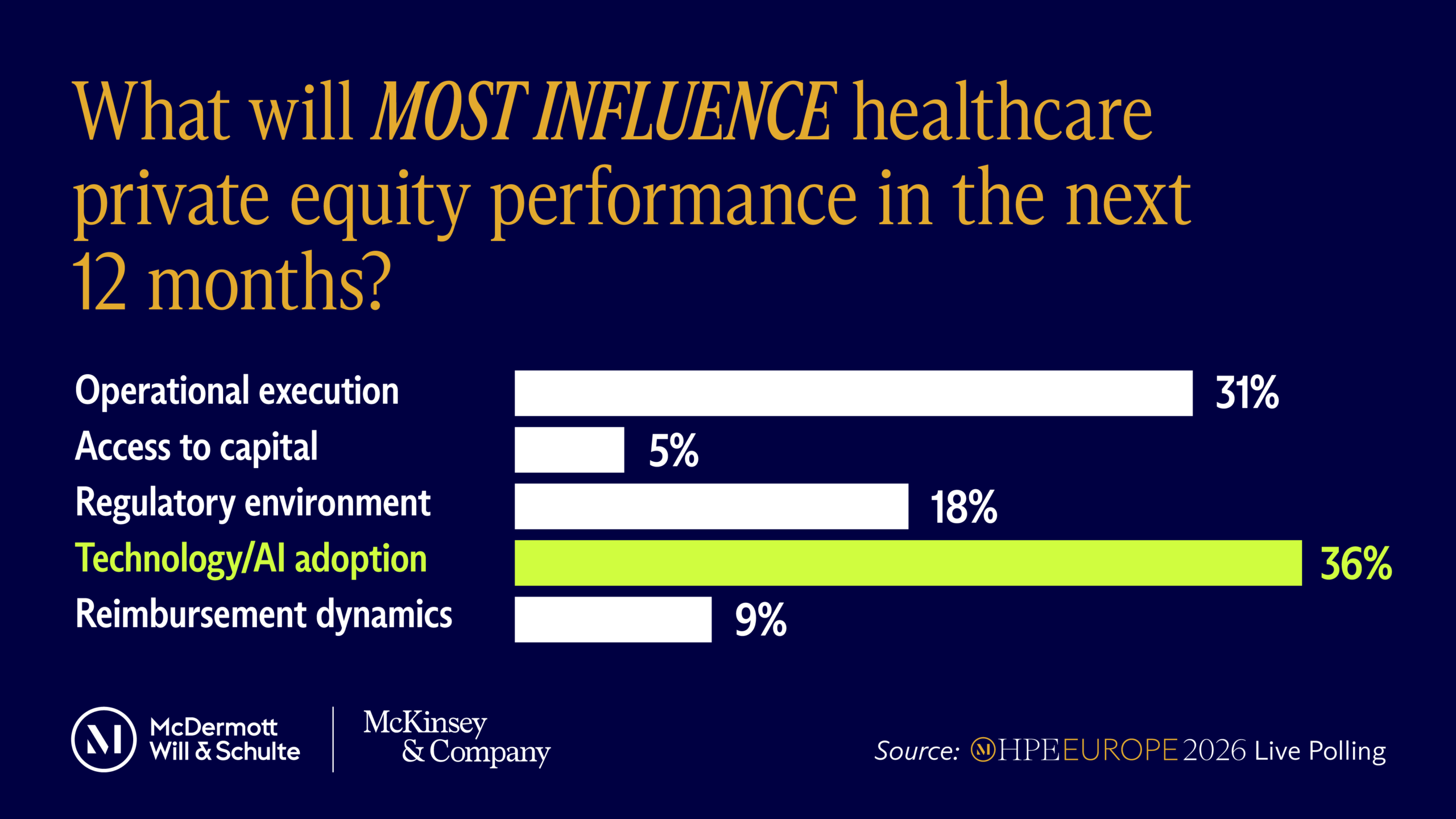
Adapting due diligence. Given the pace of geopolitical and policy change in recent years, due diligence processes have shifted. Where policy used to be one separate workstream within due diligence, policy and “stroke of pen” risk is now across all workstreams, and a key part of commercial and operational levers of a deal. Policy and regulatory risk is a tier-one consideration on transactions.
More clarity in most-favoured nation (MFN) pricing environment. MFN, the US policy to benchmark domestic drug prices against select reference countries, is now crystallising. Some 17 companies have signed confidential deals granting tariff exemptions in exchange for MFN pricing in Medicaid, new launches, and direct-to-patient offerings. The deals are time limited, and it remains to be seen what the US administration may do regulatorily on drug pricing, and how global pharma companies may rethink pricing architecture, launch sequencing, and portfolio prioritisation.
Global trends in life sciences private equity
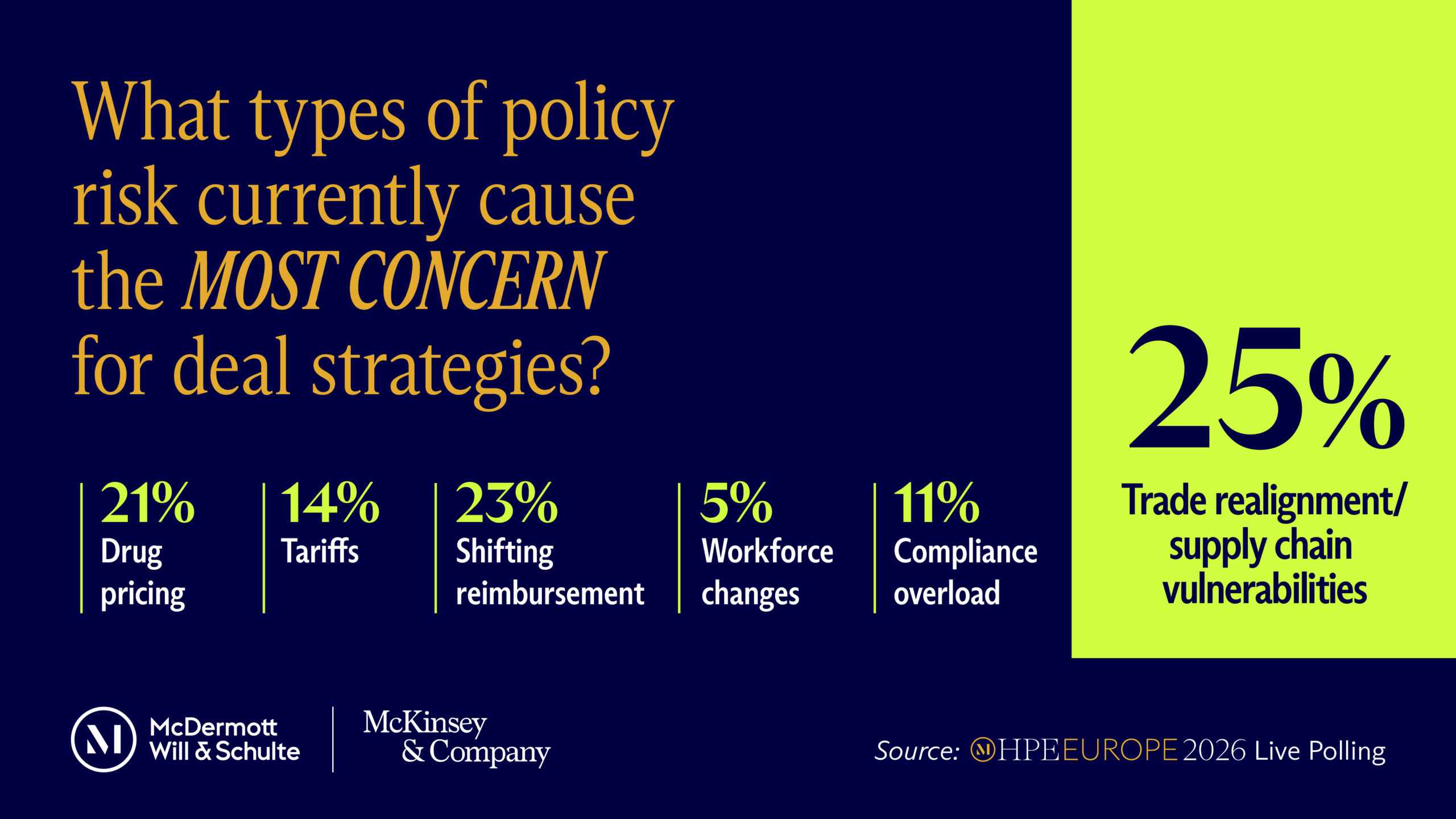
AI shifts in the landscape. The majority of life sciences companies are now developing AI tools to aid drug discovery and development, with significant progress being made. Many are using new technologies to lower manufacturing costs and make processes faster and more efficient, but the focus has now shifted to shortening the time spent on clinical trials, and driving efficiencies across drug development. Personalised medicine is also becoming more prominent.
Deal dynamics and drivers. A bifurcation of bid-ask spreads continues to impact sponsor-to-sponsor deal activity in the past year although good assets continue to trade. Another theme has been the highly structured nature of some deals. Given this, Private equity has also focused on take privates and carve-outs. The medtech sector continues to be active, and Pharma services is one subsector that is showing signs of recovery.
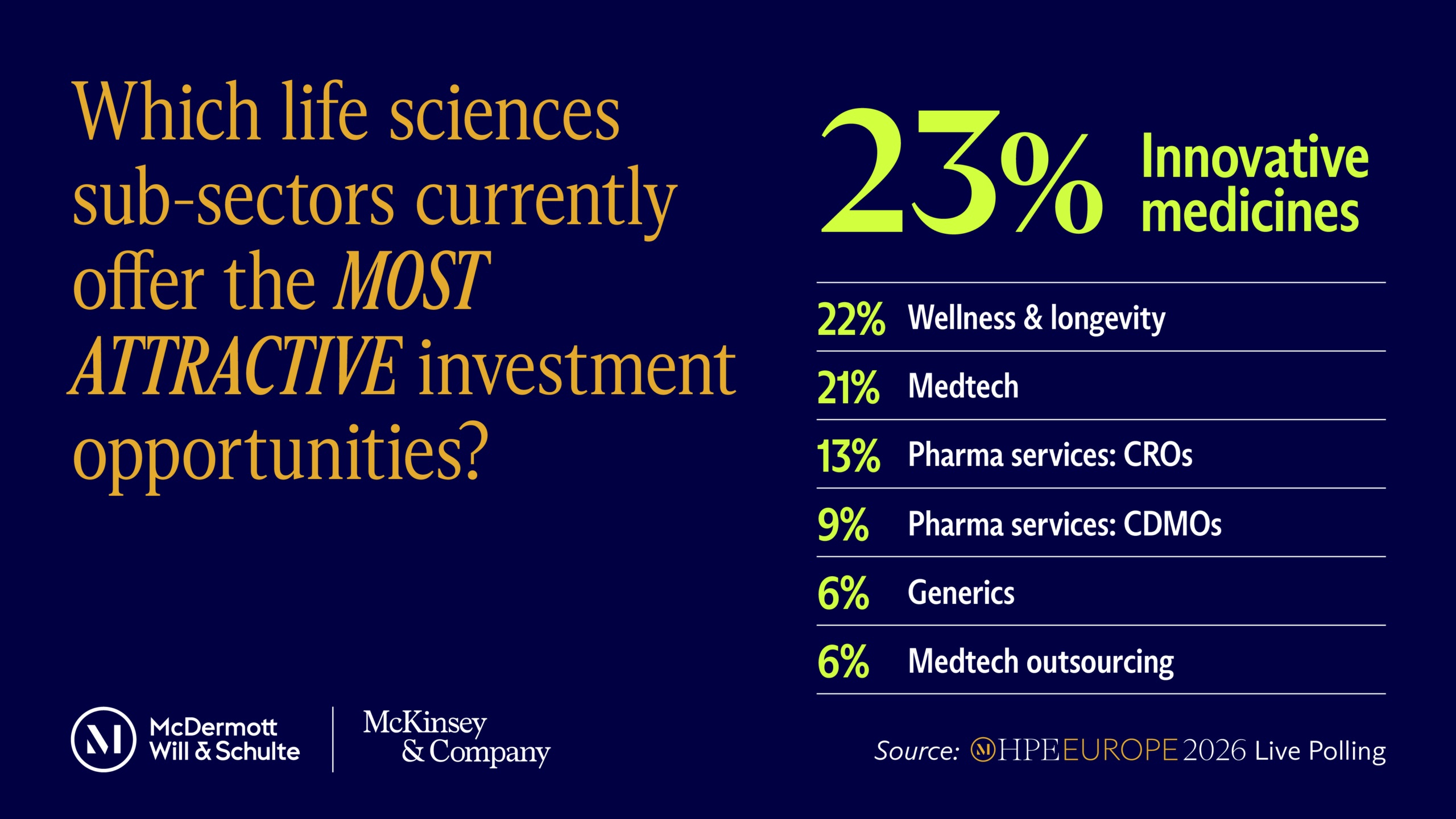
Subsectors offering opportunity. In light of the growing focus on drug pricing, constrained healthcare budgets, and looming patent expirations, generics will remain a focus for European life sciences with some of the biggest opportunities likely to be found in oncology, immunology, and GLP-1s.
“European healthcare private equity had a strong year in 2025, but so far 2026 has been more mixed. Against that backdrop, execution is more important than ever. The advantage lies in sector knowledge, regulatory insight, and operational expertise put to work across the investment cycle. Headwinds are there, but deals are getting done and we are excited to see what’s next.”
Ira Coleman, Chairman, McDermott Will & Schulte
Conclusion
The mood at HPE Europe was upbeat and the discussions were wide-ranging, reflecting the resilience of the healthcare and life sciences sectors and the breadth of opportunity available to investors.
We look forward to continuing these conversations in the months ahead with our clients and partners. Please do not hesitate to get in touch if there is anything you would like to explore further.