Content Type: Article

  • PATH Act: Recently Enacted Legislation Modifies the FIRPTA and REIT Rules

    PATH Act: Recently Enacted Legislation Modifies the FIRPTA and REIT Rules

    ARTICLE / CLIENT ALERT

    PATH Act: Recently Enacted Legislation Modifies the FIRPTA and REIT Rules

    January 28, 2016

    Read time: 11 min

    Key takeaways
    Overview

    On Dec. 18, 2015 (the “Enactment Date”), President Barack Obama signed into law the Protecting Americans from Tax Hikes Act of 2015 (the “Act”), which makes several important changes to the taxation of foreign investment in real estate and real estate investment trusts (“REITs”). These changes are important for funds that invest in public REITs and real estate. Most significantly, the Act: (1) exempts certain foreign pension funds from the Foreign Investment in Real Property Tax Act of 1980 (“FIRPTA”); (2) broadens the exception from FIRPTA for publicly traded REITs; and (3) restricts the use of “Opco/Propco” structures through tax-free REIT spinoffs. The Act makes several additional changes to the FIRPTA and REIT regimes that are described in this Alert.[1]

    Exemption from FIRPTA for Qualified Foreign Pension Funds

    Under FIRPTA, foreign investors are generally subject to U.S. tax and withholding on dispositions of U.S. real property interests (“USRPI”), which include actual ownership of U.S. real property as well as shares of U.S. real property holding corporations (“USRPHC”).

    The Act exempts “qualified foreign pension funds” (and entities wholly owned by such pension funds, e.g., Cayman subsidiaries) from tax and withholding, which would otherwise have been required by FIRPTA on the sale of USRPIs (including sales through partnerships).

    It is not generally expected that foreign pension funds will begin to invest directly (i.e., without the use of a corporate blocker) in U.S. real estate to any substantial degree. Although foreign pension funds are now exempt from FIRPTA, they remain subject to U.S. tax and withholding with respect to income effectively connected with a U.S. trade or business (“ECI”). Because the active operation of real estate produces ECI, most such real estate investments generally would still be subject to U.S. tax and expose foreign pension funds to filing obligations despite the new FIRPTA exemption. In addition, even where there is no U.S. trade or business activity, some foreign pension funds would remain subject to 30-percent gross withholding tax on any rental income.

    Foreign pension funds primarily will benefit from this new exemption by investing through REITs. Prior to the Act, foreign pension funds typically invested in U.S. real estate through domestically controlled REITs. Pursuant to the Act, a qualified foreign pension fund may invest in non-domestically controlled REITs and will be exempt from U.S. tax and withholding both on dispositions of the REIT shares and on capital gain distributions from such REITs (thus allowing an asset sale exit).

    This exemption for qualified foreign pension funds applies to dispositions and distributions after the Enactment Date.

    FIRPTA Exception Expanded for Publicly Traded REITs

    A foreign person’s disposition of stock of any corporation that is a USRPI (such as most equity REITs) is generally taxable. A distribution by a REIT or other qualified investment entity to a foreign person is also generally subject to tax to the extent the distribution is attributable to gain from sales or exchanges of USRPIs by the REIT. Prior to the Act, an exception existed for a foreign person that held no more than 5 percent of a publicly traded class of stock of a USRPI at all times during the five-year period ending on the date of disposition. An exception also existed for distributions by a REIT if the foreign person did not own more than 5 percent of the REIT stock at all times during the one-year period ending on the date of distribution (in which case the distribution was subject to the regular 30-percent withholding tax on dividends). The Act increases the ownership threshold for these FIRPTA exceptions from 5 percent to 10 percent for dispositions of stock of, or distributions from, publicly traded REITs.

    Investment funds investing in publicly traded equity REITs may now invest in up to 10 percent of such REITs without a FIRPTA risk for their foreign funds. Investment funds need to be mindful of cross ownership among the funds (including any sponsor investment and carry), which can cause the 10-percent limit to be exceeded under the applicable constructive ownership rules.

    This change is generally effective for dispositions and distributions on or after the Enactment Date.

    The Act does not provide a similar increase for publicly traded shares of non-REIT USRPIs.

    Restrictions on Tax-Free REIT Spinoffs

    Although a corporation is generally required to recognize gain on the distribution of appreciated property to shareholders, a corporation may distribute stock of a controlled corporation to its shareholders in a nontaxable transaction, as long as it meets the requirements in Section 355 of the Internal Revenue Code to qualify as a tax-free spinoff. A number of corporations have separated their real estate assets from operational activities by utilizing “Opco/Propco” structures in combination with tax-free spinoffs. In a typical transaction, the spun-off subsidiary (“Propco”) holds the real estate assets and elects to be treated as a REIT, while the distributing company (“Opco”) continues to operate the business and leases the property back from Propco. Prior to the Act, REIT spinoffs had come under increased scrutiny, largely due to the erosion of the corporate tax base. The Internal Revenue Service (the “IRS”) announced that it was studying the tax-free treatment of such spinoffs and that it would no longer issue private letter rulings in this area (see IRS Notice 2015-59 and Rev. Proc. 2015-43).

    The Act restricts the use of Opco/Propco spinoffs in two ways. First, a spinoff will not qualify for tax-free treatment if either (but not both) the distributing or controlled corporation is a REIT. Second, in the case of a qualified tax-free spinoff, neither the distributing nor the controlled corporation (nor any successor corporation) may elect REIT status for 10 years following the spinoff. However, there are two exceptions under the Act under which a REIT spinoff may receive tax-free treatment. A REIT spinoff may qualify for tax-free treatment if both the distributing and controlled corporations are REITs immediately after the transaction. Another exception provides for tax-free treatment of the spinoff by an existing REIT of its taxable REIT subsidiary (“TRS”) in certain limited circumstances.

    These provisions of the Act are effective for distributions on or after Dec. 7, 2015. However, the provisions will not apply to any distribution for which a private letter ruling had been submitted to the IRS and was still pending on Dec. 7, 2015.

    Other FIRPTA Provisions

    FIRPTA Exception for Qualified Foreign Shareholders of REITsThe Act excepts from the definition of a USRPI stock of a REIT (public or private) that is held by a “qualified shareholder” (defined below). Under this exception, dispositions of REIT stock by qualified shareholders are not subject to FIRPTA tax or withholding, and REIT distributions to a qualified shareholder are not subject to FIRPTA tax or withholding (but will be subject to the regular 30-percent withholding tax on dividends), except to the extent that an investor in the qualified shareholder holds, directly or constructively, more than 10 percent of the REIT stock. If an investor holds, directly or constructively, more than 10 percent, the qualified shareholder exception will not apply with respect to the portion of the qualified shareholder’s REIT stock attributable to such investor.

    A “qualified shareholder” is a foreign entity that: (1) either (a) is eligible for benefits of a U.S. tax treaty and is publicly traded, or (b) is a foreign limited partnership organized in a jurisdiction that has an agreement for the exchange of information with the United States and has a class of interests (representing more than 50 percent of all partnership interests) that is publicly traded on the NYSE or Nasdaq; (2) is a qualified collective investment vehicle (requiring it to meet certain additional requirements); and (3) maintains records of each person that holds 5 percent of the publicly traded interests of such entity.

    This FIRPTA exception applies to REIT dispositions and distributions after the Enactment Date.

    Increase in FIRPTA Withholding Rate

    When a USRPI is disposed of by a foreign person, FIRPTA generally requires a transferee to withhold 10 percent of the gross purchase price. This 10-percent withholding is also required on certain distributions by USRPHCs. The Act increases the FIRPTA withholding rate from 10 percent to 15 percent. This change is effective for dispositions occurring 60 days after the Enactment Date.

    Determination of Domestically Controlled REIT Status

    The disposition of shares of a domestically controlled REIT is exempt from FIRPTA. A REIT is domestically controlled if foreign persons directly or indirectly own less than 50 percent of the value of the REIT’s stock. The Act provides three new rules for determining whether a REIT is domestically controlled. First, in the case of a publicly traded class of stock of a REIT, a person holding less than 5 percent of such class at all relevant times is treated as a U.S. person, unless the REIT has actual knowledge that such person is not a U.S. person. Second, any stock of a REIT (either public or private) held by a publicly traded REIT (or by certain regulated investment companies (“RICs”)) shall be treated as held by a foreign person, unless that REIT (or RIC) is domestically controlled, in which case the stock would be treated as held by a U.S. person. Finally, stock of a REIT (either public or private) that is held by a private REIT (or certain private RICs) will be treated as held by a U.S. person to the extent the stock of such private REIT (or RIC) is held by U.S. persons. The above provisions take effect on the Enactment Date.  

    Other REIT Provisions

    Reduction in Percentage Limitation on TRS Holdings

    Under prior law, up to 25 percent of the gross assets of a REIT could be represented by one or more TRSs. The Act reduces from 25 percent to 20 percent the permitted percentage of total REIT assets that may be securities of one or more TRSs. The amendment is effective for taxable years beginning after Dec. 31, 2017. Any REIT-owning TRS representing a non-de minimis portion of its assets should undertake a valuation study to ascertain compliance with this new 20-percent limit prior to 2018.

    Debt Instruments of Publicly Offered REITs and Mortgages on Real Property Interests Treated as Real Estate Assets

    A REIT is subject to a quarterly asset test, under which at least 75 percent of the REIT’s assets must be real estate assets, cash and government securities (the “75% Asset Test”). A REIT is also subject to two income tests: (1) at least 75 percent of the REIT’s gross income must be from rents from real property, gain from the disposition of real property, interest on mortgages secured by real property, and certain other items (the “75% Income Test”); and (2) at least 95 percent of the REIT’s gross income must be derived from sources included in the 75% Income Test, as well as interest, dividends and gain from the sale or disposition of securities (the “95% Income Test”).

    The Act provides that debt instruments issued by publicly offered REITs are treated as real estate assets for the purposes of the 75% Asset Test. The interest income or gain from the sale or disposition of debt instruments issued by publicly offered REITs is not treated as qualified income under the 75% Income Test (unless it qualifies as such regardless of the Act) but will continue to be treated as qualified income under the 95% Income Test. However, not more than 25 percent of the value of the REIT’s total assets can be represented by such debt instruments.

    A mortgage on real property is treated as a real estate asset. Under the Act, mortgages on interests in real property (e.g., a mortgage on a leasehold interest in real property) are also treated as real estate assets.

    The provision is effective for tax years beginning after Dec. 31, 2015.

    Ancillary Personal Property

    Rent attributable to personal property that is leased together with real property is treated as qualified income for the purposes of the 75% Income Test if such rent does not exceed 15 percent of the total rent for the taxable year attributable to both the real and personal property under the lease. The Act clarifies that such ancillary personal property is treated as a real estate asset for purposes of the 75% Asset Test. This provision is effective for taxable years beginning after Dec. 31, 2015.

    Authored by Noah D. Beck, Philippe Benedict, Dan A. Kusnetz, Shlomo C. Twerski and Elie Zolty.

    If you have any questions concerning this Alert, please contact your attorney at Schulte Roth & Zabel or one of the authors.


    [1] Some of the additional changes that the Act makes to the FIRPTA and REIT rules are beyond the scope of this Alert, including modifying the FIRPTA “cleansing rule,” expanding the REIT prohibited transaction safe harbor, and repealing the preferential dividends rule for publicly offered REITs.


    This information has been prepared by Schulte Roth & Zabel LLP (“SRZ”) for general informational purposes only. It does not constitute legal advice, and is presented without any representation or warranty as to its accuracy, completeness or timeliness. Transmission or receipt of this information does not create an attorney-client relationship with SRZ. Electronic mail or other communications with SRZ cannot be guaranteed to be confidential and will not (without SRZ agreement) create an attorney-client relationship with SRZ. Parties seeking advice should consult with legal counsel familiar with their particular circumstances. The contents of these materials may constitute attorney advertising under the regulations of various jurisdictions.


    In depth
    Authors

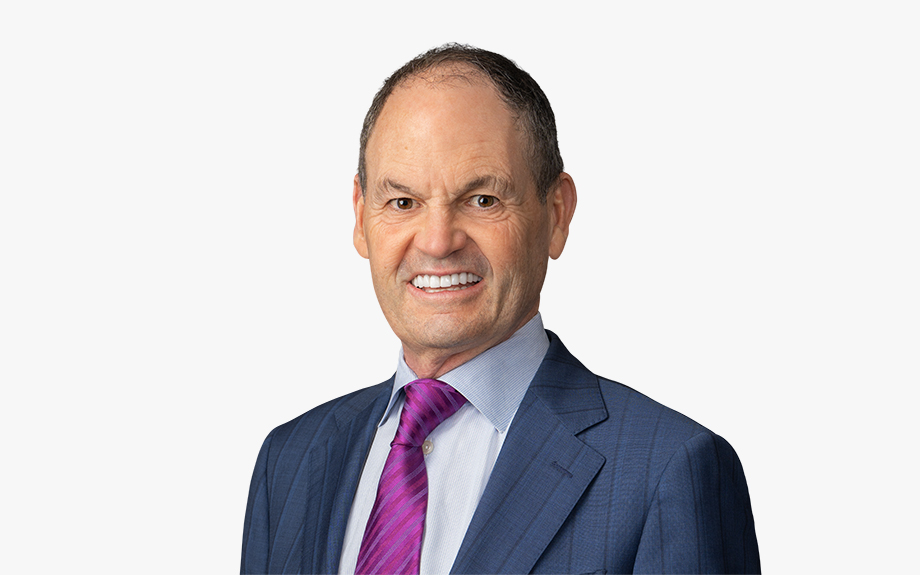
    Philippe Benedict

    Partner

    New York – 919 Third Avenue

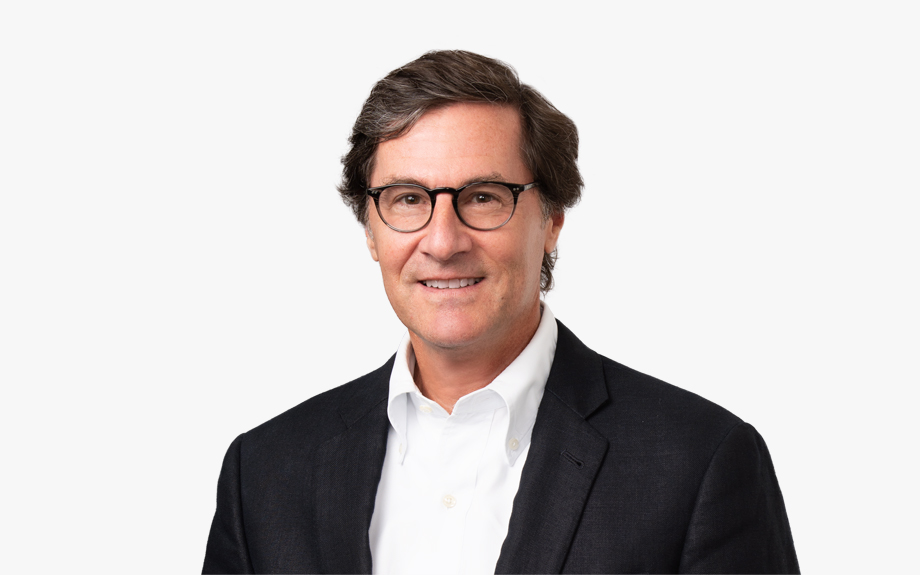
    Dan A. Kusnetz

    Of Counsel

    New York – 919 Third Avenue

    More insights

  • How to Increase Gender Diversity in Law Firms and Legal Departments

    ARTICLE

    How to Increase Gender Diversity in Law Firms and Legal Departments

    January 27, 2016

    Read time: 2 min

    Key takeaways
    Overview
    In depth

    Andrea Kramer co-authored this bylined article based on her upcoming book, Breaking Through Bias: Communication Techniques for Women to Succeed at Work. The article discusses three actions (setting numerical goals, financial incentives and clear directions) that large law firms and public corporations must take to move toward real gender diversity. “Each organization’s goals will be different, but all strategies should have certain common elements,” the article said. Read the full article.

    Authors
    More insights

  • New York Budget Bill Should Solve Domicile Confusion

    ARTICLE

    New York Budget Bill Should Solve Domicile Confusion

    January 26, 2016

    Read time: 2 min

    Key takeaways
    Overview
    In depth

    Peter Faber wrote this bylined letter to the editor about the bill introduced by New York Governor Cuomo allowing taxpayers to use charitable contributions and volunteer activities for establishing domicile in estate tax determinations. Although the legislative process for the bill “is far from over,” Mr. Faber wrote, “I suspect that this provision will not be controversial and that it will be included in the final bill that is passed by the Legislature and signed by the governor.”

    Authors
    More insights

  • New AML Regulatory Initiative Targets Real Estate Industry

    New AML Regulatory Initiative Targets Real Estate Industry

    ARTICLE / CLIENT ALERT

    New AML Regulatory Initiative Targets Real Estate Industry

    January 21, 2016

    Read time: 7 min

    Key takeaways
    Overview

    On Jan. 13, 2016, the Financial Crimes Enforcement Network (“FinCEN”), a bureau of the U.S. Department of the Treasury responsible for anti-money laundering (“AML”) enforcement, announced a new initiative aimed at “real estate secrecy.” The announcement comes on the heels of recent public statements by FinCEN Director Jennifer Shasky Calvery highlighting regulators’ concerns about money laundering in the real estate market, including the use of shell companies by criminals to purchase luxury residential real estate.[1]

    FinCEN’s initiative takes the form of Geographic Targeting Orders (“GTOs”). The GTOs, which are issued pursuant to FinCEN’s authority under the Bank Secrecy Act,[2] are limited to purchases by legal entities of residential real estate valued at more than $3 million in Manhattan, and more than $1 million in Miami-Dade County, without a bank loan or other external financing. Title insurance companies will be required to report to FinCEN certain information about these transactions, including: (1) the identity of the beneficial owner (or owners) of the legal entity, defined as an individual who owns, directly or indirectly, 25 percent or more of the entity; (2) if the purchaser is a limited liability company (“LLC”), the names, addresses and taxpayer identification numbers of all of its members; and (3) the identity of the individual primarily responsible for representing the purchaser in the transaction. The report is required to be filed on a Form 8300[3] through the Bank Secrecy Act (“BSA”) E-Filing system within 30 days of the closing of the real estate transaction.  

    Significantly, the reporting obligation only applies when at least part of the purchase price is paid by currency or a monetary instrument, which includes a cashier’s check, certified check, traveler’s check or money order in any form. It would not apply where the purchase was paid for entirely by wire transfer, even though such purchases are colloquially understood as “cash” purchases. The reporting obligation is unlikely to affect co-op purchases, which typically do not require title insurance.  

    All reports required to be filed under the BSA, including FinCEN Form 8300s, and information contained in these records, are exempt from disclosure under the Freedom of Information Act (“FOIA”).[4] Under this exemption, there is no discretionary disclosure. Additionally, since BSA records, including FinCEN Form 8300s, are maintained in a FinCEN system of records database that has been exempted from the access provisions of the Privacy Act, they cannot be disclosed under the Privacy Act either.[5] 

    The GTOs are being issued in response to increased attention to  buyers of real estate who make “all-cash” purchases through LLCs or other shell corporations and never reveal their identities. Although purchasing real estate through LLCs has been a long-standing and accepted practice in the real estate industry, a series of articles in The New York Times last year focused on how foreign buyers, some of whom have been the subject of government investigations, have been able to safeguard their assets (while concealing their identities) by purchasing luxury real estate in the United States, especially Manhattan.

    The GTOs are temporary and are scheduled to be in effect only from March 1 through August 27, 2016. FinCEN’s press release notes that the information reported during this six-month timeframe will be shared with law enforcement agencies to enhance their ability to “identify the natural persons involved in transactions deemed vulnerable to abuse for money laundering.”[6] In the GTOs, FinCEN has defined beneficial ownership in a manner consistent with FinCEN’s proposed rule on customer due diligence, which likewise applies to persons with a direct or indirect ownership interest of at least 25 percent.[7]

    Statutory authority has long existed under the Bank Secrecy Act for the federal government to impose AML regulations on those involved in the real estate industry.[8] Even so, FinCEN has only relatively recently issued regulations requiring non-bank lenders and originators in the real estate finance area, as well as the government-sponsored entities that issue mortgage-backed securities, to develop AML programs, and to engage in reporting and record-keeping. But where real estate transactions are conducted in cash and do not involve financing, they fall outside of these regulations. In the past, FinCEN has hinted at its interest in issuing AML regulations for the real estate industry, even publishing an Advance Notice of Proposed Rule Making in 2003, which contemplated imposing AML requirements on persons involved in real estate closing and settlements. But FinCEN never issued a final rule.

    Though temporary and limited to two geographic markets, the new GTOs represent FinCEN’s first attempt to impose AML requirements on those involved in all-cash transactions in the real estate industry. In connection with the GTOs, Director Shasky Calvery commented that if the information collected through the GTOs reveals that many sales involved suspicious money, FinCEN will develop permanent reporting requirements across the country. The chief of the FBI’s financial crimes section, Patrick Fallon, also noted, “We fully intend to encourage expansion of [the GTOs], so, not only to different geographic areas but as far as the time frame as well.”[9]

    Authored by Jeffrey A. Lenobel, Gary Stein, Betty Santangelo, Lisa A. Prager, Julian M. Wise, Jennifer M. Opheim, Seetha Ramachandran and Melissa G.R. Goldstein.

    If you have any questions concerning this Alert, please contact your attorney at Schulte Roth & Zabel or one of the authors.


    [1] Prepared Remarks of FinCEN Director Jennifer Shasky Calvery, delivered at the ABA/ABA Money Laundering Enforcement Conference (Nov. 16, 2015); Prepared Remarks of FinCEN Director Jennifer Shasky Calvery, delivered at the West Coast AML Forum (May 06, 2015).

    [2] See 31 U.S.C. § 5326(a) and 31 C.F.R. § 1010.370.

    [3] An electronic copy of FinCEN Form 8300 (Report of Cash Payments Over $10,000 Received in a Trade or Business) is available online.

    [4] See 5 U.S.C. § 552(b)(3) and 31 U.S.C. § 5319.

    [5] See 5 U.S.C. §§ 552a(j)(2) and (k)(2); FinCEN’s Notice of Alterations of Three Privacy Act System of Records, 79 Fed. Reg. 20969, 20974 (April 14, 2014).

    [6] For FinCEN’s summary of the GTOs, see Press Release, FinCEN, “FinCEN Takes Aim at Real Estate Secrecy in Manhattan and Miami” (Jan. 13, 2016). The GTOs are available on FinCEN’s website here and here.

    [7] The FinCEN proposed rule on customer due diligence for financial institutions defines a beneficial owner as, in part, an “individual, if any, who, directly or indirectly, through any contract, arrangement, understanding, relationship or otherwise, owns 25% or more of the equity interests of a legal entity customer.” Final Rule, Customer Due Diligence Requirements for Financial Institutions, 79 Fed. Reg. 45151, 45170 (Aug. 4, 2014).

    [8] See 31 U.S.C. § 5312(a)(2)(U) (defining financial institution to include “persons involved in real estate closings and settlements”).

    [9] “U.S. Will Track Secret Buyers of Luxury Real Estate,” The New York Times (Jan. 13, 2016).


    This information has been prepared by Schulte Roth & Zabel LLP (“SRZ”) for general informational purposes only. It does not constitute legal advice, and is presented without any representation or warranty as to its accuracy, completeness or timeliness. Transmission or receipt of this information does not create an attorney-client relationship with SRZ. Electronic mail or other communications with SRZ cannot be guaranteed to be confidential and will not (without SRZ agreement) create an attorney-client relationship with SRZ. Parties seeking advice should consult with legal counsel familiar with their particular circumstances. The contents of these materials may constitute attorney advertising under the regulations of various jurisdictions.

    In depth
    Authors

    Betty Santangelo

    Counsel

    New York – 919 Third Avenue

    Julian M. Wise

    Partner

    New York – 919 Third Avenue

    Melissa G.R. Goldstein

    Partner

    New York – 919 Third Avenue

    More insights

  • Increased HSR Act Thresholds Announced for 2016

    Increased HSR Act Thresholds Announced for 2016

    ARTICLE / CLIENT ALERT

    Increased HSR Act Thresholds Announced for 2016

    January 21, 2016

    Read time: 2 min

    Key takeaways
    Overview

    The Hart-Scott-Rodino Antitrust Improvements Act of 1976, as amended (the “HSR Act”), requires parties to acquisitions of voting securities, assets or non-corporate interests meeting certain thresholds to make a premerger notification to the Federal Trade Commission (“FTC”) and the Antitrust Division of the Department of Justice, and to observe a waiting period prior to consummating such acquisitions. On Jan. 21, 2016, the FTC announced its annual adjustments to the current HSR Act thresholds. Any transaction that will be consummated on or after the Feb. 25, 2016 effective date of such adjustments may be reportable under the HSR Act if, as a result of such transaction, the acquiring person will hold voting securities, assets and/or non-corporate interests of the acquired person valued above $78.2 million (the current adjusted minimum threshold is $76.3 million). The new adjusted thresholds reflect changes in the gross national product for the preceding fiscal year.

    In depth
    Authors

    Peter Jonathan Halasz

    Of Counsel

    New York – 919 Third Avenue

    More insights

  • United States and European Union Ease Trade Sanctions Against Iran Pursuant to Nuclear Agreement

    ARTICLE

    United States and European Union Ease Trade Sanctions Against Iran Pursuant to Nuclear Agreement

    January 20, 2016

    Read time: 2 min

    Key takeaways
    Overview
    In depth

    Andrea Hamilton, David Henry, David Levine and Raymond Paretzky wrote this bylined article about the “significant new opportunities for business with Iran” potentially created by the lifting of Western sanctions imposed over the country’s nuclear programs. “Because the sanctions that were lifted may ‘snap back’ into place in the event that Iran fails to uphold its nuclear commitments,” the authors wrote, “businesses are well advised to proceed with caution and to continue to monitor related trade compliance developments closely.” Read the full article.

    Authors

    David J. Levine

    Senior Counsel

    Washington, DC

    Raymond Paretzky

    Counsel

    Washington, DC

    More insights

  • From the Ganerbschaft to the Family Office

    ARTICLE

    From the Ganerbschaft to the Family Office

    January 20, 2016

    Read time: 2 min

    Key takeaways
    Overview
    In depth

    Norbert Schulte wrote this bylined article on how family offices help to secure, and ideally to increase, family assets for future generations. As the concept of the “ganerbschaft” (joint family estate) in old German law made clear, it is wise to hold large assets safe from jeopardy, Mr. Schulte wrote, and a properly constructed family office can fulfill this purpose.

    Authors
    More insights

  • ‘Implementation Day’ Marks Rollback of Significant Nuclear-Related Sanctions on Iran

    ‘Implementation Day’ Marks Rollback of Significant Nuclear-Related Sanctions on Iran

    ARTICLE / CLIENT ALERT

    ‘Implementation Day’ Marks Rollback of Significant Nuclear-Related Sanctions on Iran

    January 20, 2016

    Read time: 7 min

    Key takeaways
    Overview

    On Jan. 16, 2016, Secretary of State John Kerry confirmed the International Atomic Energy Agency’s (“IAEA”) determination that Iran implemented its key nuclear-related measures as described in the Joint Comprehensive Plan of Action (“JCPOA”). Thus, Jan. 16, 2016 is “Implementation Day” under the JCPOA. As a result of Iran verifiably meeting its nuclear commitments, the United States and European Union lifted certain nuclear-related “secondary sanctions” on Iran, as discussed below. In addition to sanctions relief, the United States removed over 400 individuals and entities from the U.S. Department of the Treasury’s Office of Foreign Assets Control (“OFAC”) Specially Designated Nationals and Blocked Persons List (“SDN List”), the Foreign Sanctions Evaders List (“FSE List”) and/or the Non-SDN Iran Sanctions Act List (“NS-ISA List”).

    Secondary Sanctions
    The U.S. government rolled back sanctions, with certain limited exceptions, (1) as applied to “non-U.S. persons” and entities and (2) with respect to the eight business categories listed below.

    For these purposes, the term “non-U.S. person” includes foreign entities owned or controlled by U.S. persons. A foreign entity is owned or controlled by a U.S. person if the U.S. person: (1) holds a 50-percent or greater equity interest by vote or value in the entity; (2) holds a majority of seats on the board of directors of the entity; or (3) otherwise controls the actions, policies or personnel decisions of the entity.  

    U.S.-owned or -controlled foreign entities are eligible to participate in transactions or activities subject to the sanctions lifting under the JCPOA only to the extent that the transactions or activities are exempt from regulation or authorized by OFAC. Specifically, the United States lifted only the following eight categories of secondary sanctions against Iran:

    1) Financial and banking-related activities;

    2) Underwriting services, insurance or re-insurance;

    3) Energy and petrochemicals;

    4) Shipping, shipbuilding and port operators;

    5) Gold and other precious metals;

    6) Graphite, metals and software for integrating industrial processes;

    7) Automotive sector; and

    8) Sanctions on associated services for each of the categories above.

    U.S.-owned or -controlled foreign entities continue to be subject to remaining U.S. secondary sanctions, as are all other non-U.S. persons.

    Accordingly, for example, a Swiss corporation that is majority-owned by U.S. persons may purchase, sell, transport or market petroleum, petrochemical products and natural gas from Iran, including transactions with the National Iranian Oil Company (“NIOC”). A Swiss subsidiary of a U.S. company may also engage in transactions with Iran’s energy sector, provided the U.S. parent is not involved in the Iran-related operations or decision-making.

    The secondary sanctions relief, however, does not apply to transactions involving persons on the SDN List. Transactions involving such persons remain prohibited after Implementation Day.

    Licensed Activities for U.S. Persons
    While the general prohibitions against engaging in transactions with Iran by U.S. persons remain in place, the United States has committed to license the following three categories of activity by U.S. persons, provided that the transactions do not involve persons on the SDN List.

    Aircraft Parts
    Simultaneous with Implementation Day, OFAC issued a Statement of Licensing Policy (“SLP”) establishing a favorable licensing policy regime through which U.S. and non-U.S. persons may apply for a specific license authorizing certain transactions related to the sale of commercial aircraft and related parts and services to Iran, provided those transactions do not involve SDNs. Individuals and entities, on a case-by-case basis, may be issued a license allowing them to: (1) export, re-export, sell, lease or transfer to Iran commercial passenger aircraft for exclusively civil aviation end-use; (2) export, re-export, sell, lease or transfer to Iran spare parts and components for commercial passenger aircraft; and (3) provide associated services, including warranty, maintenance and repair services and safety-related inspections for commercial passenger aviation. Cargo aircraft, state aircraft, unmanned aerial vehicles, military aircraft, and aircraft used for general aviation or aerial work are not eligible for licensing under the SLP.

    General License H
    OFAC’s General License H authorizes U.S. persons (e.g., senior management) to establish or alter corporate policies to the extent necessary to allow U.S.-owned or -controlled foreign entities to engage in transactions involving Iran that would otherwise be prohibited. However, U.S. persons may not be involved in the Iran-related day-to-day operations of a U.S.-owned or -controlled foreign entity, including by approving, financing, facilitating or guaranteeing any Iran-related transaction by the foreign entity. In addition, General License H authorizes U.S. person employees and outside legal counsel and consultants to provide training, advice and counseling on the new or revised operating policies and procedures, provided these services do not facilitate illegal transactions.

    Furthermore, General License H authorizes U.S. persons to make available certain “Authorized Business Support Systems.” This includes any automated and globally integrated computer, accounting, email, telecommunications or other business support system, platform, database, application or server broadly available to, and in general use by, the U.S. parent company’s global organization. For example, a “sales lead database” on a U.S. server that is broadly available to, and in general use by, the U.S. parent company’s non-U.S. entities would be considered “globally integrated” for the purposes of this license.

    Imports of Iranian-Origin Carpets and Foodstuffs
    In addition, effective Jan. 16, 2016, Iranian-origin carpets and foodstuffs, including pistachios and caviar, may be imported into the United States without prior written authorization. This general license covers: (1) carpets and other textile floor coverings and carpets used as wall hangings that are classified under Chapter 57 or Heading 9706.00.0060 of the Harmonized Tariff Schedule of the United States; and (2) foodstuffs intended for human consumption that are classified under Chapters 2-23 of the Harmonized Tariff Schedule of the United States. However, U.S. persons remain prohibited from paying Iranian companies for these imports by crediting or debiting an Iranian account. Therefore, payment mechanisms under this general license typically involve a third-country bank or money service business to finance the purchase from a third country.

    Sanctions in Place After Implementation Day
    Companies that want to engage in new business involving Iran must continue to exercise caution. Iran remains designated as a state sponsor of terrorism, and the JCPOA does not alter that designation. Indeed, the rollback of sanctions described above can be “snapped back” if Iran fails to comply with the JCPOA going forward. Moreover, the U.S. government continues to enforce sanctions against persons and entities involved in the proliferation of weapons of mass destruction and their delivery means, including ballistic missiles. On Jan. 17, 2016, the day after Implementation Day, OFAC added 11 entities and individuals to the SDN List for their involvement in procuring goods for Iran’s ballistic missile program. Finally, on Jan. 20, 2016, FinCEN, one of the U.S. Department of the Treasury’s lead agencies in the fight against money laundering, called on U.S. financial institutions to “give special attention to business relationships and transactions with Iran” because of the risk of terrorist financing. 

    If you have any questions concerning this Alert, please contact your attorney at Schulte Roth & Zabel or one of the following attorneys: Betty Santangelo, Gary Stein, Peter H. White, Seetha Ramachandran, Michael P. Court or Matthew J. Moses.


    This information has been prepared by Schulte Roth & Zabel LLP (“SRZ”) for general informational purposes only. It does not constitute legal advice, and is presented without any representation or warranty as to its accuracy, completeness or timeliness. Transmission or receipt of this information does not create an attorney-client relationship with SRZ. Electronic mail or other communications with SRZ cannot be guaranteed to be confidential and will not (without SRZ agreement) create an attorney-client relationship with SRZ. Parties seeking advice should consult with legal counsel familiar with their particular circumstances. The contents of these materials may constitute attorney advertising under the regulations of various jurisdictions.

    In depth
    Authors

    Betty Santangelo

    Counsel

    New York – 919 Third Avenue

    More insights

  • Conducting a Due Diligence Examination: State and Local Tax Aspects

    ARTICLE

    Conducting a Due Diligence Examination: State and Local Tax Aspects

    January 19, 2016

    Read time: 2 min

    Key takeaways
    Overview
    In depth

    Peter Faber wrote this bylined article about the role of state and local tax due diligence in business asset purchases and sales. Buyers should “evaluate the significance of these issues in the context of the transaction” to help assess their “willingness to proceed,” Mr. Faber wrote, emphasizing it is important that tax practitioners “submit a detailed and accurate assessment of state and local tax issues so that they can be evaluated by the business people.”

    Authors
    More insights

  • McDermott Will & Emery Discusses ISS Issuance of Acceptable Parameters for Proxy Access Provisions

    ARTICLE

    McDermott Will & Emery Discusses ISS Issuance of Acceptable Parameters for Proxy Access Provisions

    January 15, 2016

    Read time: 2 min

    Key takeaways
    Overview
    In depth

    David Cifrino, Thomas Conaghan, Thomas Murphy, Eric Orsic and Heidi Steele wrote this bylined article on new guidelines that Institutional Shareholder Services Inc. (ISS) will use to assess management response to shareholder-supported proxy access proposals. The authors wrote that the ISS move “lets both proponents and companies know where ISS will fall in any debate between a proponent and management as to the proper parameters of a ‘fair’ proxy access provision. Read the full article.

    Authors

    Thomas P. Conaghan

    Partner

    Washington, DC, New York – One Vanderbilt Avenue

    Eric Orsic

    Partner

    Chicago

    Heidi J. Steele

    Partner

    Chicago

    More insights