












ARTICLE
US M&A activity: Remedies return, states press forward, and HSR form reverts
August 20, 2026
Read time: 8 min
Q2 developments suggest that the Trump 2.0 antitrust agencies are more willing than their predecessors to engage with merging parties on practical resolutions, particularly where proposed fixes are structural, timely, and capable of preserving competition. At the same time, the quarter showed that federal agency clearance may not fully de-risk a transaction where states or private plaintiffs remain active. Meanwhile, the HSR form has reverted to the pre-2025 form, but the agencies are still considering possible revisions later this year.
Remedy proposals are viable again, but parties should engage early
- Current Federal Trade Commission (FTC) and US Department of Justice (DOJ) leadership have emphasized that negotiated remedies can be appropriate where they fully resolve competitive concerns, with a continued preference for structural relief over behavioral commitments.
- The FTC’s May 2026 workshop on eleventh-hour remedy proposals and “litigating the fix” reinforced that timing is critical. Parties that wait until the courthouse steps to propose a remedy should expect skepticism, because late proposals leave the FTC less time to test the proposed divestiture package, assess the buyer, and evaluate whether the fix will actually preserve competition.
- The agencies’ recent consent-order activity illustrates the point. In 365 Retail Markets/Cantaloupe, the FTC accepted a remedy that included a horizontal divestiture as well as behavioral commitments addressing vertical concerns. The DOJ’s Taiheiyo/CalPortland/Vulcan settlement required divestiture of ready-mix concrete plants in San Diego County. The practical takeaway is that parties should identify potential remedies early, build a record supporting their sufficiency, and be prepared to present a credible buyer and implementation plan.
State and private challenges threaten closing and integration
- Nexstar/TEGNA is a significant reminder that federal clearance does not necessarily end regulatory risk. Although the DOJ did not challenge the transaction and the Federal Communications Commission (FCC) cleared the deal after committing to some divestitures and behavioral remedies, a coalition of state attorneys general and DIRECTV obtained a preliminary injunction preventing Nexstar and TEGNA from integrating.
- The injunction requires TEGNA to be maintained as a separate, independently managed business pending adjudication on the merits. That relief is particularly important because the deal had already closed, and the court credited concerns that integration could make later relief, including divestiture or unwinding, more difficult.
- More recently, after federal and foreign regulators cleared the transaction, multiple states challenged Paramount’s acquisition of Warner Brothers. After the court granted a temporary restraining order (TRO), Paramount consented to a preliminary injunction, which will significantly delay the closing of the transaction.
- The case also highlights the increasing importance of state enforcement. State attorneys general may step in where they believe federal agencies have not fully addressed competitive concerns, and their ability to obtain meaningful interim relief may affect transaction planning, integration strategy, and closing-risk allocation.
The HSR form reverts to its earlier version, with possible updates ahead
- The Biden-era 2025 HSR form, which expanded the categories of information filers were required to furnish, has been vacated. The agencies abandoned litigation to enforce the new HSR form, and the agencies reverted to accepting the legacy form.
- The agencies solicited public comments relating to the HSR rules and aim to publish a notice of proposed rulemaking by year-end, presumably to develop a stronger record to support any new rules. It is unclear how similar that proposed rulemaking will be to the previous Biden-era rulemaking.
- For now, parties can file using the legacy form, which requires significantly less information than the 2025 HSR form. Deals signed in late 2026 may face a moving target if the agencies propose a revised form.
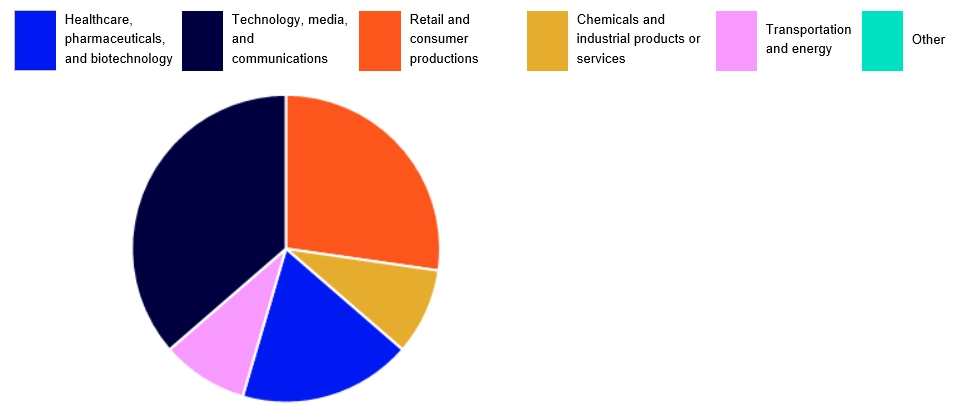
Number of enforcement actions in key industries1
Snapshot of selected enforcement actions2
Time from signing to consent or investigation closing
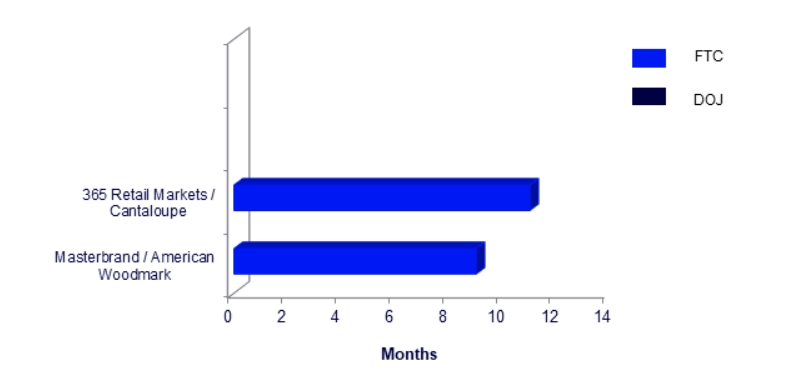









1. For the United States, the graphs include illustrative cases in which an antitrust enforcement agency issued a second request at some point and the investigation remained ongoing during the quarter, the agencies accepted a consent order or issued a complaint initiating litigation against the transaction, or the transaction was abandoned after an antitrust investigation.
2. These graphs are based on McDermott internal analysis and public press reports and filings. These graphs do not represent a complete list of all matters within a jurisdiction.