












VIDEO
November 2025
Read time: 6 min

Market conditions, regulatory pressures, and technological advancements are converging to drive a new generation of deal structures as the healthcare landscape shifts to an innovative growth paradigm. And as evolving frameworks emerge, stakeholders are embracing creative investment opportunities.
At McDermott Will & Schulte’s HPE NYC 2025, industry leaders explored some of these innovative strategies. We continue the conference conversations below with a review of the latest creative capital developments in the healthcare space.

Novel pathways to value
- Bridging valuation gaps. Performance-based agreements and clever financing align valuation with performance in a selective buyer environment. These frameworks, along with strategic alliances and alternative liquidity paths – including continuation vehicles, minority recaps, and structured equity – require tactical structuring, tax optimization, particularized negotiations, and regulatory clearance. While not specific to one sector, these financing models reflect broader investor creativity in aligning value and performance.
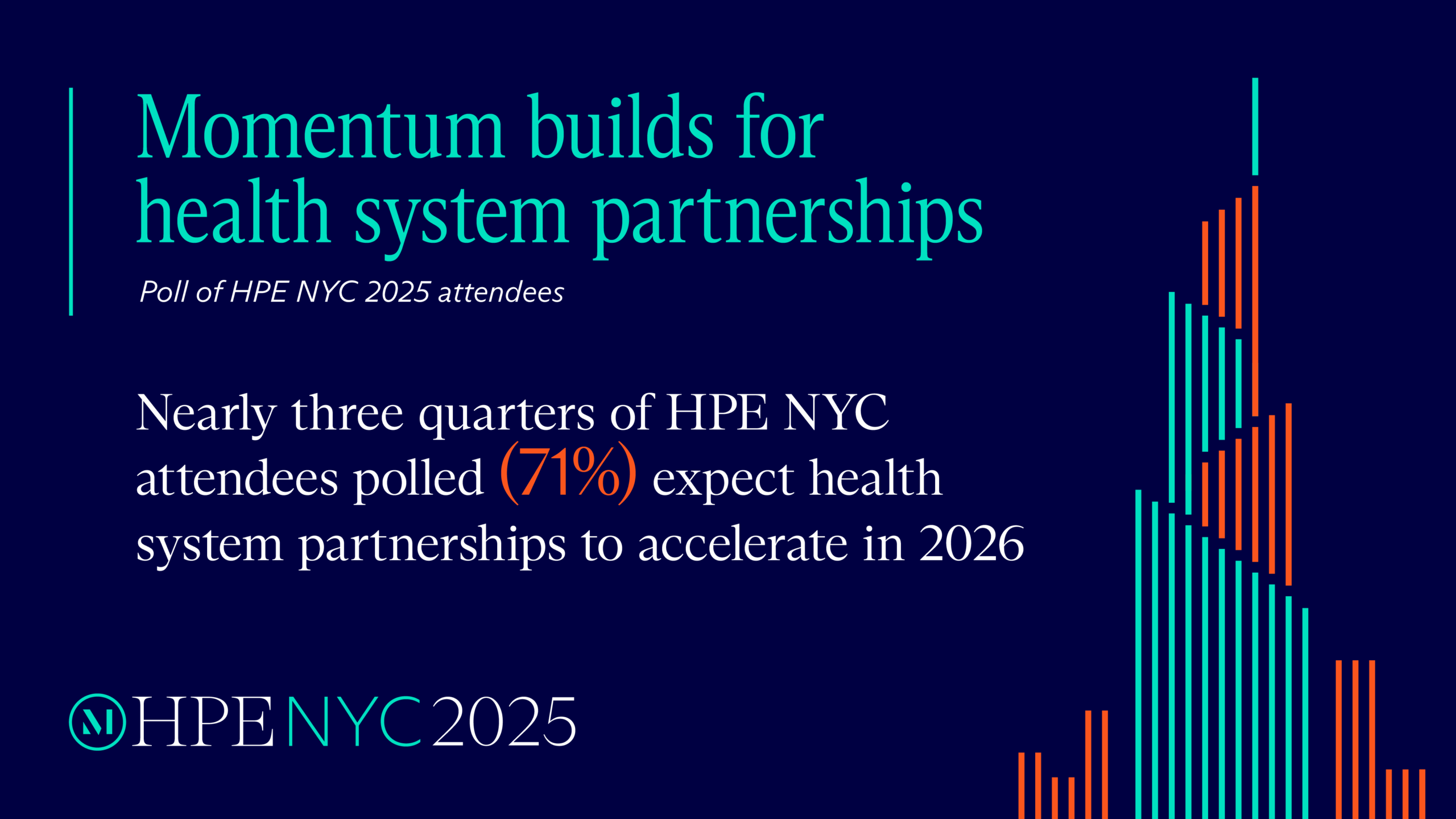
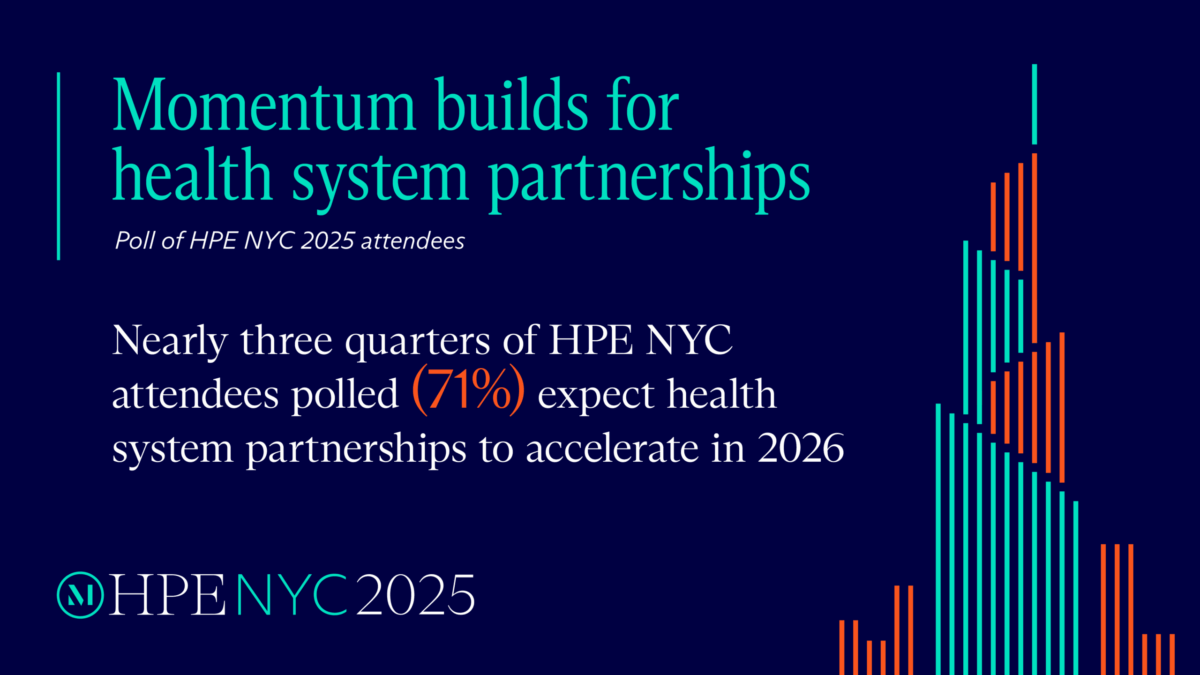
- Private equity explores partnership opportunities. Demographic and regulatory shifts strain traditional industry economic models and require alternative means to address labor shortages, maintain profitability, and expand services. Private equity/health system partnerships are proving effective at meeting those needs when the parties share a fundamental alignment around incentives and a mutual understanding of how each will benefit from their partnership.
- Post-realization MedTech carve-outs provide value. Portfolio rationalization is a significant value generator as post-rationalization carve-outs offer investors access to innovation without the cost of full-platform premiums. Carve-outs allow global strategics to shed non-core units or finance technologies through partnerships with private equity. The process, however, is complex (and lengthy), requiring comprehensive diligence and robust transition services agreements between the parties.
- Biotech investment growth. Current biotech valuations may be particularly attractive to hedge funds. HPE NYC panelists shared some of the new approaches their firms are bringing to public and private investments, such as Private investments in Public Equity (PIPE) and hedging strategies (to manage portfolio volatility). The panelists also mentioned the potential for investment in Chinese biotech. Despite the potential legal and political challenges, they believe there is value to be found in Chinese biotech, particularly in the clinical trial phases.
- Increasing engagement in shareholder activism. Historically, most hedge funds faced with shareholder activism were likely to dispose of the asset rather than engage. Now, hedge funds may take it upon themselves to create change and unlock value through strategic pivots, asset sales, and capital reallocation while engaging management and emphasizing shared long-term goals.
Healthcare trends continue in new frameworks
- Joint venture participant range broadens. Recently, joint ventures in ambulatory surgery centers, labs, and imaging have been successful and are expected to grow. To illustrate, the panelists noted the lucrative partnership (in terms of profit and patient care) between a mammography company and a health system.
- Strategics investing in physician practices. Strategics continue to invest in the acquisition and consolidation of physician practices. They act as business enablers, providing the benefits of scale in technology, management, overhead, and overall efficiency while physicians maintain complete clinical autonomy and benefit from equity and wealth generation.
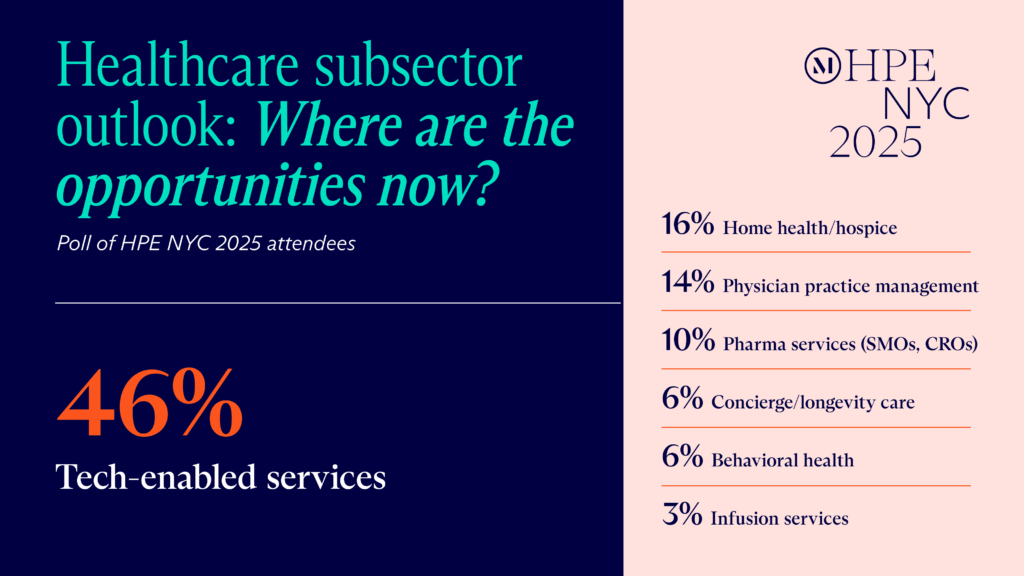
- Tech-enabled services mergers and acquisitions (M&A) activity. While broader M&A activity remains uneven, the panelists noted continued strength in tech-enabled platforms, decentralized trial capabilities, and demand for outsourced services. As platforms advance – with artificial intelligence, data, and omnichannel capabilities – into full-service commercialization, the market is rewarding scalability and integration. Anticipation and management of regulatory and compliance concerns is key, as the current M&A deal lifecycle is impacted by high-scrutiny environments in the United States and the European Union.
Custom legal structures enable investors to adapt
- Side pockets provide investment options. Hedge funds’ legal structures can significantly impact their ability to access private markets. Side pockets allow investors to maintain liquidity in the public market while participating in private deals. Traditionally, side pockets were designed to protect investors in the event an issuer went bankrupt or was delisted. More recent hedge fund structures, however, include side pockets from formation, allowing access to private deals with what is effectively a private equity fund within a hedge fund.
- Increased adoption of separately managed accounts (SMAs). SMAs are structured differently from traditional hedge funds; they are contractual relationships between investors and managers where the investor maintains ownership of the individual securities. Managers have access to the brokerage account, but their role is limited to buying and selling securities. SMAs have been gaining traction over the last several years, as they offer investors greater transparency and control.
Creativity continues to offer innovative, forward-looking investment opportunities throughout the healthcare industry.
As always, we look forward to discussing the details with our clients and partners. To explore any of these themes further, please reach out to a member of the firm’s Health & Life Sciences Group.




HPE NYC 2025: Inside the healthcare dealmaking outlook
VIDEO
October 16, 2025
Read time: 5 min
On October 16, global law firm McDermott Will & Schulte showcased its premier series for healthcare dealmakers in the heart of New York City.
Held at The Glasshouse, Healthcare Private Equity (HPE) NYC 2025 brought together hundreds of industry players for a dynamic series of engaging panels and networking opportunities. Sessions offered insights and forward-looking perspectives on various topics, including the current state of the market, the increasing role of AI in healthcare, and healthcare industry opportunities.
McKinsey & Company, the official knowledge partner of HPE NYC, shared an analysis of emerging trends across the industry at the event. Here, McKinsey and McDermott Will & Schulte share some of the takeaways from the event.

Perspectives on the current deal environment
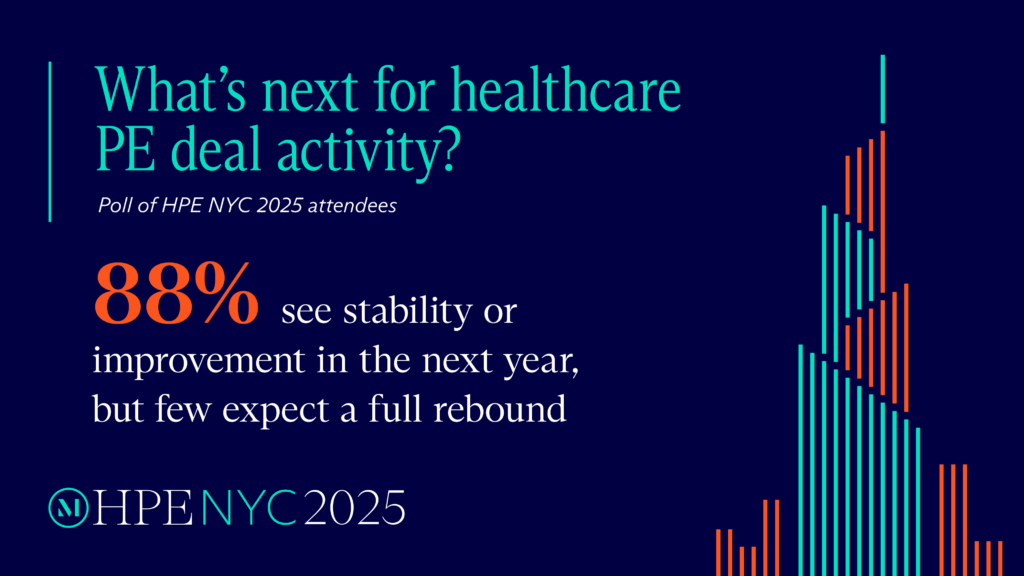
- Market activity. Participants expressed mixed-optimism at HPE NYC. Forty-six percent of attendees polled believed deal activity would be “about the same” over the next 12 months, while 42% believed it will improve. Panelists leaned more optimistic as they pointed to growing market activity over the last year and an increase in the deal pipeline through 2025.
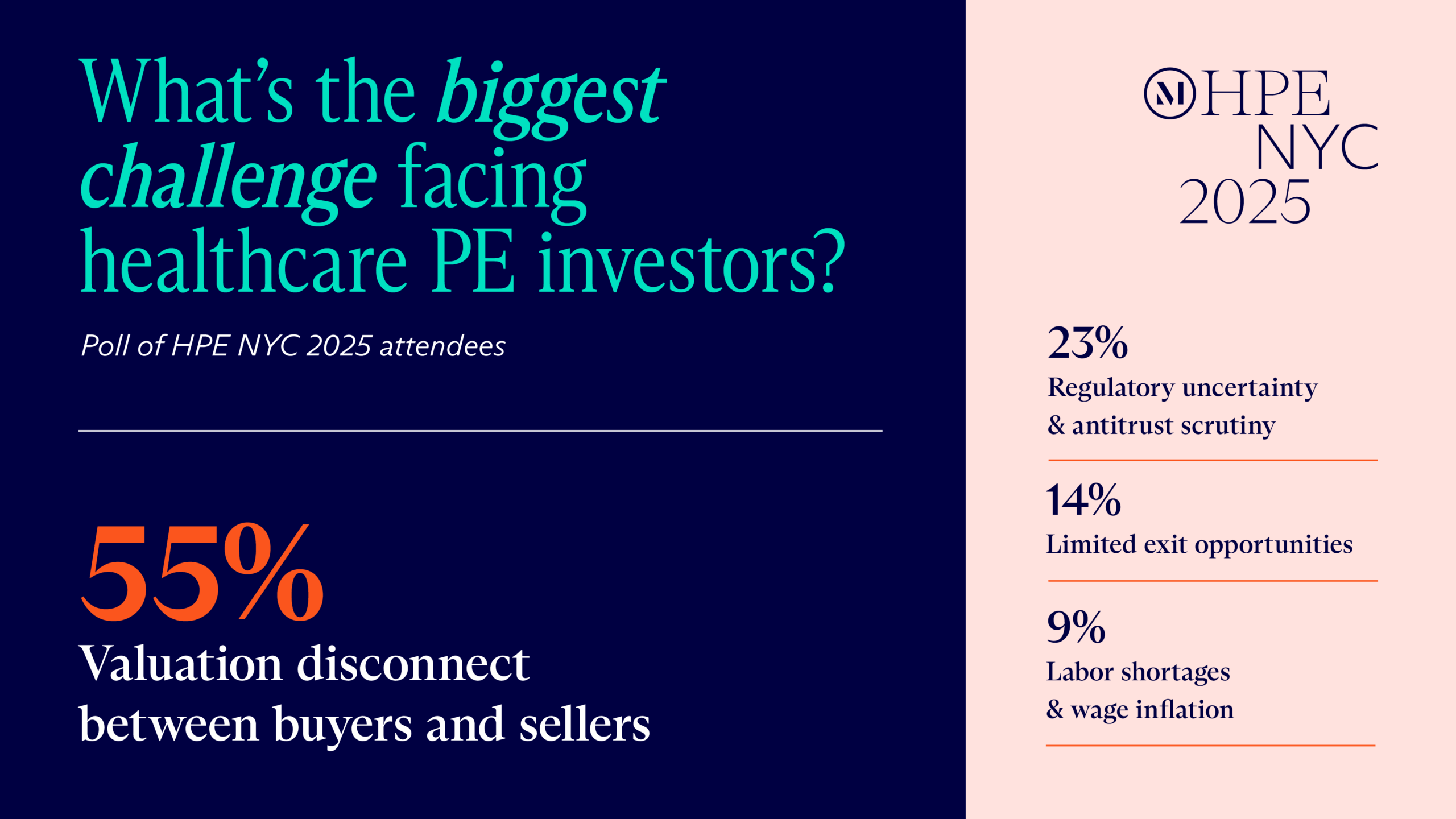
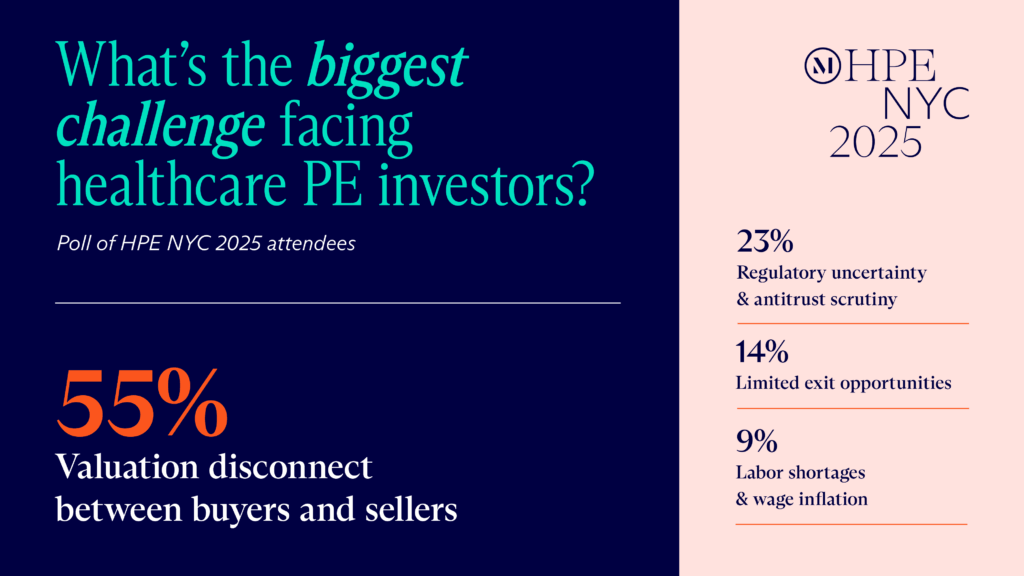
- Obstacles to healthcare PE transactions. Both panelists and attendees identified the lingering buyer-seller valuation gap as a major barrier facing Healthcare PE investors; 55% of attendees pointed to that valuation disconnect as the biggest challenge to successful deal executions. According to panelists, the gap is more pronounced in sectors where the lack of recent trades has made it particularly difficult for buyers and sellers to agree on valuations.
- Pharmaceuticals. Panelists addressed concerns over margin erosion and possible disruptions to pharmaceutical accessibility. The pharmaceutical industry is adjusting to potential changes in patient access to drugs, including a push to direct-to-consumer channels. That movement has begun and continues to trend.
“We are optimistic about healthcare in the current market, where deals are getting done. We are seeing quite a bit of deal flow in the third and fourth quarters of 2025 and look forward to continued market activity into next year.” – Ira Coleman, chairman of McDermott Will & Schulte
Emergence of AI in the healthcare space
- Change management is key. Panelists emphasized the need for a strategic approach to AI. Technology alone is insufficient; leadership buy-in and acumen at portfolio companies is essential for AI to positively impact the healthcare industry. The overall sentiment was that companies must be ready and capable of integrating and adopting AI tools to ensure effective adaptation.
- Seeing efficiency gains. AI is still in the early stages of adoption through most of the industry. Gains are mostly seen today in the back office, but the pressure on healthcare businesses to improve patient outcomes and lower costs will lead to more use of technology and AI in the future.
- Clinical applications. As of now, panelists noted limited applications for AI in clinical settings. At least one panelist, however, noted that we are starting to see early use in some specialties, highlighting how some studies have shown the potential of AI in detecting pre-cancerous legions in digital dermoscopic images, for example.
Ongoing trends in the healthcare private equity market
- Rural healthcare. Industry leaders addressed the potential of rural health as a catalyst for innovation and value creation. As states with rural populations show growing interest in private-sector partnerships, speakers noted that many are exploring tech-enabled care delivery models and financial structures that balance costs across care sites — using stronger-performing services to support those with thinner margins.
- Physician practice management (PPM’s). Panelists highlighted the potential for PPM’s to reenter the market, especially with a focus on de novos rather than roll-ups. The adoption of more tech-enabled services by PPM’s could also drive margin improvements.
- Creative deals. Industry leaders stressed a shift toward more complex structuring of today’s deals, with creative earnouts and innovative arrangements becoming increasingly common. At the same time, speakers noted that private credit is taking on a growing role in financing healthcare deals, bringing higher costs of capital and a focus on alpha creation. There was also discussion about partnering with payers and providers to develop innovative capital deployment strategies that solve key challenges for large strategics and mitigate downside risk.
Conclusion
HPE NYC 2025’s lively and thought-provoking discussions provided a variety of perspectives on the state of healthcare private equity along with insightful approaches to potential investments.
As always, we look forward to continuing the dialogue with our clients and partners. Please reach out to explore any of these themes further.


HPE NYC 2025: What dealmakers really think
VIDEO
October 16, 2025
Read time: 2 min
On October 16, Healthcare Private Equity (HPE) NYC gathered hundreds of healthcare investors and operators for a day of bold ideas and real-world insights.
Through candid conversations and on-the-ground perspectives, dealmakers shared where they see opportunity, how they’re navigating market headwinds, and what’s next for healthcare investing.
What’s next for Healthcare PE deal activity?

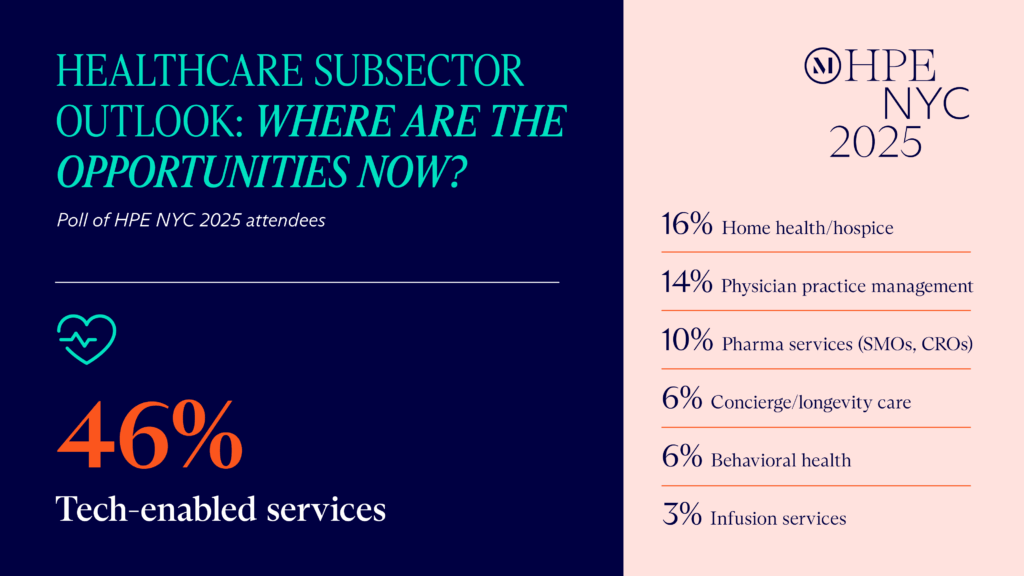
Healthcare subsector outlook: Where are the opportunities now?